




Psyllium Husk Supplements: The Complete Guide
-
By Chris Jones
Written by Chris Jones | Last Updated June 2026 | Social Media Manager at Nutrivity (7+ years in the UK supplement industry)
Psyllium Husk Supplements: The Complete Guide
Psyllium husk is one of the most extensively researched natural fibre supplements available in the UK today. It has been used in clinical practice for decades, is recommended by NICE for IBS management, and carries an FDA-approved health claim linking it to reduced coronary heart disease risk. Despite this, many people in the UK are only just discovering it — and many who take it have never been told the full story of what it can and cannot do.
This guide covers everything. What psyllium husk is, where it comes from, how it works in the body, what the clinical evidence says across each area of use, how to take it safely, and what to look for when buying in the UK. Where we have detailed follow-up articles on individual topics, we link to them throughout so you can read further without having to search elsewhere.
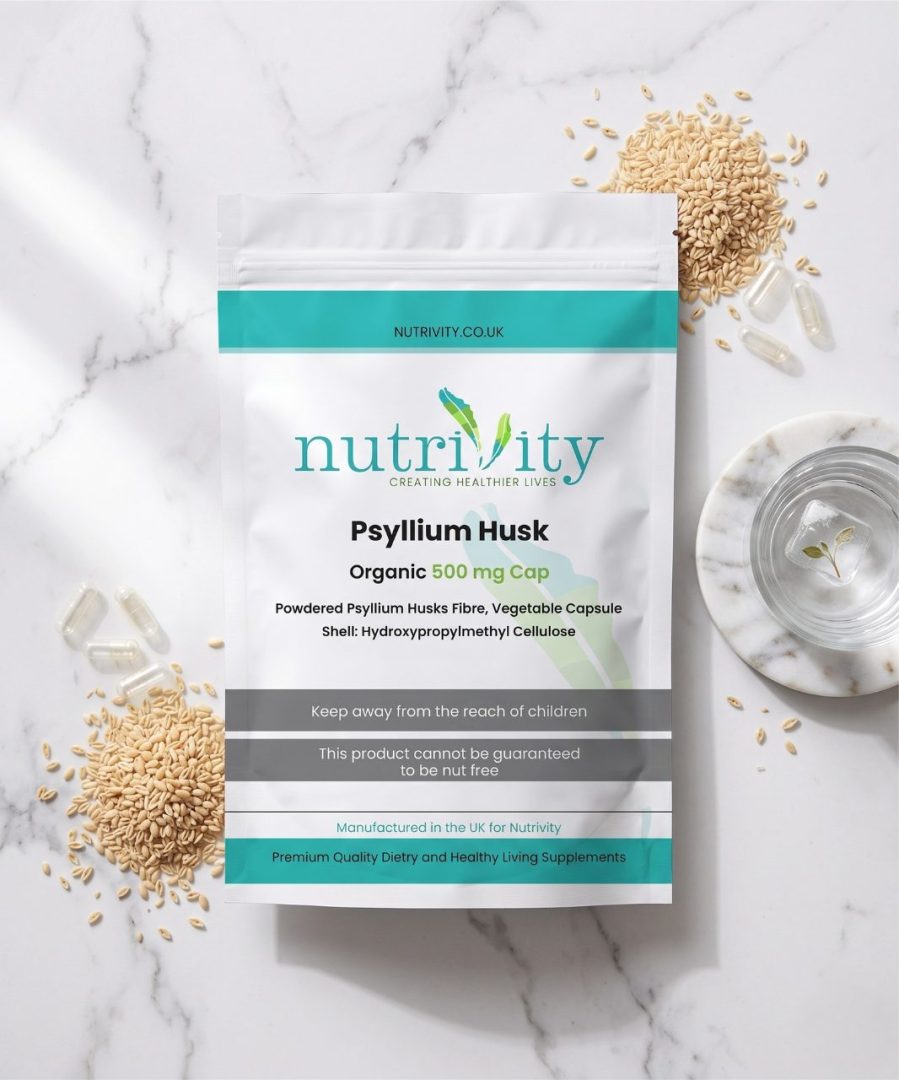
At Nutrivity, we manufacture Psyllium Husk 500mg Capsules in the UK under GMP-certified conditions using HPMC vegetable capsules — making them vegan friendly and suitable for halal diets. This guide is written as an honest, educational resource, not a sales piece.
What Is Psyllium Husk?
Psyllium husk is the outer seed coat of the Plantago ovata plant — a small shrub native to western Asia and the Indian subcontinent. India produces approximately 85 to 90 percent of the world’s psyllium supply, primarily from the state of Gujarat, where the crop has been cultivated commercially for over a century.
After harvest, the seeds are cleaned and the husk — the fibrous outer layer — is separated from the seed itself. This husk is then processed into a fine powder or encapsulated for supplement use. The seed interior is discarded or used separately; it is only the outer husk that carries the fibre density that makes psyllium so useful as a supplement.
What makes psyllium husk exceptional as a fibre source is its composition. It contains approximately 70 percent soluble fibre and 30 percent insoluble fibre — one of the highest soluble fibre concentrations of any naturally occurring food or plant material. The soluble fibre fraction is primarily arabinoxylans, which form a thick, viscous gel when they come into contact with water. This gel formation is the mechanism behind almost every effect psyllium has in the body.
Psyllium husk is also known as ispaghula husk. The two names refer to the same material. Ispaghula is the older, more technical term used predominantly in UK pharmaceutical and medical contexts — you will see it listed on the packaging of Fybogel, the most widely known branded psyllium product in the UK. Psyllium husk is the term more commonly used in supplement marketing and internationally.
How Does Psyllium Husk Work in the Body?
Understanding how psyllium husk works begins with a single fact: it is a bulk-forming agent, not a stimulant. This distinction separates it from pharmaceutical laxatives such as senna or bisacodyl, which work by triggering muscular contractions in the bowel wall. Psyllium works mechanically — by adding physical bulk, retaining moisture, and creating a gel that modifies the environment of the digestive tract.
When psyllium is swallowed with adequate water, the soluble fibre fraction begins absorbing liquid immediately. In the stomach, this creates a viscous mass that occupies space and slows the rate at which the stomach empties into the small intestine — a process known as delayed gastric emptying. This slowing is significant because it creates several downstream effects simultaneously.
In the small intestine, the gel forms a physical barrier between the contents of the intestine and the intestinal wall. This reduces the absorption rate of glucose from digested carbohydrates, producing a more gradual rise in blood sugar after eating. It also disrupts the reabsorption of bile acids — compounds the liver produces from cholesterol and secretes into the intestine to assist with fat digestion. Normally, these bile acids are reabsorbed in the lower small intestine and recycled back to the liver. When psyllium’s gel binds to bile acids, they cannot be reabsorbed efficiently. The liver compensates by synthesising new bile acids from circulating LDL cholesterol — which is the mechanism by which regular psyllium consumption is associated with LDL reductions in clinical studies.
In the large intestine, the gel adds bulk to stool, retains water within the stool mass, and softens consistency. Unlike many soluble fibres — such as inulin, fructooligosaccharides (FOS), or beta-glucan — psyllium is largely resistant to fermentation by gut bacteria. This is important because fermentable fibres produce gas as a by product, which can worsen bloating and discomfort in people with IBS or sensitive digestive systems. Psyllium’s low fermentability makes it significantly better tolerated than most other fibre supplements in this population.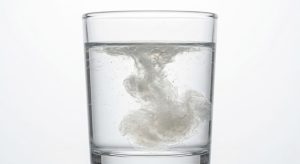 The Evidence: What Psyllium Husk Is Used For
Psyllium husk has an unusually strong evidence base for a dietary supplement. Research spans several decades and multiple clinical areas. Below is a summary of the key areas of study, with links to our detailed articles on each.
OUR TOP RECOMMENDED
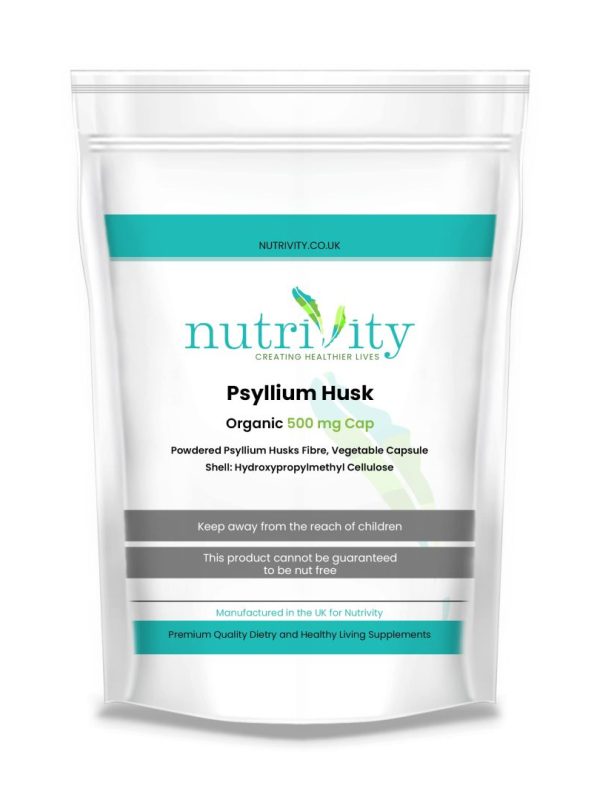
Psyllium Husk 500mg Capsules — Natural Dietary Fibre Supplement
Price range: £8.99 through £13.99
Digestive Health and Bowel Regularity
The most established use of psyllium husk is supporting regular bowel function. Multiple randomised controlled trials have confirmed that psyllium supplementation increases stool frequency, improves stool consistency, and reduces straining in both constipation and loose stool presentations. A systematic review and meta-analysis published in the American Journal of Clinical Nutrition found psyllium to be significantly more effective than wheat bran for improving stool output and consistency across multiple outcome measures.
The bidirectional nature of psyllium’s action on stool consistency is clinically important. For constipation, psyllium adds bulk and retains moisture in the stool, softening it and making passage easier. For loose or watery stools, the gel absorbs excess water, firming the stool and slowing transit. This dual action is rare in dietary supplements and makes psyllium suitable for a broader range of presentations than most alternatives. See our detailed guide: Psyllium Husk for Constipation: Does It Actually Work?
IBS Management
Psyllium husk occupies a unique position in IBS management — it is specifically recommended in NICE guidelines (CG61, updated) as a first-line dietary intervention for IBS. NICE explicitly advises healthcare professionals to recommend soluble fibre supplementation, including ispaghula husk, to patients with IBS before considering pharmacological options.
A landmark randomised controlled trial published in the British Medical Journal randomised IBS patients into three groups: psyllium supplementation, wheat bran supplementation, and placebo. After 12 weeks, psyllium produced a statistically significant reduction in IBS symptom severity scores compared to both wheat bran and placebo. Bran was no better than placebo and worsened symptoms in a subset of patients — consistent with the known irritant effect of insoluble fibre on sensitive intestines. Psyllium, by contrast, provided measurable relief without the gas and bloating associated with fermentable fibres. Full breakdown: Psyllium Husk for IBS: What the Evidence Says
Cholesterol Management
Psyllium husk has one of the most robust evidence profiles of any dietary supplement for cardiovascular risk management. The US Food and Drug Administration (FDA) permits a qualified health claim stating that diets low in saturated fat and cholesterol that include 7 grams or more of soluble fibre per day from psyllium husk may reduce the risk of heart disease.
A meta-analysis of 21 randomised controlled trials found that psyllium supplementation reduced total cholesterol by approximately 5 percent and LDL cholesterol by approximately 7 percent, with effects that were dose-dependent and more pronounced in individuals with higher baseline cholesterol levels. The mechanism — bile acid binding and LDL drawdown — is well characterised and distinct from the mechanism of statins, meaning psyllium can complement rather than replicate pharmaceutical cholesterol management. See: Psyllium Husk for Cholesterol: Can It Help?
Blood Sugar Regulation
Psyllium’s gel-forming action slows glucose absorption from the small intestine, which blunts the post-meal blood glucose spike. This effect has been confirmed in both healthy populations and people with type 2 diabetes in multiple randomised trials. A systematic review found statistically significant reductions in fasting blood glucose and post-meal blood glucose in participants taking psyllium consistently, compared to controls. The effect is most pronounced when psyllium is taken immediately before or with carbohydrate-containing meals and when hydration is adequate to ensure full gel formation.
Appetite and Weight Management
The delayed gastric emptying produced by psyllium extends the feeling of fullness after eating. Several studies have measured this effect on appetite — research published in the European Journal of Clinical Nutrition found statistically significant increases in satiety scores in participants taking psyllium before meals compared to placebo, with corresponding reductions in caloric intake at subsequent meals.
These findings are real but need to be contextualised. Psyllium is not a fat burner or a metabolic stimulant. Its contribution to weight management operates through appetite regulation — making it easier to eat less by extending satiety. As part of a structured dietary approach, this is a meaningful tool. As a standalone intervention without dietary change, results will be limited. Full analysis: Psyllium Husk for Weight Loss: What the Research Says
How to Take Psyllium Husk: The Non-Negotiables
There are two rules with psyllium husk that are not optional. Everything else is a recommendation — these two are requirements.
Water is mandatory — Psyllium husk must be taken with a full glass of water (at least 200ml) and followed by adequate hydration throughout the day. Without sufficient water, the gel formed by psyllium can become excessively thick in the oesophagus or intestine, creating a risk of blockage. Cases of oesophageal obstruction have been documented in people who took psyllium with insufficient liquid. This is the single most important safety instruction associated with psyllium supplementation. Do not take psyllium at night without immediately drinking a full glass of water.
Introduce it gradually — Starting psyllium at full dose can cause significant temporary bloating and wind as the digestive system adjusts to the increase in fibre bulk. Beginning at a lower dose and increasing over seven to fourteen days allows the gut microbiome and bowel motility to adapt. The majority of people who experience initial bloating find it resolves entirely within two weeks. People who stop because of initial discomfort are often stopping unnecessarily — the adjustment period is transient.
Psyllium Husk Dosage
Clinical trials investigating psyllium’s effects on cholesterol, blood sugar, and bowel function typically use doses of 5 to 10 grams per day, divided across one to three servings. This represents the evidence-supported dose range for achieving meaningful outcomes in those areas.
Always follow the specific dosing instructions on the product you are taking, as different products have different concentrations and recommendations. Our comprehensive dosage article covers target doses for each use case, how to time servings relative to meals, the importance of water volume, and how to manage the initial adjustment period: Psyllium Husk Dosage: How Much Should You Take?
Psyllium Husk Side Effects
Psyllium husk has a well-established safety record and is well tolerated by the vast majority of users. The most commonly reported side effects are temporary and relate to the digestive adjustment period — bloating, wind, and changes in stool frequency or consistency. These typically resolve within one to two weeks of starting supplementation.
Rare but more serious adverse effects include oesophageal or intestinal blockage (in people who take psyllium without adequate water), allergic reactions (more common in people with occupational exposure to psyllium dust, such as healthcare workers who handle it regularly), and reduced absorption of certain medications taken concurrently.
The medication interaction point deserves emphasis. Psyllium can reduce the absorption of some prescription drugs if taken simultaneously, including certain diabetes medications, cholesterol medications, and other compounds. A gap of at least one to two hours between psyllium and prescription medication is recommended. Anyone on regular medication should consult their GP or pharmacist before starting psyllium supplementation. Full guide: Psyllium Husk Side Effects: What to Know Before Taking It
Psyllium Husk vs Other Fibre Supplements
Understanding how psyllium compares to other commonly used fibre supplements helps you make an informed choice rather than defaulting to whatever is most familiar or most marketed.
Psyllium vs Metamucil — Metamucil is a branded supplement whose active ingredient is psyllium husk. The comparison is therefore not between different active ingredients but between a pure psyllium supplement and a formulated product that may include sweeteners, artificial colours, flavours, or other additives. Capsule-form psyllium contains the active ingredient only and avoids the texture and taste that some people find difficult with powder formulations. Full comparison: Psyllium Husk vs Metamucil: What’s the Difference?
Psyllium vs inulin and FOS — Inulin and fructooligosaccharides are prebiotic fibres that feed beneficial gut bacteria. They are rapidly fermented in the colon, producing short-chain fatty acids with their own gut health benefits. The tradeoff is significant gas production as a byproduct of that fermentation — which actively worsens symptoms in people with IBS. Psyllium is substantially better tolerated in IBS because it resists bacterial fermentation.
Psyllium vs wheat bran — Wheat bran is almost entirely insoluble fibre. It adds bulk but does not form a gel, does not bind bile acids, and does not moderate blood sugar. The clinical evidence comparing the two — including the BMJ IBS trial mentioned above — consistently favours psyllium for symptom relief, particularly in IBS populations. Bran is not appropriate for everyone, and psyllium is the superior choice for people with gut sensitivity.
Psyllium vs oats (beta-glucan) — Beta-glucan from oats is another well-studied soluble fibre with a genuine evidence base for cholesterol management. Psyllium and beta-glucan work through similar mechanisms and have comparable evidence profiles for LDL reduction. Psyllium has the advantage of being more concentrated as a supplement and easier to dose precisely in capsule form. The two can also be taken together without interaction.
Long-Term Use
Psyllium husk is designed for daily, long-term use. The question of whether it can be taken every day — and whether doing so creates dependency or reduces the bowel’s natural function — is one of the most common concerns people raise. The evidence is clear on this point: psyllium does not cause dependency. It is a mechanical fibre supplement, not a stimulant laxative. The bowel does not develop tolerance to it, and stopping psyllium does not leave the bowel less capable of functioning than before. For people using psyllium for its cholesterol or blood sugar effects, daily use is not only safe but necessary — these benefits require consistent intake and diminish when supplementation stops. Full long-term guide: Can You Take Psyllium Husk Every Day? Long-Term Use Guide
Buying Psyllium Husk in the UK: What to Look For
Psyllium husk is widely available in the UK in both powder and capsule form. Several factors are worth checking before you buy.
Form — Powder offers higher dose per serving but requires mixing with water and has a distinctive texture and taste that some people find unpleasant. Capsules are more convenient, tasteless, and easier to dose consistently. For long-term daily supplementation, many people find capsules significantly more sustainable.
Purity — Check the ingredient list. Pure psyllium husk supplements should list psyllium husk as the sole or primary active ingredient, with minimal excipients. Branded products often include sweeteners, maltodextrin, artificial flavours or colours — additions that serve the texture and taste of a powder product but add nothing to efficacy.
Capsule type — Many supplement manufacturers use gelatin capsules, which are derived from animal bones and are not suitable for vegans or people following halal diets. If this is a consideration, confirm the product uses HPMC (hydroxypropyl methylcellulose) vegetable capsules. All Nutrivity products use HPMC capsules exclusively.
Manufacturing standards — Look for UK-manufactured products produced under GMP (Good Manufacturing Practice) certification. GMP certification means the facility is audited to ensure what is on the label is what is in the capsule — consistent quality, accurate dosing, and no contamination.
For a full comparison of the leading psyllium husk products currently available in the UK, including ingredient breakdowns, cost-per-dose analysis, and honest assessments: Best Psyllium Husk Supplements UK 2026
Nutrivity Psyllium Husk 500mg Capsules
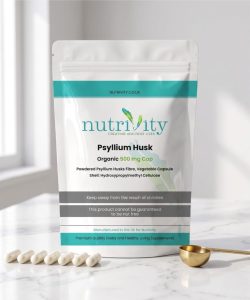 Nutrivity Psyllium Husk 500mg Capsules are manufactured in the UK in a GMP-certified facility. Each capsule contains 500mg of psyllium husk in an HPMC vegetable capsule — vegan friendly and suitable for halal diets. No artificial additives, no gelatin, no unnecessary fillers.
| Pack Size | Price | Cost Per Capsule |
|---|---|---|
| 60 Capsules | £8.99 | 15p per capsule |
| 120 Capsules | £13.99 | 11.6p per capsule |
The 120-capsule pack offers meaningfully better value per capsule and is the recommended option for anyone who plans to take psyllium husk as a regular daily supplement. View the full Nutrivity Psyllium Husk range here.
Frequently Asked Questions About Psyllium Husk Supplements
What is the difference between psyllium husk and ispaghula husk?
They are the same material. Ispaghula husk is the older pharmaceutical term used in UK medical and clinical contexts, including on Fybogel packaging and in NICE guidelines. Psyllium husk is the term used more widely in supplement marketing and internationally. Both refer to the outer seed coat of the Plantago ovata plant.
How quickly does psyllium husk work for constipation?
Most people notice improvement in stool consistency within 12 to 72 hours of their first dose. Frequency typically normalises within three to seven days of consistent daily use. For IBS symptom reduction, meaningful improvements are seen at 2 to 4 weeks. For cholesterol effects, clinical studies measure outcomes at 4 to 12 weeks of consistent use.
Can I take psyllium husk if I have IBS?
Yes. Psyllium husk is specifically recommended in NICE guidelines for IBS management. It is one of the best-tolerated fibre supplements for people with IBS because it resists bacterial fermentation in the colon, producing significantly less gas than fermentable fibres such as inulin. Start at a lower dose and increase gradually to minimise any initial adjustment symptoms.
Is psyllium husk safe to take every day?
Yes. Psyllium husk has been studied in clinical trials lasting up to 12 months with no evidence of adverse effects from long-term daily use. It does not cause dependency or reduce the bowel’s natural function over time. For people using psyllium to manage cholesterol or blood sugar, daily long-term use is the intended and evidence-supported approach.
Can psyllium husk be taken with medication?
Psyllium can reduce the absorption of certain medications if taken at the same time, including some diabetes medications, cholesterol medications, and thyroid medications. It is recommended to leave a gap of at least one to two hours between taking psyllium and any prescription medication. Consult your GP or pharmacist before starting psyllium supplementation if you take regular prescribed medication.
Does Nutrivity psyllium husk contain gelatine?
No. Nutrivity Psyllium Husk 500mg Capsules use HPMC vegetable capsules — not gelatine. HPMC is derived from plant cellulose and is suitable for vegans, vegetarians, and people following halal diets.
What is the difference between psyllium husk and Metamucil?
Metamucil is a branded product whose active ingredient is psyllium husk. The two share the same active compound, but Metamucil’s powder formulations contain additional ingredients including sweeteners, artificial colours, and flavourings that are not present in pure psyllium husk supplements. The clinical benefit comes from the psyllium, not the additives.
Can psyllium husk help with cholesterol?
Research consistently shows that regular psyllium supplementation can reduce LDL cholesterol. A meta-analysis of 21 randomised controlled trials found average reductions of approximately 5 to 7 percent in LDL cholesterol with consistent psyllium use. The mechanism involves psyllium binding bile acids in the intestine, prompting the liver to draw on circulating LDL cholesterol to produce replacement bile acids.