




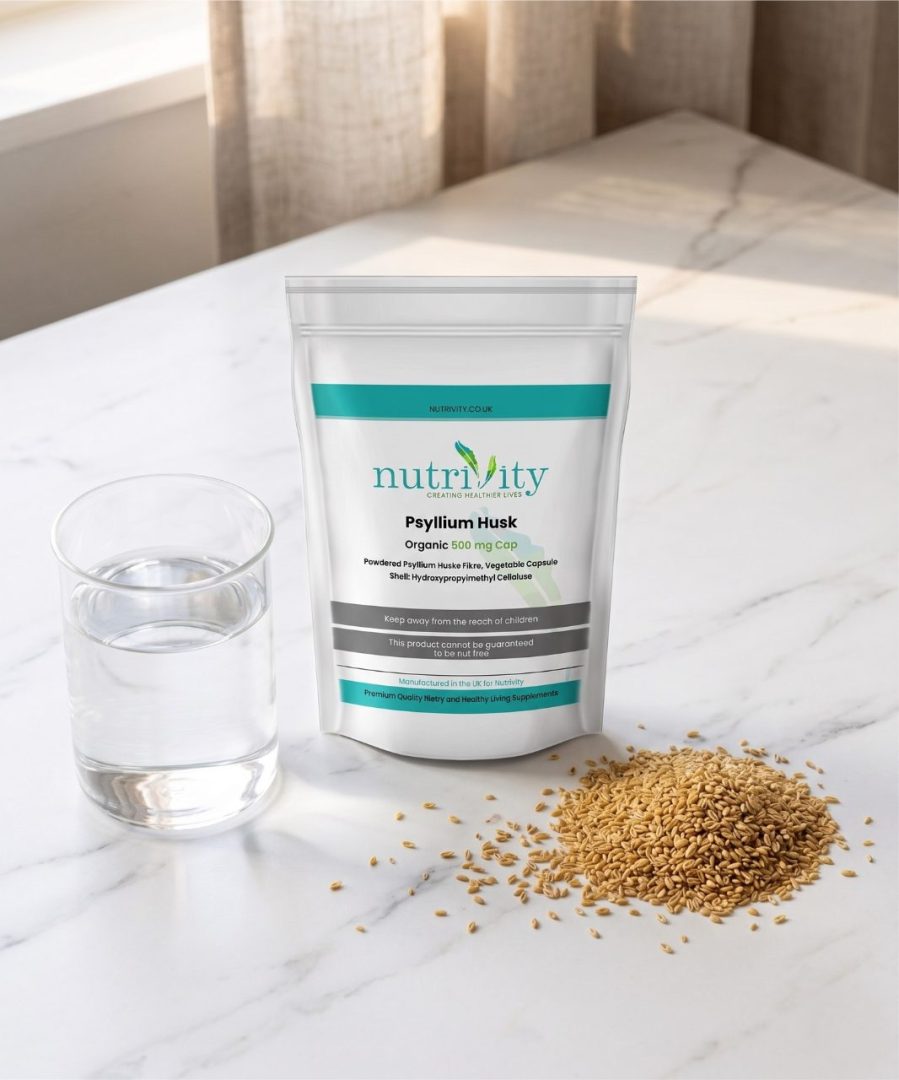
Psyllium Husk Dosage: How Much Should You Take?
-
By Chris Jones
Written by Chris Jones | Last Updated June 2026 | Social Media Manager at Nutrivity (7+ years in the UK supplement industry)
Psyllium Husk Dosage: How Much Should You Take?
One of the most common questions about psyllium husk is how much to take. The answer is not a single number — it depends on what you are taking psyllium for, what form you are taking it in, and where you are starting from in terms of current fibre intake. Getting the dose right matters, because taking too little produces minimal benefit, and starting too high increases the likelihood of digestive adjustment symptoms that cause people to stop unnecessarily.
This guide covers the clinically studied dose ranges for each use case, how to translate those into a practical daily routine, the importance of water volume, how to introduce psyllium gradually, and timing relative to meals.
What Do Clinical Studies Use?
The clinical evidence base for psyllium husk has been built using doses of approximately 5 to 10 grams of psyllium per day, typically divided into one to three servings. This range represents the dose associated with statistically significant outcomes across the key areas of research — bowel regularity, IBS symptom reduction, LDL cholesterol reduction, and blood sugar moderation.
The FDA’s qualified health claim for psyllium and coronary heart disease risk specifically references 7 grams or more of soluble fibre per day from psyllium husk as the threshold for this claim. Cholesterol studies have used doses within the 5 to 10 gram range consistently. IBS research, including the landmark BMJ trial, used doses equivalent to 10 grams per day.
It is important to understand that these are total daily psyllium husk amounts — not single servings. Most protocols divide the daily dose into two or three servings, taken with meals, rather than one large dose at a single sitting.
Dosage by Use Case
General bowel regularity and digestive health — The lower end of the studied range (5 to 6 grams per day) is typically sufficient for general stool consistency improvement and bowel regularity support. This is an accessible starting target for most healthy adults.
IBS symptom management — The BMJ IBS trial used a dose equivalent to approximately 10 grams per day. People using psyllium specifically for IBS management may benefit from working toward the higher end of the clinical dose range, increasing gradually from a lower starting dose over two to three weeks.
Cholesterol management — Studies on cholesterol reduction have typically used 5 to 10 grams per day, with the most consistent results seen at the higher end. The FDA health claim threshold of 7 grams provides a practical target. For this application, the dose should be divided across meals to maximise the bile acid binding that occurs in the small intestine after eating.
Blood sugar moderation — Effects on post-meal blood glucose are most pronounced when psyllium is taken immediately before or with meals. Doses of 5 grams per meal have been studied, with effects observed within a single meal when timing is correct.
Appetite and satiety — For appetite management effects, timing before meals is key. Taking psyllium 30 minutes before eating has been used in satiety research. Doses of 5 grams before meals are commonly studied.
How Many Capsules Is That?
Always follow the dosage instructions on the specific product you are taking. Different products have different concentrations per capsule and different serving recommendations based on their specific formulation and regulatory guidelines. The label instructions for your product are the correct reference point — not a generic number from an article.
For general guidance on how dose ranges relate to typical capsule counts: a product containing 500mg of psyllium husk per capsule requires multiple capsules per day to approach the clinical dose ranges described above. Always check and follow your product’s label, and consult a GP or pharmacist if you have any questions about appropriate dosing for your specific health circumstances.
OUR TOP RECOMMENDED
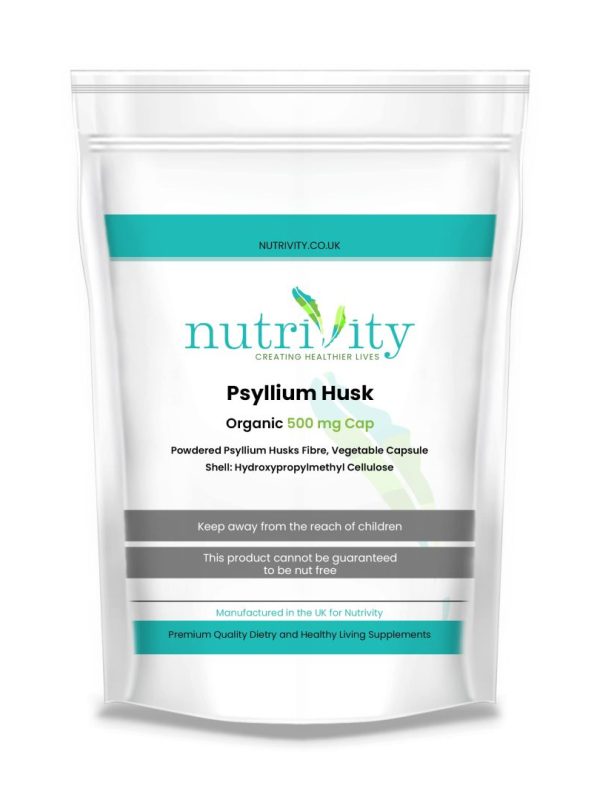
Psyllium Husk 500mg Capsules — Natural Dietary Fibre Supplement
Price range: £8.99 through £13.99
How to Start Safely: The Gradual Introduction Protocol
Starting psyllium husk at full dose immediately is the most common mistake people make — and it is the most common reason people stop. Sudden introduction of a significant amount of fibre to a digestive system that has not been used to it produces temporary bloating, wind, and changes in bowel frequency that can be uncomfortable and alarming.
These symptoms are normal and transient. They are not a sign that psyllium is harmful or that it is not working. They reflect the digestive system adjusting to a change in fibre load. The adjustment typically resolves within one to two weeks — but if you stop before then, you miss the benefit.
The recommended approach is to start at the lowest appropriate dose and increase gradually over one to two weeks. This means beginning at a portion of your target dose and stepping it up incrementally — every three to five days — until you reach your target intake. This gradual ramp-up allows the gut microbiome and bowel motility to adapt, significantly reducing the likelihood and severity of initial adjustment symptoms.
 When Is the Best Time to Take Psyllium Husk?
The optimal timing depends on your primary reason for taking psyllium:
For cholesterol management — Take psyllium with meals, particularly with meals containing dietary fat. The bile acids that psyllium binds are secreted into the small intestine in response to fat in a meal — taking psyllium with a fatty meal maximises its opportunity to intercept and bind bile acids before they can be reabsorbed. Dividing your daily dose across two or three meals is preferable to taking the full amount at once.
For blood sugar moderation — Take psyllium immediately before or at the start of carbohydrate-containing meals. The gel needs to be forming in the small intestine at the time glucose from digested carbohydrates is being absorbed. This requires taking psyllium with adequate water 10 to 30 minutes before eating or with your first bites of a meal.
For bowel regularity and constipation — Timing is less critical for this application. Taking psyllium with a meal at any point in the day works well. Consistency in timing helps establish a routine.
For IBS — Taking psyllium with meals — particularly at consistent times each day — supports regular bowel patterns, which is important for managing IBS. Many people find morning and evening servings work well as anchor points in a daily routine.
What to avoid — Do not take psyllium immediately before bed without drinking a full glass of water. Lying down shortly after taking psyllium without adequate hydration increases the theoretical risk of the gel becoming compacted in the oesophagus. Take your last dose of the day at least 30 to 60 minutes before sleep.
Water: The Non-Negotiable
Every dose of psyllium husk must be taken with a full glass of water — a minimum of 200ml, ideally 250ml. This is not a recommendation; it is a requirement for both safety and efficacy. Without adequate water, psyllium cannot form the gel that produces its effects. Worse, insufficient water can allow the dry husk to become compacted in the oesophagus or intestine.
Beyond the water taken directly with each psyllium dose, maintaining general daily hydration is important. Psyllium draws water into the stool mass in the intestine, which is how it softens and bulks the stool. If total daily fluid intake is low, this draws on hydration reserves rather than consumed fluids — potentially worsening dehydration. Aim for at least 1.5 to 2 litres of water or fluid per day when supplementing with psyllium.
What If You Miss a Dose?
If you miss a dose of psyllium, simply continue with your next scheduled dose. Do not take a double dose to compensate. The effects of psyllium — particularly for cholesterol and blood sugar — are cumulative over time and do not require perfect adherence. Missing one dose does not significantly alter outcomes. Missing multiple days will diminish the consistency of bowel function support and set back the progress toward cholesterol or blood sugar goals.
Tracking Your Psyllium Routine
For people using psyllium to manage cholesterol or blood sugar, establishing a consistent daily routine is the most important determinant of whether the clinical benefits seen in research translate to real outcomes. Keeping a simple log — the time of each dose, the amount of water consumed with it, and any symptoms — particularly in the first four weeks, provides useful feedback on whether the routine is working and highlights any deviations that might explain a lack of expected improvement. At eight weeks, a repeat blood test for cholesterol or a glucose measurement provides the objective benchmark needed to assess whether the intervention is producing its intended effect at the dose being used.
Nutrivity Psyllium Husk 500mg Capsules
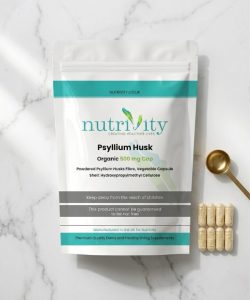 Nutrivity Psyllium Husk 500mg Capsules are manufactured in the UK under GMP-certified conditions in HPMC vegetable capsules — vegan friendly and suitable for halal diets. Available in 60 capsules (£8.99) and 120 capsules (£13.99).
Always follow the dosage instructions on the product label. View the product here.
For side effects and safety: Psyllium Husk Side Effects: What to Know Before Taking It
Full guide: Psyllium Husk Supplements: The Complete Guide
For IBS dosing context: Psyllium Husk for IBS: What the Evidence Says
Frequently Asked Questions Psyllium Husk Dosage
How much psyllium husk should I take per day?
Clinical trials investigating psyllium’s effects on cholesterol, blood sugar, and bowel function typically use 5 to 10 grams of psyllium husk per day. Always follow the dosage instructions on the specific product you are taking, as recommended servings vary by formulation. Your GP or pharmacist can advise on appropriate dosing for your specific circumstances.
How much water should I take with psyllium husk?
Take each dose with a minimum of 200ml — one full glass — of water. Staying well hydrated throughout the day is also important; aim for at least 1.5 to 2 litres of fluid daily when supplementing with psyllium. Without sufficient water, psyllium cannot form the gel it needs to produce its effects, and dry husk can become compacted in the digestive tract.
Should I take psyllium husk before or after meals?
For cholesterol benefits, take psyllium with meals. For blood sugar moderation, take it immediately before or at the start of carbohydrate-containing meals. For general bowel regularity, timing is flexible — with a meal at any point in the day works well. Avoid taking psyllium immediately before bed without a full glass of water.
Can I take psyllium husk twice a day?
Yes. Dividing your daily dose across two or three meals is preferable to taking the full daily amount at once. This is particularly important for cholesterol and blood sugar benefits, where psyllium needs to be present in the small intestine during digestion of each meal. It also reduces the likelihood of digestive adjustment symptoms compared to a single large dose.
How long before I see results from psyllium husk?
For bowel regularity, most people notice improvement within 12 to 72 hours. For IBS symptom reduction, meaningful improvements are typically seen at 2 to 4 weeks. For cholesterol effects, clinical studies measure outcomes at 4 to 12 weeks of consistent use. Consistent daily supplementation produces better outcomes than sporadic use.
What happens if I take too much psyllium husk?
Taking more than the recommended dose — particularly without adequate water — can cause excessive bloating, wind, and in severe cases, intestinal blockage. Stick to the dosage instructions on your product label. More is not better with psyllium. The clinical benefits plateau at the evidence-supported dose range and do not increase proportionally with higher doses.
Can I take psyllium husk at the same time as my medication?
No — psyllium can reduce the absorption of some medications if taken simultaneously. Leave at least one to two hours between taking psyllium and any prescription medication. This applies particularly to diabetes medications, cholesterol medications, and thyroid medications. Consult your GP or pharmacist for personalised advice if you take regular medication.
Do I need to take psyllium every day for it to work?
For bowel regularity, psyllium works on a dose-by-dose basis — each dose provides fibre bulk and moisture retention for that day’s stool. For cholesterol and blood sugar benefits, consistent daily use is required as these effects are cumulative and sustained through ongoing bile acid binding and glucose moderation with each meal.