




Psyllium Husk Side Effects: What to Know Before Taking It
-
By Chris Jones
Written by Chris Jones | Last Updated June 2026 | Social Media Manager at Nutrivity (7+ years in the UK supplement industry)
Psyllium Husk Side Effects: What to Know Before Taking It
Psyllium husk has one of the best safety profiles of any commonly used dietary supplement, and the vast majority of people who take it regularly experience no significant adverse effects. That said, no supplement is universally without risk, and psyllium does have a small but important set of side effects, contraindications, and drug interactions that are worth knowing before you start.
This article covers every relevant safety consideration for psyllium husk — from common, temporary digestive side effects to the rare but serious risks, the medication interactions that matter most, and the groups of people who should take extra caution or avoid it entirely.
Common Side Effects: Digestive Adjustment
The most frequently reported side effects of psyllium husk are digestive in nature and are largely a normal response to increasing fibre intake. They are not a sign that something is wrong — they are a sign that the digestive system is adjusting to a new fibre load.
Bloating — The most common complaint in the first one to two weeks. As psyllium adds bulk to intestinal contents and alters the environment of the large intestine, temporary gas and distension can occur. This is significantly less pronounced with psyllium than with fermentable fibres (like inulin or FOS) because psyllium resists bacterial fermentation. Most people find bloating resolves within 10 to 14 days.
Wind and flatulence — Related to the same adjustment mechanism as bloating. Starting at a lower dose and increasing gradually over two weeks reliably reduces the severity of wind during the adjustment period.
Changes in stool frequency — Some people experience an initial increase in stool frequency as psyllium increases bowel transit. This typically normalises within the first week as the digestive system calibrates to the new fibre input. Conversely, those starting at too high a dose without adequate water may experience temporary slowing as the gel mass is denser than the bowel is accustomed to.
Abdominal cramps — Mild cramping can occur during the adjustment period, particularly if psyllium is introduced at a high starting dose. Starting gradually significantly reduces this risk.
The practical solution to all of these common side effects is the same: start at a lower dose, increase gradually over one to two weeks, and ensure adequate water intake with every dose. Most people who follow this approach experience minimal adjustment symptoms.
The Most Serious Risk: Choking and Intestinal Blockage
The most clinically significant safety concern associated with psyllium husk is the risk of oesophageal or intestinal obstruction when taken with insufficient water. This is not a theoretical risk — cases have been documented, particularly in older adults and people with pre-existing swallowing difficulties.
When psyllium husk is swallowed without adequate water, it absorbs whatever liquid is available — including the mucous lining of the oesophagus — and can form a thick, sticky mass that adheres to the oesophageal wall. This can cause choking, difficulty breathing, and in severe cases requires medical intervention to clear. The same risk applies in the intestine if dehydration is severe.
Prevention is straightforward: take every dose of psyllium with a minimum of 200ml (one full glass) of water, drink it immediately without delay, and stay well hydrated throughout the day. Do not take psyllium if you have difficulty swallowing without first discussing it with your GP. Do not take psyllium immediately before lying down.
Allergic Reactions
Allergic reactions to psyllium husk are rare in the general population but are more common in people with occupational psyllium exposure — particularly healthcare workers, pharmacists, and dietary supplement manufacturing staff who handle psyllium powder regularly and may develop sensitisation through inhalation.
Symptoms of psyllium allergy range from mild (skin irritation, rhinitis, watery eyes) to severe (anaphylaxis in rare cases). If you have a known allergy to psyllium or have experienced a reaction to Fybogel or similar products, do not take psyllium supplements. If you develop new symptoms of allergic reaction — urticaria, facial swelling, difficulty breathing — stop the supplement immediately and seek medical attention.
Cross-reactivity with plantain (Plantago lanceolata) has been documented — people with existing plantain allergy should exercise caution.
OUR TOP RECOMMENDED
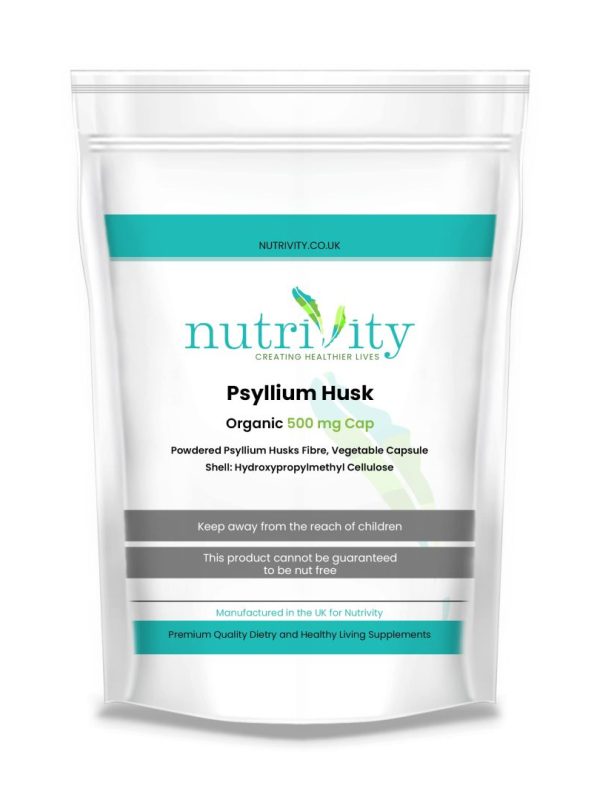
Psyllium Husk 500mg Capsules — Natural Dietary Fibre Supplement
Price range: £8.99 through £13.99
Psyllium Husk and Medication Interactions
This is the most important safety consideration for anyone taking prescription medication. Psyllium’s gel-forming action in the intestine can physically impair the absorption of some oral medications by coating the intestinal wall and slowing the passage of drug compounds from the gut into the bloodstream. This does not mean psyllium is incompatible with medication — it means timing is critical.
 The key categories of medication to be aware of:
Diabetes medications — Psyllium slows glucose absorption and can potentiate the effects of glucose-lowering medications, including insulin. Taking psyllium consistently while on diabetes medication may require monitoring and possible adjustment of medication doses by your prescribing doctor. Never adjust diabetes medication doses without medical supervision.
Cholesterol medications (statins, bile acid sequestrants) — Psyllium and bile acid sequestrants (such as cholestyramine or colestipol) work through similar mechanisms — both bind bile acids in the intestine. Taking them together may have additive effects, but it can also result in the sequestrant being bound to psyllium’s gel and excreted before being absorbed. Separate these medications from psyllium by at least two hours. Statins are generally not affected significantly by psyllium, but a safe interval is still recommended.
Thyroid medication (levothyroxine) — Psyllium can reduce the absorption of levothyroxine. This is significant because thyroid hormone replacement requires precise dosing. If you take levothyroxine, take it at least two hours before or after any psyllium dose and inform your GP that you are taking psyllium.
Warfarin and anticoagulants — Psyllium may modestly affect the absorption of warfarin. If you take warfarin or another anticoagulant, inform your prescribing doctor before starting psyllium and ensure your INR is monitored during the initial period.
Other medications — As a general rule, leave at least one to two hours between taking psyllium and any oral medication. If you take multiple prescription medications, consult your GP or pharmacist before starting psyllium supplementation.
Who Should Not Take Psyllium Husk
Certain people should avoid psyllium husk or take it only under medical supervision:
People with bowel obstruction or narrowing — Psyllium adds bulk to intestinal contents. In the presence of a bowel obstruction or stricture, this can worsen the obstruction. Do not take psyllium if you have been diagnosed with bowel obstruction, stricture, or any condition that narrows the intestinal passage.
People with Crohn’s disease or ulcerative colitis — Active inflammatory bowel disease can involve narrowing or stricture of the intestine. Psyllium should only be used under the guidance of a gastroenterologist in people with IBD.
People with difficulty swallowing — As discussed under choking risk, psyllium is contraindicated in people with oesophageal disorders or dysphagia unless cleared by a GP.
People with phenylketonuria (PKU) — Some psyllium products contain phenylalanine as part of their sweetener content. Pure capsule formulations without artificial sweeteners do not carry this risk, but branded powder products with aspartame-based sweeteners should be checked carefully.
Managing the Adjustment Period: Practical Steps
The first two weeks of psyllium supplementation are the period most likely to produce side effects, and the period most likely to cause people to stop prematurely. Understanding exactly what is happening — and having a clear strategy for managing it — significantly improves the likelihood of getting through the adjustment period to the longer-term benefits.
Keep a simple diary — Noting your starting dose, any symptoms experienced, and how they change day to day gives you objective information rather than subjective impressions. Most people who document their adjustment period find that symptoms peak within days three to five and then begin declining noticeably. Seeing this pattern in writing makes it easier to continue.
Prioritise water above everything else — Most adjustment side effects are worsened by dehydration. If you experience unusual discomfort, the first question to ask is whether your water intake has been adequate. Increasing fluid intake before increasing psyllium dose is always the right sequence.
Do not increase dose during symptomatic periods — If you are experiencing bloating or discomfort, maintain your current dose rather than increasing it until symptoms settle. Once comfortable at a given dose level, step up gradually.
When to stop — Discontinue psyllium and consult a GP if you experience symptoms of oesophageal obstruction such as difficulty swallowing, chest pain, or regurgitation; symptoms of intestinal blockage such as severe abdominal pain, inability to pass stool or wind, or vomiting; or any symptoms of severe allergic reaction.
Is Psyllium Husk Safe Long Term?
Yes — for healthy adults without the contraindications listed above, psyllium husk has a well-established long-term safety profile. It has been studied in trials lasting 12 months with no evidence of adverse effects from prolonged daily use, and it does not cause dependency or reduce the bowel’s natural function over time. For more on long-term use: Can You Take Psyllium Husk Every Day? Long-Term Use Guide
Nutrivity Psyllium Husk 500mg Capsules
 Nutrivity Psyllium Husk 500mg Capsules are manufactured in the UK under GMP-certified conditions. Each capsule contains 500mg of psyllium husk in an HPMC vegetable capsule — vegan friendly and suitable for halal diets. No artificial sweeteners, no artificial additives, no gelatine.
Frequently Asked Questions on Psyllium Husk Side Effects
What are the most common side effects of psyllium husk?
The most common side effects are temporary digestive adjustment symptoms — bloating, wind, and mild changes in stool frequency. These occur in the first one to two weeks and resolve as the digestive system adapts. Starting at a lower dose and increasing gradually significantly reduces their severity. Psyllium produces less gas than fermentable fibres such as inulin.
Can psyllium husk cause a blockage?
Yes — if taken with insufficient water. Psyllium taken without adequate liquid can form a thick, compacted mass in the oesophagus or intestine. This is the most serious safety concern with psyllium and is entirely preventable by taking every dose with a full glass of water — minimum 200ml — and maintaining good daily hydration. Never take psyllium immediately before lying down.
Can psyllium husk interact with my medication?
Yes. Psyllium can reduce the absorption of certain oral medications if taken simultaneously. Medications particularly affected include levothyroxine, some diabetes medications, and some cholesterol medications. Always leave at least one to two hours between taking psyllium and prescription medication. Consult your GP or pharmacist before starting psyllium if you take regular medication.
Is psyllium husk safe to take if I have IBS?
Yes — psyllium is specifically recommended in NICE guidelines for IBS. It is significantly better tolerated in IBS than insoluble fibres because it resists bacterial fermentation and produces minimal gas. Start at a lower dose and increase gradually to manage the initial adjustment period.
Can psyllium husk cause an allergic reaction?
Allergic reactions to psyllium are rare but possible. They are more common in people with occupational exposure to psyllium dust. Symptoms can range from mild rhinitis or skin irritation to, in rare cases, anaphylaxis. If you have a known psyllium or plantain allergy, do not take psyllium supplements. Seek immediate medical attention if you develop breathing difficulties or significant swelling after taking psyllium.
Who should not take psyllium husk?
People who should avoid psyllium husk include those with diagnosed bowel obstruction or stricture, active inflammatory bowel disease requiring specialist management, difficulty swallowing, and known psyllium or plantain allergy. If in doubt, consult your GP before starting any new supplement.
Can I take psyllium husk if I am pregnant?
Psyllium husk is generally considered a safe option for constipation during pregnancy as it works mechanically without stimulant compounds. However, all supplement use during pregnancy should be discussed with your GP or midwife before starting. Ensure particularly good hydration during pregnancy when taking psyllium.
Does psyllium husk affect blood sugar?
Yes — psyllium slows glucose absorption and can moderately reduce post-meal blood sugar levels. For people with type 2 diabetes or prediabetes taking glucose-lowering medication, this effect may potentiate the medication and could require monitoring and dose adjustment by a prescribing doctor. Never adjust diabetes medication without medical supervision.