




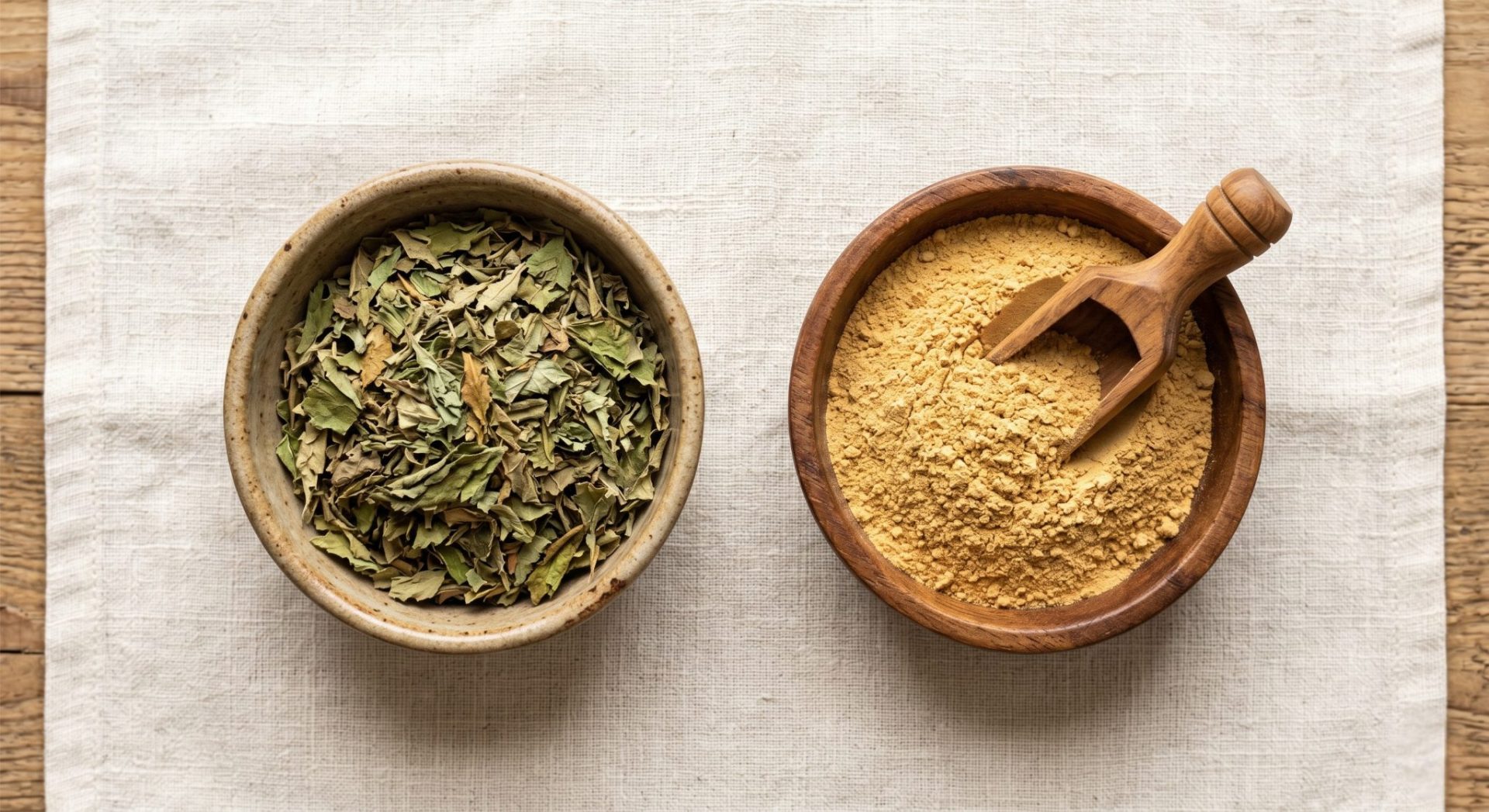
Damiana vs Maca for Energy and Vitality: Which Herbal Supplement Wins?
-
By Chris Jones
Posted May 2026 | Written by Chris Jones, Social Media Manager at Nutrivity with 7+ years in the supplement industry.
Quick Answer
Damiana and maca are both traditional herbal supplements used for energy and vitality, but they differ in origin, mechanism, and strengths. Damiana (Turnera diffusa) is a Central American shrub traditionally used as a nerve tonic and aphrodisiac, valued for its calming-yet-energising effects on mood and libido. Maca (Lepidium meyenii) is a Peruvian root classified as an adaptogen, primarily used for physical stamina, endurance, and general vitality. If your low energy is linked to mood, stress, or reduced libido, damiana may be the better fit. If you need physical stamina and broad-spectrum vitality support, maca is the more researched option.
Damiana vs Maca — Two Distinct Approaches to Vitality
“Energy and vitality” is a broad category, and the supplements marketed under this umbrella work in very different ways. Damiana and maca are two of the most popular herbal options in this space, but lumping them together as equivalent does a disservice to both. They come from different continents, different botanical families, have different active compounds, and suit different types of low energy.
Understanding what each one actually does — rather than relying on the vague “energy booster” label that covers half the supplements aisle — is essential for choosing the right one. Low energy can stem from physical exhaustion, mental fatigue, stress, poor sleep, hormonal changes, or mood-related causes. The right supplement depends on which of these is driving your symptoms.
How Damiana Works
Damiana (Turnera diffusa) is a small, aromatic shrub native to Central America, Mexico, and the Caribbean. It has been used in traditional Mayan and Aztec herbal medicine for centuries, primarily as a nerve tonic, aphrodisiac, and mood-supporting herb. The leaves are the part used medicinally, and they contain a complex mix of bioactive compounds including flavonoids (such as apigenin, pinocembrin, and acacetin), terpenoids, tannins, caffeine in small amounts, and a compound called damianin.
Damiana’s mechanism of action is not as precisely characterised as pharmaceutical compounds, but research has identified several pathways through which it may exert its effects:
Nervous system support — Damiana has traditionally been classified as a nervine — an herb that supports the nervous system. Some of its flavonoid compounds have shown affinity for GABA receptors in preclinical studies, which could contribute to its calming, anxiety-reducing properties. This is notable because many people experience low energy as a secondary consequence of chronic anxiety and mental tension — the nervous system is constantly in “fight or flight” mode, which is exhausting. By supporting a calmer nervous state, damiana may help the body redirect energy more productively.
Mood enhancement — Several of damiana’s active compounds have been investigated for their effects on mood. Some preclinical research suggests interactions with serotonergic and dopaminergic pathways, though human clinical data is limited. Traditionally, damiana has been used as a mild euphoriant — not in a dramatic sense, but as a gentle mood-lifter that can make low-energy states feel less oppressive.
Aphrodisiac properties — Damiana is perhaps best known for its traditional use as a libido enhancer. While the human clinical evidence is still developing, animal studies have shown increased sexual behaviour in both male and female subjects administered damiana extract. The proposed mechanisms include arginase inhibition (which could support nitric oxide production and blood flow) and modulation of the nervous system. For many people, reduced libido is both a symptom and a contributor to feelings of low vitality — addressing it can have a positive knock-on effect on overall energy and quality of life.
Antioxidant activity — Damiana’s flavonoid content gives it significant antioxidant capacity. While this does not directly translate to “more energy” in the way people typically understand it, antioxidant support helps protect cells from oxidative stress, which contributes to fatigue and reduced cellular function over time.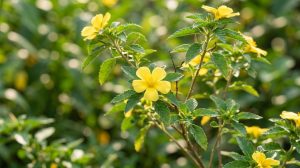 Damiana Dosage and Forms
Nutrivity’s Damiana Extract 1000mg provides a high-strength damiana extract in vegan friendly capsules — manufactured in the UK to GMP standards, and both vegan friendly and halal friendly. The 1000mg strength delivers a meaningful dose in a single capsule, suitable for daily use as part of a broader wellness routine.
Damiana can also be consumed as a tea (made from the dried leaves), as a tincture, or in combination herbal formulas. The capsule form is the most convenient for standardised dosing and avoids the bitter, herbal taste of the tea.
How Maca Works
Maca (Lepidium meyenii) is a cruciferous root vegetable that grows at high altitudes in the Peruvian Andes — typically between 4,000 and 4,500 metres above sea level. It has been cultivated for at least 3,000 years, used both as a food staple and a traditional medicine for stamina, fertility, and resilience.
Maca is classified as an adaptogen — a category of herbs and foods believed to help the body adapt to physical, chemical, and biological stressors. Its mechanism of action is broader and less targeted than damiana’s, reflecting its role as a nutritive tonic rather than a specific herbal remedy:
Nutritional density — Maca root is unusually nutrient-rich for a single plant food. It contains significant amounts of essential amino acids, fatty acids (including linolenic, palmitic, and oleic acids), B vitamins, vitamin C, iron, calcium, potassium, zinc, and copper. This nutritional profile means maca provides genuine substrate for energy metabolism — it is not just an “energy herb” in the marketing sense but a food with meaningful nutritional contributions.
Adaptogenic modulation — Maca is believed to support the hypothalamic-pituitary-adrenal (HPA) axis — the body’s central stress response system. Chronic stress leads to sustained cortisol elevation, which can cause fatigue, impaired cognitive function, disrupted sleep, and reduced libido. By supporting a more balanced stress response, maca may help reduce the energy-depleting effects of chronic stress.
Physical stamina and endurance — Several clinical trials have reported improvements in exercise performance, endurance, and physical stamina with maca supplementation. A randomised controlled trial involving trained male cyclists found improvements in time-trial performance after 14 days of maca supplementation compared to placebo. These effects may be related to maca’s nutritional content, its effects on cellular energy metabolism, or its adaptogenic properties — likely a combination of all three.
Libido support — Multiple clinical trials have shown that maca may support healthy libido in both men and women. Importantly, these effects appear to occur without measurable changes in circulating sex hormone levels (testosterone, oestrogen, DHEA), suggesting the mechanism is not through direct hormonal modulation but through other pathways — possibly neurological, energetic, or psychologically mediated.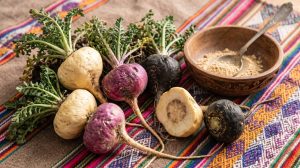 Head-to-Head Comparison
| Feature | Damiana | Maca |
|---|---|---|
| Botanical origin | Turnera diffusa — Central America and Mexico | Lepidium meyenii — Peruvian Andes |
| Plant part used | Leaves | Root (hypocotyl) |
| Classification | Nervine, aphrodisiac | Adaptogen, nutritive tonic |
| Primary strength | Mood support, nervous system calming, libido | Physical stamina, endurance, general vitality |
| Mechanism | Flavonoid-mediated nervous system support, possible GABA/serotonin activity | Adaptogenic HPA axis modulation, nutritional substrate |
| Research maturity | Traditional use well-established; clinical trials limited | Stronger clinical trial base for energy and libido |
| Libido support | Yes — traditional use and preclinical evidence | Yes — clinical trial evidence in men and women |
| Suitable for men and women | Yes | Yes |
| Stimulant effect | Mild — contains trace caffeine | Non-stimulant — no caffeine |
| Vegan friendly options | Yes — Nutrivity Damiana is vegan friendly | Typically yes — maca is a root vegetable |
| Typical daily dose | 500–2000mg extract | 1,500–3,000mg powder or equivalent extract |
Which Type of Low Energy Do You Have?
The right choice between damiana and maca depends largely on the nature of your low energy. These are different problems that benefit from different solutions:
Mental and emotional fatigue — If your energy is low because you feel mentally drained, emotionally flat, anxious, or your libido has declined alongside your energy, damiana’s nervine and mood-supporting properties are more directly relevant. Damiana addresses the nervous system and mood, which can have a cascading positive effect on perceived energy levels.
Physical exhaustion and stamina — If you feel physically depleted, lack the endurance you used to have, recover slowly from exercise, or your energy problem is primarily a body-level issue rather than a mind-level one, maca’s adaptogenic and nutritive properties are better suited. Maca has the stronger clinical evidence for physical performance and stamina.
General low vitality — If your energy is low across the board — both mental and physical — you might benefit from either supplement, and your choice may come down to which secondary benefits appeal more. If mood and libido are priorities, lean toward damiana. If physical endurance and adaptogenic stress resilience are priorities, lean toward maca.
Can You Take Damiana and Maca Together?
There is no established contraindication between damiana and maca, and their different mechanisms of action make them potentially complementary. Damiana addresses the nervous system and mood, while maca provides adaptogenic and nutritive support. Combining both could theoretically cover a broader range of energy-related needs.
That said, it is generally sensible to introduce one supplement at a time and take it consistently for 4-6 weeks before adding the second. This allows you to assess each product’s individual contribution and determine which is providing the most benefit. If damiana alone resolves your symptoms, there may be no need to add maca, and vice versa.
Supporting Energy Through Broader Lifestyle Factors
No supplement — however effective — can compensate for the fundamentals of energy management. Before or alongside taking damiana or maca, ensure the following bases are covered:
Sleep quality — Chronic sleep deprivation is the single most common cause of persistent low energy. No herb can replace adequate sleep. If you are sleeping fewer than 7 hours per night or your sleep quality is poor, addressing this should be the priority.
Vitamin D status — Vitamin D deficiency is widespread in the UK and is associated with fatigue, low mood, and muscle weakness. If you have not had your vitamin D levels checked, consider supplementing — especially during autumn and winter. Nutrivity’s Vitamin D3 4000IU & K2 MK-7 provides high-strength vitamin D3 alongside K2 for optimal bone and calcium metabolism support.
Iron and B vitamins — Deficiencies in iron, B12, and folate are common causes of fatigue, particularly in women of menstruating age and those following restricted diets. A blood test through your GP can identify these easily.
Hydration — Even mild dehydration impairs cognitive function and physical performance. Many people underestimate how much their energy levels are affected by insufficient water intake.
CoQ10 — Coenzyme Q10 plays a central role in cellular energy production within the mitochondria. Levels naturally decline with age, and supplementation may support energy metabolism. Nutrivity’s CoQ10 300mg provides a high-strength dose in vegan friendly capsules.
The Bottom Line
Damiana and maca both support energy and vitality, but through different pathways. Damiana is the better choice for mood-related fatigue, nervous system support, and libido, while maca excels at physical stamina, adaptogenic stress resilience, and broad nutritive support. Nutrivity’s Damiana Extract 1000mg provides a high-strength, vegan friendly, halal friendly option for those whose low energy is tied to mood and nervous system function — manufactured in the UK to GMP standards.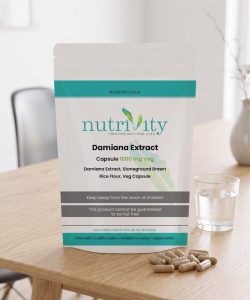 Key Takeaways
Different plants, different strengths — Damiana is a nervine and aphrodisiac from Central America. Maca is an adaptogenic root from Peru. They work through different mechanisms.
Match the supplement to the type of fatigue — Mental and emotional fatigue suits damiana. Physical exhaustion and stamina deficits suit maca.
Both support libido — Damiana through nervous system and mood pathways; maca through adaptogenic and possibly neurological mechanisms — neither through direct hormonal changes.
Fundamentals first — Sleep, hydration, vitamin D, iron, and B vitamins should be addressed before or alongside herbal supplementation.
Give them time — Herbal supplements require consistent use over 4-6 weeks minimum to assess their effects. They are not stimulants.
Frequently Asked Questions
Is damiana a stimulant?
Damiana is not a stimulant in the same way that caffeine or energy drinks are. It contains only trace amounts of caffeine and does not produce the jitteriness, heart rate increase, or crash associated with stimulant products. Its energy-supporting effects work through nervous system calming and mood enhancement rather than sympathetic nervous system activation. It is more accurately described as an energising tonic than a stimulant.
How long does maca take to work for energy?
Some people report noticing improvements in energy and stamina within 1-2 weeks of consistent daily use. Clinical trials typically evaluate maca over periods of 4 to 12 weeks. For best results, take maca consistently for at least 4 weeks before assessing whether it is making a meaningful difference to your energy levels.
Can I take damiana before bed?
Yes. Unlike stimulant supplements, damiana’s calming nervine properties mean it does not typically interfere with sleep. Some people find its mild relaxing effect makes it suitable for evening use. However, individual responses vary, so if you are new to damiana, consider starting with a daytime dose to observe how your body responds before switching to bedtime use.
Is Nutrivity's Damiana Extract suitable for both men and women?
Yes. Damiana has a long history of traditional use by both men and women. Its mood-supporting, nervine, and aphrodisiac properties are not gender-specific. Nutrivity’s Damiana Extract 1000mg is vegan friendly, halal friendly, and manufactured in the UK to GMP standards.
Does maca affect hormones?
Clinical studies have consistently shown that maca supplementation does not significantly alter circulating levels of sex hormones including testosterone, oestrogen, DHEA, or follicle-stimulating hormone. Its effects on energy, libido, and vitality appear to work through non-hormonal mechanisms, which is one of the reasons it is generally considered safe for both men and women without the hormonal concerns associated with some other supplements.
Can damiana interact with medications?
Damiana may interact with certain medications, particularly those that affect blood sugar levels (as some preclinical research suggests hypoglycaemic effects) and those metabolised by liver enzymes. If you are taking any prescription medication — especially diabetes medication, anticoagulants, or psychiatric medications — consult your GP before starting damiana supplementation.