




Psyllium Husk for IBS: What the Evidence Says
-
By Chris Jones
Written by Chris Jones | Last Updated June 2026 | Social Media Manager at Nutrivity (7+ years in the UK supplement industry)
Psyllium Husk for IBS: What the Evidence Says
Irritable bowel syndrome affects an estimated one in five people in the UK. It is one of the most common reasons for GP referral to gastroenterology, and one of the most frustrating conditions to manage because it has no single cause, no definitive cure, and a symptom profile that varies widely between individuals. Among the dietary interventions that have been clinically studied for IBS, psyllium husk has one of the most compelling evidence bases — and it is one of only a small number of supplements that NICE specifically recommends.
This article covers what the research actually says about psyllium husk and IBS, which subtypes it is most relevant to, what NICE guidelines recommend, and how to use it practically. It does not overstate what psyllium can achieve — managing IBS is a process, not a fix — but the evidence is stronger than most people realise.
What Is IBS and Why Is Fibre Relevant?
Irritable bowel syndrome is a functional gastrointestinal disorder characterised by recurrent abdominal pain, bloating, and altered bowel habits. It is classified as functional because structural abnormalities — inflammation, lesions, or disease — are absent on investigation. The underlying mechanisms are thought to involve altered gut motility, visceral hypersensitivity, changes in the gut microbiome, and disrupted communication between the gut and the brain via the gut-brain axis.
IBS is typically categorised into subtypes based on predominant bowel habit:
IBS-C (constipation-predominant) — Characterised by infrequent, hard, or difficult-to-pass stools. Accounts for approximately 25 to 30 percent of IBS cases.
IBS-D (diarrhoea-predominant) — Characterised by frequent, loose, or urgent stools. Also accounts for approximately 25 to 30 percent of cases.
IBS-M (mixed) — Characterised by alternating periods of constipation and diarrhoea. A substantial proportion of IBS patients fall into this category.
IBS-U (unclassified) — Symptoms do not fit clearly into any of the above patterns.
Fibre is relevant to IBS management because stool consistency and transit time are directly influenced by fibre intake and type. The challenge is that not all fibres are appropriate. Insoluble fibre — the type predominant in wheat bran — adds bulk but can irritate a sensitive intestine, worsening pain and bloating. Fermentable fibres such as inulin produce gas that directly exacerbates IBS symptoms in most patients. Soluble, non-fermentable fibre — which is exactly what psyllium husk is — occupies a different category entirely.
What Do NICE Guidelines Say?
NICE Clinical Guideline CG61 (Irritable Bowel Syndrome in Adults) recommends that healthcare professionals advise IBS patients to modify their diet as a first-line management approach before pharmacological options are considered. Within dietary modification, NICE specifically recommends increasing soluble fibre intake and identifies ispaghula husk (the pharmaceutical name for psyllium husk) as an appropriate soluble fibre source.
Crucially, the same guidelines caution against recommending insoluble fibre (bran) to IBS patients, noting that it can worsen symptoms. This reflects the evidence that has consistently shown psyllium to be superior to bran for IBS symptom management, and it is why many GPs in the UK recommend Fybogel — a branded ispaghula/psyllium product — to IBS patients as a starting intervention.
The Key Clinical Evidence
The most frequently cited trial examining psyllium husk specifically for IBS is a 12-week randomised controlled trial published in the British Medical Journal. This study randomised 275 IBS patients into three groups: psyllium (ispaghula) supplementation, wheat bran supplementation, and placebo (rice flour).
After 12 weeks, the psyllium group showed a statistically significant reduction in composite IBS symptom severity scores — a validated clinical measure that captures pain intensity, frequency, and impact on daily life. The wheat bran group showed no significant improvement versus placebo, and in a subset of patients with more severe IBS, bran worsened symptom scores. This is one of the most important findings in the trial: not only was psyllium meaningfully better than placebo, but bran — the most commonly suggested fibre alternative — was functionally useless and potentially harmful in IBS.
A subsequent meta-analysis examining fibre supplementation across multiple IBS trials confirmed these findings, with soluble fibre showing consistent benefit and insoluble fibre showing no benefit or harm. The evidence base strongly and specifically supports psyllium/ispaghula over other fibre types for this population.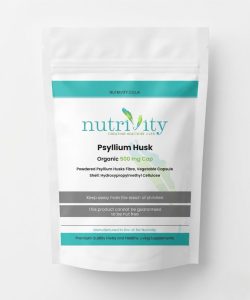 The Three Types of IBS and How Psyllium Addresses Each
One of psyllium husk’s most clinically useful properties for IBS is its bidirectional effect on stool consistency. This makes it relevant across IBS subtypes in a way that most interventions are not.
IBS-C — In constipation-predominant IBS, psyllium adds bulk to stool, retains moisture, and softens consistency. The gel formed by psyllium in the large intestine makes stool easier to pass and supports more regular frequency. The mechanical nature of this action — without stimulating bowel contractions — means it does not cause the cramping or urgency associated with stimulant laxatives, which are generally poorly tolerated in IBS.
IBS-D — In diarrhoea-predominant IBS, the same gel-forming properties absorb excess water from loose stool, firming consistency and slowing intestinal transit. Psyllium acts as a buffer — normalising transit rather than accelerating or decelerating it in an extreme direction. This bidirectionality is rare and clinically valuable.
IBS-M — Mixed IBS is arguably where psyllium is most useful, precisely because the treatment challenge is managing both constipation and loose stool phases without making either worse. A stimulant laxative used during a constipation phase can trigger diarrhoea. Anti-diarrhoeal agents used during a loose stool phase can cause rebound constipation. Psyllium, by normalising consistency mechanically, tends to reduce symptom severity across both phases.
OUR TOP RECOMMENDED
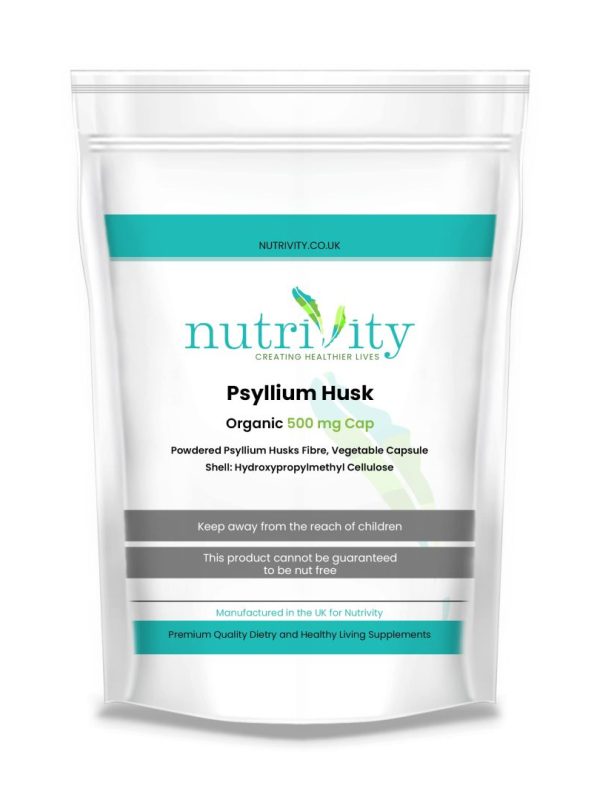
Psyllium Husk 500mg Capsules — Natural Dietary Fibre Supplement
Price range: £8.99 through £13.99
Why Psyllium Is Better Tolerated Than Other Fibres in IBS
The low-fermentation profile of psyllium is the critical factor that separates it from many other soluble fibres in IBS populations. Fermentable fibres — inulin, FOS, guar gum, partially hydrolysed fibres — are broken down by colonic bacteria rapidly, producing short-chain fatty acids and significant volumes of gas. Gas distension of the colon is one of the primary triggers for pain and bloating in IBS patients, who have heightened visceral sensitivity compared to the general population.
Psyllium resists this fermentation. Its arabinoxylans are not readily accessible to colonic bacteria, meaning the gel passes through the large intestine largely intact. This produces minimal gas — a major practical advantage in people whose IBS symptoms are particularly sensitive to bloating and distension. Multiple head-to-head comparisons have confirmed that psyllium produces significantly less gas-related symptoms than fermentable fibre alternatives in IBS patients.
Practical Guidance for IBS Patients
If you have IBS and are considering psyllium husk, the following points are important.
Start low, increase slowly — Beginning at the lowest recommended dose and increasing gradually over two to three weeks is particularly important in IBS. The digestive system in IBS is sensitised, and introducing too much fibre too quickly — even a well-tolerated type like psyllium — can temporarily worsen symptoms. The adjustment period is shorter and less pronounced than with fermentable fibres, but it is still worth managing carefully.
Water is non-negotiable — Always take psyllium with a full glass of water. In IBS patients where motility is already altered, insufficient hydration with psyllium can lead to hard, compact stool that worsens constipation-phase symptoms.
Consistency matters — The BMJ trial ran for 12 weeks for a reason. Benefits in IBS tend to accumulate with consistent daily use. Sporadic supplementation is less effective than a regular daily routine.
Psyllium is not a cure — IBS is a complex functional disorder and psyllium addresses one aspect — stool consistency and intestinal transit — but does not resolve visceral hypersensitivity, gut-brain axis dysfunction, or the psychological component of IBS. It should be seen as one tool within a broader management approach that may include dietary modification (such as the low-FODMAP diet), stress management, and in some cases pharmacological support.
It may not work for everyone — Some IBS patients with primarily pain-predominant or post-infectious IBS may find fibre supplementation less impactful. If symptoms worsen after a genuine two to four week trial at appropriate dose, psyllium may not be the right tool for that individual presentation.
Psyllium Husk and the Gut Microbiome in IBS
Emerging research has examined how psyllium husk affects the gut microbiome in IBS patients. Unlike rapidly fermentable fibres, psyllium does not dramatically shift the microbial population in the colon — which is one reason it does not cause the gas and bloating associated with prebiotic fibres. However, the physical environment created by psyllium in the gut — more consistent stool water content, regulated transit time, and reduced exposure of the colonic wall to hard, slow-moving stool — is thought to be supportive of a healthier microbial habitat over time.
People with IBS who are considering additional gut microbiome support should be aware that combining psyllium with fermentable prebiotics or probiotics is possible, but should introduce any new supplement separately and at a low dose to avoid compounding adjustment symptoms. If you are under the care of a gastroenterologist for IBS, discuss any new supplement additions with them before starting.
Nutrivity Psyllium Husk 500mg Capsules
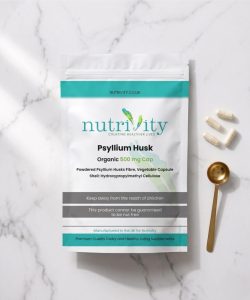 Nutrivity Psyllium Husk 500mg Capsules are manufactured in the UK under GMP-certified conditions in HPMC vegetable capsules — vegan friendly and suitable for halal diets. Available in 60 capsules (£8.99) and 120 capsules (£13.99).
View the Nutrivity Psyllium Husk range here.
For our complete guide to psyllium husk: Psyllium Husk Supplements: The Complete Guide
For bowel regularity: Psyllium Husk for Constipation: Does It Actually Work?
For dosage guidance: Psyllium Husk Dosage: How Much Should You Take?
Frequently Asked Questions Psyllium Husk for IBS
Is psyllium husk recommended for IBS in the UK?
Yes. NICE Clinical Guideline CG61 specifically recommends soluble fibre — including ispaghula husk (psyllium) — as a first-line dietary intervention for IBS in adults. The same guidelines advise against insoluble fibre such as bran, which can worsen IBS symptoms.
Does psyllium husk help IBS-D (diarrhoea-predominant IBS)?
Yes. In IBS-D, psyllium’s gel-forming properties absorb excess water from loose stool, firming consistency and slowing transit. This bidirectional action — softening hard stool in IBS-C and firming loose stool in IBS-D — is one of psyllium’s most clinically useful characteristics for IBS management.
Can psyllium husk cause IBS symptoms to worsen?
Temporary bloating and wind are possible in the first one to two weeks as the digestive system adjusts to increased fibre intake. Starting at a lower dose and increasing gradually typically minimises this. Psyllium produces significantly less gas than fermentable fibres, which is why it is better tolerated in IBS than inulin or FOS. If symptoms persistently worsen beyond the initial adjustment period, consult your GP.
How long does psyllium husk take to work for IBS?
The landmark BMJ trial used a 12-week supplementation period. Many people notice improvements in stool consistency within the first one to two weeks. Meaningful reductions in IBS symptom severity scores in clinical research are typically measured at 4 to 12 weeks. Consistent daily use produces better results than sporadic supplementation.
Why is wheat bran not recommended for IBS?
Wheat bran is predominantly insoluble fibre, which adds physical bulk but also irritates the intestinal wall in people with visceral hypersensitivity — a feature of IBS. The BMJ psyllium IBS trial found that wheat bran was no better than placebo for IBS symptom severity and worsened symptoms in a subset of patients. NICE guidelines reflect this by specifically cautioning against bran for IBS patients.
Can psyllium husk be taken alongside low-FODMAP diet for IBS?
Yes. Psyllium husk is low-FODMAP and compatible with the low-FODMAP dietary protocol. Unlike many high-fibre foods that are restricted on a low-FODMAP diet due to their fermentable carbohydrate content, psyllium resists fermentation and does not trigger the FODMAP-related gas production that exacerbates IBS symptoms.
Does psyllium husk interact with IBS medication?
Psyllium can reduce the absorption of some medications if taken simultaneously. If you are taking prescription medication for IBS or any other condition, leave at least one to two hours between taking psyllium and your medication. Consult your GP or pharmacist for personalised advice.
Is Nutrivity psyllium husk suitable for people with IBS?
Yes. Nutrivity Psyllium Husk 500mg Capsules use pure psyllium husk in HPMC vegetable capsules with no added fillers, sweeteners, or artificial additives. The absence of fermentable additives is important for IBS patients whose symptoms can be triggered by small amounts of FODMAP-containing ingredients in supplement formulations.