



Psyllium Husk vs Metamucil: What’s the Difference?
-
By Chris Jones
Written by Chris Jones | Last Updated May 2026 | Social Media Manager at Nutrivity (7+ years in the UK supplement industry)
Psyllium Husk vs Metamucil: What’s the Difference?
If you have been researching psyllium husk supplements in the UK, you have almost certainly come across Metamucil. It is one of the most recognised fibre supplement brands globally, and people frequently search for comparisons between Metamucil and plain psyllium husk products. The answer to this comparison is more interesting than it might appear — because Metamucil and psyllium husk are not two different things. Metamucil is a branded product whose active ingredient is psyllium husk. What you are really comparing is a pure psyllium husk product against a formulated branded version of the same ingredient.
This article breaks down exactly what Metamucil is, what is in it beyond the psyllium, how it compares to pure psyllium husk capsules on cost and ingredient quality, and what UK buyers should know about availability.
What Is Metamucil?
Metamucil is a fibre supplement brand owned by Procter and Gamble. It was first introduced in the United States in 1934 and remains one of the best-selling fibre supplement brands in the world. In the UK, Metamucil is less dominant than in North America — its market position here is smaller, and it is not as widely stocked in mainstream retail. The Fybogel brand (manufactured by Reckitt) serves a similar function in the UK market.
The active ingredient in Metamucil is psyllium husk. Specifically, most Metamucil formulations use psyllium husk powder, and the product is sold primarily in powder form to be mixed with water. Metamucil products are available in several flavours and formulations, including sugar-free versions.
This is the critical point for the comparison: Metamucil and psyllium husk supplements share the same active ingredient. The differences are entirely in the formulation, additives, and delivery format.
What Is in Metamucil Beyond the Psyllium?
Metamucil’s powder formulations — particularly the flavoured versions — contain several additional ingredients beyond psyllium husk. These vary by specific product, but commonly include:
Sweeteners — Sugar-containing versions use sucrose (table sugar) as a primary sweetener. The standard orange-flavoured Metamucil powder contains sucrose as a prominent ingredient, adding to caloric load and making the product unsuitable for people managing blood sugar. Sugar-free versions use artificial sweeteners such as aspartame or acesulfame potassium — appropriate for people avoiding sugar but undesirable for those seeking clean-label supplements.
Artificial colours — Flavoured Metamucil products use artificial colouring agents to produce their characteristic orange colour. These add nothing to efficacy and are among the most commonly avoided additives by health-conscious consumers.
Artificial flavours — The distinctive flavour of Metamucil is produced by artificial flavouring compounds. These do not affect the psyllium’s function but represent an addition that many buyers prefer to avoid.
Citric acid — Added for flavour balance in most formulations. Generally considered safe but an unnecessary addition in a purely functional fibre supplement.
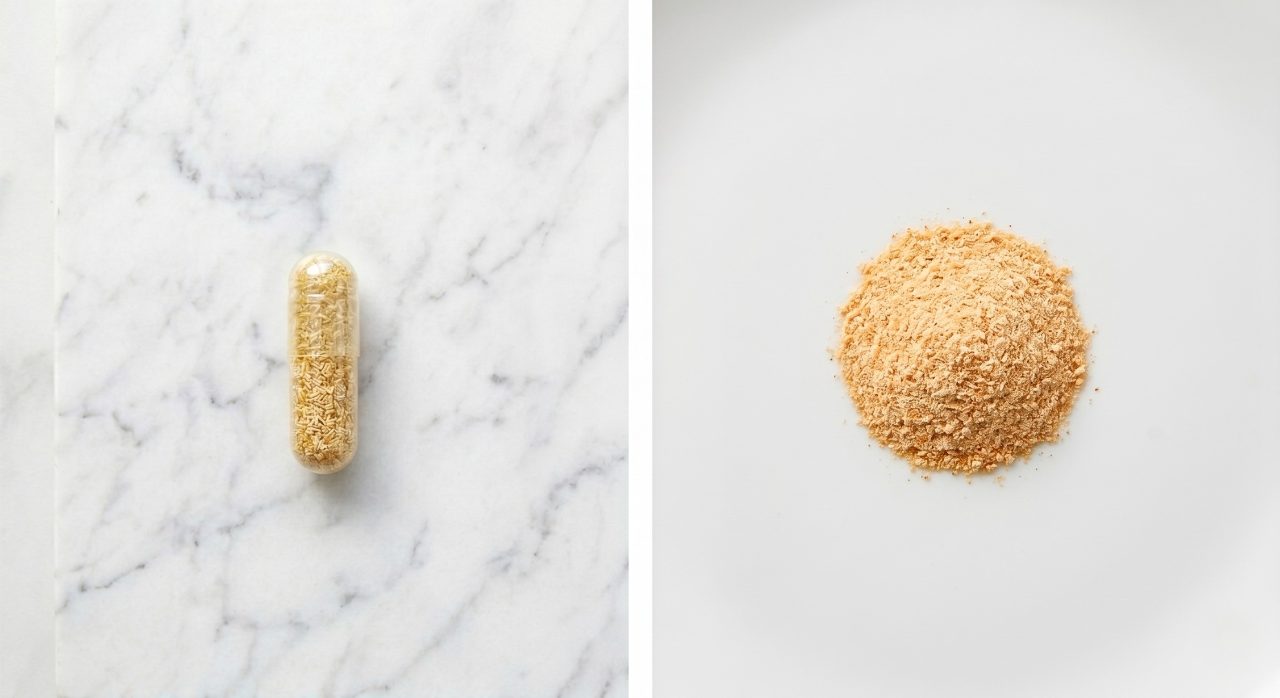
Pure psyllium husk supplements — particularly in capsule form — contain none of these additions. The capsule contains psyllium husk and the vegetable capsule shell only. For buyers who want the clinical benefit of psyllium without the additives, capsule-form supplements are the cleaner option.
 Capsule vs Powder: A Practical Comparison
Beyond the additive question, the format difference between Metamucil (powder) and psyllium capsules is worth addressing directly. Both formats deliver psyllium husk, but the user experience and practicalities differ significantly.
Powder — Requires mixing with water, typically 250ml or more. When mixed, psyllium powder forms a thick, mucilaginous texture that some people find unpleasant. The gel forms within minutes of mixing, meaning you need to drink it relatively quickly before it thickens further. Flavoured powders improve palatability but add the ingredient concerns noted above.
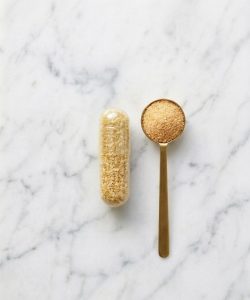
Capsules — Swallowed with water, no mixing required. No taste or texture. Gel forms in the stomach rather than in the glass. More convenient for daily use, easier to carry when travelling, and less subject to palatability issues. Dose is consistent and pre-measured. The main limitation is that achieving higher clinical doses (5 to 10 grams per day) requires taking multiple capsules — users should check how many capsules their specific product recommends and follow those instructions.
For people who have abandoned psyllium supplementation in the past because of the texture of mixed powder, capsule format is often the solution that makes consistent daily use sustainable.
Cost Comparison
Metamucil is typically priced at a premium reflecting its brand positioning. In UK retail where it is stocked, Metamucil powder tends to cost more per dose than equivalent pure psyllium husk products. The sugar-free versions carry a further premium. Fybogel sachets — the UK’s closest branded equivalent — are more competitively priced but still typically more expensive per effective dose than own-brand or direct-to-consumer psyllium capsule products.
| Product | Format | Additives | Vegan Capsule | UK Made |
|---|---|---|---|---|
| Nutrivity Psyllium Husk 500mg | Capsule | None | Yes (HPMC) | Yes |
| Metamucil Orange (standard) | Powder | Sucrose, artificial colour, artificial flavour | N/A | No |
| Metamucil Sugar-Free | Powder | Aspartame, artificial colour, artificial flavour | N/A | No |
| Fybogel (ispaghula sachets) | Sachet powder | Sucrose, flavouring, colour | N/A | No |
OUR TOP RECOMMENDED
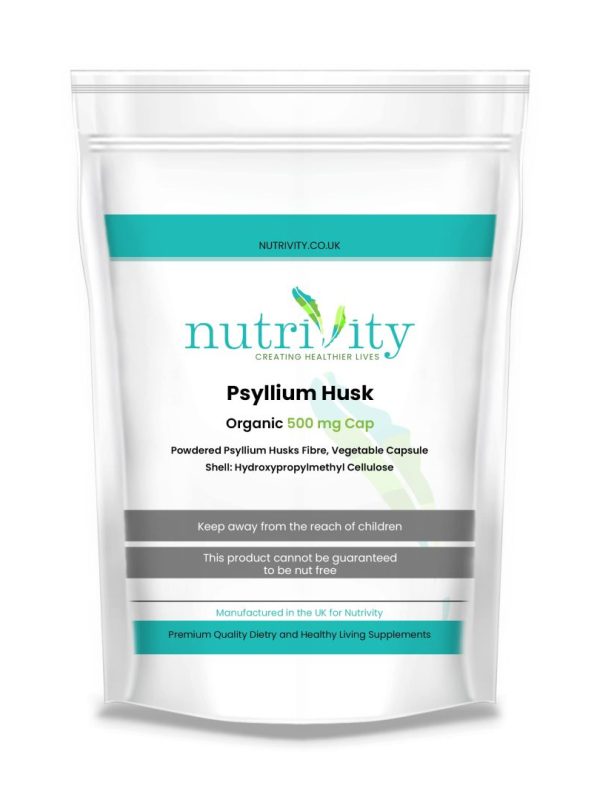
Psyllium Husk 500mg Capsules — Natural Dietary Fibre Supplement
Price range: £8.99 through £13.99
Is Metamucil Available in the UK?
Metamucil has limited availability in UK high street retail. It is stocked by some pharmacies and can be ordered online, but it is not as consistently available as Fybogel or other UK-branded fibre supplements. For UK buyers, the practical question is less often Metamucil versus psyllium husk and more often Fybogel versus a pure psyllium husk supplement.
Fybogel sachets are widely available in UK pharmacies and contain ispaghula husk as the active ingredient — the same compound as psyllium, as discussed in our article What Is Psyllium Husk and How Does It Work? Fybogel does contain sugar and flavouring, however, making pure psyllium capsule alternatives preferable for people seeking a clean-label option.
Which Should You Choose?
The choice ultimately comes down to format preference and ingredient priorities rather than efficacy, since the active ingredient is identical. If you prefer a flavoured powder drink as part of your morning routine and have no objection to the additives in Metamucil, it delivers the same psyllium benefit as any other product. If you want a clean-label supplement with no artificial additives, in a format you can take quickly with a glass of water without texture issues, pure psyllium husk capsules are the better choice.
For long-term daily supplementation — which is the intended use pattern for psyllium husk — the sustainability of the format matters. Capsules are consistently reported to be easier to maintain as a daily habit than mixing powder each morning, and the absence of additives means less to think about from an ingredient perspective.
For a full market comparison of the leading psyllium products in the UK: Best Psyllium Husk Supplements UK 2026
Psyllium Husk Capsules vs Powder: Long-Term Sustainability
One of the most overlooked factors in choosing a fibre supplement format is long-term sustainability. A supplement that produces excellent results over a 12-week clinical trial is only valuable in practice if people actually continue taking it. Consistency of use is the single strongest predictor of whether psyllium husk will deliver its evidence-based benefits — and consistency depends heavily on how easy the supplement is to take as part of a daily routine.
This is where the powder versus capsule distinction becomes practically important. Mixed powder requires preparation — measuring the powder, adding it to water, stirring, and drinking it before it thickens into a gel. People who find the texture unpleasant — a common complaint — tend to skip doses or stop entirely. Flavoured products like Metamucil improve palatability at the cost of additives, but even flavoured psyllium powder is rated poorly for texture by a significant proportion of users.
Capsules eliminate the texture issue entirely. The gel forms in the stomach rather than in the glass, meaning there is no unpleasant experience at the point of consumption. Capsules also require no preparation — they can be kept at a desk, in a bag, or next to a water glass and taken in seconds. For anyone who has tried and abandoned psyllium powder in the past because of the texture, capsule format is often what makes the difference between inconsistent and consistent supplementation.
For long-term cholesterol management, IBS support, or blood sugar moderation — all of which require daily consistent supplementation over months — the format that you will actually take every day is the better choice. If that is powder, use powder. If capsules are more sustainable for your routine, choose capsules. Efficacy is equivalent across formats when the same amount of psyllium husk is consumed.
Nutrivity Psyllium Husk 500mg Capsules
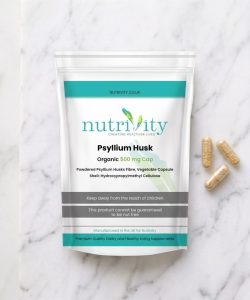 Nutrivity Psyllium Husk 500mg Capsules are manufactured in the UK under GMP-certified conditions. Each capsule contains 500mg of psyllium husk in an HPMC vegetable capsule — vegan friendly and suitable for halal diets. No artificial sweeteners, no artificial colours, no artificial flavours.
| Pack Size | Price | Cost Per Capsule |
|---|---|---|
| 60 Capsules | £8.99 | 15p |
| 120 Capsules | £13.99 | 11.6p |
View the Nutrivity Psyllium Husk range here.
For dosage guidance: Psyllium Husk Dosage: How Much Should You Take?
Full guide: Psyllium Husk Supplements: The Complete Guide
The bottom line is simple: Metamucil and psyllium husk capsules share the same active ingredient. Choose the format that best suits your lifestyle, prioritise purity of ingredients, and ensure whatever you choose is manufactured to GMP standards in a facility that can be held accountable for label accuracy and consistency.
Frequently Asked Questions
Is Metamucil the same as psyllium husk?
Metamucil’s active ingredient is psyllium husk. The two share the same active compound, but Metamucil’s powder formulations contain additional ingredients including sweeteners such as sucrose or aspartame, artificial colours, and flavourings that are not present in pure psyllium husk supplements. The clinical benefit comes from the psyllium — not the additives.
Is Metamucil available in the UK?
Metamucil has limited availability in UK retail. It can be found in some pharmacies and ordered online, but it is not consistently stocked across UK retailers. Fybogel — ispaghula/psyllium sachets — is more widely available in UK pharmacies and serves a similar function, though it also contains sugar and flavouring. Pure psyllium husk capsule supplements are available directly from UK manufacturers including Nutrivity.
Is psyllium husk powder better than capsules?
Neither format is clinically superior — both deliver psyllium husk and produce the same effects in the body. The differences are practical. Powder requires mixing with water and has a thick texture that some people dislike. Capsules are more convenient, tasteless, and easier to take consistently as a daily habit. For long-term supplementation, most people find capsules more sustainable.
Does Metamucil contain sugar?
Standard Metamucil powder formulations contain sucrose. Sugar-free versions use artificial sweeteners including aspartame and acesulfame potassium. People managing blood sugar or who prefer clean-label supplements should note that pure psyllium husk capsule products contain neither sugar nor sweeteners.
What is Fybogel and how does it compare to psyllium?
Fybogel is a UK-branded ispaghula husk product manufactured by Reckitt. Ispaghula husk and psyllium husk are the same material. Fybogel sachets contain ispaghula/psyllium as the active ingredient but also contain sucrose and flavouring. It is widely available in UK pharmacies. Pure psyllium husk capsule supplements contain only the active ingredient without these additions.
Is Nutrivity psyllium husk a Metamucil alternative?
Yes. Nutrivity Psyllium Husk 500mg Capsules contain the same active ingredient as Metamucil — psyllium husk — without artificial sweeteners, colours, or flavourings. The capsule format avoids the texture issues of powder. The product is UK-manufactured under GMP-certified conditions and is vegan friendly and suitable for halal diets.
Can I switch from Metamucil to psyllium capsules without any difference in effect?
Yes. Since both products share the same active ingredient, switching to pure psyllium capsules should produce the same clinical effects as Metamucil, provided the dose of psyllium is comparable. Check the psyllium husk content per serving on each product and maintain an equivalent total daily dose during the transition.
Does psyllium husk have any artificial additives?
Pure psyllium husk in capsule form — such as Nutrivity’s product — contains only psyllium husk and the HPMC capsule shell. There are no artificial sweeteners, colours, flavours, or other additives. Branded powder products such as Metamucil do contain additives that vary by formulation.