




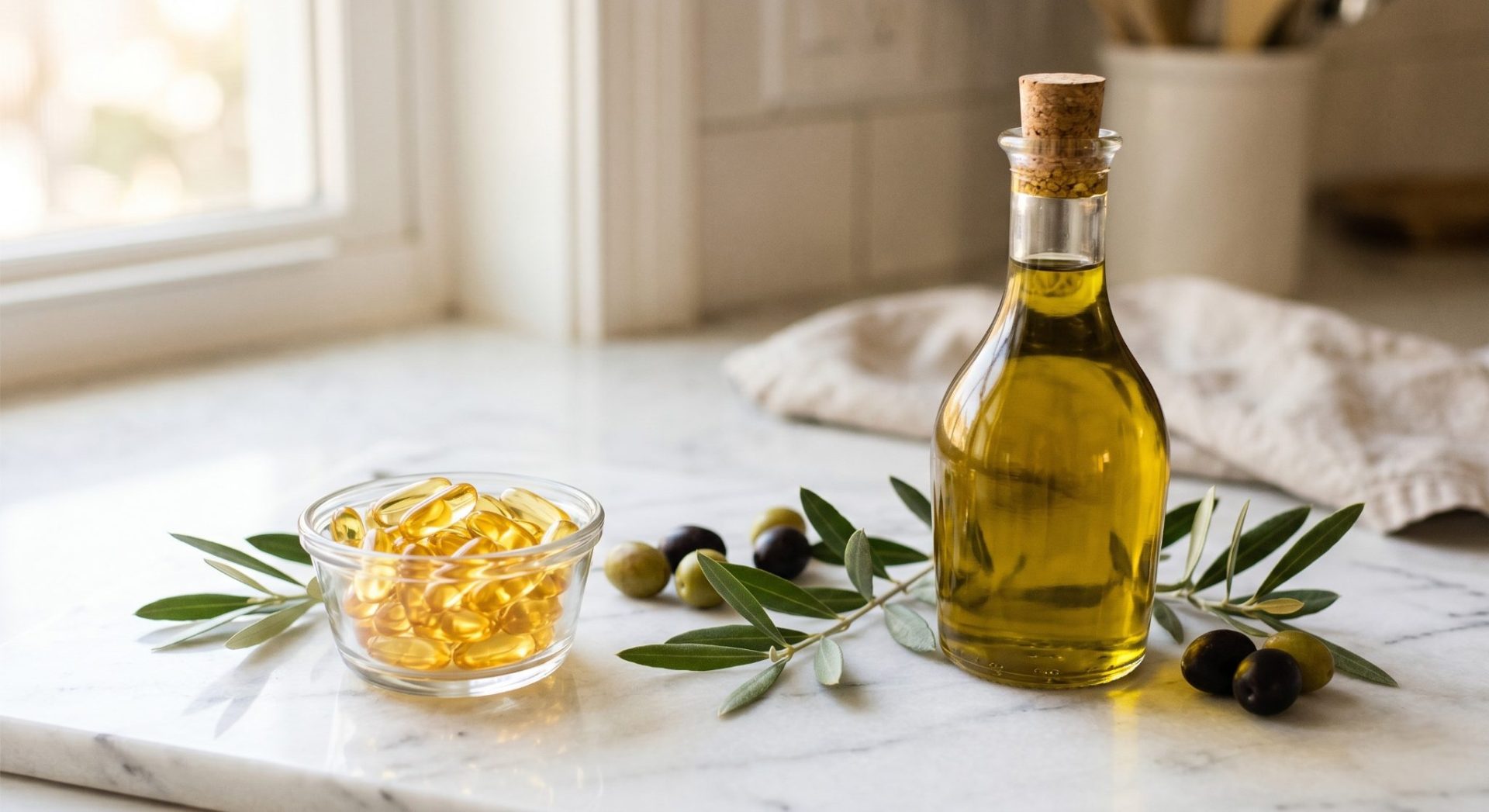
Olive Oil Capsules vs Liquid Olive Oil: Which Is Better for You?
-
By Chris Jones
Last Updated May 2026 | Written by Chris Jones, Social Media Manager at Nutrivity with 7+ years in the supplement industry.
Quick Answer
Olive oil capsules and liquid olive oil provide the same core beneficial compounds — oleic acid, polyphenols, and vitamin E — but in very different delivery formats. Liquid olive oil offers higher doses per serving and is a versatile culinary ingredient, while capsules provide a convenient, taste-free, precisely measured daily dose that is easy to incorporate into a supplement routine. If you already use olive oil liberally in cooking and dressings, liquid is fine. If you dislike the taste of olive oil, struggle to consume it consistently, or want a standardised daily dose without the calories and mess of liquid oil, capsules are the more practical solution.
Olive Oil Capsules vs Liquid — The Core Difference
Olive oil — particularly extra virgin olive oil — has been a cornerstone of the Mediterranean diet for thousands of years and is one of the most extensively researched dietary fats in nutritional science. Its association with cardiovascular health, antioxidant protection, and overall longevity is well-documented. The question is not whether olive oil is beneficial — that is largely settled — but whether you are better off consuming it as a culinary liquid or as a concentrated supplement in capsule form.
The answer depends on your lifestyle, your dietary habits, and what you are actually trying to achieve. Both formats deliver the same fundamental compounds, but they do so in different quantities, with different levels of convenience, and with different practical implications for daily use.
Liquid olive oil is a food. You cook with it, drizzle it on salads, use it as a dipping oil, and incorporate it into meals. A single tablespoon (about 15ml) provides roughly 120 calories and 14g of fat, of which approximately 73% is monounsaturated oleic acid. You get a substantial dose of olive oil’s beneficial compounds, but you also get the associated calories and need to actively incorporate it into your eating pattern.
Olive oil capsules are a supplement. Each capsule contains a measured dose of olive oil — typically 500mg to 1000mg — encapsulated in a soft gel shell. You swallow them with water, just like any other supplement. The dose per capsule is much smaller than a tablespoon of liquid oil, but the delivery is precise, consistent, and requires zero culinary effort.
The Health Benefits of Olive Oil
Before comparing the two formats in detail, it is worth understanding what makes olive oil beneficial in the first place. The health properties of olive oil are attributed to several key compounds:
Oleic acid (omega-9) — The dominant fatty acid in olive oil, accounting for roughly 70-80% of its fat content. Oleic acid is a monounsaturated fatty acid that has been extensively studied for its role in cardiovascular health. The European Food Safety Authority recognises that replacing saturated fats in the diet with unsaturated fats contributes to the maintenance of normal blood cholesterol levels. Oleic acid is one of those unsaturated fats.
Polyphenols — Extra virgin olive oil contains a range of polyphenolic compounds, including hydroxytyrosol, tyrosol, oleuropein, and oleocanthal. EFSA has approved a specific health claim for olive oil polyphenols: olive oil polyphenols contribute to the protection of blood lipids from oxidative stress. This claim applies when the oil provides at least 5mg of hydroxytyrosol and its derivatives per 20g of olive oil consumed daily.
Vitamin E (alpha-tocopherol) — Olive oil is a natural source of vitamin E, which contributes to the protection of cells from oxidative stress (EFSA-approved claim).
Squalene — A triterpene compound found in higher concentrations in olive oil than in most other dietary fats. Squalene has antioxidant properties and is also used extensively in skincare products. Why Choose Olive Oil Capsules?
Olive oil capsules exist because, despite olive oil’s well-documented benefits, not everyone consumes enough of it on a regular basis to enjoy those benefits. There are several practical reasons why capsules make sense:
Taste aversion — Not everyone enjoys the taste of olive oil, particularly extra virgin olive oil, which has a stronger, more peppery flavour profile than refined olive oils. Some people find it difficult to drink olive oil neat or to consume it in sufficient quantities through cooking alone. Capsules bypass the taste entirely.
Consistency — Supplements work best when taken consistently. It is easy to forget to add olive oil to your meals, especially if your cooking habits are variable or if you eat out frequently. A capsule taken at the same time each day ensures consistent intake regardless of your meal choices.
Calorie control — A tablespoon of olive oil adds roughly 120 calories to your daily intake. For people managing their weight, adding multiple tablespoons of any oil to their diet may not be practical. Capsules deliver beneficial olive oil compounds in a much lower calorie package — a 1000mg capsule contains approximately 9 calories, compared to 120 calories in a tablespoon.
Portability and convenience — Capsules travel easily, do not leak, do not require refrigeration, and can be taken anywhere. Carrying a bottle of olive oil to work or on holiday is significantly less practical.
Standardised dosing — Each capsule delivers a precise, consistent amount of olive oil. With liquid oil, serving sizes can vary significantly depending on how generously you pour.
Nutrivity’s Virgin Olive Oil 1000mg Soft Gel Capsules provide 1000mg of virgin olive oil per capsule — a convenient way to ensure daily olive oil intake without the taste, mess, or additional calories of liquid oil. The capsules are halal friendly and manufactured in the UK to GMP standards.
Why Choose Liquid Olive Oil?
Liquid olive oil remains the gold standard for olive oil consumption in terms of dose and culinary versatility. There are clear advantages to the liquid form:
Higher dose per serving — A single tablespoon of olive oil delivers roughly 14,000mg (14g) of olive oil. Even a generous capsule supplement of 1000mg provides only a fraction of this amount. If your goal is to match the intake levels associated with the Mediterranean diet (typically 25-50ml per day), liquid oil is the only realistic way to achieve this.
Full polyphenol spectrum — High-quality extra virgin olive oil (EVOO) retains the full spectrum of polyphenols because it is extracted mechanically without heat or chemical processing. The polyphenol content of capsule products depends on the quality and type of oil used in manufacturing. Not all olive oil capsules use extra virgin olive oil — some use refined or virgin oil with lower polyphenol levels.
Culinary integration — Olive oil is a fundamental cooking ingredient. Using it for sautéing, roasting, dressing, and finishing dishes means you benefit from its nutritional properties while also enhancing the flavour of your food. This is arguably the most enjoyable way to consume olive oil.
Absorption context — When consumed as part of a meal, olive oil is ingested alongside other nutrients. Fat-soluble vitamins (A, D, E, K) and carotenoids from vegetables are better absorbed in the presence of dietary fat, so cooking with or dressing food with olive oil enhances the nutritional value of the overall meal.
Cost per dose — On a per-milligram basis, liquid olive oil is significantly cheaper than capsule supplements. A litre of good quality extra virgin olive oil provides far more olive oil per pound spent than an equivalent quantity in capsule form. Head-to-Head Comparison
| Feature | Olive Oil Capsules | Liquid Olive Oil |
|---|---|---|
| Dose per serving | 500–1000mg per capsule | ~14,000mg (14g) per tablespoon |
| Calories per serving | ~9 calories per 1000mg capsule | ~120 calories per tablespoon |
| Taste | None — soft gel capsule bypasses taste | Strong flavour, especially EVOO — not for everyone |
| Convenience | High — swallow with water, portable | Moderate — requires meal integration |
| Consistency of intake | High — standardised dose per capsule | Variable — depends on cooking and serving habits |
| Polyphenol content | Depends on oil quality used in capsule | Highest in quality EVOO |
| Cost per mg of olive oil | Higher | Lower |
| Culinary use | Not applicable | Versatile — cooking, dressing, finishing |
| Suitable for weight management | Yes — minimal calorie contribution | Requires portion awareness |
| Shelf life and storage | Long — sealed capsules protected from light and air | Shorter once opened — sensitive to light, heat, and air |
OUR TOP RECOMMENDED
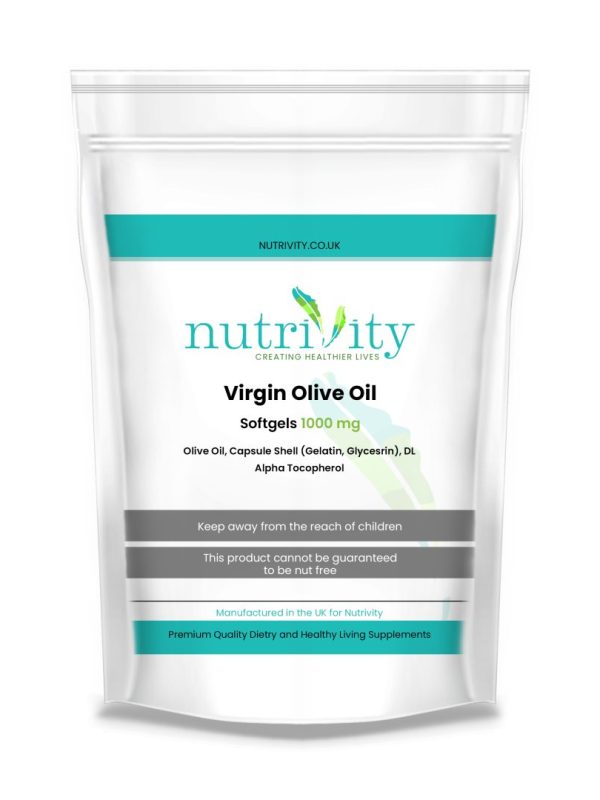
Virgin Olive Oil 1000mg Soft Gels – with added Vitamin E | Natural Antioxidant
Price range: £8.99 through £42.99
Do Olive Oil Capsules Actually Work?
This is the question that matters most, and the answer is nuanced. Olive oil capsules do deliver the same type of oil — and therefore the same fatty acids and, depending on the product, the same polyphenols — as liquid olive oil. The body processes the oil from a capsule in the same way it processes oil from food. There is no biochemical difference between oleic acid absorbed from a capsule and oleic acid absorbed from a drizzle of olive oil on your salad.
However, the dose difference is significant. The major epidemiological studies that link olive oil consumption to cardiovascular benefits — including the landmark PREDIMED trial — involved daily olive oil intakes of 40-50ml (roughly 3-4 tablespoons). A single 1000mg capsule provides approximately one-fourteenth of a single tablespoon. To match the PREDIMED dose through capsules alone, you would need to take approximately 40-50 capsules per day, which is obviously impractical.
This does not mean capsules are useless — it means they serve a different purpose. Capsules are best understood as a baseline supplement that ensures a minimum daily intake of olive oil’s beneficial compounds, particularly for people who do not regularly consume olive oil in their diet. They are not a replacement for the dietary levels of olive oil consumed in a traditional Mediterranean eating pattern, but rather a practical way to add olive oil’s key nutrients when dietary intake is low or inconsistent.
Choosing a Quality Olive Oil Product
Whether you choose capsules or liquid, quality matters. For liquid olive oil, look for extra virgin olive oil with a harvest date on the label, stored in a dark glass bottle, and from a reputable producer. For capsules, look for products that specify the type of oil used — virgin or extra virgin is preferable to refined olive oil — and that are manufactured under GMP standards.
Nutrivity’s Virgin Olive Oil 1000mg Soft Gel Capsules use virgin olive oil and are manufactured in the UK to GMP standards. The soft gel encapsulation protects the oil from oxidation, preserving its quality throughout the product’s shelf life. The capsules are halal friendly.
The Best Approach — Why Not Both?
In practice, the best strategy for many people is to use both liquid olive oil and capsules in a complementary way. Use liquid olive oil as your primary cooking and dressing oil to benefit from its full nutritional profile and culinary versatility. Use capsules as a daily supplement to ensure a consistent baseline intake on days when your cooking does not include olive oil, when you eat out, or when you are travelling.
This combined approach gives you the higher-dose benefits of liquid olive oil when you are cooking at home, plus the consistency and convenience of capsules as a safety net. It is a practical, realistic strategy that does not require you to choose one format over the other.
The Bottom Line
Olive oil capsules and liquid olive oil are not in competition — they serve complementary roles. Liquid olive oil delivers higher doses and integrates into your diet as a food, while capsules provide convenient, calorie-light, taste-free daily supplementation. If you want the best of both, use liquid olive oil in cooking and take capsules on days when your diet falls short. Nutrivity’s Virgin Olive Oil 1000mg Soft Gel Capsules offer a straightforward way to maintain daily olive oil intake — halal friendly and manufactured in the UK to GMP standards. Key Takeaways
Same oil, different delivery — Capsules and liquid olive oil contain the same beneficial compounds. The body processes them identically.
Liquid delivers more per serving — A tablespoon of olive oil provides roughly 14 times more oil than a 1000mg capsule. For Mediterranean-diet-level intake, liquid is essential.
Capsules excel at consistency — For people who do not cook with olive oil regularly, capsules ensure a minimum daily baseline without taste or calorie concerns.
Quality matters in both formats — Look for virgin or extra virgin olive oil in capsules, and GMP-certified manufacturing for supplement products.
Use both for the best results — Cook with liquid olive oil when possible; supplement with capsules when your diet falls short.
Frequently Asked Questions
Are olive oil capsules as good as drinking olive oil?
Olive oil capsules contain the same type of oil and are processed by the body in the same way. However, the dose per capsule is much smaller than a typical serving of liquid olive oil. Capsules are not a direct replacement for dietary olive oil consumption but rather a convenient supplement to ensure consistent baseline intake when diet alone falls short.
How many olive oil capsules should I take per day?
Follow the manufacturer’s recommended dosage on the product label. Nutrivity’s Virgin Olive Oil capsules provide 1000mg per soft gel. Taking 1 capsule daily as directed provides a supplemental dose of olive oil’s key compounds. For higher intakes, incorporating liquid olive oil into your diet is more practical than taking large numbers of capsules.
Can olive oil capsules help with cholesterol?
Olive oil is rich in oleic acid, a monounsaturated fatty acid. EFSA recognises that replacing saturated fats in the diet with unsaturated fats contributes to the maintenance of normal blood cholesterol levels. However, olive oil capsules alone are unlikely to be sufficient — this benefit is associated with the broader dietary pattern of substituting saturated fats with unsaturated fats across your entire diet.
Do olive oil capsules contain polyphenols?
This depends on the quality of oil used in the capsules. Virgin and extra virgin olive oil naturally contain polyphenols, while refined olive oil has significantly reduced polyphenol content. Nutrivity uses virgin olive oil in its capsules, which retains more of the naturally occurring polyphenolic compounds than refined alternatives.
Are olive oil capsules suitable for vegans?
Olive oil itself is plant-based, but the capsule shell determines vegan suitability. Soft gel capsules typically use a gelatin-based shell derived from animal sources. Check the specific product’s labelling for confirmation. Nutrivity’s Virgin Olive Oil capsules are halal friendly — check the product page for current vegan status information.