



Psyllium Husk for Cholesterol: Can It Help?
-
By Chris Jones
Written by Chris Jones | Last Updated May 2026 | Social Media Manager at Nutrivity (7+ years in the UK supplement industry)
Psyllium Husk for Cholesterol: Can It Help?
Of all the evidence associated with psyllium husk supplementation, the cholesterol research is perhaps the most compelling. It is one of the few dietary supplements for which a regulatory body — the US Food and Drug Administration — has formally recognised a qualified health claim linking consumption to cardiovascular disease risk reduction. The evidence is not anecdotal, and the mechanism is well understood. This article covers what the research actually shows, how psyllium reduces LDL cholesterol, how much is needed, how long it takes, and how it fits alongside pharmaceutical cholesterol management.
What Is Cholesterol and Why Does It Matter?
Cholesterol is a waxy, fat-like substance produced by the liver and obtained through dietary intake. It is essential to the body — used in cell membrane construction, vitamin D synthesis, and the production of steroid hormones. The problem arises with excess circulating cholesterol, particularly the low-density lipoprotein (LDL) fraction, which deposits in arterial walls and contributes to atherosclerosis — the plaque build-up that underlies most heart attacks and strokes.
LDL cholesterol is often described as “bad” cholesterol. High-density lipoprotein (HDL), by contrast, is considered “good” cholesterol because it transports cholesterol from peripheral tissues back to the liver for processing. The ratio of LDL to HDL is a key cardiovascular risk indicator. Lowering LDL is one of the primary targets of cardiovascular risk reduction, both pharmacologically (statins) and through dietary and lifestyle modification.
Total cholesterol above 5 mmol/L is considered elevated in UK clinical guidelines. LDL above 3 mmol/L in people without existing cardiovascular disease, or above 2 mmol/L in people with existing cardiovascular disease or high risk, is a threshold for intervention. Dietary approaches — including soluble fibre intake — are recommended as first-line interventions for borderline elevated cholesterol before pharmaceutical management is initiated.
How Does Psyllium Husk Reduce Cholesterol?
The mechanism by which psyllium husk reduces LDL cholesterol is bile acid binding. Understanding this mechanism explains why psyllium works, why consistent daily use is required, and why the timing of doses relative to meals matters.
Bile acids are produced by the liver from cholesterol. They are secreted into the small intestine to emulsify dietary fats — breaking fat into smaller droplets that can be absorbed. Once this function is complete, the vast majority of bile acids (approximately 95 percent) are reabsorbed near the end of the small intestine (the terminal ileum) and returned to the liver via the portal circulation for recycling. The liver reuses the same pool of bile acids repeatedly, and net cholesterol consumption in bile acid synthesis is normally low because recycling is so efficient.
Psyllium’s gel disrupts this recycling. When psyllium forms its viscous gel in the small intestine, bile acids become physically trapped within the gel matrix. They cannot diffuse freely to the intestinal wall for reabsorption. Instead, bound within the gel, they are carried into the large intestine and excreted in the stool. The liver, deprived of its recycled bile acids, must synthesise new ones to maintain the pool needed for fat digestion. Bile acid synthesis requires cholesterol as a precursor — specifically, the liver draws on circulating LDL cholesterol. This repeated daily cycle of bile acid trapping and new synthesis gradually depletes the circulating LDL pool, producing the LDL reductions observed in clinical studies.
 What the Clinical Evidence Shows
The evidence base for psyllium husk and cholesterol is one of the most robust in the dietary supplement field.
A meta-analysis of 21 randomised controlled trials — published in the American Journal of Clinical Nutrition — examined the effects of psyllium supplementation on cholesterol levels across a broad population. The findings showed that psyllium supplementation reduced total cholesterol by approximately 5 percent and LDL cholesterol by approximately 7 percent compared to control groups. Effects were dose-dependent — higher daily intakes produced larger reductions. Effects were also more pronounced in people with higher baseline cholesterol levels, suggesting that people with clinically elevated LDL may experience greater benefit than those with normal baseline values.
A subsequent meta-analysis of 28 trials confirmed and extended these findings, showing consistent LDL reductions across geographies, ages, and dietary backgrounds. HDL cholesterol (the beneficial fraction) was not negatively affected by psyllium — in fact some trials showed modest HDL increases, though this effect was not consistent across all studies.
The US FDA’s decision to permit a qualified health claim for psyllium and coronary heart disease — specifically that diets low in saturated fat and cholesterol including 7 grams or more of soluble fibre from psyllium husk per day may reduce the risk of heart disease — reflects this accumulated evidence base. This is an unusually high regulatory recognition for a dietary supplement.
OUR TOP RECOMMENDED
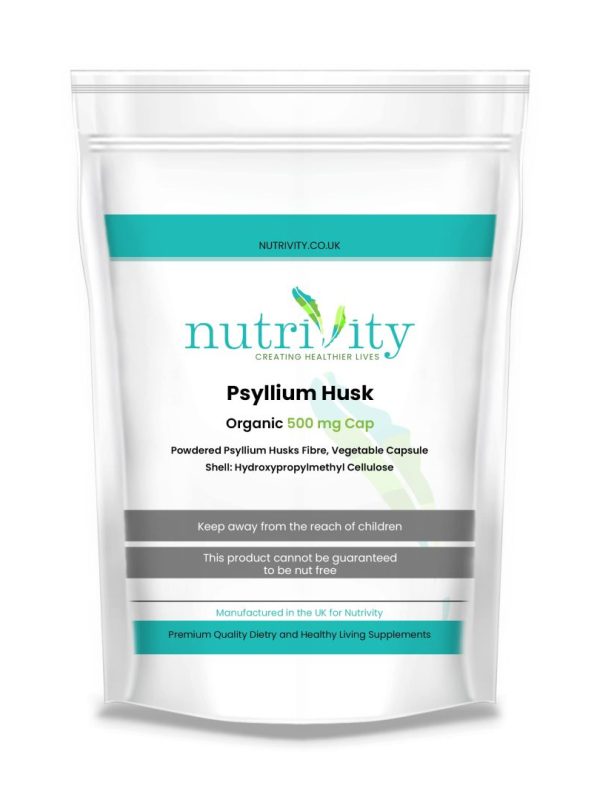
Psyllium Husk 500mg Capsules — Natural Dietary Fibre Supplement
Price range: £8.99 through £13.99
How Much Psyllium Is Needed for Cholesterol Effects?
The clinical dose range associated with significant LDL reductions is approximately 7 to 10 grams of psyllium husk per day. The FDA health claim references 7 grams of soluble fibre per day from psyllium as the minimum threshold. Studies using higher doses within this range have produced larger effects.
This dose should be divided across meals — ideally two to three servings per day taken with food. The bile acid binding mechanism requires psyllium to be present in the small intestine at the time bile acids are secreted in response to a meal, particularly a meal containing dietary fat. A single large dose on an empty stomach is significantly less effective than smaller doses spread across meals. Always follow the dosage instructions on your specific product. See our full guide: Psyllium Husk Dosage: How Much Should You Take?
How Long Does It Take to See Results?
Meaningful reductions in LDL cholesterol are typically measured at 4 to 12 weeks of consistent daily supplementation. Some studies have shown measurable effects as early as 4 weeks; the majority of the evidence base uses an 8 to 12 week measurement point, which represents a realistic timeframe for expecting to see a change in blood test results.
This has practical implications for monitoring. If your GP has suggested dietary approaches to manage elevated cholesterol before considering statins, a repeat fasting cholesterol measurement should be timed to allow at least 8 to 12 weeks of consistent supplementation. A test at two weeks will not give an accurate picture of psyllium’s effect.
Psyllium Husk vs Statins
It is important to be clear about what psyllium can and cannot achieve relative to pharmaceutical cholesterol management. Statins reduce LDL cholesterol by 30 to 50 percent in most patients — a far larger reduction than psyllium’s 5 to 7 percent. For people with clinically significant cardiovascular risk or established cardiovascular disease, statins remain the evidence-based intervention of choice and psyllium is not a substitute.
Psyllium is most appropriately used in the following contexts:
Borderline elevated cholesterol — People with mildly elevated LDL (above 3 mmol/L but below the threshold for statin prescription in low-risk individuals) for whom dietary and lifestyle modification is recommended before pharmacological treatment. Psyllium is one of the most evidence-supported dietary interventions for this group.
Alongside statins — Psyllium and statins work through different mechanisms — psyllium reduces bile acid recycling while statins inhibit hepatic cholesterol synthesis. There is no interaction concern, and the effects may be additive. People on statins who want to maximise their dietary cholesterol management may add psyllium without pharmaceutical interference.
Alongside dietary change — Psyllium’s LDL reduction is additive to the effects of a low-saturated-fat, high-fibre diet. The FDA health claim specifically references psyllium as part of a diet low in saturated fat — the two approaches work synergistically.
Dietary Context: Psyllium Within a Cholesterol-Lowering Diet
The FDA health claim for psyllium specifically situates it within a diet low in saturated fat and cholesterol — not as a standalone intervention. This framing reflects the evidence that psyllium’s LDL-lowering effect is additive to the benefits of a heart-healthy dietary pattern, not a substitute for it.
A diet low in saturated fat — primarily from red meat, full-fat dairy, and processed foods — reduces hepatic LDL production. Psyllium, by increasing bile acid excretion, increases hepatic LDL consumption. These two mechanisms operate independently and their effects combine. People who address both dietary saturated fat intake and add psyllium supplementation can expect larger combined reductions in LDL than either intervention alone would produce.
Other evidence-supported dietary cholesterol interventions that are compatible with psyllium supplementation include increasing oat beta-glucan intake (through oats or oat products), consuming plant sterols and stanols (found in fortified products and naturally in plant foods), and reducing dietary cholesterol from eggs and organ meats. None of these interventions interfere with psyllium’s bile acid binding mechanism, and they can all be pursued simultaneously as part of a comprehensive dietary approach to cholesterol management.
Nutrivity Psyllium Husk 500mg Capsules
Nutrivity Psyllium Husk 500mg Capsules are manufactured in the UK under GMP-certified conditions in HPMC vegetable capsules — vegan friendly and suitable for halal diets. No gelatinw, no artificial additives.
| Pack Size | Price |
|---|---|
| 60 Capsules | £8.99 |
| 120 Capsules | £13.99 |
View the Nutrivity Psyllium Husk range here.
Complete guide: Psyllium Husk Supplements: The Complete Guide
Dosage: Psyllium Husk Dosage: How Much Should You Take?
Safety: Psyllium Husk Side Effects: What to Know Before Taking It
Frequently Asked Questions Psyllium Husk for Cholesterol
Does psyllium husk actually lower cholesterol?
Yes. Multiple meta-analyses of randomised controlled trials have confirmed that consistent psyllium supplementation reduces LDL cholesterol by approximately 5 to 7 percent. The US FDA permits a qualified health claim linking psyllium husk consumption — 7 grams of soluble fibre per day — to reduced coronary heart disease risk as part of a low-saturated-fat diet.
How does psyllium husk lower LDL cholesterol?
Psyllium’s gel binds bile acids in the small intestine, preventing their reabsorption. The liver must then synthesise new bile acids from circulating LDL cholesterol. This repeated daily cycle of bile acid trapping and new synthesis gradually reduces the LDL pool. The mechanism is distinct from statins, which inhibit hepatic cholesterol synthesis directly.
How much psyllium husk do I need to take for cholesterol benefits?
Clinical research on cholesterol typically uses 7 to 10 grams of psyllium husk per day, divided across meals. The FDA health claim references 7 grams of soluble fibre from psyllium per day as the threshold dose. Always follow the dosage instructions on your specific product.
How long does psyllium husk take to lower cholesterol?
Measurable LDL reductions are typically observed at 4 to 12 weeks of consistent daily supplementation. Most clinical studies measure outcomes at 8 to 12 weeks. A repeat fasting cholesterol blood test should be taken at least 8 weeks after starting consistent supplementation to accurately measure the effect.
Can psyllium husk replace statins?
No. Statins reduce LDL cholesterol by 30 to 50 percent in most patients. Psyllium produces reductions of approximately 5 to 7 percent. For people with established cardiovascular disease or clinically significant cardiovascular risk, statins remain the appropriate pharmaceutical intervention. Psyllium is most suited to people with mildly elevated cholesterol managed through dietary approaches, or as an additive strategy alongside statins.
Can I take psyllium husk alongside my cholesterol medication?
Generally yes, but timing matters. Leave at least one to two hours between taking psyllium and any cholesterol medication, particularly bile acid sequestrants. Psyllium and statins operate through different mechanisms and are generally compatible. Always consult your GP or pharmacist before adding psyllium if you are on prescribed cholesterol medication.
Does psyllium husk affect HDL (good) cholesterol?
Psyllium does not negatively affect HDL cholesterol. Some studies have shown modest HDL increases alongside LDL reductions, though this effect is not consistent across all trials. The primary established effect is LDL reduction. Psyllium does not deplete or reduce beneficial HDL cholesterol.
When should I take psyllium husk for cholesterol?
For cholesterol management, take psyllium with meals — particularly meals containing dietary fat, which trigger bile acid secretion. Dividing your daily dose across two or three meals is preferable to a single daily dose. The bile acid binding mechanism requires psyllium to be present in the small intestine at the time bile acids are secreted and active.