




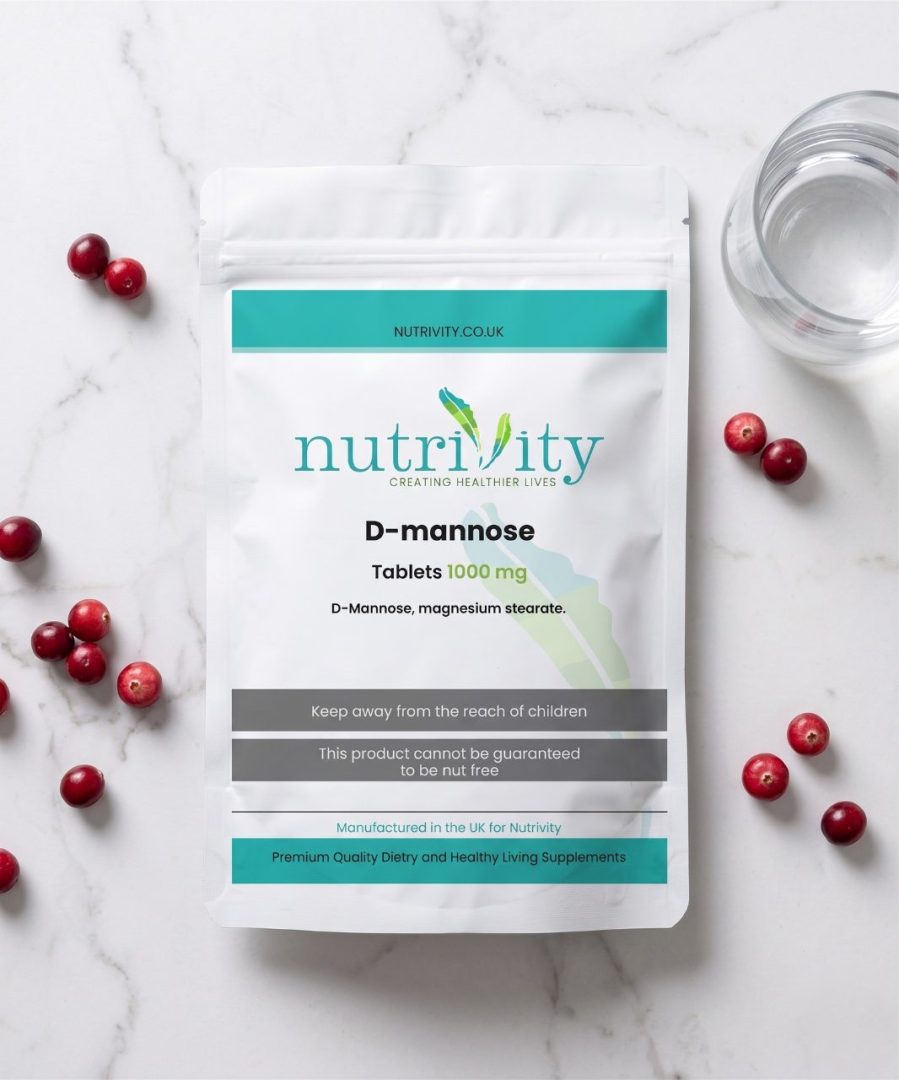
D-Mannose Supplements: The Complete Guide
-
By Chris Jones
Written by Chris Jones | Last Updated June 2026 | Social Media Manager at Nutrivity (7+ years in the UK supplement industry)
D-Mannose Supplements: The Complete Guide
D-Mannose is one of the most searched natural supplements for urinary health in the UK. Whether you have experienced a urinary tract infection and are looking for a preventative approach, or you are simply researching your options, this guide covers everything you need to know — what D-Mannose is, how it works, how to take it safely, and what to look for when buying in the UK.
At Nutrivity we manufacture D-Mannose 1000mg Vegan Tablets in the UK under GMP standards. This guide is written as an honest, balanced resource — not a sales pitch. Where relevant, we link to detailed articles on each topic so you can read further without having to search elsewhere.
Quick Answer on D-mannose Supplements:
This comprehensive hub guide establishes D-Mannose as a highly sought-after, non-antibiotic food supplement in the UK that acts as a daily preventative habit rather than an acute infection treatment. It operates via an elegant anti-adhesion mechanism, flooding the bladder with free-floating simple sugars that bind to E. coli bacteria (the cause of 80–90% of uncomplicated UTIs) so they are naturally flushed away during urination without disrupting the gut microbiome. Backed by clinical trials like Kranjčec and MERIT, a daily maintenance dose of 1000mg to 2000mg is widely considered safe and effective for long-term use in both men and women, with bulk options like Nutrivity’s UK-manufactured, vegan, and halal-friendly 365-tablet pack offering the most cost-effective approach at 16p per day.
What Is D-Mannose?
D-Mannose is a naturally occurring simple sugar found in small amounts in certain fruits, including cranberries, apples, and peaches. It is structurally similar to glucose but the body processes it differently — rather than being absorbed and used for energy, most ingested D-Mannose passes through the bloodstream and is excreted largely unchanged in the urine.
This passage through the urinary tract is the basis for its use as a supplement. D-Mannose is not classified as a medicine and cannot be used to treat or cure any condition. It is a food supplement regulated under UK food law, and any claims made about it must remain within the boundaries set by the Food Standards Agency and the Medicines and Healthcare products Regulatory Agency.
D-Mannose supplements in the UK are available in tablet, capsule, and powder form. The most common dose in tablet and capsule products is 500mg or 1000mg per unit. Nutrivity’s product provides 1000mg per tablet — a full high-strength dose in a single daily tablet.
For a detailed explanation of how D-Mannose works at a biological level, see our full article: What Is D-Mannose and How Does It Work?
How Does D-Mannose Work?
The mechanism behind D-Mannose relates to how certain bacteria — most commonly Escherichia coli (E. coli) — cause urinary tract infections. E. coli is responsible for the vast majority of UTIs in otherwise healthy adults. The bacteria use tiny hair-like appendages called fimbriae to bind to mannose receptors on the cells lining the urinary tract wall. Once attached, they can proliferate and cause infection.
D-Mannose works by providing an alternative binding target. When D-Mannose is present in the urine, E. coli preferentially attach to the free-floating mannose molecules rather than the cells lining the urinary tract. The bacteria are then flushed out of the body during urination rather than remaining attached to the bladder wall.
This mechanism does not involve antibiotics, does not disrupt gut bacteria, and does not carry the same risks associated with pharmaceutical interventions. However, D-Mannose is a supplement, not a treatment — if you suspect an active infection, always consult a healthcare professional.
D-Mannose and UTIs: What the Research Shows
The research base for D-Mannose is growing. Several clinical studies have examined its use for urinary tract health, with the most cited being a 2014 trial published in the World Journal of Urology by Kranjčec et al., which compared D-Mannose powder to an antibiotic and a placebo in women with recurrent UTIs. The D-Mannose group showed significantly lower rates of recurrence compared to placebo, with a comparable outcome to the antibiotic group and fewer reported side effects.
More recently, the MERIT trial conducted in the UK examined D-Mannose for recurrent UTIs in women, adding to the evidence base. The research is encouraging, though it is worth noting that most trials have been conducted in women, and the evidence base for men or for acute infections is thinner.
For a full breakdown of the research, see: D-Mannose for UTIs: What the Research Actually Says
D-Mannose vs Cranberry
Cranberry is the supplement most commonly associated with urinary health in the UK, partly because of its long history and wide availability in pharmacies. D-Mannose and cranberry work through related but distinct mechanisms. Cranberry contains compounds called proanthocyanidins (PACs) which may also inhibit bacterial adhesion, but through a different pathway and with a lower concentration of the active mechanism per dose.
For buyers choosing between the two, the key considerations are dose consistency and dietary suitability. D-Mannose provides a precise, measured dose of a single active compound. Cranberry supplements vary widely in PAC content and extraction method, making product-to-product comparisons difficult.
For a full head-to-head comparison: D-Mannose vs Cranberry: Which Is Better for Urinary Health?
D-Mannose vs Antibiotics
Antibiotics are the standard medical treatment for confirmed urinary tract infections. They are effective but carry well-documented risks including disruption to gut microbiome, resistance development with repeated use, and side effects including nausea and fungal overgrowth in some patients.
D-Mannose is not an antibiotic and should not be positioned as a replacement for one. Where D-Mannose is used, it tends to be as a preventative daily supplement by people with a history of recurrent UTIs, or as a short-term supportive measure. The decision between antibiotics and supplements for any specific situation is always one for a qualified healthcare professional.
For a detailed comparison: D-Mannose vs Antibiotics for Urinary Tract Infections
How Long Does D-Mannose Take to Work?
This is one of the most common questions buyers ask before purchasing. The honest answer is that it depends on how D-Mannose is being used. As a preventative daily supplement, it works by maintaining a constant presence of mannose in the urine — there is no single moment of effect to measure. As a short-term higher-dose protocol some users follow at the onset of symptoms, anecdotal reports suggest effects within a few hours, though clinical evidence for this acute use is limited.
For a full explanation of timelines and what to expect: How Long Does D-Mannose Take to Work?
D-Mannose Dosage
Most D-Mannose supplements in the UK provide either 500mg or 1000mg per tablet or capsule. Research studies have typically used doses of 1g to 2g per day for preventative use. Nutrivity D-Mannose provides 1000mg per tablet, designed as a single daily tablet for maintenance use.
Dosage guidance varies between products. Some brands suggest higher doses during acute periods — two to three tablets taken multiple times per day. Always follow the specific dosing instructions on the product you purchase, and consult a healthcare professional if you are unsure what dose is appropriate for your situation.
For a full dosage guide including preventative and acute protocols: D-Mannose Dosage: How Much Should You Take Per Day?
OUR TOP RECOMMENDED
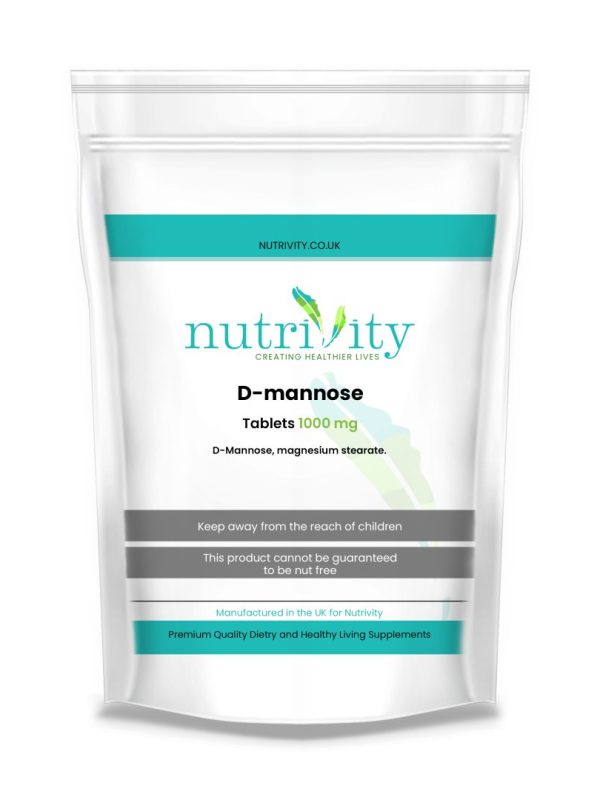
D-Mannose 1000mg Vegan Tablets – High Strength | Women’s Health
Price range: £13.99 through £58.99
D-Mannose for Recurrent UTIs
Recurrent UTIs — defined as two or more infections within six months, or three or more within a year — affect a significant number of people in the UK, predominantly women. For this group, long-term low-dose antibiotic prophylaxis has traditionally been the medical approach, but interest in D-Mannose as a daily preventative supplement has grown alongside the clinical evidence.
The 2014 Kranjčec trial specifically focused on recurrent UTI prevention, and the MERIT trial was also designed around this population. The evidence for daily D-Mannose in this context is more developed than for single acute episodes.
For a detailed discussion: D-Mannose for Recurrent UTIs: Can It Help Long-Term?
Is D-Mannose Safe?
D-Mannose is generally considered well tolerated. It is a simple sugar that occurs naturally in the body and in common fruits, and at supplement doses it does not appear to cause significant adverse effects in healthy adults. The most commonly reported side effects are mild digestive discomfort in some users, particularly at higher doses.
People with diabetes or impaired glucose metabolism should exercise caution, as D-Mannose is a sugar. While it is not thought to significantly affect blood glucose in healthy individuals, anyone with a metabolic condition should check with their doctor before use. D-Mannose is not recommended for use in children without medical supervision.
For a full safety overview including contraindications: Is D-Mannose Safe? Side Effects and What to Know Before Taking It
D-Mannose for Men
UTIs are far more common in women due to anatomical differences, but men do experience them — particularly older men with prostate issues or those with urinary catheters. D-Mannose is suitable for both men and women. The mechanism of action is the same regardless of sex, and there is no reason the supplement would not work in the same way in a male urinary tract.
The clinical evidence, however, has been generated predominantly in female study populations. Men experiencing urinary symptoms should always seek medical assessment, as the causes of urinary problems in men are more varied and a UTI cannot simply be assumed.
For a dedicated guide: D-Mannose for Men: Does It Work the Same Way?
Can You Take D-Mannose Every Day?
Daily long-term use of D-Mannose is how many buyers incorporate it into their routine, particularly those with a history of recurrent UTIs. There is no established upper limit for daily D-Mannose intake in healthy adults, and the clinical trials examining its use have involved daily supplementation over periods of several months without significant safety concerns reported.
Nutrivity D-Mannose is available in pack sizes up to 365 tablets specifically to support daily use at the lowest cost per day — 16p per day on the year supply. For a full guide to daily use and long-term considerations: Can You Take D-Mannose Every Day? A Guide to Daily Use
Is D-Mannose Vegan and Halal?
D-Mannose as an active ingredient is plant-derived and is suitable for vegans and for halal diets. However, the suitability of a specific supplement product also depends on the excipients used — particularly the capsule or tablet shell.
Nutrivity D-Mannose 1000mg is in tablet form using plant-based excipients. It is vegan friendly and halal friendly, with no gelatine and no animal derivatives. It is manufactured in the UK under GMP standards.
Of the major D-Mannose brands on the UK market, Nutrivity is the only one that explicitly confirms halal suitability on the product listing. If this matters to you, always check the label of any product you purchase.
What to Look for When Buying D-Mannose in the UK
Strength — Look for 1000mg per tablet or capsule. Products at 500mg require two capsules to match a 1000mg dose, which increases cost and tablet burden.
Excipients — Check the full ingredients list, not just the active ingredient. Tablet shell material, fillers, and anti-caking agents vary between brands. If you follow a vegan or halal diet, confirm the product is explicitly suitable rather than assuming.
Pack size and daily cost — D-Mannose is often taken daily over long periods. The daily cost drops significantly with larger pack sizes. At 365 tablets, Nutrivity works out at 16p per day — substantially cheaper than buying smaller packs repeatedly.
UK manufacturing and GMP — GMP certification means the manufacturer has been independently audited for quality and consistency. UK-manufactured supplements are subject to MHRA oversight. Always check whether a product states where it is made and under what quality standards.
Source transparency — Some brands state whether the D-Mannose is birch-sourced, corn-derived, or produced via glucose epimerization. If the source matters to you, check the product listing before buying.
For a full side-by-side comparison of five leading UK brands: Best D-Mannose Supplements UK 2026
 Nutrivity D-Mannose 1000mg Vegan Tablets
Nutrivity D-Mannose is manufactured in the UK under GMP standards. Each tablet delivers 1000mg of D-Mannose in a single daily tablet. The product is vegan friendly and halal friendly — no gelatine, no animal derivatives. It is available in five pack sizes from 30 tablets to 365 tablets, with a daily cost of 16p at the year supply level.
| Attribute | Nutrivity D-Mannose |
|---|---|
| Strength | 1000mg per tablet |
| Vegan friendly | Yes |
| Halal friendly | Yes |
| Made in UK | Yes – GMP manufactured |
| Daily cost (best value) | From 16p per day |
| Pack sizes | 30 / 60 / 120 / 240 / 365 tablets |
View Nutrivity D-Mannose 1000mg Vegan Tablets
All D-Mannose Articles
This guide is the hub for all D-Mannose content on the Nutrivity blog. Below are links to every detailed article in this cluster:
What Is D-Mannose and How Does It Work?
D-Mannose for UTIs: What the Research Actually Says
D-Mannose vs Cranberry: Which Is Better for Urinary Health?
D-Mannose vs Antibiotics for Urinary Tract Infections
How Long Does D-Mannose Take to Work?
D-Mannose Dosage: How Much Should You Take Per Day?
D-Mannose for Recurrent UTIs: Can It Help Long-Term?
Is D-Mannose Safe? Side Effects and What to Know Before Taking It
D-Mannose for Men: Does It Work the Same Way?
Can You Take D-Mannose Every Day? A Guide to Daily Use
Best D-Mannose Supplements UK 2026
Understanding Urinary Tract Infections in the UK
Urinary tract infections are among the most common bacterial infections in the UK, affecting around one in two women at some point in their lives. The NHS estimates that around half of all women will experience at least one UTI, and a significant proportion will go on to have recurrent episodes. Men experience UTIs less frequently due to their longer urethra, which makes it harder for bacteria to reach the bladder, but are not immune — particularly in later life when prostate changes can affect urinary flow and increase vulnerability.
The vast majority of uncomplicated UTIs — those occurring in otherwise healthy adults without structural abnormalities of the urinary tract — are caused by Escherichia coli (E. coli). This single piece of information is important for understanding why D-Mannose is relevant: because D-Mannose works specifically against the adhesion mechanism used by E. coli, it is most applicable to the type of UTI that accounts for the largest proportion of cases.
Complicated UTIs — those involving the kidneys, catheter-associated infections, or infections in people with underlying conditions — may involve a broader range of bacteria and always require medical assessment. D-Mannose is not appropriate as a response to complicated UTIs.
Why recurrent UTIs are a significant issue
For a substantial minority of UTI sufferers, infections recur repeatedly. This pattern — sometimes called recurrent cystitis — can have a significant impact on quality of life, affecting work, sleep, relationships, and overall wellbeing. The standard medical approach to recurrent UTIs has historically been long-term low-dose antibiotic prophylaxis, but growing concern about antibiotic resistance and the impact on gut microbiome has led both clinicians and patients to seek alternatives.
D-Mannose sits within this context as a supplement with a growing evidence base for preventative use. It does not cure a UTI that is already established, but taken daily it may support a urinary environment that is less hospitable to bacterial adhesion. This is why daily long-term use is the most common protocol reported by buyers.
The role of hydration
Hydration is one of the most important and underrated factors in urinary tract health. Drinking adequate water — at least 1.5 to 2 litres per day for most adults — helps flush bacteria from the urinary tract before they can establish. D-Mannose works most effectively when taken with a full glass of water, and maintaining good fluid intake throughout the day supports its mechanism of action.
How to Take Nutrivity D-Mannose
Standard daily dose — One 1000mg tablet per day, taken with a full glass of water. This is the maintenance dose most commonly used for daily preventative supplementation.
Timing — There is no evidence that time of day significantly affects D-Mannose efficacy. Most buyers take it as part of a morning or evening routine alongside other supplements. Taking it with water at the same time each day supports consistent urinary levels.
Storage — Store in a cool, dry place away from direct sunlight. Keep out of reach of children. Do not exceed the stated dose.
Duration — D-Mannose can be taken daily on an ongoing basis. There is no established maximum duration for daily supplementation in healthy adults. If you are taking it for a specific purpose, reassess periodically with your healthcare professional.
Pack Sizes and Pricing
| Pack Size | Price | Daily Cost | Supply Duration |
|---|---|---|---|
| 30 tablets | £13.99 | 47p/day | 1 month |
| 60 tablets | £15.99 | 27p/day | 2 months |
| 120 tablets | £23.99 | 20p/day | 4 months |
| 240 tablets | £46.99 | 19.5p/day | 8 months |
| 365 tablets | £58.99 | 16p/day | 12 months |
All orders include free UK delivery. The 365-tablet pack represents the best value for daily users and eliminates the inconvenience of frequent reordering.
Frequently Asked Questions About D-Mannose
Is D-Mannose the same as sugar?
D-Mannose is a simple sugar, but it behaves differently in the body to glucose or sucrose. Most ingested D-Mannose is not metabolised for energy — it passes into the urine largely intact. This is precisely why it is taken as a supplement for urinary health. However, because it is a sugar, people with diabetes or glucose metabolism disorders should consult a healthcare professional before using it.
Can I take D-Mannose with other supplements?
D-Mannose is generally well tolerated alongside other food supplements. There are no well-documented interactions with common supplements such as vitamin D, vitamin C, or magnesium. If you are taking prescribed medication, particularly for kidney conditions or diabetes, consult your doctor or pharmacist before adding D-Mannose to your routine.
How is D-Mannose different from other urinary health supplements?
Most other urinary health supplements — cranberry, uva ursi, hibiscus extract — work through antioxidant or antimicrobial mechanisms that are less precisely targeted. D-Mannose works specifically by providing a mannose binding target for E. coli fimbriae, which accounts for the majority of UTI-causing bacteria in otherwise healthy adults. This specificity is both its strength and its limitation: it is most relevant for E. coli-driven infections specifically.
Does D-Mannose work for kidney infections?
D-Mannose is a supplement for urinary tract health and is not appropriate as a treatment for kidney infections (pyelonephritis). Kidney infections are serious medical conditions that require prompt medical assessment and treatment. If you have symptoms consistent with a kidney infection — including back pain, fever, nausea — seek medical attention immediately.
Is Nutrivity D-Mannose suitable for pregnancy?
If you are pregnant or breastfeeding, consult your midwife or doctor before taking any food supplement including D-Mannose. Nutrivity does not make specific recommendations for use during pregnancy.
Where is Nutrivity D-Mannose made?
Nutrivity D-Mannose 1000mg Vegan Tablets are manufactured in the United Kingdom under Good Manufacturing Practice (GMP) standards. Every batch is produced to a consistent quality specification.
What is the best pack size to buy?
For daily long-term use, the 365-tablet pack offers the best value at 18p per day. If you are trying D-Mannose for the first time, the 30-tablet or 60-tablet pack allows you to assess how it works for you before committing to a larger supply. All pack sizes are shipped free within the UK.
Food supplements must not replace a varied and balanced diet and a healthy lifestyle. As with other food supplements, consult your doctor or pharmacist before using if you are under medical supervision, have epilepsy, a thyroid condition, haemochromatosis, suffer from food allergies, or are allergic to any of the ingredients. Made in a site that may handle nuts.