




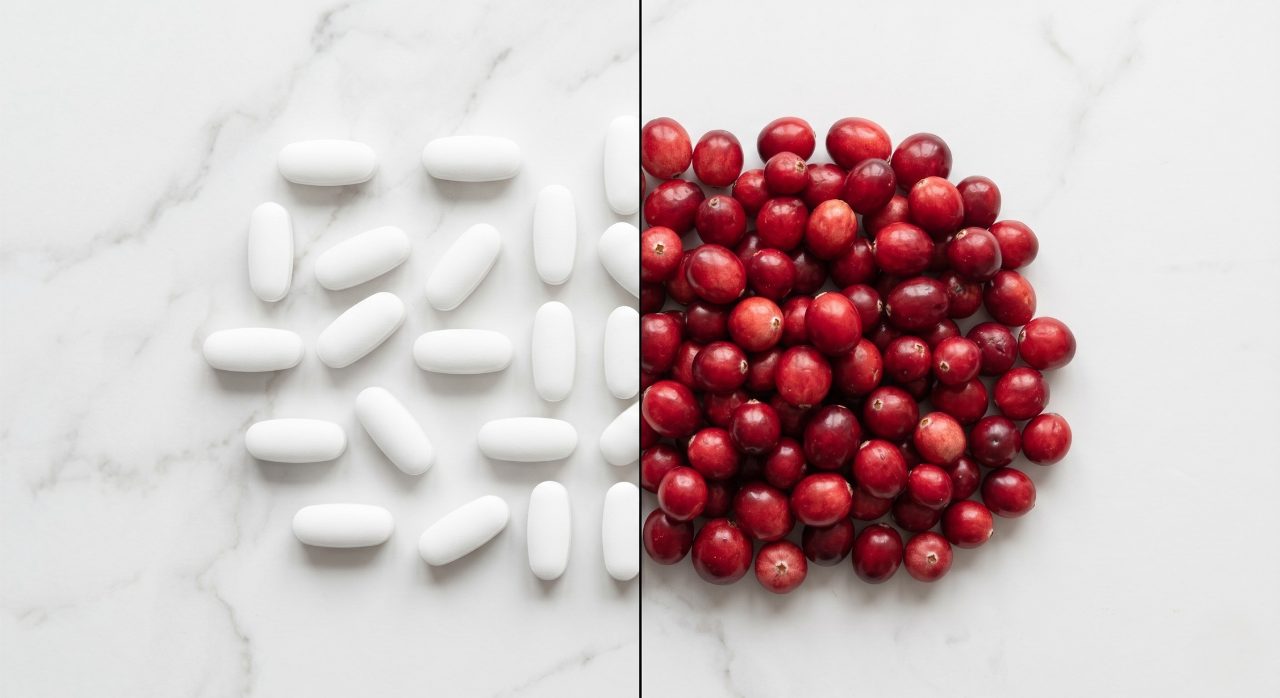
D-Mannose vs Cranberry: Which Is Better for Urinary Health?
-
By Chris Jones
Written by Chris Jones| Last Updated May 2026 | Social Media Manager at Nutrivity (7+ years in the UK supplement industry)
D-Mannose vs Cranberry: Which Is Better for Urinary Health?
Cranberry has been the default recommendation for urinary tract health for decades. D-Mannose is newer to mainstream awareness but has grown significantly in popularity over the last ten years. This article compares both approaches honestly — their mechanisms, their evidence base, their practical differences, and how to decide which is right for you.
This is part of our complete D-Mannose guide: D-Mannose Supplements: The Complete Guide
How Cranberry Works — and Why It Is Complicated
The reputation of cranberry for urinary health is long-established, but the mechanism is less straightforward than commonly assumed. For many years it was thought that cranberry acidified the urine, creating an environment hostile to bacteria. This has largely been disproved — the amounts of cranberry consumed as food or supplement are insufficient to meaningfully alter urine pH.
The current scientific understanding focuses on proanthocyanidins (PACs) — specifically Type A PACs found in cranberries. These compounds appear to interfere with bacterial adhesion to the urinary tract lining, though through a different mechanism to D-Mannose. Type A PACs affect P-fimbriated E. coli, which use a different adhesin mechanism to Type 1 fimbriated E. coli targeted by D-Mannose.
The problem with cranberry supplements is dose and standardisation. PAC content varies enormously between cranberry products — from negligible amounts to meaningful doses depending on the extraction method, concentration ratio, and formulation. A 500mg cranberry extract capsule with no PAC content stated is essentially an unknown quantity from a mechanism perspective. Products need to state the PAC content — ideally confirming PACs by DMAC/A2 method which is the accepted analytical standard — to be meaningfully compared.
How D-Mannose Works — and Where Its Evidence Is Stronger
D-Mannose works by competitive inhibition of Type 1 fimbriated E. coli adhesion. When present in urine, D-Mannose binds to the FimH tip of E. coli type 1 fimbriae, preventing the bacteria from attaching to bladder wall cells. The bacteria are then flushed out during urination.
The mechanism is more directly targeted than cranberry PACs, and the dose is more straightforward to standardise — a 1000mg tablet contains exactly 1000mg of D-Mannose. There is no equivalent of the PAC content problem. The clinical evidence specifically comparing D-Mannose to a control — including the Kranjčec 2014 trial — is more directly interpretable than most cranberry trial evidence.
For a full explanation of the D-Mannose mechanism: What Is D-Mannose and How Does It Work?
 Cranberry vs D-Mannose: The Evidence Compared
| Factor | D-Mannose | Cranberry |
|---|---|---|
| Primary mechanism | Type 1 fimbriae FimH inhibition | Type A PAC anti-adhesion activity |
| Target bacteria | E. coli (Type 1 fimbriated) | E. coli (P-fimbriated) and others |
| Dose standardisation | Simple — mg of D-Mannose stated | Complicated — PAC content varies widely |
| Clinical trial evidence | Kranjčec 2014, MERIT trial | Mixed — Cochrane review inconclusive |
| Typical UK cost per day | From 16p/day (Nutrivity 365-pack) | Varies widely by product |
| Suitable for vegans | Yes (Nutrivity) | Usually yes |
| Suitable for halal diets | Yes (Nutrivity) | Usually yes |
OUR TOP RECOMMENDED
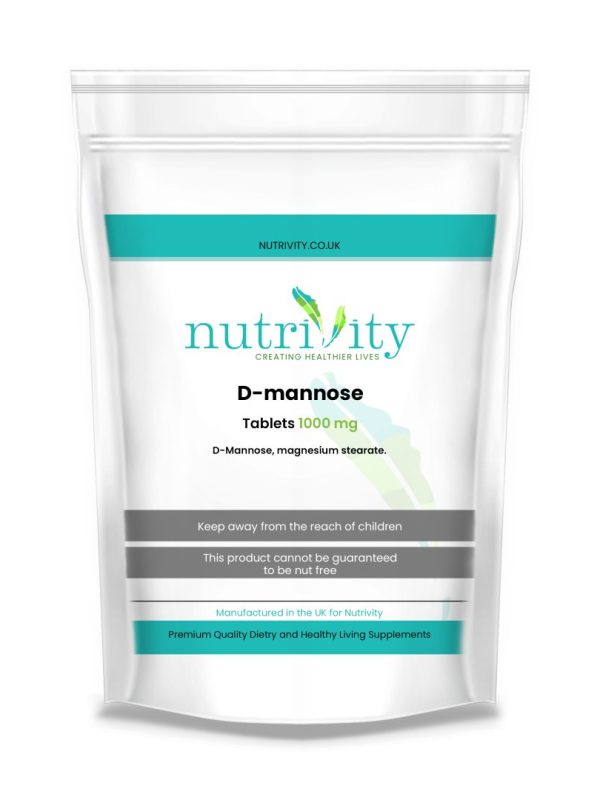
D-Mannose 1000mg Vegan Tablets – High Strength | Women’s Health
Price range: £13.99 through £58.99
What Does the Cochrane Review Say About Cranberry?
The Cochrane Collaboration — an international body that produces systematic reviews of clinical evidence — has reviewed cranberry products for UTI prevention on multiple occasions. The most recent reviews have reached broadly inconclusive results: some individual trials show benefit, but the overall evidence is inconsistent across studies, and the quality of trials has varied considerably. The Cochrane review found that cranberry products may reduce the number of symptomatic UTIs in women with recurrent UTIs, but noted that the magnitude of effect was uncertain and the evidence quality moderate.
This is a more mixed picture than the specific D-Mannose trial evidence, though it is worth noting the cranberry evidence base is also larger — more trials exist for cranberry simply because it has been studied for longer.
Practical Differences: Which Is Easier to Take?
D-Mannose in tablet form at 1000mg per tablet offers a clean, single-ingredient daily dose. You take one tablet with water and you know exactly what you have taken. The dose is consistent and the product is standardised.
Cranberry supplements range from juices (high sugar content, inconvenient for daily supplementation) to capsules (variable PAC content) to standardised extracts (better, but harder to find and more expensive). For anyone who wants a consistent, measurable daily dose, D-Mannose in tablet form is generally more practical than cranberry supplementation.
Can You Take D-Mannose and Cranberry Together?
There is no known interaction between D-Mannose and cranberry supplements. Because they work through different mechanisms — D-Mannose on Type 1 fimbriae, cranberry PACs on P-fimbriae — they are theoretically complementary rather than redundant. Some people take both as a belt-and-braces approach to urinary health.
There is no clinical trial evidence specifically examining the combination, so whether taking both provides additive benefit over either alone is not established. From a safety perspective, both are well tolerated and there is no reason they cannot be taken together.
Which Should You Choose?
Choose D-Mannose if — you want a well-studied, standardised daily supplement with a clear mechanism of action against the most common UTI-causing bacteria, at a consistent and affordable daily cost. Especially relevant if you have a history of recurrent UTIs and know they have been E. coli-driven.
Choose cranberry if — you prefer a supplement with a longer history of use and wider mainstream availability, and you choose a product with a stated, standardised PAC content. Cranberry may also have some benefit against a slightly broader range of bacterial types than D-Mannose.
Consider both if — you have had recurrent UTIs and want to cover multiple mechanisms simultaneously. This is a reasonable approach and there is no safety concern with combining them.
For more on D-Mannose dosage and how to take it: D-Mannose Dosage: How Much Should You Take Per Day?
For the full UK brand comparison: Best D-Mannose Supplements UK 2026
Nutrivity D-Mannose 1000mg Vegan Tablets
UK-made, GMP manufactured, vegan friendly and halal friendly. From 16p per day on the 365-tablet pack.
View Nutrivity D-Mannose 1000mg Vegan Tablets
A Closer Look at Cranberry Supplement Quality in the UK
One of the most significant practical problems with cranberry supplementation is the dramatic variation in product quality across the UK market. Unlike D-Mannose — where a 1000mg tablet contains 1000mg of the active compound — cranberry supplements are complicated by extraction ratios, concentration factors, and PAC content that is rarely stated on the label.
A product labelled as “500mg cranberry extract” might contain anywhere from negligible to meaningful amounts of PACs depending on how the extract was produced. The concentration ratio matters enormously: a 10:1 extract means 500mg of extract was derived from 5000mg of whole cranberries, while a 36:1 extract would be derived from 18000mg. But the PAC content — which is the actual active compound — depends on the specific extraction method and the cranberry variety used, not simply the ratio.
The accepted analytical method for quantifying PAC content in cranberry products is the DMAC/A2 method. Only a small number of premium cranberry supplement brands in the UK state their PAC content using this method. When choosing a cranberry supplement, a product that states its PAC content per dose by this method is significantly more meaningful than one that only lists the extract weight.
This complexity is one of the main reasons health professionals and informed consumers have increasingly moved toward D-Mannose as a more transparent and standardised alternative. The dose is clear, the mechanism is specific, and the clinical evidence is directly applicable to the dose provided in the supplement.
Historical Context: Why Cranberry Got Its Reputation
The association between cranberry and urinary health has roots going back centuries in Native American traditional medicine, and entered mainstream healthcare awareness in the 20th century. For a long time, the mechanism was misattributed — it was thought that cranberry acidified the urine, making it hostile to bacteria. This hypothesis has been largely abandoned as research showed the amounts consumed were insufficient to meaningfully change urine pH.
The PAC hypothesis emerged from research in the 1980s and 1990s, and Type A PACs were specifically identified as the relevant compounds in the early 2000s. This represents relatively recent mechanistic understanding, which helps explain why the clinical evidence for cranberry is both extensive (many trials going back decades) and inconsistent (early trials were not designed around the correct mechanism and used products with variable PAC content).
D-Mannose benefited from entering the supplement mainstream with better-established mechanistic understanding and more specifically designed trials. The Kranjčec 2014 trial was designed around D-Mannose’s specific mechanism from the outset, which may partly explain why its results are more clearly interpretable than much of the older cranberry literature.
Other Urinary Health Supplements Worth Knowing About
Beyond D-Mannose and cranberry, several other supplements are commonly sold for urinary health in the UK:
Uva ursi (bearberry) — Contains arbutin, which is converted to hydroquinone in the urine and has antimicrobial properties. Some evidence for short-term use, but concerns about long-term safety at high doses. Not recommended for prolonged daily use without medical supervision.
Hibiscus extract — Some evidence for antimicrobial activity in vitro, but clinical evidence for UTI prevention in humans is limited.
Probiotics (Lactobacillus strains) — Increasingly studied for urinary health, particularly in the context of restoring urogenital flora after antibiotic courses. Some evidence for benefit in women with recurrent UTIs, often used in combination with D-Mannose.
Vitamin C — Sometimes sold in combination UTI formulas. The theory that high-dose vitamin C acidifies the urine is not well supported by evidence. However, vitamin C has general immune support benefits and is unlikely to be harmful.
Of these options, D-Mannose has the most specifically targeted mechanism of action against the most common UTI pathogen, and the most directly applicable clinical evidence for preventative use. It is the supplement most worth considering as a starting point for anyone with a history of recurrent UTIs.
Summary: D-Mannose vs Cranberry at a Glance
D-Mannose offers a more standardised, transparent dose with a more directly interpretable evidence base for recurrent UTI prevention. Cranberry offers a broader range of potential anti-adhesion activity and a longer history of use, but product quality varies enormously and the evidence base is more mixed. Neither is a treatment for an active infection. Both are well tolerated. For daily preventative supplementation, D-Mannose is the more straightforward choice for most buyers. For anyone who wants the broadest possible approach, combining both is a reasonable option with no known safety concerns.
For further reading, see: D-Mannose for Recurrent UTIs: Can It Help Long-Term?
Frequently Asked Questions
Is D-Mannose better than cranberry for UTIs?
The clinical evidence for D-Mannose in recurrent UTI prevention is more directly interpretable than the cranberry evidence base, which is hampered by dose inconsistency across products. Whether “better” applies depends on your specific situation, the type of bacteria involved, and the quality of cranberry product you compare it to. For standardisation and clarity of dose, D-Mannose has an advantage. For breadth of anti-adhesion activity, cranberry may cover additional bacterial strains.
Does cranberry juice work for UTIs?
Cranberry juice as commonly sold in UK supermarkets typically contains too little PAC content — and too much sugar — to be a meaningful urinary health supplement. Concentrated cranberry juice or standardised cranberry extract supplements with stated PAC content are a more appropriate comparison to D-Mannose tablets.
Can cranberry and D-Mannose be taken together?
Yes. There is no known safety concern or interaction between cranberry supplements and D-Mannose. They work through different mechanisms and can be taken simultaneously. Whether the combination provides additional benefit over either alone is not established by clinical evidence.
Which is cheaper per day — cranberry or D-Mannose?
Cost varies significantly by product for both options. Nutrivity D-Mannose at the 365-tablet pack works out at 18p per day. A high-quality standardised cranberry extract with confirmed PAC content can be similarly priced, but cheaper cranberry products often have negligible PAC content, making them poor value regardless of price.
Food supplements must not replace a varied and balanced diet and a healthy lifestyle. This article does not constitute medical advice.