




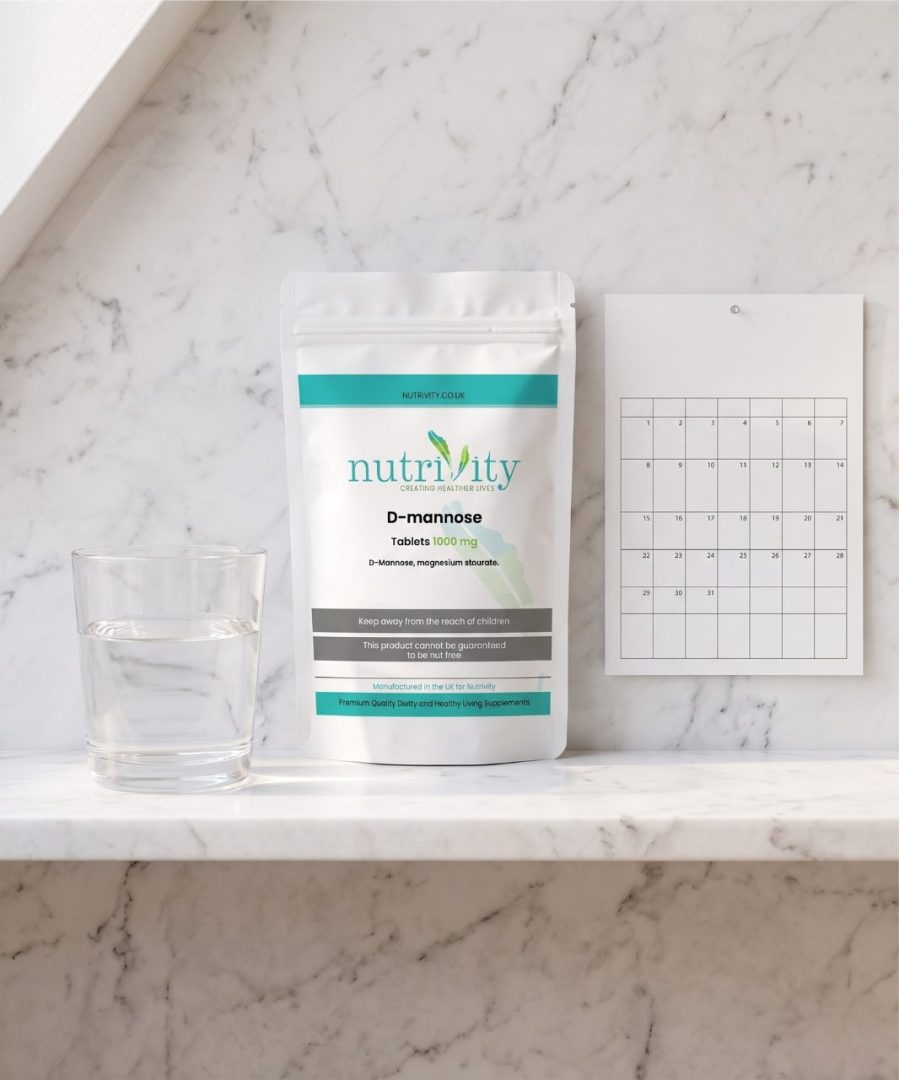
Can You Take D-Mannose Every Day? A Guide to Daily Use
-
By Chris Jones
Written by Chris Jones | Last Updated June 2026 | Social Media Manager at Nutrivity (7+ years in the UK supplement industry)
Can You Take D-Mannose Every Day? A Guide to Daily Use
Daily long-term supplementation is the most common way people use D-Mannose. Whether you have experienced recurrent UTIs and want ongoing preventative support, or simply want to maintain a healthy urinary environment, this article covers everything you need to know about taking D-Mannose every day — the evidence, the safety, the practicalities, and what to expect over time.
This is part of our complete D-Mannose guide: D-Mannose Supplements: The Complete Guide
Quick Answer for can you take D-mannose every day?
-
Taking D-Mannose daily (1000mg to 2000mg) is clinically safe for healthy adults and highly effective because its protective, bacteria-flushing mechanism requires continuous presence in the urine.
-
If you stop daily supplementation, its urinary benefits fade within hours, making consistent routines (like taking it with water morning or night) essential for preventing recurrent UTIs.
-
To make long-term use affordable, purchasing bulk sizes like Nutrivity’s 365-tablet pack drops the cost to around 16p per day, eliminating the hassle and gaps of frequent reordering.
Is It Safe to Take D-Mannose Every Day?
For otherwise healthy adults, daily D-Mannose supplementation at 1000mg to 2000mg per day is considered safe based on the available clinical evidence. The major clinical trials examining D-Mannose — including the Kranjčec 2014 trial — used daily supplementation over a six-month period without reporting significant safety concerns. There is no established upper tolerable limit for daily D-Mannose in healthy adults, and the compound does not accumulate in the body in the way that fat-soluble supplements can.
D-Mannose is a naturally occurring sugar that the human body already produces and processes. At supplement doses, most of it passes into the urine without being metabolised, which is the property that makes it useful for urinary health. This also means it does not build up in tissues or create chronic exposure concerns in the same way some synthetic compounds might.
For a full safety guide: Is D-Mannose Safe? Side Effects and What to Know
Why Daily Use Is the Most Effective Approach
D-Mannose works by providing competitive binding sites for E. coli in the urine. This mechanism is only active when mannose is present in the urine — which means the protective effect is tied to consistent daily supplementation. Unlike some supplements where you can take a course and stop, D-Mannose’s mechanism is continuous: it works on the dose you took today during the urination cycles over the next several hours, and then requires the next dose to maintain coverage.
This is why the clinical trials examined daily supplementation over months, not short courses. The reduction in recurrence rates seen in the Kranjčec trial reflects the cumulative effect of continuous daily coverage, not a short-term intervention. Taking D-Mannose for a week and then stopping does not provide ongoing preventative benefit.
Building a Daily D-Mannose Habit
The most effective way to ensure consistent daily supplementation is to make it part of an existing routine. Options that work well for most people:
Morning routine — Take D-Mannose at the same time as breakfast or alongside other morning supplements or medication. Having a fixed morning trigger makes it easy to remember and builds the habit quickly.
Evening routine — Take it before bed alongside any evening supplements. Some people prefer this as it means elevated urinary mannose concentrations during the overnight period when urination is less frequent.
With water, always — Taking D-Mannose with a full glass of water supports absorption and the complementary flushing effect. This is a good habit regardless of what time of day you choose to take it.
Set a reminder — For the first few weeks of building the habit, a phone reminder at the same time each day is a practical way to avoid missed doses until the routine is established.
OUR TOP RECOMMENDED
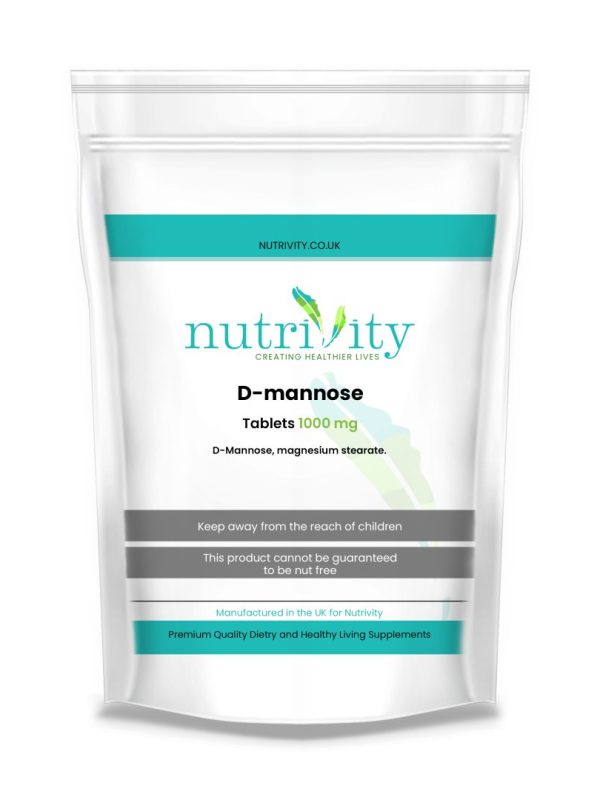
D-Mannose 1000mg Vegan Tablets – High Strength | Women’s Health
Price range: £13.99 through £58.99
What Happens If You Stop Taking D-Mannose?
If you stop taking D-Mannose, urinary mannose concentrations return to baseline levels within a few hours of the last dose. The protective mechanism is no longer active. For someone using D-Mannose daily as a preventative supplement for recurrent UTIs, stopping supplementation removes the preventative effect and the risk of recurrence returns to its previous baseline.
This does not mean you must take D-Mannose forever. Some people use it for a defined period — for example, the winter months when they are more susceptible to infections, or during a period of higher sexual activity — and reassess. Others incorporate it as a permanent daily habit. The decision is an individual one based on your pattern of infections and how much the preventative effect is contributing to your quality of life.
 Daily Cost: Making Long-Term Use Affordable
For daily ongoing supplementation, cost per day matters more than pack price. The table below shows how the daily cost of Nutrivity D-Mannose decreases significantly with larger pack sizes:
| Pack size | Price | Daily cost | Reorder frequency |
|---|---|---|---|
| 30 tablets | £13.99 | 47p/day | Monthly |
| 60 tablets | £15.99 | 27p/day | Every 2 months |
| 120 tablets | £23.99 | 20p/day | Every 4 months |
| 240 tablets | £46.99 | 19.5p/day | Every 8 months |
| 365 tablets | £58.99 | 16p/day | Once a year |
For daily use, the 365-tablet pack is by far the most practical and cost-effective choice. At 18p per day it works out at £58.99 for a full year of daily supplementation — less than £1.15 per week. It also eliminates the inconvenience and potential for gaps in supplementation that come with monthly reordering. View all pack sizes here.
Reassessing Over Time
Taking D-Mannose every day does not mean you should never evaluate whether it is still serving you. Periodically — perhaps every six months — it is worth reviewing:
Has the frequency of your infections changed since starting daily supplementation? Have you noticed any changes in side effects or tolerance? Has anything in your health situation changed that warrants a conversation with your GP about your supplement use? Are there other interventions — medical or lifestyle — that should be considered alongside or instead of D-Mannose?
D-Mannose is not a permanent commitment. It is a daily supplement that you take for as long as it continues to provide value relative to its cost and any side effects. Reviewing this periodically is sensible practice for any supplement you take long-term.
Daily D-Mannose and Other Supplements
D-Mannose can be taken alongside most other commonly used supplements without known interactions. It is often combined with:
Vitamin C — Sometimes taken together in urinary health supplement routines. No known interaction. Both are water-soluble and well tolerated together.
Probiotics — Lactobacillus-based probiotics are increasingly used alongside D-Mannose for urinary health support, as they support vaginal and urinary microbiome health through complementary mechanisms. No known adverse interaction.
Cranberry extract — Some people combine D-Mannose and cranberry as a belt-and-braces approach covering different bacterial adhesion mechanisms. No known interaction. For more on this combination: D-Mannose vs Cranberry
General daily supplements — D-Mannose alongside vitamin D, magnesium, omega-3, or multivitamins is straightforward. No known interactions.
View Nutrivity D-Mannose 1000mg Vegan Tablets | Best D-Mannose Supplements UK 2026 | Complete D-Mannose Guide
Long-Term D-Mannose Use: What Seven Years in the Supplement Industry Has Taught Me
Over seven years working at Nutrivity, I have spoken with and read feedback from a significant number of customers who use D-Mannose daily. The pattern that emerges consistently from those who report the most benefit is not a dramatic overnight change — it is a gradual reduction in infection frequency over months that, looking back, represents a meaningful improvement in quality of life.
The customers who get the least from D-Mannose tend to fall into a few categories: those who take it inconsistently, stopping and starting based on how they feel; those who take it at a low dose for a short period and conclude it is not working before giving it adequate time; and those whose UTIs may not be primarily E. coli-driven, meaning the specific mechanism of D-Mannose is less relevant to their situation.
The customers who report the most benefit are those who commit to daily use at an adequate dose for at least three to six months, maintain good hydration, and have a clear baseline of their pre-supplementation infection frequency to compare against. This honest picture from years of real-world use is consistent with what the clinical evidence shows — D-Mannose is a long-term habit with a gradual preventative effect, not a short-term intervention with immediate results.
Nutrivity D-Mannose 1000mg: Designed for Daily Use
Nutrivity D-Mannose is specifically designed with daily long-term users in mind. Five pack sizes from 30 to 365 tablets allow you to start with a smaller supply to assess how it works for you, then move to the larger pack sizes once you have established it as a daily habit. The 365-tablet pack — a full year’s supply at one tablet per day — is 18p per day and eliminates reordering for twelve months.
The product is vegan friendly and halal friendly, UK-manufactured under GMP standards, with no gelatine and no animal derivatives. It is the only D-Mannose brand in the major UK market comparison that explicitly confirms halal suitability. For a full comparison of UK D-Mannose brands: Best D-Mannose Supplements UK 2026
For the complete hub covering all D-Mannose topics: D-Mannose Supplements: The Complete Guide
For dosage information: D-Mannose Dosage: How Much Should You Take Per Day?
For the research behind D-Mannose: D-Mannose for UTIs: What the Research Actually Says
The One-Year View: What Daily D-Mannose Actually Costs
To put daily supplementation in context, here is what a year of D-Mannose supplementation costs across the main UK brands, based on their best available pack pricing:
| Brand | Best daily cost | Annual cost |
|---|---|---|
| Nutrivity (365-tablet pack) | 16p/day | £58.99 |
| Naturesupplies (1000-tablet pack, pro-rated) | 17p/day | ~£62 |
| Natures Aid (60-tablet pack, repeated) | 30p/day | ~£109 |
| SC Nutra Sweet Cures (50-tablet pack, repeated) | 46p/day | ~£168 |
| Holland & Barrett (30-tablet pack, repeated) | 50p/day | ~£183 |
At £58.99 for a full year, Nutrivity D-Mannose is the most straightforward and competitive option for committed daily users — one purchase, no reordering hassle, at the lowest per-day cost among the explicit single-brand tablet options. Order your year supply here.
Frequently Asked Questions
Can I take D-Mannose every day indefinitely?
For otherwise healthy adults, there is no established maximum duration for daily D-Mannose supplementation. The compound does not accumulate in the body and the clinical evidence from six-month trials shows no safety concerns with continuous daily use. Long-term use beyond six months is not evaluated by controlled trial data but is not associated with known harm based on the mechanism and safety profile. Reassess periodically with your GP if you have any health conditions.
Should I take a break from D-Mannose?
There is no clinical or mechanistic basis for cycling D-Mannose — taking it for a period and then stopping for a break. The protective effect is continuous and tied to daily supplementation. Taking breaks simply removes the preventative effect during the break period. If you want to stop for any reason — cost, convenience, or to assess whether you still need it — simply stopping and reassessing your infection frequency is a reasonable approach.
What if I forget to take my daily dose?
Missing an occasional dose is not a significant concern. Take your usual dose the following day and continue your normal schedule. Missing a single day does not reset the mechanism or require you to start over. Consistent daily use over months is what delivers the long-term preventative benefit.
Can I take D-Mannose every day during pregnancy?
Consult your midwife or doctor before taking D-Mannose or any supplement during pregnancy. UTIs are more common during pregnancy and carry specific risks, but supplement use during pregnancy should always be medically supervised.
Is D-Mannose suitable for daily use in older adults?
Yes, for otherwise healthy older adults. Older adults with diabetes, kidney disease, or complex medication regimens should discuss D-Mannose with their GP before starting daily supplementation. For postmenopausal women with recurrent UTIs, topical vaginal oestrogen should also be discussed with a GP as it has strong evidence for this population and can be used alongside D-Mannose.
Food supplements must not replace a varied and balanced diet and a healthy lifestyle. This article does not constitute medical advice.