




D-Mannose Dosage: How Much Should You Take Per Day?
-
By Chris Jones
Written by Chris Jones | Last Updated June 2026 | Social Media Manager at Nutrivity (7+ years in the UK supplement industry)
D-Mannose Dosage: How Much Should You Take Per Day?
D-Mannose dosage is one of the most practically important questions when starting this supplement. Unlike some supplements where a single universal dose applies, D-Mannose is taken at different amounts depending on whether you are using it preventatively on a daily basis or responding to early urinary discomfort. This article covers both, based on the clinical evidence and practical guidance.
This is part of our complete D-Mannose guide: D-Mannose Supplements: The Complete Guide.
Quick answer on D-mannose dosage:
-
Two Main Approaches: D-Mannose dosage is split into a preventative maintenance dose (typically 1000mg to 2000mg daily, which aligns with clinical trials) and a targeted post-coital dose (1000mg to 2000mg taken immediately before or after sexual activity).
-
Acute Protocol: At the very first sign of urinary discomfort, some users temporarily switch to an intensive protocol of 1000mg to 2000mg every three to four hours for 24 to 48 hours to flood the urinary tract with competitive binding sites.
-
Format & Practicalities: It should always be taken with a full glass of water to support the mechanical flushing of bacteria, whether using a standard 1000mg tablet (like Nutrivity) or loose powder; users with diabetes or kidney conditions must consult a GP first.
Preventative Daily Dose
The best-supported dose for daily preventative supplementation comes from the Kranjčec 2014 trial, which used 2g (2000mg) of D-Mannose powder per day in women with recurrent UTIs. This is the dose most frequently referenced in discussions of the evidence.
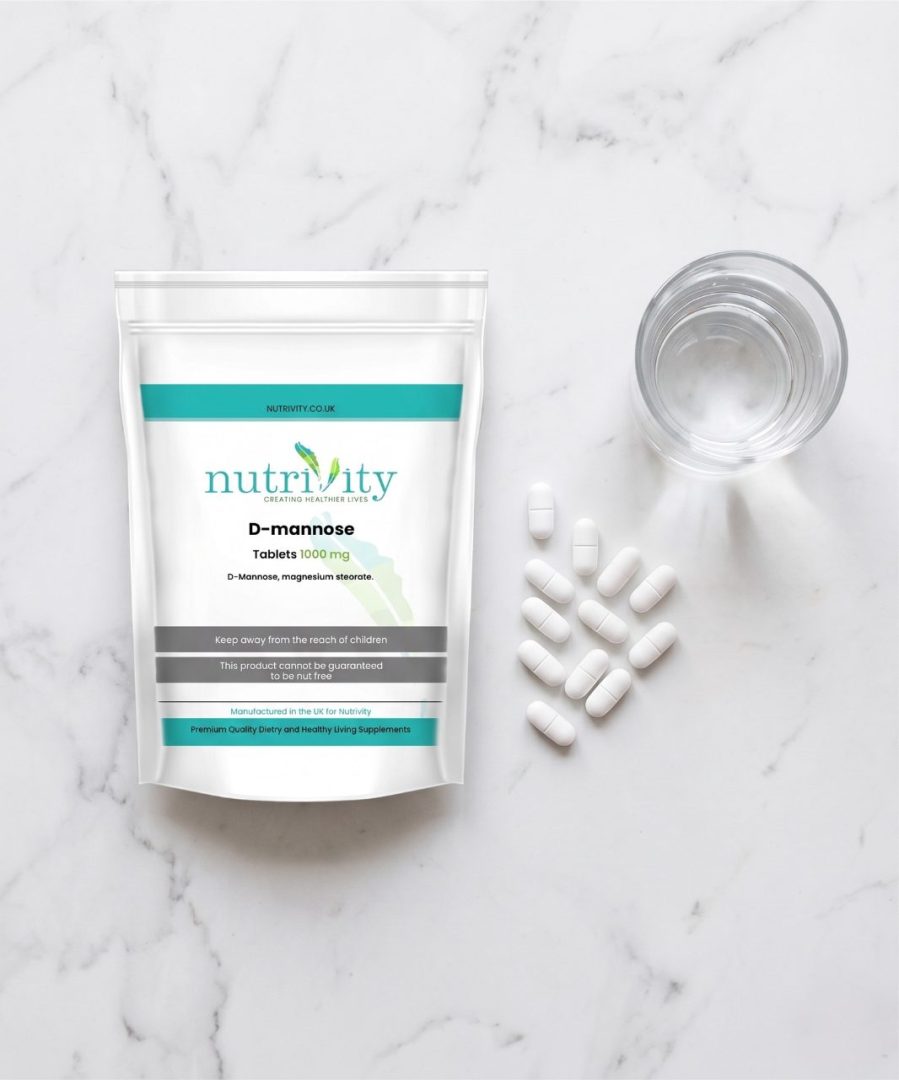
Most D-Mannose tablet products in the UK, including Nutrivity, provide 1000mg per tablet. A single 1000mg tablet daily is the standard maintenance dose across the UK market. Whether 1g provides equivalent preventative benefit to the 2g used in the trial is not definitively established, but 1000mg daily is the dose most UK suppliers design their products around for routine use.
Some people choose to take two 1000mg tablets per day (2000mg total) to match the trial dose. This is within the bounds of what the evidence considers, though the cost doubles compared to a single-tablet daily dose.
Higher-Dose Protocol at Symptom Onset
A common approach among experienced D-Mannose users is to temporarily increase the dose at the first sign of urinary discomfort — a tingling sensation, a feeling of urgency, or the early warning signs they have learned to recognise from previous UTIs. Some people take one to two tablets every three to four hours during this period, maintaining high urinary mannose concentrations throughout the day.
This acute protocol is not the subject of specific clinical trial evidence — the Kranjčec trial tested daily preventative use, not acute higher doses. The rationale is mechanistic: higher mannose concentrations in the urine mean more competitive binding sites available for E. coli fimbriae. It is a logical extension of the mechanism but not a clinically validated protocol in the same way that daily preventative use is.
If you are using D-Mannose in this way and symptoms persist or worsen beyond 24 to 48 hours, seek medical assessment. A supplement should never be used to delay appropriate medical care for a suspected infection.
Dose by Product Form
| Product form | Typical dose | Notes |
|---|---|---|
| 1000mg tablet (e.g. Nutrivity) | 1 tablet daily for maintenance | Convenient, standardised, no measuring required |
| 500mg capsule | 2 capsules daily for 1g total | More tablets needed; check halal/vegan status of capsule shell |
| Powder (e.g. SC Nutra) | 2g dissolved in water, once daily | Matches Kranjčec trial dose; requires measuring |
OUR TOP RECOMMENDED
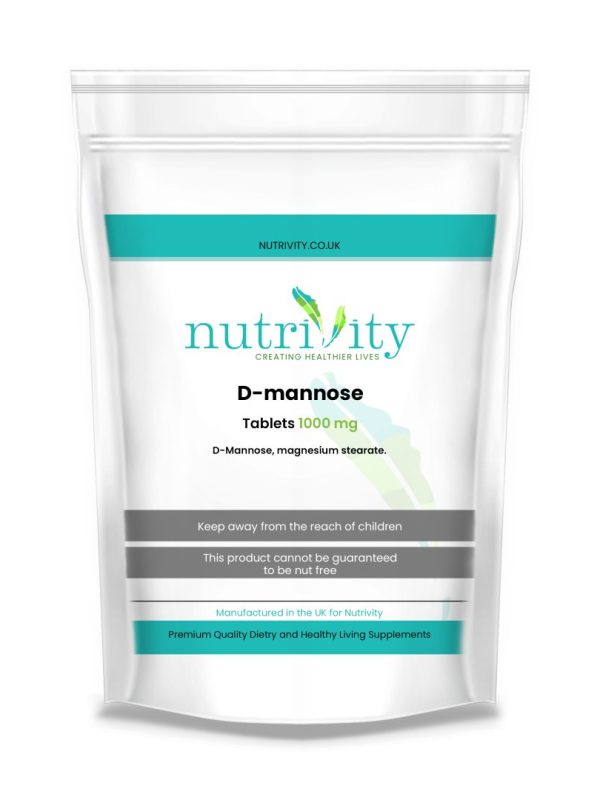
D-Mannose 1000mg Vegan Tablets – High Strength | Women’s Health
Price range: £13.99 through £58.99
Taking D-Mannose: Practical Guidance
With water — Always take D-Mannose with a full glass of water. D-Mannose works best when urine is flowing regularly, and adequate hydration supports both absorption and the flushing mechanism.
Timing — There is no clinical evidence favouring a specific time of day for D-Mannose. Most people take it as part of a morning or evening routine. Consistency of timing each day helps build the habit and ensures regular dosing.
With or without food — D-Mannose can be taken with or without food. Some people with sensitive stomachs find taking it with food reduces mild gastrointestinal discomfort.
Duration — For preventative use, D-Mannose is typically taken daily on an ongoing basis. There is no established maximum duration for daily supplementation in healthy adults. Reassess periodically with your healthcare professional, particularly if you have other health conditions.
Special Populations and Dose Considerations
Diabetes — D-Mannose is a sugar. While it is poorly metabolised and not thought to significantly affect blood glucose in healthy adults at supplement doses, people with diabetes or impaired glucose metabolism should consult their doctor before taking it and should monitor their blood glucose carefully if they choose to use it.
Kidney conditions — D-Mannose is filtered by the kidneys. If you have kidney disease or significantly impaired kidney function, consult your doctor before taking any supplement that reaches the kidneys in meaningful amounts.
Pregnancy and breastfeeding — Consult your midwife or doctor before taking D-Mannose or any supplement during pregnancy or breastfeeding.
Children — D-Mannose supplements are generally not recommended for children without medical supervision. If a child is experiencing urinary symptoms, seek medical assessment.
 Nutrivity D-Mannose Pack Sizes and Daily Cost
| Pack size | Price | Daily cost (1 tablet/day) |
|---|---|---|
| 30 tablets | £13.99 | 47p/day |
| 60 tablets | £15.99 | 27p/day |
| 120 tablets | £23.99 | 20p/day |
| 240 tablets | £46.99 | 19.5p/day |
| 365 tablets | £58.99 | 16p/day |
For daily long-term use, the 365-tablet pack provides the best value and removes the inconvenience of reordering every month. View Nutrivity D-Mannose
For further reading: How Long Does D-Mannose Take to Work? | Can You Take D-Mannose Every Day? | Is D-Mannose Safe?
Dosage for Post-Coital Use
Sexual activity is one of the most commonly cited triggers for UTIs in women who are prone to recurrent infections. The anatomical proximity of the urethra to the vagina and perineum means bacteria can be introduced into the urinary tract during sex relatively easily. For this reason, some women specifically target their D-Mannose supplementation around sexual activity rather than — or in addition to — a fixed daily dose.
The most common approach is to take a dose of D-Mannose (typically 1000 to 2000mg) within 30 to 60 minutes before or immediately after sexual activity, to ensure elevated urinary mannose concentrations during the period when bacterial introduction is most likely. Some people also urinate promptly after sex — a recommendation consistently made by urologists — which mechanically flushes bacteria from the urethra before they can ascend to the bladder.
This targeted approach is not the subject of specific clinical trial evidence for D-Mannose, but it is mechanistically sound and commonly practiced. It can be used either as a standalone targeted strategy or alongside daily preventative supplementation.
D-Mannose Dosage Compared Across UK Products
Understanding dosage requires looking at how different UK D-Mannose products compare, because not all products are designed around the same dose or protocol.
Nutrivity D-Mannose provides 1000mg per tablet in a simple daily tablet. SC Nutra (Sweet Cures) Waterfall D-Mannose Tablets also provide 1000mg per tablet but only comes in packs of 50. Natures Aid provides 1000mg per tablet in packs of 60 and suggests an initial dose of one to three tablets every three hours before transitioning to a maintenance dose — a more intensive initial protocol that reflects a higher-dose approach to early use.
Naturesupplies also provides 1000mg tablets and sells in bulk packs up to 1000 tablets. SC Nutra’s powder product, Waterfall D-Mannose Powder, allows flexible dosing that can match the 2g per day used in the Kranjčec trial without taking two tablets.
For a full comparison of all five brands including pricing: Best D-Mannose Supplements UK 2026
Adjusting Dose as Part of an Overall Urinary Health Strategy
D-Mannose dosage does not operate in isolation. It works best as part of an overall approach that includes adequate hydration, sensible hygiene practices, and appropriate medical care when needed. The dose that works for one person may not be optimal for another — individual variation in absorption, urinary concentration achieved, and the specific bacteria involved in any recurrent infections all influence how effective a given dose will be.
Starting at 1000mg daily and assessing over three to six months is a sensible approach. If after several months at 1g daily you are still experiencing recurrent infections and they are known to be E. coli-driven, increasing to 2g daily — two Nutrivity tablets — is a reasonable next step before concluding that D-Mannose is not effective for you.
For the full guide to long-term daily use: Can You Take D-Mannose Every Day?
For information on how long to take D-Mannose before assessing its effectiveness: How Long Does D-Mannose Take to Work?
For recurrent UTI management context: D-Mannose for Recurrent UTIs: Can It Help Long-Term?
Frequently Asked Questions About D-Mannose Dosage
How much D-Mannose should I take per day?
For daily preventative supplementation, 1000mg (one Nutrivity tablet) per day is the standard maintenance dose used across the UK market. The clinical trial evidence used 2000mg per day — matching this dose means taking two Nutrivity tablets daily. Both are reasonable approaches; 1g daily is the most common starting point for daily maintenance use.
Can I take too much D-Mannose?
There is no established upper tolerable limit for D-Mannose in healthy adults. At high doses some people experience mild loose stools or digestive discomfort. The doses used in clinical trials — up to 2g per day — are considered safe. Exceeding this without medical guidance is not advisable, not because of known toxicity but because there is no evidence that higher doses provide additional benefit.
What happens if I miss a dose?
Missing an occasional dose is not a significant concern. Simply take your normal dose the following day and continue your regular schedule. Do not double your dose to compensate for a missed one. Consistent daily use over time is more important than any single dose.
Should I take D-Mannose morning or evening?
There is no clinical evidence that timing matters. The most important factor is consistency — take it at the same time each day to build the habit and ensure regular coverage.
Food supplements must not replace a varied and balanced diet and a healthy lifestyle. Consult your doctor or pharmacist before use if you are under medical supervision or taking prescribed medication.