





Glucosamine Dosage UK 2026 — How Much Should You Take?
-
By Chris Jones
Posted June 2026 Written by Chris Jones, Social Media Manager at Nutrivity, with 7+ years in the supplement industry.
Glucosamine Dosage UK — How Much Should You Take?
Glucosamine is one of the most widely used joint supplements in the UK, but the dosage question trips a lot of people up — partly because different products use different forms and strengths, and partly because “more” is often assumed to be “better” when that is not how glucosamine works. This guide sets out the standard dose, why that specific amount is used, how and when to take it, how long to give it, and the safety limits and cautions that matter.
For the wider background on what glucosamine is and how it sits alongside cod liver oil for joints, see our guide to cod liver oil and glucosamine.
The Standard Glucosamine Dose
The dose used in the great majority of clinical research, and the one most UK products are built around, is 1,500mg of glucosamine sulphate per day. This is the figure that appears throughout the osteoarthritis trial literature, and it is the benchmark against which other doses are judged. It can be taken either as a single 1,500mg dose once a day or split into smaller amounts across the day — both approaches are used, and the total daily intake is what matters most rather than how it is divided.
Taking more than the standard daily amount does not produce a proportionally bigger benefit. Glucosamine is not a painkiller that scales with dose; it is a slow-acting structural supplement, and the research has not shown that exceeding the studied amount improves results. The sensible approach is to take the established dose consistently rather than to chase a higher number.
Glucosamine Sulphate vs Hydrochloride — Why the Form Affects the Dose
There are two common forms of glucosamine, and they are not interchangeable on a milligram-for-milligram basis. Glucosamine sulphate has the stronger and more consistent evidence base, particularly for osteoarthritis, and it is the form used in most of the positive clinical trials. Glucosamine hydrochloride contains more glucosamine by weight but has less supportive trial evidence behind it. Because the research that established the 1,500mg figure used glucosamine sulphate, that is the form the standard dose refers to.
This matters when comparing products: a label quoting a large milligram figure is meaningless unless you know which form it is and how much elemental glucosamine it delivers. For a fuller breakdown of the two forms, see our guide on glucosamine sulphate vs hydrochloride. The practical takeaway is to favour glucosamine sulphate and to make sure you are actually getting the studied daily amount.
 How to Take Glucosamine
Take glucosamine with food. The most common side effects are mild and gastrointestinal — a little nausea or stomach discomfort — and taking it with a meal substantially reduces these for most people. If you find a single 1,500mg dose sits less comfortably, splitting it into two smaller doses with meals is a reasonable alternative that delivers the same daily total.
Consistency is the single most important factor. Glucosamine needs to be taken every day, not just on days when joints feel sore, because its proposed action is on the cartilage environment over time rather than on immediate pain. Set it to a fixed point in your day — with breakfast or your main meal — so it becomes routine. Missing the occasional day will not undo progress, but sporadic use is unlikely to reproduce the results seen in the trials.
OUR TOP RECOMMENDED
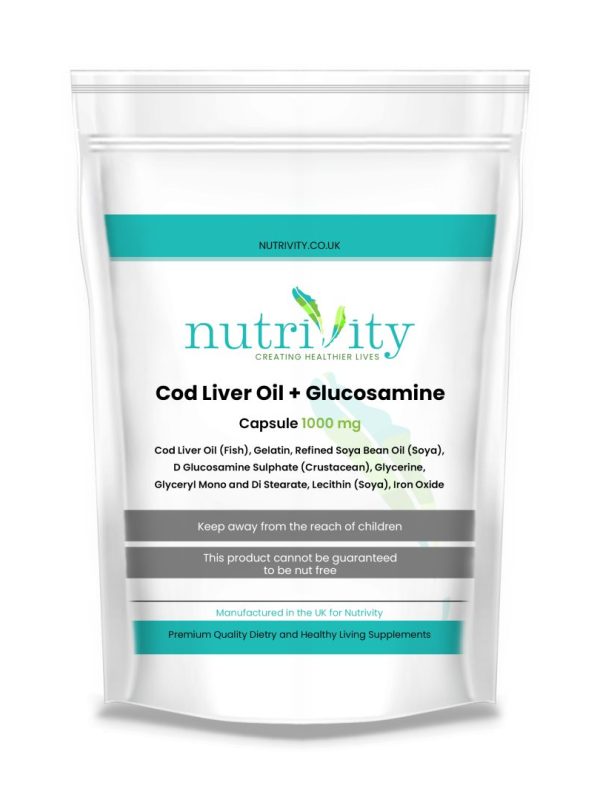
Cod Liver Oil, Omega 3 & Glucosamine 1000mg High Strength Soft Gels – 3 in 1 | Joint Support
Price range: £11.99 through £51.99🐟 Cod Liver Oil, Omega 3 & Glucosamine High Strength - 3 in 1 Formula. 📦 Up to 12 months supply – from just 15p per day.

How Long Before It Works
Glucosamine is slow-acting. Most people who notice a benefit do so after several weeks to a few months of consistent daily use, not within days. This is normal and expected, and it is the main reason people abandon glucosamine too early — they judge it on a fortnight when the fair trial is closer to two to three months. We cover this in detail in our guide on how long glucosamine takes to work. If you have taken the standard dose consistently for around three months and noticed nothing, that is reasonable grounds to reassess with your GP.
Glucosamine Dosage in a Combined Supplement
Many people take glucosamine as part of a combined product rather than on its own. Nutrivity’s Cod Liver Oil, Omega-3 & Glucosamine soft gels are a three-in-one that provides glucosamine sulphate alongside cod liver oil and additional fish oil for omega-3 — pairing the structural cartilage building block with the omega-3 fatty acids that support a normal inflammatory response. They are made in the UK to GMP standards and are halal friendly (the capsule uses halal-sourced gelatine), though, because they contain fish and shellfish-derived glucosamine, they are not suitable for vegans or anyone with a fish or shellfish allergy.
If you take a combined supplement, always read the label for the exact glucosamine amount per serving and follow the stated daily dose on the pack. The key rule with any combined product is not to double up: do not add a separate glucosamine supplement on top without checking the combined total, and be especially careful not to stack multiple cod liver oil sources because of the vitamin A content. For the right serving for your product, follow the on-pack directions rather than a generic figure.
Can You Take Too Much Glucosamine?
At standard supplement doses, glucosamine has a good safety record built from decades of use and multiple large trials. There is no benefit in exceeding the studied daily amount, and taking very high doses simply increases the chance of mild digestive upset without improving results. The most sensible ceiling is the established daily dose for your chosen form, taken with food. If you are taking glucosamine within a combined product, the relevant limit is the pack’s stated serving — adding more from other sources is where people get into trouble.
Who Should Be Cautious
Some people should check with their GP before taking glucosamine at any dose. Because supplement glucosamine is derived from the shells of shellfish, anyone with a shellfish or crustacean allergy should avoid it. If you take the blood thinner warfarin, glucosamine can affect how it works, so it should only be taken with your GP’s awareness and appropriate INR monitoring. If you have diabetes or problems with blood sugar control, it is worth a conversation with your GP and monitoring your levels, which we cover separately in our guide on glucosamine and blood sugar. Glucosamine is not recommended in pregnancy or breastfeeding due to a lack of safety data, and it is not suitable for children unless a doctor advises otherwise.
Glucosamine With Chondroitin — Does It Change the Dose?
Glucosamine is often paired with chondroitin, another component of cartilage, and many combined products put the two together. This does not change the glucosamine target — you still want around 1,500mg of glucosamine sulphate a day — but it adds a second ingredient, typically chondroitin at several hundred milligrams to over a gram daily depending on the product. The evidence for the combination is mixed: some people and some studies report benefit, others find it no better than glucosamine alone, and large trials have produced inconsistent results. If you choose a combined glucosamine-and-chondroitin product, the practical advice is unchanged — follow the pack’s stated serving, give it a proper two-to-three-month trial, and do not add a separate glucosamine product on top. For how glucosamine compares with other joint ingredients, see our guide on glucosamine vs collagen for joints.
Should You Cycle Glucosamine or Take It Continuously?
A common question is whether glucosamine should be taken in courses with breaks, or continuously. The trial evidence is based on continuous daily use over months, so that is the pattern to follow if you want to mirror the research. There is no established benefit to cycling glucosamine on and off, and because it is slow-acting, stopping and restarting is more likely to interrupt any benefit than to enhance it. The sensible model is to take the standard dose continuously, reassess honestly at around three months, and then make a deliberate decision: if it is clearly helping, continue; if you genuinely cannot tell any difference after a fair trial at the correct dose, there is little point continuing indefinitely. Either way, that decision should be based on a proper trial rather than a fortnight of use.
A Note on Vegetarian and Vegan Glucosamine
Most glucosamine is derived from the shells of shellfish, which is why standard glucosamine — and any combined product containing it — is not suitable for vegans or vegetarians, and must be avoided by anyone with a shellfish allergy. Vegetarian and vegan glucosamine does exist, produced by fermenting plant material such as corn rather than from shellfish, and it is dosed the same way at around 1,500mg of glucosamine sulphate a day. If you follow a plant-based diet, check the source on the label, because the dose target is identical but the suitability is not. The combined Cod Liver Oil, Omega-3 & Glucosamine product is not vegan or vegetarian, as it contains both fish-derived oil and shellfish-derived glucosamine.
 The Bottom Line
The standard glucosamine dose is 1,500mg of glucosamine sulphate a day, taken with food, every day, for at least two to three months before judging the effect. More is not better, the form matters, and consistency beats dose-chasing every time. If you take it within a combined product, follow the pack’s serving and avoid doubling up. And if you have a shellfish allergy, take warfarin, have diabetes, or are pregnant, speak to your GP first. For help comparing products and their actual glucosamine content, see our comparison of UK cod liver oil and glucosamine supplements.
Related Reading
- What Is Cod Liver Oil and Glucosamine? Benefits and UK Guide
- Glucosamine Sulphate vs Hydrochloride
- How Long Does Glucosamine Take to Work?
- Glucosamine for Joints UK
- Cod Liver Oil and Glucosamine Side Effects UK
Disclaimer: This article is for general information only and is not a substitute for professional medical advice. Food supplements are not intended to diagnose, treat, cure, or prevent any disease and should not replace a varied, balanced diet or a healthy lifestyle. Glucosamine is derived from shellfish and is unsuitable for anyone with a shellfish allergy. If you are pregnant, breastfeeding, take any medication such as warfarin, have diabetes, or have a medical condition, consult your GP before taking any supplement.
Frequently Asked Questions
How much glucosamine should I take a day?
The standard dose is 1,500mg of glucosamine sulphate per day, which is the amount used in most clinical research. It can be taken as a single daily dose or split into smaller amounts with meals. Taking more than this does not improve results, because glucosamine is a slow-acting structural supplement rather than a dose-dependent painkiller.
Is glucosamine sulphate or hydrochloride a better dose to take?
Glucosamine sulphate has the stronger evidence base and is the form the 1,500mg standard dose refers to. Hydrochloride contains more glucosamine by weight but has less supportive trial evidence. When comparing products, check which form is used and how much elemental glucosamine it actually delivers, not just the headline milligram figure.
When is the best time to take glucosamine?
Take it with food, ideally at the same point each day, such as with your main meal. Taking it with a meal reduces the mild stomach upset some people get. The exact time of day matters less than taking it consistently every day, since the benefit builds over weeks and months.
How long does glucosamine take to work at the right dose?
Most people who notice a benefit do so after several weeks to a few months of consistent daily use at the standard dose, not within days. A fair trial is around two to three months. If you have taken the correct dose consistently for about three months with no change, it is reasonable to reassess with your GP.
Can you take too much glucosamine?
There is no benefit in exceeding the studied daily amount, and very high doses mainly increase the chance of mild digestive upset. Stick to the standard dose for your chosen form, or the stated serving if you take a combined product, and avoid doubling up with other glucosamine sources.