




Glucosamine and Blood Sugar — Does It Affect Diabetes? UK Guide
-
By Chris Jones
Posted June 2026 | Written by Chris Jones, Social Media Manager at Nutrivity, with 7+ years in the supplement industry.
Glucosamine and Blood Sugar — Does It Affect Diabetes?
If you have diabetes or watch your blood sugar, you may have come across a worry that glucosamine — being a type of sugar — could raise your glucose levels or worsen insulin resistance. It is a reasonable question, and it deserves a clear, evidence-based answer rather than either casual reassurance or alarm. This guide explains where the concern came from, what the research actually shows, and how to take glucosamine sensibly if blood sugar is something you manage.
For the wider background on glucosamine and its role in joint health, see our guide to cod liver oil and glucosamine.
Where the Concern Comes From
Glucosamine is an amino sugar — a molecule that combines glucose with an amino group — and it sits on a biochemical pathway (the hexosamine pathway) that researchers have linked to insulin signalling. In some early laboratory and animal studies, very high doses of glucosamine delivered directly into the bloodstream appeared to interfere with insulin action. That is the origin of the theoretical concern that oral glucosamine might raise blood sugar or push someone toward insulin resistance.
The crucial point is that those experiments used routes and doses that bear little resemblance to a person swallowing a standard daily glucosamine supplement with food. A laboratory finding using intravenous infusion at high concentrations does not automatically translate to a tablet taken by mouth. To know what actually happens in people, you have to look at human studies — which is where the picture becomes much more reassuring.
What the Evidence Actually Shows
In people without diabetes, the human research has been consistent: standard oral doses of glucosamine do not produce meaningful changes in fasting blood glucose or in longer-term markers of blood sugar control. Studies looking at glucosamine taken at normal supplement doses have generally found no significant effect on glucose handling in healthy adults.
In people with diabetes or impaired glucose tolerance, the evidence is also broadly reassuring, though appropriately more cautious. Most studies have not found that standard-dose glucosamine significantly worsens blood sugar control or HbA1c. However, the number of long-term studies specifically in people with diabetes is smaller, and individual responses can vary, so the responsible position is not “ignore it” but “be aware and monitor.” The honest summary is that for most people, including most people with well-controlled diabetes, standard-dose oral glucosamine is unlikely to have a clinically meaningful effect on blood sugar — but monitoring and a word with your GP are sensible precautions rather than unnecessary ones.

OUR TOP RECOMMENDED

Cod Liver Oil, Omega 3 & Glucosamine 1000mg High Strength Soft Gels – 3 in 1 | Joint Support
Price range: £11.99 through £51.99🐟 Cod Liver Oil, Omega 3 & Glucosamine High Strength - 3 in 1 Formula. 📦 Up to 12 months supply – from just 15p per day.

If You Do Not Have Diabetes
If your blood sugar is normal and you have no diagnosis of diabetes or pre-diabetes, the current evidence does not give a reason to avoid glucosamine at standard doses on blood-sugar grounds. You do not need to monitor your glucose specially or take any particular precaution beyond the usual sensible advice: take the standard dose, take it with food, and do not exceed it. The amino-sugar label sounds alarming, but in practice a daily supplement dose behaves very differently from the high-concentration laboratory conditions that first raised the question.
If You Have Diabetes or Pre-Diabetes
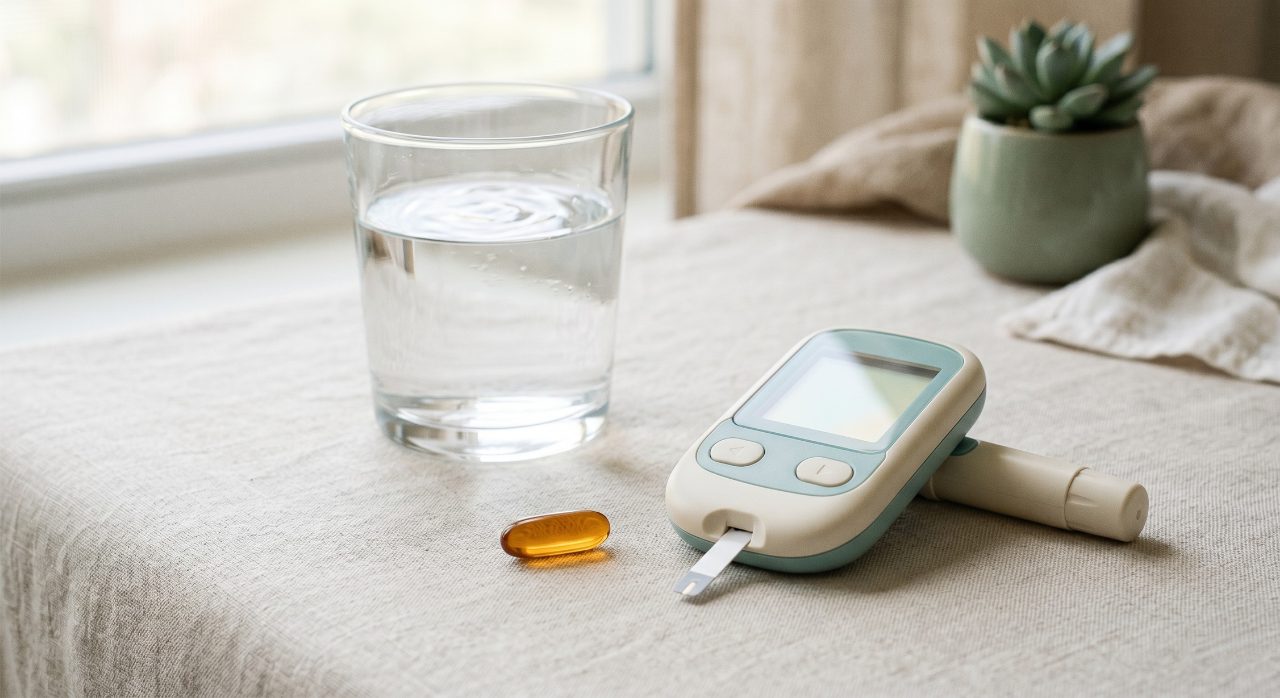
If you have diabetes or are managing pre-diabetes, the practical approach is straightforward. First, mention glucosamine to your GP or diabetes team before starting, so it is on your record alongside your other medications and supplements. Second, when you start, monitor your blood glucose a little more closely than usual for the first few weeks so you can see your own response rather than relying on population averages. If your readings stay stable, that is strong personal evidence that it is not affecting you. If you notice an unexplained change, stop and discuss it with your healthcare team.
This is also a good moment to remember that joint pain and diabetes often coexist, and that some people with diabetes take several medications. Adding any supplement is worth doing deliberately, one change at a time, so that if anything shifts you can tell what caused it. Glucosamine is not known to be a significant problem for blood sugar at normal doses, but careful introduction is simply good practice.
Other Cautions Worth Knowing
Blood sugar is not the only consideration with glucosamine. Because it is derived from shellfish shells, anyone with a shellfish or crustacean allergy should avoid it. If you take the blood thinner warfarin, glucosamine can influence how it works and should only be taken with your GP’s awareness and INR monitoring — a particularly relevant point for some people with diabetes who also have cardiovascular conditions. For the full rundown of side effects and interactions, see our guide to cod liver oil and glucosamine side effects, and for how to take it correctly, our glucosamine dosage guide.
Taking Glucosamine Within a Combined Supplement
Glucosamine is often taken as part of a combined joint product. Nutrivity’s Cod Liver Oil, Omega-3 & Glucosamine soft gels provide glucosamine sulphate alongside cod liver oil and additional fish oil, made in the UK to GMP standards and halal friendly, though not suitable for vegans or anyone with a fish or shellfish allergy. If you manage your blood sugar, the same advice applies whether glucosamine is taken alone or in a combination: tell your GP, follow the pack’s stated serving, and monitor your levels when you first start. The presence of omega-3 and the fat-soluble vitamins in cod liver oil does not change the blood-sugar guidance for the glucosamine component.
Dose Matters Here Too
It is worth tying the blood-sugar question back to dose, because the two are connected. The reassuring human evidence is based on standard supplement doses — around 1,500mg of glucosamine sulphate a day. The early concerns came from far higher concentrations delivered in ways that do not reflect normal use. So part of taking glucosamine sensibly when you watch your blood sugar is simply not exceeding the standard dose: there is no benefit to taking more, and higher intakes are exactly the territory the cautionary laboratory work explored. Stick to the studied amount, or the stated serving of a combined product, and you are working within the conditions the reassuring human studies actually tested.
Glucosamine and Other Metabolic Markers
People who watch their blood sugar are often keeping an eye on other markers too, such as cholesterol and blood pressure, so it is fair to ask whether glucosamine affects those. The short answer is that there is no strong, consistent evidence that standard-dose glucosamine meaningfully changes cholesterol or blood pressure in either direction. It is not a treatment for any of these, and it should not be expected to improve them. The point is simply that, for most people, a standard glucosamine dose is metabolically fairly neutral — its job is joint support, not metabolic effect. As always, if you have multiple conditions and take several medications, that is more reason to introduce any new supplement deliberately and with your GP’s knowledge, rather than a reason for alarm about glucosamine specifically.
Practical Steps If You Manage Blood Sugar
Pulling it together, here is the sensible routine. Tell your GP or diabetes team before you start, so glucosamine is recorded alongside your medications. Introduce it on its own, not at the same time as other new supplements or medication changes, so any effect is easy to attribute. Monitor your blood glucose a little more closely than usual for the first two to four weeks and note your readings. Take the standard dose with food, and do not exceed it. If your readings stay stable, you have strong personal reassurance; if anything shifts unexpectedly, stop and speak to your healthcare team. This deliberate approach turns a vague worry into a clear, controlled answer for your own body.
Signs to Stay Aware Of
If you are monitoring your blood sugar while starting glucosamine, it helps to know what you are watching for so you can respond sensibly rather than anxiously. The reassuring evidence means most people will simply see stable readings, but awareness is part of doing this properly. Be alert to the usual signs that your blood sugar may be running higher than normal — increased thirst, needing to pass urine more often, or unusual tiredness — and the signs of it running low if you take medication that can cause that, such as shakiness, sweating, or feeling lightheaded. If your home readings drift outside your usual range over the first few weeks, or you notice these symptoms, that is the cue to pause the glucosamine and contact your GP or diabetes team rather than pressing on. In practice, for the large majority of people taking a standard dose, none of this materialises — but a little structured attention in the early weeks is exactly how you turn a theoretical worry into solid personal reassurance. Keep a brief written log of your readings during those first weeks rather than relying on memory, and share it with your GP or diabetes team at your next review, so the decision to continue is based on your own data rather than on general advice.
 The Bottom Line
The fear that glucosamine spikes blood sugar comes from early high-dose laboratory work that does not reflect a normal oral supplement. In people without diabetes, standard doses do not meaningfully affect glucose; in people with diabetes, most evidence is reassuring but the data are thinner, so monitoring and a GP conversation are the sensible precautions. If you have diabetes, introduce it deliberately and watch your readings for the first few weeks. And remember the non-sugar cautions too: avoid it with a shellfish allergy, and use it only with medical oversight if you take warfarin.
Related Reading
- What Is Cod Liver Oil and Glucosamine? Benefits and UK Guide
- Glucosamine Dosage UK
- Cod Liver Oil and Glucosamine Side Effects UK
- Glucosamine for Joints UK
- How Long Does Glucosamine Take to Work?
Disclaimer: This article is for general information only and is not a substitute for professional medical advice. Food supplements are not intended to diagnose, treat, cure, or prevent any disease. Glucosamine is derived from shellfish and is unsuitable for anyone with a shellfish allergy. If you have diabetes, take any medication such as warfarin, are pregnant or breastfeeding, or have a medical condition, consult your GP before taking any supplement.
Frequently Asked Questions
Does glucosamine raise blood sugar?
In people without diabetes, standard oral doses of glucosamine have not been shown to meaningfully raise fasting blood glucose or worsen longer-term blood sugar control. The concern originated from early high-dose laboratory studies that do not reflect a normal supplement taken by mouth. For most people, a standard daily dose is unlikely to have a clinically meaningful effect.
Is glucosamine safe if I have diabetes?
Most studies in people with diabetes have not found that standard-dose glucosamine significantly worsens blood sugar control, but the long-term data are more limited. The sensible approach is to tell your GP or diabetes team before starting, monitor your glucose more closely for the first few weeks, and stop and seek advice if you notice an unexplained change.
Why is glucosamine a concern for blood sugar if it is a sugar?
Glucosamine is an amino sugar and sits on a biochemical pathway linked to insulin signalling, which is why high-dose laboratory and animal studies raised a theoretical concern. However, those experiments used routes and doses very different from a normal oral supplement, and human studies at standard doses have been largely reassuring.
Should I monitor my blood sugar when taking glucosamine?
If you do not have diabetes, no special monitoring is needed on blood-sugar grounds. If you have diabetes or pre-diabetes, monitoring a little more closely for the first few weeks is sensible so you can see your own response, alongside telling your GP before you start.
Can I take glucosamine with my diabetes medication?
Generally glucosamine is not known to interact significantly with common diabetes medications, but you should always tell your GP or diabetes team before adding it so it is recorded with your other treatments. Introduce it one change at a time and monitor your readings so any effect is easy to identify.