





Agnus Castus for Breast Tenderness (Cyclical Mastalgia) — UK Guide 2026
-
By Chris Jones
Posted June 2026 | Written by Chris Jones, Social Media Manager at Nutrivity with 7+ years in the supplement industry.
Agnus Castus for Breast Tenderness (Cyclical Mastalgia)
Cyclical breast tenderness — pain, heaviness, or lumpiness that flares in the days before a period and eases once it starts — is one of the most common premenstrual complaints. It is also one of the areas where agnus castus (Vitex agnus-castus, or chasteberry) has some of its most consistent supporting evidence, because the mechanism behind cyclical breast pain and the mechanism of agnus castus line up unusually well.
This guide explains what cyclical mastalgia is, why agnus castus may help it, what the research shows, how to take it, and the warning signs that mean you should see your GP rather than reach for a supplement. For the full background on how the herb works, see our guide to what agnus castus is and how it works.
What Is Cyclical Breast Tenderness?
Breast pain (mastalgia) is broadly divided into two types. Cyclical mastalgia is tied to the menstrual cycle: it typically builds in the second half of the cycle (the luteal phase), peaks in the days before the period, and settles once bleeding begins. It often affects both breasts, can feel like heaviness, soreness, or a dull ache, and may come with a sense of lumpiness. Non-cyclical mastalgia, by contrast, is not linked to the cycle and can have other causes.
Cyclical breast tenderness is extremely common and, while uncomfortable and sometimes distressing, is usually not a sign of anything serious. It reflects the way breast tissue responds to the normal hormonal rhythm of the cycle. The relevant hormone for our purposes is prolactin: cyclical breast pain has been linked to mildly elevated or heightened prolactin activity, which increases the sensitivity and fluid content of breast tissue in the luteal phase.
Why Agnus Castus May Help
Agnus castus works primarily by acting on the pituitary gland to reduce the secretion of prolactin. Since cyclical breast tenderness is closely associated with prolactin-driven changes in breast tissue, lowering mildly elevated prolactin is a direct and plausible route to easing the symptom. This is why breast tenderness is one of the symptoms that improves most consistently in agnus castus trials — the herb is acting on the very pathway that drives the pain.
This mechanistic fit is part of what makes agnus castus more credible for cyclical breast pain than for some of the other conditions it is marketed for. It is not masking the symptom like a painkiller; it is nudging the underlying hormonal signal that contributes to it. As with all of agnus castus’s effects, this works gradually across cycles rather than overnight — see how long agnus castus takes to work for the realistic timeline.
 What the Evidence Shows
Agnus castus has been studied specifically for cyclical mastalgia, and the research is broadly supportive. Clinical trials have found that agnus castus extract can reduce the intensity of cyclical breast pain compared with placebo over a period of months, and breast tenderness consistently appears among the symptoms most improved in the broader premenstrual trials. Background pharmacological reviews of Vitex agnus-castus explicitly list cyclical mastalgia among its evidence-supported uses, alongside PMS and irregular cycles.
As always, the effect is most relevant for mild to moderate cyclical tenderness, and it builds over time rather than providing instant relief. It is not a treatment for breast pain that is severe, one-sided, persistent, or accompanied by other changes — those need medical assessment, not a supplement.
OUR TOP RECOMMENDED
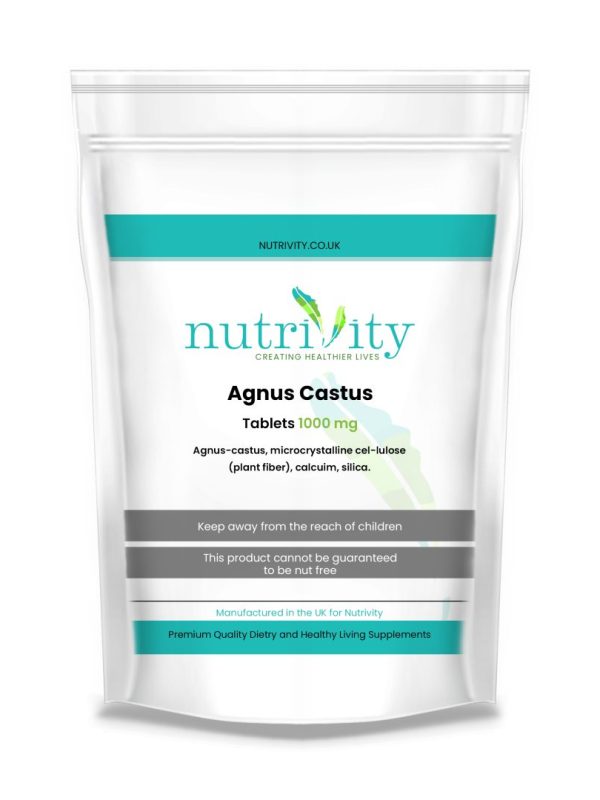
Agnus Castus 1000mg Vegan Tablets | 8 Months Supply (240 Tablets) | Women’s Health
Original price was: £28.99.£24.99Current price is: £24.99.
How to Take Agnus Castus for Cyclical Breast Pain
Agnus castus is taken once daily, every day, continuously throughout the cycle — not only in the premenstrual week when symptoms are worst. Its prolactin-modulating effect operates across the whole cycle, so consistent daily use is what the evidence-based protocols rely on; intermittent use is unlikely to reproduce the trial results. A single daily tablet at a consistent time is the simplest approach. Nutrivity’s Agnus Castus 1000mg Vegan Tablets provide a high-strength whole-herb dose in one daily vegan tablet, suitable for vegan and halal diets.
Give it at least three complete menstrual cycles before judging the effect, and keep a simple note of your breast-pain severity across those cycles so you can see a genuine trend rather than relying on memory. Many women find cyclical tenderness is one of the earlier symptoms to respond, but three cycles remains the fair assessment window.
Other Things That Help Cyclical Breast Pain
Agnus castus is one option among several sensible measures. A well-fitted, supportive bra — including a soft sports bra worn at night during the worst days — genuinely reduces discomfort for many women. Some find that moderating caffeine and very salty foods in the luteal phase helps with fluid-related heaviness, though the evidence here is mixed and individual. Maintaining a healthy weight and regular activity supports overall hormonal balance. Simple pain relief such as paracetamol can be used for bad days. The point is that cyclical breast pain is usually manageable with a combination of practical measures, of which agnus castus may be one.
When to See Your GP
Most cyclical breast tenderness is harmless, but some breast symptoms always warrant prompt medical assessment rather than self-treatment. See your GP if you have a new or distinct lump, breast pain that is constant and not linked to your cycle, pain in only one specific spot, any nipple discharge (especially if bloodstained), skin changes such as dimpling or redness, or any change that worries you. Supplements are never the right response to these signs — get them checked. Agnus castus is appropriate only for typical, cycle-linked tenderness once anything concerning has been ruled out.
Safety and Cautions
Agnus castus is generally well tolerated, with mild and uncommon side effects. It can interact with hormonal contraception and with dopamine-related medications, and should be avoided in pregnancy and while breastfeeding. If you take any prescription medication or have a medical condition, check with your GP before starting. If your breast tenderness is severe or you are unsure whether it is truly cyclical, see your GP first.
Cyclical vs Non-Cyclical: Telling Them Apart
Knowing which type of breast pain you have is the first step, because agnus castus is only relevant to the cyclical type. Cyclical mastalgia follows the menstrual rhythm: it builds in the second half of the cycle, usually affects both breasts in a diffuse, aching, heavy way, and reliably eases once the period starts. It is hormonally driven and, while uncomfortable, is generally benign. Non-cyclical breast pain has no consistent relationship to the cycle, may be confined to one breast or one area, can feel sharp or burning, and has a different range of causes — from muscular or chest-wall pain to other issues that need assessment. Because agnus castus works through the hormonal cycle, it has no logical role in non-cyclical pain.
A simple way to find out which you have is to keep a breast-pain diary for two cycles, marking each day you have pain and rating its severity, alongside your period dates. If the pattern clearly tracks the cycle and settles with your period, that points to cyclical mastalgia. If it does not, or if anything about it is unusual, that is a prompt to see your GP rather than to start a supplement.
Diet, Caffeine and Lifestyle
Several practical measures sit alongside agnus castus for cyclical breast pain, with varying levels of evidence. A properly fitted supportive bra is one of the most reliably helpful and most overlooked steps — many women are wearing the wrong size, and good support genuinely reduces movement-related discomfort, with a soft bra at night during the worst days helping some. The role of caffeine is debated: the evidence is mixed and inconsistent, but a subset of women report that cutting back in the luteal phase eases heaviness, so a personal trial of reducing caffeine for a couple of cycles is reasonable if you suspect a link. Limiting very salty foods premenstrually may help fluid-related fullness for some. Maintaining a healthy weight and regular activity supports overall hormonal balance.
Evening primrose oil is often suggested for cyclical breast pain; the evidence for it is weak and inconsistent, but it is low-risk, and some women combine general measures while they assess whether agnus castus is helping. The overall message is that cyclical breast tenderness is usually manageable through a combination of simple, low-risk steps, with agnus castus as one evidence-supported option among them rather than the only lever.
Pain Relief and Judging Your Response
While you are giving agnus castus its three-cycle trial, there is no reason to suffer through bad days unnecessarily. Simple over-the-counter pain relief such as paracetamol can be used for the worst of the premenstrual tenderness, and a well-fitted supportive bra remains the most consistently helpful practical measure. Warm or cool compresses help some women. None of these interferes with assessing whether agnus castus is working, because they address comfort on the day rather than the underlying cyclical pattern.
To judge the herb’s effect fairly, focus on the trend across cycles rather than any single month. Breast tenderness naturally varies from cycle to cycle, so one good or bad month tells you little. What you are looking for over three cycles is a downward drift in the average severity and the number of days affected. Writing down a simple daily score makes this visible in a way that memory cannot — it is genuinely common for women to feel “nothing is changing” while their own diary shows a clear improvement, or the reverse. If the trend is flat across three full cycles, it is reasonable to conclude agnus castus is not the right lever for you and to focus on the practical measures and, if the pain is significant, a GP review.
 The Bottom Line
Of all the things agnus castus is used for, cyclical breast tenderness is one where the mechanism and the evidence align well: the herb lowers mildly elevated prolactin, and prolactin drives much of the luteal-phase breast sensitivity. For mild to moderate cyclical mastalgia, a consistent three-month-plus trial is a reasonable, low-risk option alongside practical measures like a supportive bra. But any unusual, one-sided, persistent, or worrying breast change needs your GP, not a supplement. To compare the agnus castus products available in the UK, see our Agnus Castus brand comparison guide.
Related Reading
Disclaimer: This article is for general information only and is not a substitute for professional medical advice. Food supplements are not intended to diagnose, treat, cure, or prevent any disease. Any new, persistent, one-sided, or unusual breast change should be assessed by a healthcare professional. If you are pregnant, breastfeeding, taking any medication, or have a medical condition, consult your GP before taking any supplement.
Frequently Asked Questions
Does agnus castus help breast tenderness?
Yes, for cyclical breast tenderness it is one of the better-supported uses. Cyclical breast pain is linked to mildly elevated prolactin, and agnus castus works by lowering prolactin, so the mechanism fits. Trials have shown reduced cyclical breast pain over a period of months, with consistent daily use.
How long does agnus castus take to ease cyclical breast pain?
It works gradually, so allow at least three complete menstrual cycles of consistent daily use before judging the effect. Breast tenderness is often one of the earlier symptoms to respond, but three cycles is still the fair assessment window. Tracking severity across cycles helps you see a real trend.
How should I take agnus castus for breast tenderness?
Take it once daily, every day, continuously throughout the cycle — not only in the premenstrual week. Its effect on prolactin operates across the whole cycle, so consistent daily use matters. A single daily tablet at a consistent time is the simplest routine.
When should breast pain be checked by a doctor?
See your GP for any new or distinct lump, pain in one specific spot, constant non-cyclical pain, nipple discharge, skin changes such as dimpling or redness, or any change that worries you. These need medical assessment, not a supplement. Agnus castus is only appropriate for typical cycle-linked tenderness.
Is agnus castus safe to take for breast tenderness?
It is generally well tolerated, but it can interact with hormonal contraception and dopamine-related medication, and should be avoided in pregnancy and breastfeeding. Check with your GP before starting if you take any medication or have a medical condition.