





Agnus Castus for PMDD — What the Evidence Shows (UK Guide)
-
By Chris Jones
Posted June 2026 | Written by Chris Jones, Social Media Manager at Nutrivity with 7+ years in the supplement industry.
Agnus Castus for PMDD — What the Evidence Shows
Premenstrual dysphoric disorder (PMDD) is the severe, disabling end of the premenstrual spectrum, and women living with it are understandably keen to find anything that helps. Agnus castus (Vitex agnus-castus, or chasteberry) comes up often, partly because it has the strongest herbal evidence of any supplement for premenstrual symptoms. But PMDD is not the same as PMS, and it is important to be clear-eyed about what agnus castus can and cannot offer here.
This guide explains what PMDD is, how it differs from ordinary PMS, what the research on agnus castus actually shows, and — most importantly — when herbal support is reasonable and when prescription treatment should come first. For the underlying mechanism, our guide to what agnus castus is and how it works gives the full background.
PMDD Is Not Just Bad PMS
Most women of reproductive age experience some premenstrual symptoms. PMDD is different in degree and in kind. It is a recognised condition, classified in psychiatric diagnostic manuals, characterised by severe mood symptoms — marked irritability, anger, depressed mood, anxiety, feelings of being overwhelmed or out of control — that appear in the week or two before a period (the luteal phase) and lift shortly after the period begins. The defining feature is that these symptoms are severe enough to significantly impair work, relationships, or daily functioning.
The current understanding is that PMDD is not caused by abnormal hormone levels, but by an abnormal sensitivity of the brain to the normal hormonal changes of the cycle, particularly fluctuations in progesterone metabolites that affect mood-regulating systems. This matters when thinking about agnus castus, because agnus castus works on the hormonal-signalling side of things rather than directly on this central sensitivity.
 What the Evidence Says About Agnus Castus and PMDD
Here is the honest position. Agnus castus has solid randomised controlled trial evidence for premenstrual syndrome — more than any other herbal supplement. Several systematic reviews that examined agnus castus for premenstrual complaints have considered both PMS and PMDD together, and have concluded that it can be effective and is generally well tolerated for premenstrual symptoms. So there is some supportive evidence that touches PMDD.
However, the trials specifically designed around diagnosed PMDD are far fewer than those for general PMS, and PMDD’s severity means the bar for “adequate treatment” is higher. The fair summary is this: agnus castus may help reduce the milder physical and some mood symptoms in premenstrual presentations, but for full PMDD — particularly where mood symptoms are severe — it should not be relied upon as a standalone treatment. The evidence does not support that, and severe PMDD is a condition that deserves proper medical care.
When Prescription Care Should Come First
If your premenstrual symptoms are severe — if they involve significant depression, hopelessness, severe anxiety, rage that frightens you, or any thoughts of self-harm — this is not a situation for a slow herbal trial. PMDD has established medical treatments, including SSRIs (which can be taken continuously or only in the luteal phase and often work quickly for PMDD), certain hormonal approaches, and structured psychological support. These are evidence-based and your GP can discuss them. Please speak to a healthcare professional rather than trying to manage severe PMDD with supplements alone. If you ever feel unsafe or have thoughts of harming yourself, contact your GP, NHS 111, or the Samaritans on 116 123 straight away.
Where agnus castus may reasonably fit is at the milder end, or as a possible adjunct that you have discussed with your GP — not as a replacement for treatment that is actually working, and not as a first and only response to severe symptoms.
How Agnus Castus Works
Agnus castus acts on the pituitary gland, lowering the secretion of prolactin and supporting more balanced cycle signalling, including the luteal phase where premenstrual symptoms cluster. Some of its plant compounds also appear to interact with mood-related receptor systems, which may partly explain why the symptoms most consistently improved in trials are mood-related ones such as irritability and low mood, alongside physical symptoms like breast tenderness and bloating. It is a cycle-regulating, slow-acting herb rather than an acute mood treatment — an important distinction for anyone hoping for fast relief during a bad luteal week. Our guide on how long agnus castus takes to work explains the timeline in detail.
OUR TOP RECOMMENDED
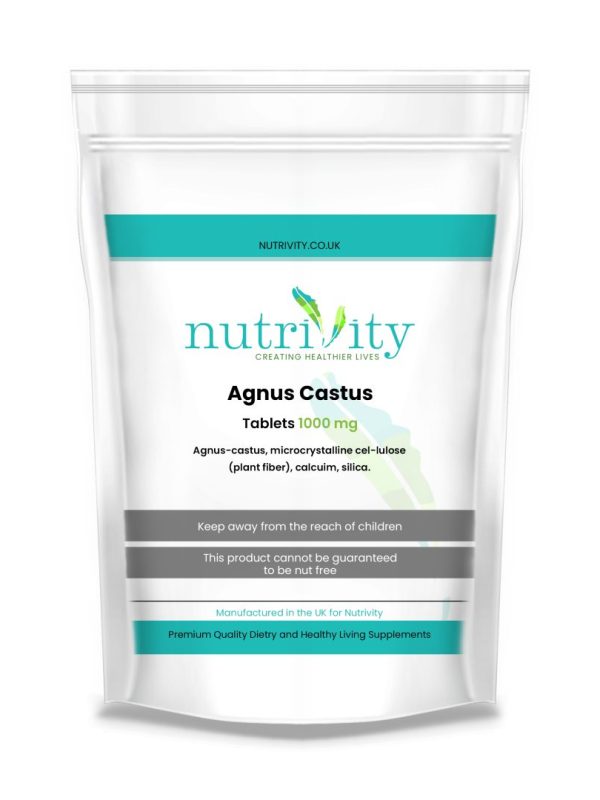
Agnus Castus 1000mg Vegan Tablets | 8 Months Supply (240 Tablets) | Women’s Health
Original price was: £28.99.£24.99Current price is: £24.99.
How to Use Agnus Castus for Premenstrual Symptoms
If you and your GP decide a trial is appropriate, agnus castus is taken once daily, every day, continuously — not just in the premenstrual window. Because it works by gradually modulating pituitary signalling across the whole cycle, taking it only in the luteal phase does not match how the evidence-based protocols are used. A single daily tablet at a consistent time is the simplest routine. Nutrivity’s Agnus Castus 1000mg Vegan Tablets deliver a high-strength whole-herb dose in one daily vegan tablet.
Commit to at least three complete menstrual cycles and track your symptoms across them, ideally with a daily rating, so you can judge the effect objectively rather than by memory. If, after three cycles, your symptoms remain severe or unchanged, that is a clear signal to return to your GP and consider medical treatment rather than continuing to wait.
Safety and Interactions
Agnus castus is generally well tolerated, with mild and uncommon side effects such as nausea, headache, or skin reactions. The important cautions for PMDD specifically are around interactions: it can theoretically interact with hormonal contraception, with dopamine-related medications, and it is not recommended alongside many psychiatric or fertility medications without medical oversight. Since PMDD is often treated with SSRIs or hormonal approaches, this makes a conversation with your GP essential before combining anything. It should also be avoided in pregnancy and breastfeeding.
Why a Symptom Diary Comes First
Before treating PMDD with anything — herbal or prescription — the recommended first step is to confirm the pattern with a daily symptom diary kept across at least two menstrual cycles. This matters because the defining feature of PMDD is timing: symptoms must cluster in the luteal phase and resolve shortly after the period begins. Several other conditions, including depression and anxiety disorders, can be mistaken for PMDD when in fact they persist throughout the month and merely worsen premenstrually. Getting this distinction right changes the treatment entirely, and it is something your GP will want to establish.
Keeping a simple daily rating of your main symptoms — mood, irritability, anxiety, physical symptoms — across two cycles gives both you and your clinician a clear map. It also gives you an honest baseline against which to judge whether any intervention, including agnus castus, is actually doing anything. Without that baseline, a slow-acting herb is almost impossible to evaluate fairly.
Lifestyle Measures That Genuinely Help
Alongside medical treatment, several lifestyle measures have reasonable support for premenstrual symptoms and are worth building in regardless of whether you try agnus castus. Regular aerobic exercise has consistent evidence for improving mood and reducing premenstrual symptom severity. Prioritising sleep, particularly in the luteal phase, helps with emotional regulation. Reducing alcohol and being mindful of caffeine can ease anxiety and sleep disruption for some women. Some find structured stress-management approaches, including cognitive behavioural techniques, genuinely useful for the cyclical mood component. None of these is a cure for PMDD, but together they form a foundation that makes everything else work better — and unlike supplements, they carry no interaction risk.
Managing Expectations
It helps to be honest with yourself about what a supplement can realistically offer for a condition defined by severe, life-disrupting symptoms. Agnus castus is slow, modest, and acts on the hormonal-signalling side rather than the central brain sensitivity that underlies PMDD. For someone with mild premenstrual mood symptoms it may be a reasonable, low-risk thing to try over three months. For someone whose symptoms are severe enough to damage relationships or work, waiting three months on a herb while effective treatment exists is not a neutral choice — it can mean three more difficult cycles. That trade-off is exactly why the order matters: get assessed first, treat severe symptoms properly, and treat agnus castus as an optional extra to raise with your GP, not the headline act.
Combining Agnus Castus Safely With Treatment
If you are already receiving treatment for PMDD and are curious about adding agnus castus, the order of operations matters. Never stop or reduce a prescribed treatment to “make room” for a supplement, and never start agnus castus on top of hormonal or psychiatric medication without your prescriber knowing. Agnus castus can interact with hormonal contraception and with medications that act on dopamine, both of which are relevant to PMDD treatment plans, so the decision to combine anything has to be made with your clinician rather than independently. If your current treatment is working well, there is rarely a strong reason to add an unproven herb to the mix at all. Where agnus castus is most defensible is as a first, gentle step for genuinely mild premenstrual symptoms in someone not on other treatment — and even then, a quick word with your GP first is the sensible move, especially if you use any form of hormonal contraception.
 The Bottom Line
Agnus castus has the best herbal evidence base for premenstrual symptoms, and for milder premenstrual presentations it is a reasonable, low-risk option taken consistently over three or more cycles. But PMDD is a serious condition, and the evidence does not support using agnus castus as a standalone treatment for severe cases. If your symptoms are significantly affecting your life, see your GP — effective medical treatments exist, and they should come first. Agnus castus, if it has a role, is a supporting one to discuss with your clinician. For help choosing between the products on the market, see our comparison of UK agnus castus supplements.
Related Reading
- What Is Agnus Castus? Benefits, Uses and UK Guide
- How Long Does Agnus Castus Take to Work?
- Agnus Castus for PCOS — Does It Help?
- Agnus Castus for Breast Tenderness (Cyclical Mastalgia)
- Best Agnus Castus Supplement UK — Brands Compared
Disclaimer: This article is for general information only and is not a substitute for professional medical advice. Food supplements are not intended to diagnose, treat, cure, or prevent any disease. PMDD is a serious condition that should be assessed and managed by a healthcare professional. If you are pregnant, breastfeeding, taking any medication, or experiencing severe mood symptoms, consult your GP before taking any supplement. If you feel unsafe or have thoughts of self-harm, contact your GP, NHS 111, or the Samaritans on 116 123.
Frequently Asked Question
Does agnus castus help PMDD?
Agnus castus has the strongest herbal evidence of any supplement for premenstrual symptoms, and some reviews covering PMDD suggest it can help, particularly with milder mood and physical symptoms. However, the evidence does not support using it as a standalone treatment for severe PMDD, which has established medical treatments that should come first.
What is the difference between PMS and PMDD?
PMS is common and usually manageable. PMDD is the severe end of the spectrum — marked mood symptoms such as severe irritability, depression, and anxiety in the luteal phase that significantly impair daily functioning and lift after the period starts. PMDD is a recognised condition that often needs medical treatment.
Should I take agnus castus instead of an SSRI for PMDD?
No. SSRIs are an established, often fast-acting treatment for PMDD and should not be replaced with a supplement. If you are on prescribed treatment, do not stop or substitute it. Agnus castus should only ever be considered alongside medical care after discussing it with your GP.
How long before agnus castus might help premenstrual symptoms?
It works gradually, so a fair trial is at least three complete menstrual cycles of consistent daily use, with symptoms tracked across them. Most women notice little change in the first cycle. If symptoms remain severe after three cycles, return to your GP.
When should I see a doctor about PMDD?
See your GP if premenstrual symptoms significantly affect your work, relationships, or wellbeing, and urgently if you experience severe depression or any thoughts of self-harm. If you feel unsafe, contact your GP, NHS 111, or the Samaritans on 116 123 immediately. PMDD has effective treatments and should not be managed with supplements alone.