



Agnus Castus for PCOS — Does It Help? UK Guide 2026
-
By Chris Jones
Posted June 2026 | Written by Chris Jones, Social Media Manager at Nutrivity with 7+ years in the supplement industry.
Agnus Castus for PCOS — Does It Help? An Honest UK Guide
Agnus castus (Vitex agnus-castus, also called chasteberry) is one of the most popular herbal supplements women reach for when dealing with cycle problems — and polycystic ovary syndrome (PCOS) is one of the most common reasons UK women have irregular cycles. So it is a natural question: does agnus castus help PCOS? The honest answer is “sometimes, for some women, in a limited and specific way” — and being clear about that is far more useful than the blanket “yes” you will find on most supplement websites.
This guide explains what PCOS actually is, where agnus castus may genuinely help, where it almost certainly will not, and why it should be thought of as one possible supporting tool rather than a treatment for the condition itself. For the underlying mechanism and full background, our guide to what agnus castus is and how it works sets the scene.
What Is PCOS?
Polycystic ovary syndrome is a common hormonal condition affecting an estimated 1 in 10 women of reproductive age in the UK. It is diagnosed using the Rotterdam criteria, which require at least two of the following three features: irregular or absent ovulation (which causes irregular or missing periods), signs of elevated androgens (such as excess facial or body hair, or acne), and polycystic ovaries on an ultrasound scan.
Crucially, PCOS is not a single problem with a single cause. For many women it is driven substantially by insulin resistance — the body’s cells responding poorly to insulin, which in turn pushes the ovaries to produce more androgens (male-type hormones such as testosterone). For others, the picture is dominated by raised androgens or by the irregular ovulation itself. This variability is the single most important thing to understand before considering any supplement, because a remedy that targets one mechanism will do little for a presentation driven by another.
How Agnus Castus Works — And Why That Matters for PCOS
Agnus castus acts mainly on the pituitary gland, where it has a dopamine-like effect that lowers the secretion of prolactin. Prolactin is the hormone best known for driving milk production, but mildly elevated prolactin outside of pregnancy and breastfeeding can disrupt the signalling that governs ovulation and the menstrual cycle. By nudging prolactin down, agnus castus can help restore more regular cycle signalling and support the second half of the cycle (the luteal phase) in women whose problems are linked to this pathway.
Here is the key point for PCOS: agnus castus does not lower androgens directly, and it does not address insulin resistance — the two mechanisms that drive the majority of PCOS cases. Its action is on prolactin. So where agnus castus is most plausibly useful is in the subset of women whose cycle irregularity is associated with mildly raised prolactin or luteal-phase insufficiency, rather than in classic insulin-resistant or high-androgen PCOS. To understand how slowly this pathway shifts, see our guide on how long agnus castus takes to work.
OUR TOP RECOMMENDED
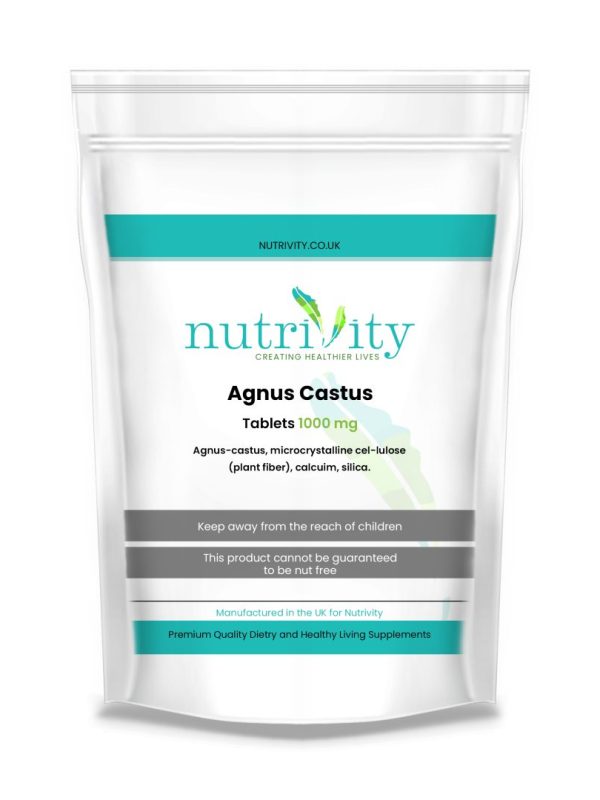
Agnus Castus 1000mg Vegan Tablets | 8 Months Supply (240 Tablets) | Women’s Health
Original price was: £28.99.£24.99Current price is: £24.99.
 What the Evidence Actually Says
It is important to be straight about this: there is no large, high-quality body of randomised controlled trial evidence showing that agnus castus treats PCOS. The strong clinical evidence for agnus castus is in premenstrual syndrome and cyclical breast pain, not PCOS. What exists for PCOS is largely indirect — evidence that agnus castus can regulate cycles and lower mildly elevated prolactin, combined with smaller studies and traditional use in cycle irregularity.
That means anyone telling you agnus castus is a proven PCOS treatment is overstating the case. What can be said fairly is that for women with PCOS whose cycles are irregular and who do not have markedly raised androgens or significant insulin resistance, a trial of agnus castus is low-risk and may help re-establish more regular cycles. For women with the insulin-resistant or high-androgen phenotype, the realistic expectation should be low.
When Agnus Castus May Be Worth Trying for PCOS
Considering the mechanism, agnus castus is most worth a trial when several of the following apply: your periods are irregular but you do not have strongly raised androgen symptoms; blood tests have shown your prolactin to be at the higher end or mildly elevated; you prefer a non-hormonal first step before or alongside other approaches; and you are able to commit to consistent daily use for at least three full cycles before judging whether it helps.
It is far less likely to help — and may simply delay more appropriate care — if your PCOS is clearly insulin-resistant (often signalled by weight gain around the middle, skin tags, or darkened skin patches), if your androgen symptoms are pronounced, or if you are actively trying to conceive and need timely fertility support rather than a slow herbal trial.
An Important Caution: PCOS and Conception
If you have PCOS and are trying to conceive, do not start agnus castus without speaking to your GP or fertility specialist first. There are two reasons. First, ovulation induction and fertility treatment follow specific protocols, and adding a herb that influences pituitary signalling can complicate the picture. Second, agnus castus should not be combined with fertility medications or hormonal treatment without medical oversight. PCOS-related subfertility is a situation where professional guidance comes first, and supplements are a conversation to have with your clinician — not a substitute for that conversation.
How to Take Agnus Castus (If You and Your GP Decide to Try It)
Agnus castus is taken once daily, every day, continuously — not only in the run-up to a period. The pituitary signalling it influences operates across the whole cycle, so consistency is everything; skipping days or taking it only premenstrually is not how the evidence-based protocols work. Most products, including high-strength whole-herb options, are taken as a single daily tablet, ideally at the same time each day. Nutrivity’s Agnus Castus 1000mg Vegan Tablets provide a high-strength whole-herb dose in a single daily vegan tablet, suitable for vegan and halal diets.
Give it a fair trial of at least three complete menstrual cycles before deciding whether it is working — and track your cycles honestly over that period, because subjective impressions are unreliable with a slow-acting herb. If three cycles bring no change, that is useful information: it suggests prolactin is not the main driver of your symptoms, and a different approach is warranted.
Knowing Your PCOS Type Matters Most
The single most useful thing you can do before spending money on any supplement is to understand which type of PCOS you have, because it predicts whether a prolactin-acting herb has any chance of helping. Broadly, clinicians describe several overlapping patterns. The insulin-resistant pattern is the most common, often involving weight gain around the middle, sugar cravings, fatigue after meals, and sometimes skin changes such as tags or darkened patches; agnus castus does nothing for this mechanism. The androgen-dominant pattern shows up as persistent acne, excess hair growth, and scalp hair thinning; again, agnus castus does not lower androgens. The pattern most likely to involve a prolactin component is one where cycles are irregular without strong insulin or androgen features — and this is the narrow slice where agnus castus is most plausible.
A simple set of blood tests requested by your GP — including prolactin, testosterone, and markers of insulin and glucose handling — can place you within these patterns far more reliably than guesswork. If your prolactin comes back genuinely raised, your GP will also want to rule out other causes before attributing it to PCOS, which is another reason this should be a medical conversation rather than a self-directed supplement trial.
What to Track If You Do Try It
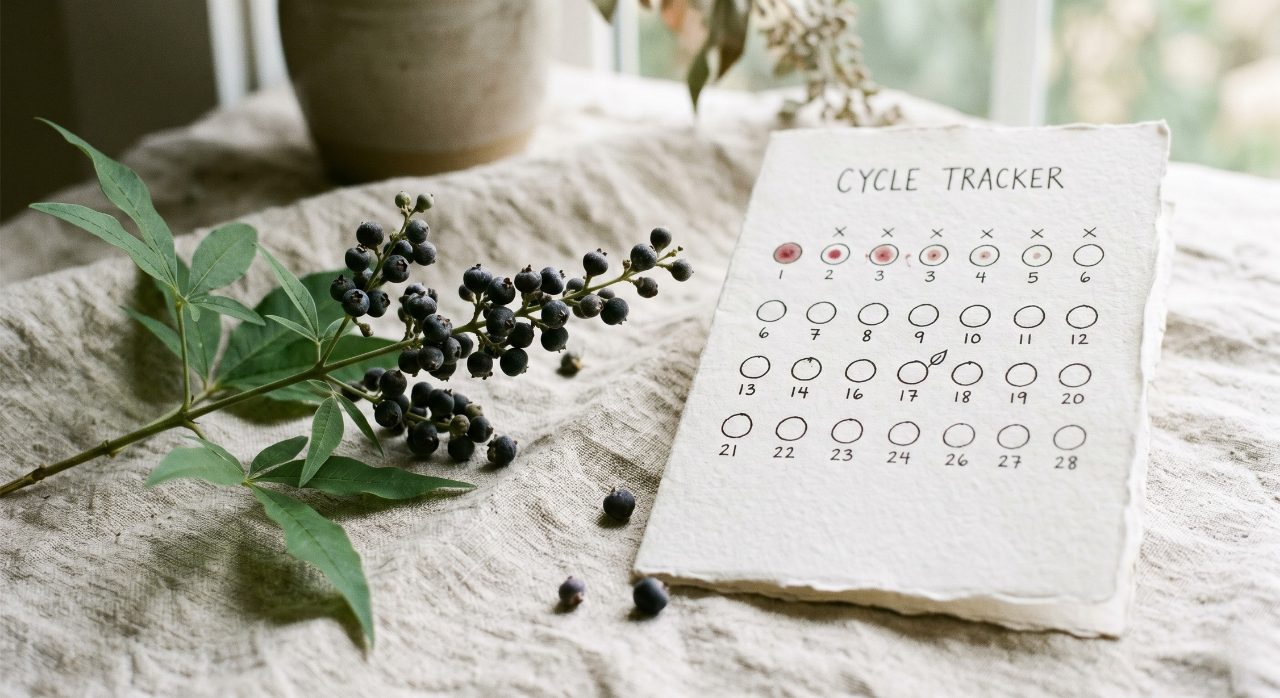
If you and your GP agree a trial is reasonable, decide in advance what “working” would look like, so you are not relying on hope or memory. Track the length of your cycle and the date your period starts each month, note any premenstrual symptoms and their severity on a simple scale, and record start and stop dates so you can count three full cycles accurately. This kind of objective record turns a vague “I think it might be helping” into a clear answer, and it gives your GP something concrete to work with if you need to escalate. A slow-acting herb with a modest, mechanism-limited rationale demands this discipline — otherwise it is easy to keep taking something for months on the strength of wishful thinking.
What Else Helps — The Bigger PCOS Picture
Because most PCOS is driven by insulin resistance, the interventions with the strongest evidence are not herbal at all. Regular physical activity, particularly a combination of resistance and aerobic exercise, improves insulin sensitivity. Dietary patterns that moderate refined carbohydrates and prioritise protein, fibre, and whole foods help many women. Weight management, where relevant, can restore ovulation on its own. And medical options — from metformin to specific ovulation-induction treatments — are evidence-based tools your GP can discuss. Agnus castus, at best, plays a small supporting role around the edges of this bigger picture; it is not the foundation.
 The Bottom Line
Agnus castus is not a PCOS treatment, and no honest reading of the evidence supports marketing it as one. For a specific subset of women — those with irregular cycles linked to mildly raised prolactin and without dominant insulin resistance or high androgens — it is a low-risk option that may help regulate cycles over three or more months. For the insulin-resistant majority, the real levers are lifestyle and medical management. If you have PCOS, the smartest move is to talk to your GP about which phenotype you have before deciding whether agnus castus has any place in your plan. For a side-by-side look at the products available, see our comparison of UK agnus castus supplements.
Related Reading
- What Is Agnus Castus? Benefits, Uses and UK Guide
- How Long Does Agnus Castus Take to Work?
- Agnus Castus for PMDD — What the Evidence Shows
- Agnus Castus for Hormonal Acne — Does It Work?
- Best Agnus Castus Supplement UK — Brands Compared
Disclaimer: This article is for general information only and is not a substitute for professional medical advice. Food supplements are not intended to diagnose, treat, cure, or prevent any disease and should not replace a varied, balanced diet or a healthy lifestyle. PCOS should be diagnosed and managed with a healthcare professional. If you are pregnant, breastfeeding, trying to conceive, taking any medication, or have a medical condition, consult your GP before taking any supplement.
Frequently Asked Questions
Does agnus castus help PCOS?
Agnus castus is not a proven treatment for PCOS. It works by lowering prolactin and supporting cycle regulation, so it may help the specific subset of women whose irregular cycles are linked to mildly raised prolactin. It does not lower androgens or improve insulin resistance, which drive most PCOS cases, so for many women its effect on PCOS will be limited.
Can agnus castus regulate periods in PCOS?
It may help regulate cycles in women whose irregularity is connected to prolactin or luteal-phase issues, taken consistently over at least three menstrual cycles. It is less likely to help where PCOS is driven by insulin resistance or high androgens. Tracking your cycles over three months is the only reliable way to judge whether it is working for you.
Should I take agnus castus for PCOS if I am trying to conceive?
Not without speaking to your GP or fertility specialist first. PCOS-related fertility issues follow specific medical protocols, and agnus castus should not be combined with fertility medications or hormonal treatment without medical oversight. Professional guidance comes first in this situation.
How long does agnus castus take to work for PCOS symptoms?
Agnus castus works gradually through pituitary signalling, so a fair trial is at least three complete menstrual cycles of consistent daily use. Most women notice little in the first cycle. If three cycles bring no change, prolactin is probably not the main driver of your symptoms.
Is agnus castus safe to take with PCOS?
For most women it is well tolerated, but PCOS is often managed with medications and sometimes hormonal treatment, and agnus castus can interact with these. Always check with your GP before starting it if you have PCOS, take any prescription medication, or are trying to conceive.