




CoQ10 Side Effects and Safety UK — Everything You Need to Know
-
By Chris Jones
CoQ10 Side Effects and Safety: What You Need to Know (UK Guide 2026)
Last Updated May 2026 | By Chris Jones Social Media Manager at Nutrivity (7+ years in the UK supplement industry)
CoQ10 has one of the most reassuring safety profiles of any widely used supplement, with decades of clinical research and widespread use producing a consistent picture: it is well-tolerated by most adults at standard doses, with no serious adverse effects identified at doses up to 1200mg daily in clinical studies. That said, no supplement is entirely without risk for all people in all circumstances, and understanding the known side effects, contraindications, and drug interactions is important for safe and informed use.
This guide covers what is known about CoQ10 side effects, who should exercise caution, the drug interactions worth knowing about, and what to do if you experience symptoms. For a full overview of CoQ10 and its health applications, see our guide to what is CoQ10. For full product information on Nutrivity’s CoQ10 300mg, visit our CoQ10 300mg Vegan Capsules product page.
CoQ10 Side Effects — What the Research Shows
The side effect profile of CoQ10 is well-characterised from decades of clinical trials across a wide range of doses and populations. The vast majority of people taking CoQ10 at standard doses (100–300mg daily) experience no side effects at all.
When side effects do occur, they are almost exclusively gastrointestinal and mild. The most commonly reported include nausea, stomach discomfort, loose stools, loss of appetite, and heartburn. These effects are generally dose-dependent — more likely at higher doses — and are typically resolved by taking CoQ10 with food rather than fasting, or by reducing the dose temporarily and titrating up gradually.
Headache and dizziness are occasionally reported but are uncommon and have not been consistently demonstrated in placebo-controlled trials — meaning they may reflect individual variability rather than a direct effect of CoQ10. Insomnia or sleep disturbance is reported anecdotally by some users who take CoQ10 in the evening, though this is not reliably demonstrated in research. If this occurs, switching to a morning or lunchtime dose with food typically resolves it.
At doses above 300mg daily, gastrointestinal side effects become slightly more common but remain mild. Clinical studies have used doses up to 1200mg daily without serious adverse events, and the upper tolerable limit has not been formally established because no serious toxicity has been identified at any dose studied.
Who Should Exercise Caution With CoQ10?
While CoQ10 is safe for the vast majority of adults, certain groups should approach supplementation with additional care and consult their GP before starting.
People taking blood-thinning medications (anticoagulants). CoQ10 has mild vitamin K-like activity and may reduce the effectiveness of warfarin (Coumadin) by slightly promoting clotting. People taking warfarin who start CoQ10 supplementation should have their INR (international normalised ratio) monitored more closely, particularly in the first few weeks. This does not mean CoQ10 and warfarin cannot be taken together — it means the combination requires monitoring and GP awareness.
People on blood pressure medication. CoQ10 has been shown in research to modestly reduce blood pressure. In people already taking antihypertensive medication, this combined effect may produce a more pronounced reduction in blood pressure than either alone. This is generally a beneficial interaction rather than a harmful one, but it warrants monitoring — particularly in people on multiple antihypertensive drugs. Always inform your GP if you start CoQ10 while on blood pressure medication.
People taking chemotherapy. CoQ10’s antioxidant properties have raised theoretical concerns that it might reduce the effectiveness of some chemotherapy drugs that work through oxidative mechanisms. The evidence on this is limited and inconclusive, but the theoretical concern is sufficient to warrant discussion with an oncologist before taking CoQ10 during active cancer treatment.
Pregnant and breastfeeding women. CoQ10 has not been extensively studied in pregnancy or lactation. While no harm has been demonstrated, the absence of robust safety data means most clinicians recommend discontinuing CoQ10 once pregnancy is confirmed. Some fertility research protocols use CoQ10 during preconception but not during pregnancy itself. Always consult your GP or midwife.
Children. CoQ10 has been studied in some paediatric populations, particularly children with mitochondrial disorders, generally with a favourable safety profile. However, standard adult supplements are not formulated or dosed for children, and any use in children should be under medical supervision.
CoQ10 Side Effects in Women
Women searching for information about CoQ10 side effects often have specific concerns, particularly around hormonal effects, fertility and pregnancy.
The general side effect profile for women is the same as for men — digestive symptoms, headaches and sleep disturbances are the most commonly reported issues regardless of sex. There is no evidence that CoQ10 causes hormonal disruption or affects menstrual cycles.
Pregnancy and breastfeeding — There is currently insufficient safety data on CoQ10 supplementation during pregnancy and breastfeeding. For this reason, most healthcare professionals advise against taking CoQ10 during these periods unless specifically recommended by your doctor. The Mayo Clinic and the BHF both note this precaution.
Fertility — CoQ10 has been studied in the context of egg quality and fertility support, with some preliminary research suggesting potential benefits. However, if you are trying to conceive or undergoing fertility treatment, you should discuss CoQ10 supplementation with your fertility specialist rather than self-prescribing.
Who Should Not Take CoQ10
While CoQ10 is safe for most people, certain groups should either avoid it or use it only under medical supervision:
People taking warfarin or other anticoagulants — This is the most important safety consideration. CoQ10 has a chemical structure similar to vitamin K, which means it can reduce the effectiveness of warfarin and other coumarin-based blood thinners. If you are taking anticoagulant medication, you should not start CoQ10 without first consulting your GP or anticoagulation clinic. If your doctor agrees that CoQ10 is appropriate, your INR (International Normalised Ratio) will need to be monitored more closely, particularly when starting, stopping or changing your CoQ10 dose.
People taking blood pressure medication — CoQ10 may have a mild blood pressure-lowering effect. While this is not necessarily harmful, it could cause your blood pressure to drop too low if you are already taking antihypertensive drugs. Your GP can advise on whether the combination is appropriate for you.
People with diabetes — Some evidence suggests CoQ10 may affect blood sugar levels. If you are managing diabetes with medication, adding CoQ10 could potentially alter your blood sugar control. Monitor your levels more closely if you start supplementation, and inform your diabetes care team.
People undergoing chemotherapy — CoQ10 has antioxidant properties that could theoretically interfere with certain chemotherapy drugs that work by generating oxidative stress in cancer cells. If you are undergoing cancer treatment, do not take CoQ10 without discussing it with your oncologist first.
Pregnant and breastfeeding women — As noted above, insufficient safety data means CoQ10 is best avoided during pregnancy and breastfeeding unless your doctor specifically recommends it.
CoQ10 Drug Interactions
Beyond the groups listed above, CoQ10 can interact with several categories of medication. The most significant interactions include:
Warfarin and anticoagulants — CoQ10 may reduce the blood-thinning effect of warfarin. This interaction is well documented and is the primary reason the UK Specialist Pharmacy Service advises that patients on warfarin should either avoid CoQ10 or have their INR closely monitored if they choose to take it.
Statins — This is a common area of confusion. Statins (such as atorvastatin, simvastatin and rosuvastatin) reduce your body’s natural CoQ10 production because they inhibit the same biochemical pathway — the mevalonate pathway — that is responsible for both cholesterol and CoQ10 synthesis. Some people take CoQ10 specifically to counteract this reduction. CoQ10 does not interfere with statins’ cholesterol-lowering effect, so the combination is generally considered safe. However, NICE does not currently recommend routine CoQ10 supplementation for statin users, and the evidence for CoQ10 reducing statin-related muscle pain remains mixed, see our guide to CoQ10 and statins UK.
Blood pressure medications — CoQ10 may enhance the blood pressure-lowering effect of antihypertensive drugs, potentially causing hypotension (blood pressure dropping too low). Symptoms can include dizziness, light-headedness and fainting.
Insulin and oral diabetes medications — CoQ10 may lower blood sugar levels, which could increase the risk of hypoglycaemia when combined with diabetes medications.
Thyroid medications — There is limited evidence suggesting CoQ10 may interact with some thyroid hormones, though this is not well established. If you are taking levothyroxine or other thyroid medications, mention your CoQ10 use to your GP.
As a general rule, if you are taking any prescription medication, inform your GP or pharmacist before starting CoQ10 supplementation. This applies even if CoQ10 is available without a prescription as a food supplement.
CoQ10 Dosage and Safety Range
The appropriate dose of CoQ10 depends on why you are taking it, but for general supplementation, the most commonly used range is 100 to 300mg per day.
| Purpose | Typical Daily Dose | Notes |
|---|---|---|
| General supplementation | 100 – 200mg | Well tolerated by most adults |
| Statin support | 100 – 300mg | Discuss with your GP first |
| Higher-strength support | 200 – 300mg | Take with a fat-containing meal for best absorption |
Research has tested doses up to 1,200mg per day for periods of 12 to 16 months without identifying serious safety concerns in most participants. However, higher doses increase the likelihood of digestive side effects, and there is no strong evidence that taking more than 300mg daily provides additional benefit for most people.
CoQ10 is fat-soluble, which means it absorbs significantly better when taken with a meal that includes some dietary fat. Taking it on an empty stomach reduces absorption and may also increase the risk of stomach discomfort.
If you are taking a higher dose (200mg or above), splitting it into two doses — for example, 150mg with breakfast and 150mg with lunch — can improve both absorption and tolerability.
Is CoQ10 Safe for Long-Term Use?
Yes. CoQ10 has been studied in long-term clinical trials — including the Q-SYMBIO cardiovascular trial, which ran for two years — without emerging safety concerns. It is a compound the body produces naturally and uses continuously. The research does not suggest any cumulative toxicity, organ damage, or adverse effects with prolonged daily use at standard doses.
CoQ10 does not require cycling (periods off the supplement) and does not cause dependency or tolerance. Unlike stimulant-based energy supplements, it does not produce withdrawal effects if stopped. Long-term daily supplementation at 100–300mg is appropriate and well-supported by the available safety evidence.
What to Do If You Experience Side Effects
If you experience gastrointestinal symptoms — nausea, stomach discomfort, loose stools — after starting CoQ10, the first step is to ensure you are taking it with a fat-containing meal rather than fasting. This resolves the majority of gastrointestinal side effects. If symptoms persist, try reducing the dose to 100–150mg daily for 2–4 weeks before increasing back to 300mg. If symptoms continue at the lower dose, discontinue and consult your GP.
If you experience more significant symptoms — dizziness, significant blood pressure changes, unusual bleeding or bruising if on anticoagulants — discontinue CoQ10 and contact your GP promptly. These symptoms are rare but warrant medical assessment.
CoQ10 Dosage and Safety — The Numbers
To put the safety profile in context: CoQ10 clinical research has used doses from 30mg to 1200mg daily across a wide range of populations including children, older adults, heart failure patients, and healthy volunteers. No dose has produced serious adverse effects in any well-designed clinical trial. The most significant cardiovascular trial — Q-SYMBIO — used 300mg daily for two years in heart failure patients without safety signals. For more detail on appropriate dosing for different health goals, see our CoQ10 dosage guide.
Summary — CoQ10 Safety and Side Effects
CoQ10 has one of the best safety profiles of any supplement in widespread use. Decades of clinical research across a wide range of doses, populations, and durations have produced a consistent picture: it is well-tolerated, with no serious adverse effects identified at any dose studied. The known side effects are mild and gastrointestinal, resolved by taking CoQ10 with food. The meaningful safety considerations are drug interactions — particularly with warfarin and antihypertensive medication — rather than direct toxicity, and these are manageable through GP awareness and appropriate monitoring.
For healthy adults not on interacting medications, daily CoQ10 at 200–300mg is safe, well-evidenced, and appropriate for long-term use. For those on the medications mentioned, GP consultation before starting is the right approach — not avoidance of CoQ10 altogether.
For full product information and to purchase, visit Nutrivity’s CoQ10 300mg Vegan Capsules product page.
Frequently Asked Questions
How much CoQ10 is safe to take per day?
Most research suggests that doses of 100 to 300mg per day are well tolerated by healthy adults. Studies have tested doses up to 1,200mg daily without identifying serious safety concerns, though higher doses increase the likelihood of mild side effects such as digestive discomfort. For general supplementation, 100 to 300mg per day is the most commonly used range.
What are the side effects of CoQ10?
The most common side effects are mild and gastrointestinal — nausea, stomach discomfort, loose stools, and heartburn. These are dose-dependent and typically resolved by taking CoQ10 with a fat-containing meal. Headache, dizziness, and sleep disturbance are occasionally reported but are uncommon. Serious side effects have not been identified in clinical research.
Can CoQ10 cause stomach problems?
Yes, mild digestive issues such as nausea, stomach discomfort and diarrhoea are the most commonly reported side effects of CoQ10 supplementation. These tend to occur at higher doses and can usually be reduced by taking CoQ10 with food or splitting the dose across the day.
Can CoQ10 be harmful?
CoQ10 has no identified serious toxicity at any dose studied. The main risk considerations are drug interactions — particularly with warfarin, antihypertensive medication, and potentially chemotherapy drugs — rather than direct toxicity. People on these medications should consult their GP before starting CoQ10. For healthy adults not on interacting medications, CoQ10 is considered very safe.
Is CoQ10 safe to take with statins?
CoQ10 is generally considered safe alongside statins, though you should always check with your GP first. Statins reduce your body’s natural CoQ10 production through the same biochemical pathway they use to lower cholesterol. Some people take CoQ10 to support their levels while on statin therapy, but NICE does not currently recommend routine CoQ10 supplementation for statin users.
Can CoQ10 cause heart palpitations?
Heart palpitations are not a recognised side effect of CoQ10 in clinical research. CoQ10 is used clinically to support cardiovascular function, including in heart failure patients. If you experience palpitations after starting CoQ10, discontinue and consult your GP — the cause is more likely unrelated to CoQ10, but medical assessment is appropriate.
Does CoQ10 interact with any medications?
The most important interactions are with warfarin (where CoQ10 may reduce anticoagulant effect, requiring INR monitoring), antihypertensive medication (where combined blood pressure lowering warrants monitoring), and chemotherapy drugs (theoretical concern about antioxidant interference with oxidative mechanism). Statins do not interact negatively with CoQ10 — statins deplete CoQ10, making supplementation appropriate rather than contraindicated.
Who should not take CoQ10?
People taking warfarin or other anticoagulant medications should avoid CoQ10 without medical supervision, as it may reduce the effectiveness of these drugs. Pregnant and breastfeeding women should also avoid CoQ10 due to insufficient safety data. People with diabetes should use CoQ10 with caution as it may affect blood sugar levels.
Does CoQ10 affect blood pressure?
CoQ10 may have a mild blood pressure-lowering effect in some individuals. If you are already taking blood pressure medication, adding CoQ10 could potentially cause your blood pressure to drop too low. Speak to your GP before combining CoQ10 with antihypertensive drugs.
Can CoQ10 cause insomnia?
Some people report difficulty sleeping when taking CoQ10, particularly at higher doses. Because CoQ10 plays a role in cellular energy production, taking it later in the day may contribute to sleep disturbances. If you experience this, try taking your CoQ10 in the morning with breakfast instead.
Is Nutrivity's CoQ10 300mg safe?
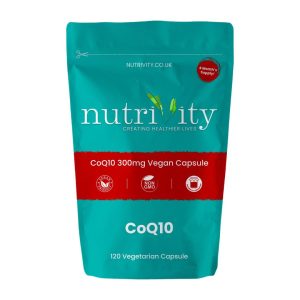
Yes. Nutrivity’s CoQ10 300mg uses naturally fermented ubiquinone in HPMC vegetable capsules with no unnecessary additives. 300mg is the dose used in the Q-SYMBIO cardiovascular trial over two years without safety concerns. As with any supplement, consult your GP if you take prescription medication — particularly warfarin or antihypertensive drugs — before starting.
Can you take CoQ10 long term?
CoQ10 appears to be safe for long-term use based on available research. Studies lasting up to 16 months at doses up to 1,200mg daily have not identified significant adverse effects. However, periodic review with your GP is sensible, particularly if you are taking other medications.
Does CoQ10 interact with any vitamins or supplements?
CoQ10 has a chemical structure similar to vitamin K, which means it may reduce the effectiveness of anticoagulant medications that work by opposing vitamin K. There are no well-documented negative interactions between CoQ10 and standard vitamins or minerals, but you should always inform your GP about all supplements you are taking.