





CoQ10 for Migraines and Headaches — What the Research Shows (2026)
-
By Chris Jones
CoQ10 for Migraines and Headaches — What the Research Shows (2026)
Posted June 2026 | Written by Chris Jones, Social Media Manager at Nutrivity with 7+ years in the supplement industry.
Quick Answer: Clinical trials show that CoQ10 supplementation at 300mg daily can reduce migraine frequency by up to 50% and decrease the severity and duration of attacks. The Canadian Headache Society and multiple clinical guidelines include CoQ10 as a recommended preventive supplement for migraines. It is not an acute treatment for an ongoing migraine but a daily preventive strategy that builds effectiveness over 4–12 weeks.
Migraines affect approximately 10 million people in the UK and are the third most common disease in the world. They are far more than bad headaches — they involve debilitating pain, nausea, light sensitivity, and cognitive impairment that can last for hours or days. For chronic migraine sufferers (15 or more headache days per month), the impact on work, relationships, and quality of life is enormous.
Pharmaceutical prevention options exist (beta-blockers, topiramate, amitriptyline, CGRP inhibitors), but all carry side-effect profiles that many patients find difficult to tolerate. This has driven significant interest in natural preventive approaches, and CoQ10 has emerged as one of the most evidence-based options available.
Why CoQ10 May Help Prevent Migraines
The biological rationale for CoQ10 in migraine prevention centres on mitochondrial dysfunction. Research over the past two decades has increasingly linked migraines to impaired mitochondrial energy metabolism in brain cells:
Mitochondrial energy deficit — Brain cells are among the most energy-demanding in the body, and migraine patients have been shown to have lower mitochondrial energy reserves between attacks. This “energy deficit” may lower the threshold at which a migraine is triggered. CoQ10, as an essential component of mitochondrial ATP production, helps restore this energy reserve.
Oxidative stress — Migraine patients show elevated markers of oxidative damage, suggesting that reactive oxygen species play a role in triggering or sustaining attacks. CoQ10 is one of the body’s most potent fat-soluble antioxidants and can reduce oxidative stress within mitochondrial membranes.
Neuroinflammation — Migraines involve activation of the trigeminovascular system and release of inflammatory neuropeptides (including CGRP). CoQ10’s anti-inflammatory properties may help modulate this neuroinflammatory cascade, reducing the frequency and severity of activation.
Measured CoQ10 deficiency in migraine patients — Studies have found that a significant proportion of migraine patients have below-normal blood levels of CoQ10. A study in paediatric and adolescent migraine patients found that over 30% were deficient, and those who were supplemented showed significant improvement in migraine frequency.
The Clinical Evidence
CoQ10 for migraine prevention has been tested in multiple randomised controlled trials:
The landmark trial: A double-blind, placebo-controlled trial published in Neurology (the official journal of the American Academy of Neurology) found that 300mg of CoQ10 daily for 3 months reduced migraine frequency by 50% in the treatment group compared to 14% in the placebo group. The number of headache days per month dropped from an average of 7.34 to 2.95. Attack duration and nausea severity also improved significantly.
Paediatric evidence: A study in children and adolescents with migraines found that CoQ10 supplementation significantly reduced headache frequency, with the greatest improvements in those with the lowest baseline CoQ10 levels. This supports the theory that correcting a deficiency is a key mechanism.
Comparison with preventive medications: While direct head-to-head trials with pharmaceutical preventives are limited, the 50% reduction in migraine frequency seen with CoQ10 is comparable to the efficacy threshold used to define successful pharmaceutical prevention. Topiramate, one of the most commonly prescribed preventive medications, typically reduces migraine frequency by 50% in approximately 50% of patients — a similar magnitude of effect to CoQ10 but with a substantially higher side-effect burden.
Guidelines endorsement: The Canadian Headache Society has included CoQ10 in its guidelines as a recommended supplement for migraine prevention. The American Academy of Neurology and the American Headache Society classify CoQ10 as “possibly effective” (Level C evidence), acknowledging the positive trial results while noting the need for larger confirmatory studies.
 How to Use CoQ10 for Migraine Prevention
Dose: 300mg daily. This is the dose used in the positive clinical trials and the one recommended by headache specialists. Lower doses (100–150mg) have shown less consistent results. See our CoQ10 dosage guide.
Timing: Take with breakfast or lunch alongside food containing fat. See best time to take CoQ10. CoQ10 is a preventive supplement, not an acute treatment — it will not stop a migraine once it has started.
Timeline: The clinical trials that showed positive results ran for 3 months (12 weeks). Most patients noticed a gradual reduction in migraine frequency starting around week 4, with the maximum benefit reached by week 8–12. Give CoQ10 a full 12-week trial before deciding whether it is working for you.
Tracking: Keep a simple migraine diary recording the number of headache days per month, pain severity (1–10 scale), and duration. This objective record is essential for assessing whether CoQ10 is reducing your migraines, since subjective impressions can be unreliable over 12 weeks.
Recommended: CoQ10 300mg Vegan Capsules — the exact dose used in positive migraine trials, in a single daily capsule. Vegan friendly, halal friendly, UK-made, GMP standard. See our Best CoQ10 Supplement UK comparison.
OUR TOP RECOMMENDED
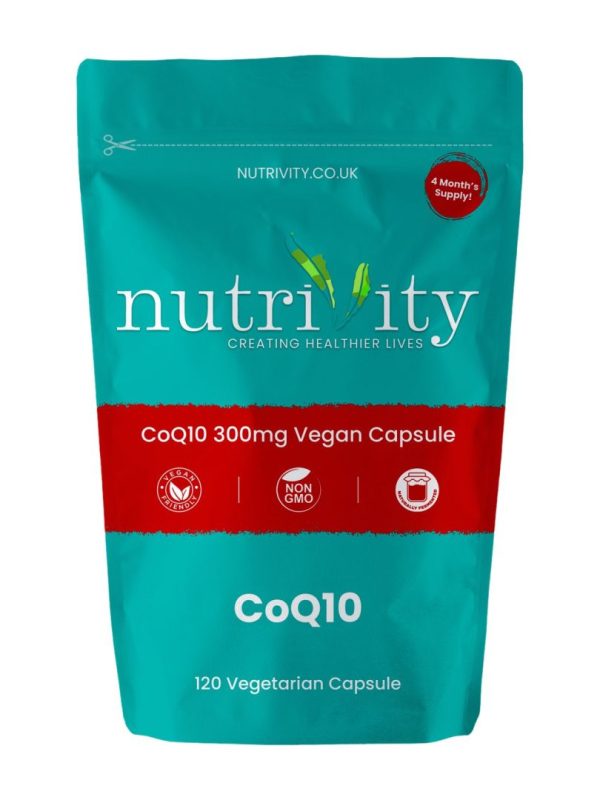
CoQ10 300mg Vegan Capsules – Naturally Fermented Ubiquinone
Price range: £12.99 through £49.99💊 High Strength 300mg CoQ10 per Vegan capsule.
🎋 Naturally fermented ubiquinone.
👉 No artificial colours or preservatives.
📦 Up to 12 months supply – from just 13.7p per day.
CoQ10 and Other Migraine Supplements
CoQ10 can be combined with other evidence-based migraine supplements for a multi-pathway preventive approach:
Magnesium — 400–600mg of magnesium (citrate or glycinate) daily is one of the most well-evidenced migraine preventives. Magnesium deficiency is common in migraine patients and affects neurotransmitter release, blood vessel tone, and cortical excitability. CoQ10 and magnesium work through entirely different mechanisms and can be safely combined.
Riboflavin (Vitamin B2) — 400mg daily has been shown in trials to reduce migraine frequency. Like CoQ10, riboflavin supports mitochondrial energy production, but through a different step in the electron transport chain. The combination of CoQ10 + riboflavin provides comprehensive mitochondrial support.
Omega-3 fatty acids — High-dose omega-3 has shown modest migraine reduction benefits in some trials, likely through anti-inflammatory mechanisms. Cod Liver Oil provides omega-3 alongside vitamin D, which is also being investigated for migraine prevention.
What to Expect — Realistic Outcomes
Setting realistic expectations is important for adherence. Here is what the clinical evidence suggests you can reasonably expect from 300mg of CoQ10 daily over 12 weeks:
Migraine frequency — The average reduction in the landmark trial was from 7.34 to 2.95 headache days per month. Not everyone will see this level of improvement. Approximately 50% of participants in the treatment group achieved a 50% or greater reduction in migraine days. This means roughly half of people will see meaningful improvement and half will see modest or no benefit.
Migraine severity — Even when migraines still occur, their intensity and duration tend to decrease with CoQ10 supplementation. Attacks may be shorter, less intense, and more responsive to acute treatment.
Nausea — Migraine-associated nausea showed significant improvement in clinical trials, which is meaningful because nausea is often the most disabling symptom for many sufferers.
What CoQ10 will NOT do — It will not eliminate all migraines. It will not work as an acute treatment during an attack. It will not replace all other preventive strategies. It is one effective tool in a comprehensive migraine management approach, not a standalone cure.
The best predictor of response may be baseline CoQ10 levels. Those with the lowest levels tend to improve the most, which supports the theory that correcting a deficiency is the primary mechanism. Unfortunately, routine CoQ10 blood testing is not widely available through the NHS, so most people will need to try supplementation empirically and assess the results through migraine diary tracking.
Who Should Try CoQ10 for Migraines?
Episodic migraine sufferers (4–14 headache days per month) — The patient group most studied in CoQ10 trials and most likely to benefit.
People who have not tolerated pharmaceutical preventives — CoQ10’s minimal side-effect profile makes it a practical alternative for patients who have discontinued medications due to adverse effects.
People who prefer to try natural approaches before medication — CoQ10 is a reasonable first-line preventive strategy, and many headache specialists support trying it (alongside magnesium and riboflavin) before escalating to pharmaceuticals.
Migraine patients on statins — Statins deplete CoQ10, potentially worsening mitochondrial dysfunction that may trigger migraines. If your migraines worsened after starting a statin, CoQ10 depletion could be a contributing factor.
Children and adolescents with migraines — CoQ10 has been studied in younger patients with positive results and an excellent safety profile. Dosing should be guided by a healthcare professional.
 The Bottom Line
CoQ10 at 300mg daily is one of the most evidence-based natural supplements for migraine prevention. Clinical trials show it can reduce migraine frequency by up to 50% over 12 weeks, with minimal side effects. It is endorsed by the Canadian Headache Society and recognised by the American Academy of Neurology as possibly effective.
It is not a cure for migraines and it will not stop an attack once it has started. It is a daily preventive strategy that works by supporting mitochondrial energy production and reducing oxidative stress in brain cells. For the millions of UK migraine sufferers looking for an effective approach with a fraction of the side-effect burden of pharmaceutical preventives, CoQ10 deserves serious consideration.
Give it 12 weeks. Track your headache days with a simple diary — date, severity, duration. Compare month one to month three. The clinical evidence says the numbers will come down for the majority of migraine sufferers, and the process of tracking will help you identify triggers and patterns that supplementation alone cannot address.
Related reading: What Is CoQ10? | CoQ10 Dosage Guide | CoQ10 Side Effects | CoQ10 and Ageing | CoQ10 for Athletes
Disclaimer: This article is for informational purposes only and does not constitute medical advice. Migraines can be a symptom of serious conditions. If you experience sudden severe headaches, changes in headache pattern, or neurological symptoms, seek medical attention. Consult your healthcare professional before starting any new supplement. All Nutrivity products are manufactured in the UK to GMP standards.
Frequently Asked Questions
Can CoQ10 prevent migraines?
Clinical evidence shows CoQ10 at 300mg daily can reduce migraine frequency by up to 50 percent over 12 weeks. It is a preventive supplement taken daily, not an acute treatment for an active migraine. The Canadian Headache Society includes CoQ10 in its migraine prevention guidelines.
How much CoQ10 should I take for migraines?
300mg daily. This is the dose used in the positive clinical trials. Lower doses (100 to 150mg) have shown less consistent results. Take with food containing fat for optimal absorption.
How long does CoQ10 take to reduce migraines?
Most patients notice gradual improvement starting around week 4, with maximum benefit at 8 to 12 weeks. Give CoQ10 a full 12-week trial before assessing effectiveness. Keep a migraine diary to track changes objectively.
Can I take CoQ10 with migraine medication?
CoQ10 is generally safe alongside common migraine medications including triptans, paracetamol, and NSAIDs. It can also be used alongside preventive medications such as beta-blockers and topiramate. Always inform your GP or neurologist about all supplements you take.
Does CoQ10 help with tension headaches?
The clinical evidence for CoQ10 is specific to migraines rather than tension headaches. The mitochondrial dysfunction hypothesis is more relevant to migraine pathophysiology. However, if you experience mixed migraine and tension patterns, CoQ10 may reduce the migraine component.
Can children take CoQ10 for migraines?
CoQ10 has been studied in children and adolescents with migraines with positive results and an excellent safety profile. Over 30 percent of paediatric migraine patients in one study were found to be CoQ10 deficient. Dosing for children should be guided by a healthcare professional.
What other supplements help with migraines?
Magnesium (400 to 600mg daily) and riboflavin (400mg daily) are the other two supplements with strong evidence for migraine prevention. All three work through different mechanisms and can be safely combined for a comprehensive preventive approach. Omega-3 fatty acids have also shown modest benefits.
Is CoQ10 better than prescription migraine preventives?
CoQ10 produces a similar magnitude of migraine frequency reduction (approximately 50 percent) to some pharmaceutical preventives but with substantially fewer side effects. It is not necessarily stronger than prescription options but is better tolerated. Many headache specialists recommend trying CoQ10, magnesium, and riboflavin before escalating to pharmaceutical prevention.