




CoQ10 for Athletes and Exercise Performance — Does It Help? (2026)
-
By Chris Jones
CoQ10 for Athletes and Exercise Performance — Does It Help? (2026)
Posted June 2026 | Written by Chris Jones, Social Media Manager at Nutrivity with 7+ years in the supplement industry.
Quick Answer: CoQ10 supplementation at 200–300mg daily has been shown in clinical trials to improve exercise capacity, reduce fatigue during prolonged activity, and accelerate post-exercise recovery. The benefits are most pronounced in older athletes, those training at high volumes, and anyone experiencing exercise-related fatigue. For young, well-nourished athletes at lower training volumes, the effects are more modest.
Coenzyme Q10 is not a typical sports supplement. It does not provide a caffeine-like stimulant effect or an immediate performance boost. Instead, it works at the fundamental cellular level — directly supporting the mitochondrial energy production that powers every muscle contraction, every heartbeat, and every breath you take during exercise.
For athletes and active adults, this raises a practical question: can supplementing with CoQ10 measurably improve performance, reduce fatigue, or accelerate recovery? The clinical evidence says yes — with some important nuances about who benefits most and what to expect. For a broader overview of CoQ10’s benefits, see what is CoQ10?
How CoQ10 Supports Exercise Performance
Every movement you make during exercise depends on ATP — adenosine triphosphate — the molecule that provides energy to muscle cells. CoQ10 is an essential component of the mitochondrial electron transport chain, the process that generates approximately 95% of your body’s ATP.
During intense exercise, ATP demand increases dramatically. Your muscles require a continuous, rapid supply of ATP to sustain contraction. If mitochondrial function is compromised — by age, training stress, or CoQ10 depletion — ATP production cannot keep pace with demand. The result: fatigue, reduced power output, and slower recovery.
CoQ10 supplementation supports this process in three ways:
Enhanced mitochondrial efficiency — By ensuring adequate CoQ10 availability in the electron transport chain, supplementation supports maximal ATP production under training stress. This is particularly relevant during sustained endurance efforts where mitochondrial function is the limiting factor.
Antioxidant protection during exercise — Intense exercise generates a surge of reactive oxygen species (free radicals) as a by product of increased mitochondrial activity. While some oxidative stress is necessary for training adaptation, excessive levels damage muscle cells and delay recovery. CoQ10 is one of the body’s primary fat-soluble antioxidants, neutralising free radicals within mitochondrial membranes where they are most concentrated during exercise.
Reduced exercise-induced inflammation — CoQ10 has been shown to lower inflammatory markers (CRP, IL-6) following intense exercise, supporting faster recovery and reduced muscle soreness.
What the Research Shows
Endurance Performance
A randomised controlled trial published in the Journal of the International Society of Sports Nutrition found that 300mg of CoQ10 daily for 8 weeks significantly increased time to exhaustion during cycling exercise compared to placebo. Participants also reported lower perceived exertion at submaximal intensities, suggesting that the same training load felt easier.
A separate study in trained middle-distance runners found that 200mg of CoQ10 daily for 4 weeks improved VO2max (a key measure of aerobic fitness) and reduced oxidative stress markers after a 5km time trial. The improvements were modest (approximately 3–5%) but potentially meaningful for competitive athletes where small margins matter.
Strength and Power
The evidence for CoQ10 and acute strength or power output is less consistent. Some studies show improvements in peak power during repeated sprint tests, while others show no significant effect. The current consensus is that CoQ10 is more relevant for endurance and recovery than for maximal strength efforts.
However, for resistance training athletes training at high volumes, CoQ10’s role in reducing exercise-induced muscle damage and inflammation may indirectly support strength gains by enabling better recovery between sessions.
Recovery and Muscle Damage
This is where CoQ10 shows some of its strongest athletic benefits. A placebo-controlled study found that 300mg of CoQ10 daily significantly reduced creatine kinase (CK) levels — a marker of muscle damage — following intense exercise. Participants also reported less muscle soreness in the days following hard training sessions.
A meta-analysis of exercise and CoQ10 studies concluded that supplementation consistently reduced markers of oxidative damage and inflammation following exercise, supporting faster recovery between sessions. For athletes training daily or twice daily, this accelerated recovery window is a practical advantage.
The recovery benefits are complementary to omega-3 fatty acids, which also reduce post-exercise inflammation through different mechanisms. Athletes seeking comprehensive recovery support may benefit from combining CoQ10 with Cod Liver Oil, Omega-3 & Glucosamine for joint protection alongside muscle recovery.
 CoQ10 Dosage for Athletes
Athletic performance studies have used doses ranging from 100mg to 300mg daily. The strongest and most consistent results come from 200–300mg daily, taken with a meal containing fat for optimal absorption. See our CoQ10 dosage guide for detailed recommendations.
Timing: Take CoQ10 with breakfast or lunch rather than close to bedtime, as its energy-supporting effects may interfere with sleep in some people. On training days, taking it 2–3 hours before exercise ensures peak availability during your session. See best time to take CoQ10.
Loading phase: CoQ10 takes 2–4 weeks to reach optimal tissue levels. Start supplementation at least 4 weeks before a target event or peak training block. It is not an acute performance supplement — you cannot take it the morning of a race and expect an effect.
Recommended: CoQ10 300mg Vegan Capsules — full clinical-strength dose in a single capsule. Vegan friendly, halal friendly, UK-made, GMP standard. See our Best CoQ10 Supplement UK comparison.
OUR TOP RECOMMENDED
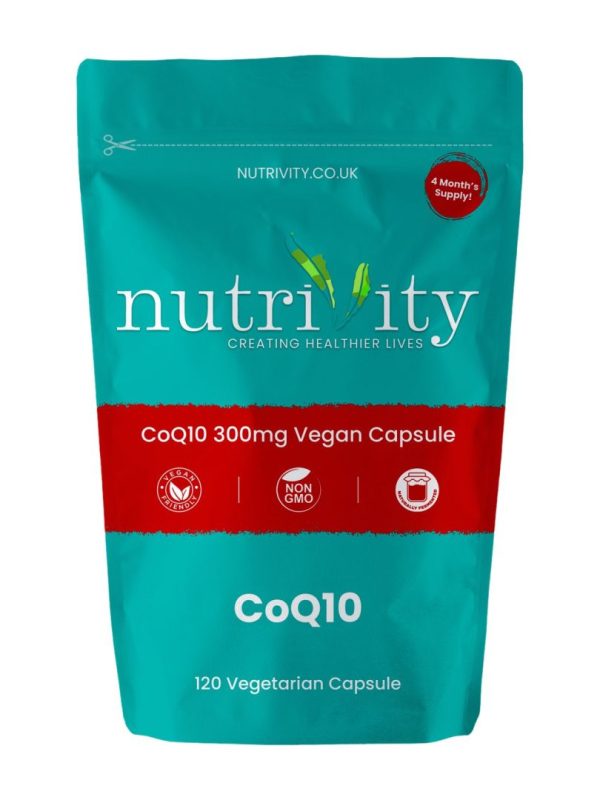
CoQ10 300mg Vegan Capsules – Naturally Fermented Ubiquinone
Price range: £12.99 through £49.99💊 High Strength 300mg CoQ10 per Vegan capsule.
🎋 Naturally fermented ubiquinone.
👉 No artificial colours or preservatives.
📦 Up to 12 months supply – from just 13.7p per day.
Who Benefits Most?
Masters athletes (over 40) — Natural CoQ10 production declines significantly with age, precisely when training recovery also slows. Supplementation addresses this age-related decline and helps maintain exercise capacity that would otherwise diminish. This is the group with the most consistent research support.
Endurance athletes in heavy training blocks — Marathon, triathlon, and cycling training at high volumes depletes CoQ10 through increased mitochondrial demand. Supplementation ensures the mitochondrial machinery can keep up with training stress.
Athletes experiencing unexplained fatigue — If training performance has plateaued or declined despite adequate rest, nutrition, and training periodisation, low CoQ10 levels may be a contributing factor. This is especially worth considering for athletes also taking statins, which deplete CoQ10.
Recovery-limited athletes — If you train frequently and find that soreness and fatigue from one session carry into the next, CoQ10’s anti-inflammatory and antioxidant effects may help close the recovery gap.
Young, well-rested recreational exercisers — The least likely to see dramatic benefits. Natural CoQ10 levels are typically adequate in younger adults with moderate training loads. Benefits are more subtle in this group and harder to distinguish from normal training adaptation.
CoQ10 for Different Types of Athletes
Runners and endurance athletes — CoQ10’s mitochondrial support directly benefits the aerobic energy system that powers sustained efforts. Marathon and half-marathon runners in heavy training blocks deplete CoQ10 through increased mitochondrial demand. Supplementation maintains the energy production capacity needed for long-duration efforts and accelerates recovery between sessions. Combined with joint-protective supplements like glucosamine, it provides comprehensive support for the demands of distance running.
Team sport athletes — Football, rugby, hockey, and similar sports require repeated high-intensity efforts with incomplete recovery. CoQ10’s support for both aerobic recovery between sprints and antioxidant protection during repeated maximal efforts makes it relevant for these intermittent-intensity demands.
Strength and resistance training — While the acute strength benefits are less clear, CoQ10’s recovery-supporting effects are valuable for lifters training at high frequencies. Reduced muscle damage markers and faster inflammatory resolution between sessions means you can train hard more often with less accumulated fatigue.
Recreational exercisers — If you exercise 3–5 times per week for general health, CoQ10 is less critical than for competitive athletes but still provides meaningful energy and recovery support, particularly if you are over 40 and noticing that exercise feels harder and recovery takes longer than it used to.
CoQ10 and Other Sports Supplements
CoQ10 stacks well with several evidence-based sports supplements without interactions:
Omega-3 / Cod Liver Oil, Omega-3 & Glucosamine — Complementary anti-inflammatory and joint-protective effects. Omega-3 reduces inflammation through cytokine modulation while CoQ10 works through antioxidant pathways. Particularly valuable for runners and endurance athletes managing both muscle recovery and joint health.
Creatine — Both support ATP availability but through different mechanisms. Creatine provides a rapid ATP buffer for short-duration high-intensity efforts. CoQ10 supports sustained mitochondrial ATP production for longer efforts. No interaction between the two.
Caffeine — No known interaction. CoQ10 supports cellular energy production while caffeine blocks adenosine receptors to reduce perceived fatigue. They work through entirely different mechanisms.
Vitamin D3+K2 — Essential for bone health under training load, particularly for athletes training through UK winters when vitamin D deficiency is virtually guaranteed.
Whether you are a competitive athlete chasing personal bests or a recreational exerciser who wants to maintain fitness and energy as the years pass, CoQ10 offers a well-tolerated, evidence-based tool for supporting the cellular machinery that makes all physical activity possible.
 The Bottom Line
CoQ10 is not a magic performance pill. It is not a shortcut, and it will not turn a recreational jogger into a marathon runner or add 20kg to your deadlift. What it does, supported by clinical evidence, is optimise the cellular energy production that underpins all exercise, reduce the oxidative damage and inflammation that slow recovery, and help maintain performance capacity as training loads and age increase.
The research trajectory is also worth noting. Early studies on CoQ10 and exercise used lower doses (60–100mg) and produced inconsistent results, which led some sports scientists to dismiss CoQ10. More recent trials using 200–300mg have produced consistently positive findings, particularly in the areas of endurance and recovery. The earlier negative studies were almost certainly a dosing problem rather than an efficacy problem.
At 300mg daily, taken consistently for at least 4 weeks before a target event or training peak, CoQ10 is a well-tolerated, evidence-based addition to any serious athlete’s supplement routine. Combined with proper training periodisation, nutrition, and recovery, the benefits are greatest for masters athletes, endurance athletes in heavy training, and anyone experiencing training fatigue that rest and nutrition alone are not resolving.
Related reading: What Is CoQ10? | CoQ10 for Energy and Fatigue | CoQ10 for Heart Health | CoQ10 Dosage Guide | CoQ10 for Blood Pressure
Disclaimer: This article is for informational purposes only and does not constitute medical or sports nutrition advice. Consult a qualified sports nutritionist or healthcare professional before adding supplements to your training regimen. All Nutrivity products are manufactured in the UK to GMP standards.
Frequently Asked Questions
Does CoQ10 improve exercise performance?
Clinical trials show CoQ10 at 200 to 300mg daily can improve time to exhaustion, reduce perceived exertion, and modestly improve VO2max. Benefits are most consistent in endurance activities and in athletes over 40. Effects on maximal strength are less clear.
How much CoQ10 should athletes take?
200 to 300mg daily, taken with food containing fat. Start at least 4 weeks before a target event or training peak. A 300mg capsule provides the full clinical dose in one serving.
When should I take CoQ10 for training?
With breakfast or lunch, 2 to 3 hours before training on workout days. Avoid taking close to bedtime as the energy-supporting effects may affect sleep. Consistency matters more than precise timing.
Does CoQ10 help with muscle soreness?
Yes. Studies show 300mg daily reduces creatine kinase levels (a marker of muscle damage) and reported muscle soreness following intense exercise. The antioxidant and anti-inflammatory effects support faster recovery between sessions.
Can CoQ10 help older athletes maintain performance?
This is where CoQ10 shows the strongest athletic benefits. Natural production declines with age, coinciding with slower recovery and reduced exercise capacity. Supplementation addresses this age-related decline and helps maintain performance that would otherwise diminish.
Is CoQ10 banned in sport?
No. CoQ10 is not on the World Anti-Doping Agency (WADA) prohibited list and is not banned by any major sporting body. It is a naturally occurring compound found in food and produced by the body. It is safe for competitive athletes in all sports.
Can I take CoQ10 with creatine?
Yes. They support ATP through different mechanisms (CoQ10 through mitochondrial production, creatine through phosphocreatine buffering) and do not interact. Combining them may provide complementary benefits for both endurance and high-intensity performance.
How long before I notice performance benefits from CoQ10?
CoQ10 takes 2 to 4 weeks to reach optimal tissue levels. Most exercise studies showing positive results used supplementation periods of 4 to 8 weeks. It is not an acute supplement and will not produce same-day effects.