





Cod Liver Oil for Skin — Does It Help? UK Guide
-
By Chris Jones
Posted June 2026 | Written by Chris Jones, Social Media Manager at Nutrivity, with 7+ years in the supplement industry.
Cod Liver Oil for Skin — Does It Help?
Cod liver oil has a long-standing reputation as a “general health” tonic, and skin is one of the areas people hope it will improve. There is a sensible nutritional rationale here — cod liver oil contains nutrients that the skin genuinely relies on — but it is also an area where claims tend to run ahead of the evidence. This guide explains how cod liver oil could support skin, what the research does and does not show, and the one important caution that applies specifically to skin.
For the wider background on what cod liver oil provides, see our cod liver oil benefits guide.
How Cod Liver Oil Could Support Skin
Cod liver oil is nutritionally distinctive because it delivers three things at once: the omega-3 fatty acids EPA and DHA, plus the fat-soluble vitamins A and D. Each of these has a recognised relationship with skin. Vitamin A contributes to the maintenance of normal skin — it plays a role in the turnover and differentiation of skin cells, which is why vitamin A derivatives are so prominent in dermatology. Omega-3 fatty acids support a normal inflammatory response, and inflammation is a feature of many skin complaints. Vitamin D is involved in skin cell function and immune regulation in the skin.
So the rationale is real: if your skin issues are partly linked to low intake of these nutrients, topping them up could plausibly help. That is different, though, from saying cod liver oil is a proven treatment for any specific skin condition — and that distinction is where honesty matters.
 What the Evidence Actually Shows
Here is the straight version. The strongest, clearest claim that can be made is the authorised one: vitamin A contributes to the maintenance of normal skin. That is a statement about normal skin function with adequate nutrition, not a promise to clear acne or cure eczema. Beyond that, the direct clinical evidence that taking oral cod liver oil specifically improves skin conditions is limited. Much of what circulates online is mechanistic reasoning (these nutrients matter for skin, therefore the supplement must help) and anecdote, rather than robust trials of cod liver oil itself.
Omega-3 has been studied in inflammatory skin conditions with mixed and modest results, and there is interest in the role of vitamin D in conditions such as eczema and psoriasis, but none of this amounts to cod liver oil being an evidence-based treatment you should rely on instead of proper dermatological care. The fair position is that cod liver oil can support overall skin health as part of good nutrition, particularly if your diet is short on oily fish and you are not getting enough vitamin D, but it should not be sold to yourself as a cure for a specific skin problem.
OUR TOP RECOMMENDED
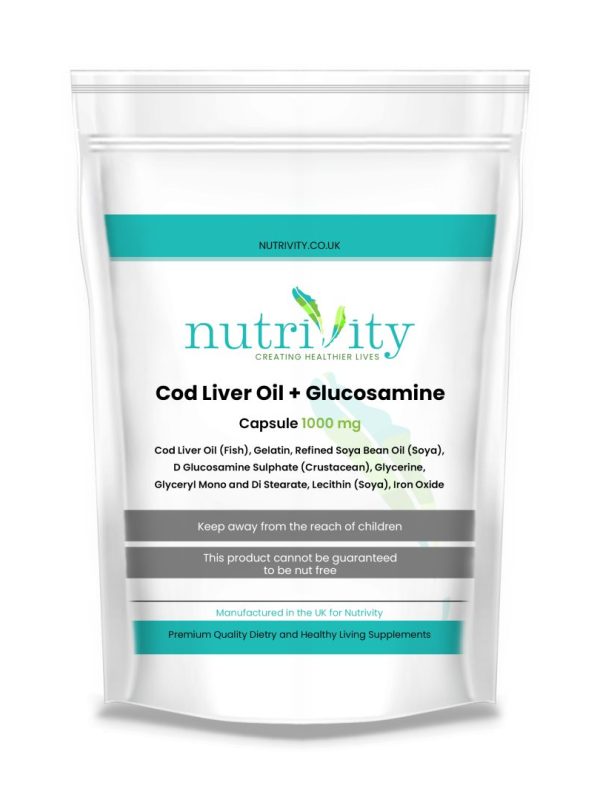

Cod Liver Oil, Omega 3 & Glucosamine 1000mg High Strength Soft Gels – 3 in 1 | Joint Support
Price range: £11.99 through £51.99🐟 Cod Liver Oil, Omega 3 & Glucosamine High Strength - 3 in 1 Formula. 📦 Up to 12 months supply – from just 15p per day.

Cod Liver Oil and Acne or Eczema
Because these are the conditions people most often ask about, they deserve a direct word. For acne, the honest answer is that cod liver oil is not a proven treatment; the omega-3 anti-inflammatory angle is plausible for the inflammatory component, but evidence-based acne care (appropriate topical treatments and, for persistent cases, a GP or dermatologist) will do far more. For eczema, the picture is similar — there is scientific interest in omega-3 and vitamin D, but the data do not support cod liver oil as a treatment, and active eczema needs proper management with emollients and, where prescribed, other treatments. In both cases, think of cod liver oil as possible nutritional support around the edges, not the main intervention, and do not delay effective treatment while waiting on a supplement.
The Vitamin A Caution for Skin
This is the most important practical point in the whole article, and it is specific to skin. Many people who are focused on their skin are also using vitamin A in another form — prescription retinoids or high-strength retinol serums applied topically, or a skincare routine built around vitamin A derivatives. Cod liver oil adds oral preformed vitamin A (retinol) to that picture. Stacking multiple sources of vitamin A raises the risk of getting too much, and excessive vitamin A intake can itself cause problems including dry skin, skin peeling, and hair loss — the opposite of what you are hoping for, as well as more serious effects with sustained excess.
So if you use prescription-strength retinoids or high-concentration retinol products, or take a multivitamin containing retinol, factor that in before adding cod liver oil, and ideally check with your GP or pharmacist. The UK Food Standards Agency advises that habitual vitamin A intake from all sources should stay within safe limits, and cod liver oil is one of those sources. And to state it clearly because it overlaps with skin goals: cod liver oil must not be taken in pregnancy, as we explain in our guide to cod liver oil in pregnancy.
 Skin Basics That Matter More
Whatever you decide about cod liver oil, the fundamentals do more for skin than any single supplement. A consistent, gentle skincare routine, daily broad-spectrum sun protection, adequate hydration, sleep, and a balanced diet rich in vegetables, oily fish, and whole foods form the real foundation. Not smoking and managing stress matter too. Supplements work best as a top-up to an already-decent baseline, not as a shortcut around it. If your skin concern is persistent, painful, spreading, or affecting your confidence, a GP or dermatologist is a far better investment than experimenting with supplements.
How to Take It If You Choose To
If, after all that, you want to take cod liver oil for general skin and overall health, the approach is the same as for any cod liver oil use: one standard daily dose with a fat-containing meal, taken consistently, and not combined with other vitamin A sources. Nutrivity’s Cod Liver Oil, Omega-3 & Glucosamine soft gels provide omega-3 along with the naturally occurring vitamins A and D, made in the UK to GMP standards and halal friendly, though not suitable for vegans or anyone with a fish or shellfish allergy. As with any cod liver oil product, stick to the stated serving, do not double up on cod liver oil or vitamin A, and give nutrition time — skin responds over months, not days. For the correct amounts and the vitamin A limit, see our cod liver oil dosage guide.
Cod Liver Oil for Hair and Nails
People who ask about skin often ask about hair and nails in the same breath, since they share some of the same nutritional inputs. The honest picture is similar to skin. The nutrients in cod liver oil — vitamin A, vitamin D, and omega-3 — all have roles in healthy hair follicles and the skin from which hair and nails grow, so adequate intake as part of good nutrition supports them. But cod liver oil is not a proven treatment for hair loss or brittle nails, and the direct evidence for it specifically improving hair or nail growth is limited. There is also an important irony with vitamin A: while too little can affect hair, too much can actually cause hair loss, which is another reason not to stack cod liver oil with other vitamin A sources. If you have noticeable hair loss or significant nail changes, these can signal underlying issues worth a GP visit, rather than something to self-treat with a supplement.
Topical Use vs Taking It Orally
Occasionally people ask about applying cod liver oil to the skin directly rather than taking it by mouth. This is not something supported by good evidence, the smell and texture make it impractical, and it does nothing to address the nutritional angle that is the only real rationale for cod liver oil and skin in the first place. If your interest is nutritional support for your skin, that comes from what you take in and your overall diet, not from applying a fish oil topically. For genuine topical skincare, evidence-based products designed for the skin are the sensible route, and cod liver oil is best thought of purely as an oral nutritional supplement.
Who Might Notice the Most Benefit
If cod liver oil is going to support anyone’s skin, it is most likely to be people whose baseline nutrition is genuinely lacking in the relevant nutrients. Someone who rarely eats oily fish, who gets little sunlight and may be low in vitamin D over the UK winter, and whose overall diet is limited has more room to benefit from topping up omega-3 and vitamins A and D than someone already eating well. Conversely, if you already eat oily fish a couple of times a week, take a vitamin D supplement, and have a varied diet, adding cod liver oil is unlikely to transform your skin, because you are not short of what it provides. This is the realistic way to set your expectations: cod liver oil corrects shortfalls rather than supercharging skin that is already well-nourished. If you are unsure whether you are deficient in anything, your GP can arrange relevant checks, which is more useful than guessing.
The Bottom Line
Cod liver oil provides nutrients the skin genuinely uses — vitamin A, vitamin D, and omega-3 — and can support normal skin as part of good nutrition, especially if your diet is short on oily fish. But it is not a proven treatment for acne, eczema, or any specific skin condition, and the direct evidence for oral cod liver oil improving skin is limited. The key caution is vitamin A: do not stack it with retinoid skincare, other vitamin A supplements, or use it in pregnancy. Get the basics right first, keep expectations realistic, and see a GP or dermatologist for anything persistent.
Related Reading
- Cod Liver Oil Benefits UK
- Cod Liver Oil Dosage UK
- Cod Liver Oil in Pregnancy UK
- Cod Liver Oil vs Fish Oil
- What Is Cod Liver Oil and Glucosamine? Benefits and UK Guide
Disclaimer: This article is for general information only and is not a substitute for professional medical advice. Food supplements are not intended to diagnose, treat, cure, or prevent any disease and should not replace a varied, balanced diet or a healthy lifestyle. Cod liver oil should not be combined with other vitamin A sources and must not be taken in pregnancy. If you have a skin condition, are pregnant or breastfeeding, take any medication, or have a fish or shellfish allergy, consult a healthcare professional before taking any supplement.
Frequently Asked Questions
Is cod liver oil good for your skin?
Cod liver oil provides vitamin A, vitamin D, and omega-3, all of which the skin uses, and vitamin A contributes to the maintenance of normal skin. So it can support skin health as part of good nutrition. However, it is not a proven treatment for any specific skin condition, and the direct evidence for oral cod liver oil improving skin is limited.
Does cod liver oil help acne?
Cod liver oil is not a proven acne treatment. The omega-3 anti-inflammatory angle is plausible for the inflammatory component, but evidence-based acne care — appropriate topical treatments and, for persistent cases, a GP or dermatologist — will do far more. Treat cod liver oil as possible nutritional support, not the main intervention.
Can I take cod liver oil with retinol skincare?
Be careful. Retinoids and retinol products are forms of vitamin A, and cod liver oil adds oral preformed vitamin A, so stacking them raises the risk of too much vitamin A — which can itself cause dry, peeling skin and hair loss. If you use prescription retinoids or strong retinol products, check with your GP or pharmacist before adding cod liver oil.
How long does cod liver oil take to affect skin?
Nutrition affects skin gradually, so any benefit would build over months rather than days. Take one standard daily dose with food, consistently, and keep expectations realistic. If your skin concern is persistent or worsening, see a GP or dermatologist rather than waiting on a supplement.
Is cod liver oil safe for skin in pregnancy?
No — cod liver oil should be avoided in pregnancy regardless of skin goals, because of its vitamin A (retinol) content, which carries a risk to the developing baby. If you are pregnant and want to support your skin, speak to your midwife or GP about safe options.