




Best vitamins for energy
-
By Chris Jones
Last Updated May 2026 | Written by Chris Jones, Social Media Manager at Nutrivity with 7+ years in the supplement industry.
Best Vitamins for Energy — What Actually Fights Fatigue
Fatigue is one of the most common reasons people visit their GP in the UK, and one of the most common reasons people reach for supplements. The appeal is understandable — the idea that a vitamin or capsule could resolve persistent tiredness is simple and attractive. But the reality of energy, fatigue, and supplementation is more nuanced than the marketing suggests.
Some supplements address genuine biological causes of fatigue. Others are essentially expensive placebos for people whose tiredness is caused by insufficient sleep, chronic stress, or underlying medical conditions that no supplement will fix. The difference between the two comes down to one question: is there an actual nutritional deficit causing your tiredness, or is the fatigue coming from somewhere else entirely?
This guide covers the vitamins, minerals, and supplements with the strongest evidence for addressing fatigue — what they actually do, who they help, and who they will not help.
| Quick Answer |
| The supplements most likely to improve energy levels are CoQ10 (cellular energy production, especially after age 40 and for statin users), vitamin D (fatigue is a common symptom of the UK’s most widespread deficiency), vitamin B12 (essential for red blood cell formation, commonly low in vegans and over-60s), and iron (only if confirmed deficient — do not supplement without a blood test). If your tiredness is caused by poor sleep, chronic stress, or an underlying medical condition, supplements will not resolve it. Start with your GP, not the supplement aisle. |
Why You Are Tired — Before You Buy Anything
Before spending money on energy supplements, it is worth being honest about the most common causes of fatigue in UK adults — most of which are not nutritional:
Insufficient sleep — The NHS recommends seven to nine hours for adults. Consistently sleeping less than six hours causes cumulative fatigue that no supplement can offset. If you are sleeping poorly, fixing sleep hygiene is worth more than any capsule.
Chronic stress and mental health — Anxiety, depression, and prolonged stress are major causes of fatigue. They are medical conditions, not nutritional deficiencies. If your tiredness is accompanied by persistent low mood, difficulty concentrating, or loss of interest in activities, speak to your GP.
Thyroid dysfunction — Hypothyroidism (underactive thyroid) is a common and treatable cause of fatigue, particularly in women over 40 but also in men. A simple blood test can detect it.
Dehydration — Mild chronic dehydration causes fatigue, reduced concentration, and headaches. Many people do not drink enough water throughout the day, particularly those who work in offices or rely heavily on coffee.
If you have addressed these factors and persistent fatigue remains, then nutritional supplementation becomes a reasonable consideration — ideally guided by blood tests to identify specific deficiencies rather than guessing.
CoQ10 — The Energy Molecule
Coenzyme Q10 is the supplement with the most direct connection to cellular energy production. It is not a vitamin — it is a naturally occurring compound found in every cell, with the highest concentrations in the heart, liver, and kidneys. Its role is within the mitochondrial electron transport chain, where it is essential for the production of ATP — the molecule that powers virtually every process in the body.
What makes CoQ10 particularly relevant for energy is that natural levels decline with age. From around age 40, the body produces progressively less CoQ10. By age 80, cardiac tissue levels are approximately half what they were at age 20. This decline directly reduces the efficiency of cellular energy production.
Statin medications — one of the most widely prescribed drug classes in the UK — further deplete CoQ10 because they inhibit HMG-CoA reductase, the same enzyme pathway the body uses to synthesise CoQ10. Men and women taking statins who report unexplained fatigue as a side effect may be experiencing statin-induced CoQ10 depletion.
Unlike B vitamins (which the body simply excretes if levels are already adequate), CoQ10 supplementation addresses a quantifiable, age-related decline. For adults over 40 experiencing fatigue that is not explained by sleep, stress, or medical conditions, CoQ10 is one of the most physiologically rational energy supplements available.
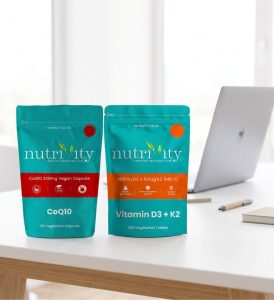
Nutrivity’s CoQ10 300mg Vegan Capsules provide one of the highest available strengths in the UK in a single daily capsule. For dosage guidance, see our CoQ10 dosage guide. For a comparison of UK CoQ10 products, see our best CoQ10 supplement UK 2026 comparison.
 Vitamin D — The Deficiency You Do Not Know You Have
Fatigue is one of the most commonly reported symptoms of vitamin D deficiency — and vitamin D deficiency is the most common nutritional inadequacy in the UK population. The NHS estimates that one in five UK adults has low vitamin D levels, with rates significantly higher during autumn and winter when UVB exposure is insufficient for skin synthesis.
Vitamin D contributes to normal muscle function and plays a role in reducing tiredness and fatigue. Deficiency has been associated with muscle weakness, generalised fatigue, and reduced physical performance in clinical studies. For many people who experience seasonal dips in energy — feeling noticeably more tired from October to March — vitamin D insufficiency is a likely contributing factor.
The fix is straightforward and inexpensive. The NHS recommends all UK adults consider supplementing with vitamin D during autumn and winter at a minimum. A blood test through your GP can confirm your current levels if you want to be precise about dosing.
Nutrivity’s Vitamin D3 4000 IU + K2 MK7 365 Tablets provides a full year’s supply at 3.5p per day. For more on D3 and K2, see our best time to take vitamin D3 and K2 guide.
Vitamin B12 — Who Actually Needs It
Vitamin B12 (cobalamin) is essential for red blood cell formation, neurological function, and DNA synthesis. B12 deficiency causes megaloblastic anaemia — a condition where the body produces abnormally large, dysfunctional red blood cells that cannot efficiently deliver oxygen to tissues. The result is fatigue, weakness, and breathlessness.
B12 deficiency is relatively uncommon in people who eat meat, fish, eggs, and dairy products regularly. The groups at genuine risk of deficiency are:
Vegans — B12 is found almost exclusively in animal-derived foods. Long-term vegans who do not supplement will eventually become deficient. This is not debatable.
Adults over 60 — The body’s ability to absorb B12 from food decreases with age due to declining stomach acid production. Up to 15% of adults over 60 have low B12 status.
People with absorption conditions — Pernicious anaemia, coeliac disease, Crohn’s disease, and gastric bypass surgery all impair B12 absorption.
People taking certain medications — Long-term use of proton pump inhibitors (omeprazole, lansoprazole) and metformin can reduce B12 absorption.
If you are not in one of these groups and you eat a diet that includes animal products, supplementing with B12 is unlikely to improve your energy levels because you are unlikely to be deficient. A blood test is the correct way to confirm.
Iron — The Most Dangerous One to Get Wrong
Iron deficiency is the most common nutritional deficiency worldwide and a well-established cause of fatigue. Iron is essential for haemoglobin production — the protein in red blood cells that carries oxygen from the lungs to every tissue in the body. When iron is low, oxygen delivery is compromised, and the result is tiredness, weakness, pallor, and reduced exercise tolerance.
However, iron is the one supplement on this list that you must never take without a confirmed deficiency. Unlike water-soluble vitamins that are excreted when intake exceeds need, excess iron accumulates in the body and can cause organ damage. Haemochromatosis — a genetic condition causing excessive iron absorption — affects roughly 1 in 200 people of Northern European descent, many of whom are undiagnosed.
If you suspect iron deficiency is causing your fatigue, get your serum ferritin tested through your GP. Do not self-prescribe iron supplements based on symptoms alone.
Omega-3 Fatty Acids — Supporting Overall Vitality
While omega-3s are not typically categorised as “energy supplements,” there is emerging evidence that omega-3 status affects perceived fatigue and physical performance. A 2019 systematic review found that omega-3 supplementation was associated with reduced inflammation markers and improved subjective energy in several study populations.
The mechanism is indirect but plausible: chronic low-grade inflammation is a recognised contributor to persistent fatigue, and omega-3 fatty acids have well-established anti-inflammatory properties. For adults whose tiredness is accompanied by joint stiffness, generalised aches, or a sense of physical sluggishness, omega-3 supplementation may provide benefit through inflammation reduction rather than direct energy pathway effects.
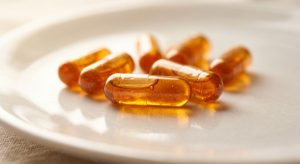
Nutrivity’s Cod Liver Oil & Glucosamine 1000mg provides omega-3 (EPA and DHA) alongside vitamin D, vitamin A, and glucosamine for joint support — making it relevant for adults whose fatigue accompanies physical stiffness and reduced mobility.
What About B-Complex, Caffeine, and “Energy” Supplements?
B-complex supplements — The B vitamins (B1, B2, B3, B5, B6, B7, B9, B12) are involved in energy metabolism, and B-complex supplements are widely marketed for energy. However, if you eat a varied diet that includes meat, fish, eggs, dairy, whole grains, and leafy vegetables, you are almost certainly getting adequate B vitamins already. Supplementing above adequate levels does not produce extra energy. The main B vitamin worth testing individually is B12 (see above).
Caffeine supplements — Caffeine is a stimulant, not a nutrient. It masks fatigue temporarily by blocking adenosine receptors in the brain. It does not address the underlying cause of tiredness and creates dependency with diminishing returns over time. If you rely on caffeine to function, you have a fatigue problem that caffeine is covering up, not solving.
Branded “energy” supplements — Many products marketed for energy combine B vitamins, caffeine, taurine, ginseng, and guarana in proprietary blends. These are essentially expensive caffeine delivery systems with vitamin garnish. They do not address the biological causes of persistent fatigue.
Nutrivity Supplements for Energy Support
| Supplement | Energy Mechanism | Who Benefits Most | Price From |
|---|---|---|---|
| CoQ10 300mg | Mitochondrial ATP production | Adults over 40, statin users, unexplained fatigue | 17p/day |
| Vitamin D3 4000 IU + K2 | Muscle function, fatigue reduction | All UK adults Oct–Mar, indoor workers, darker skin | 3.5p/day |
| Cod Liver Oil & Glucosamine | Anti-inflammatory omega-3, vitamin D | Fatigue with joint stiffness or physical sluggishness | 17p/day |
All Nutrivity supplements are manufactured in the UK in GMP-certified facilities. Vegan friendly products use HPMC plant-based capsules. Halal friendly. Free UK delivery on every order.
The Bottom Line
The most honest thing anyone can tell you about energy supplements is that most fatigue is not caused by a vitamin deficiency — it is caused by insufficient sleep, chronic stress, or medical conditions that require professional assessment. Supplements are worth considering after those factors have been addressed, ideally guided by blood tests.
Where supplements genuinely help is in addressing specific, measurable deficits: CoQ10 for the well-documented age-related decline in cellular energy production; vitamin D for the UK’s most common nutritional deficiency; B12 for vegans and older adults; iron for confirmed deficiency. Everything else in the “energy supplement” market is largely noise.
Key Takeaways
— Most fatigue is not caused by vitamin deficiency — rule out sleep, stress, and medical conditions first
— CoQ10 is the most physiologically direct energy supplement, addressing an age-related decline in mitochondrial ATP production
— Vitamin D deficiency causes fatigue in up to one in five UK adults, particularly during autumn and winter
— Vitamin B12 supplementation only helps if you are deficient — most common in vegans, over-60s, and people on PPIs or metformin
— Never supplement iron without a blood test — excess iron is harmful and haemochromatosis is common in Northern Europeans
— B-complex supplements are unnecessary for most people eating a varied diet
— Branded “energy” supplements are typically caffeine delivery systems with vitamin garnish
— A blood test for vitamin D, B12, iron, and ferritin through your GP is the most cost-effective first step
Frequently Asked Questions
What is the best vitamin for energy and tiredness?
There is no single best vitamin for energy because the cause of tiredness varies between individuals. For UK adults, the most common nutritional cause of fatigue is vitamin D deficiency, particularly during autumn and winter. For adults over 40, CoQ10 addresses a well-documented age-related decline in cellular energy production. For vegans and adults over 60, vitamin B12 is the most likely deficiency causing fatigue. A blood test is the most effective way to identify which, if any, nutritional deficit is contributing to your tiredness.
Does CoQ10 give you energy?
CoQ10 does not give you energy in the way caffeine does — it does not act as a stimulant. Instead, it supports the body’s natural energy production at the cellular level by facilitating ATP synthesis in the mitochondria. For adults over 40, whose natural CoQ10 levels have declined, supplementation can restore more efficient cellular energy production. Most people notice a gradual improvement over two to four weeks rather than an immediate effect.
Why am I tired all the time even though I sleep enough?
Persistent fatigue despite adequate sleep can have many causes, including vitamin D deficiency, iron deficiency, thyroid dysfunction, chronic low-grade inflammation, sleep apnoea, depression, or chronic stress. Before reaching for supplements, see your GP for a basic blood panel including vitamin D, B12, iron, ferritin, and thyroid function. Addressing a confirmed underlying cause will produce far better results than guessing with supplements.
Should I take B vitamins for energy?
B vitamins are involved in energy metabolism, but supplementing above adequate levels does not produce extra energy. If you eat a varied diet that includes meat, fish, eggs, dairy, and whole grains, you are likely getting sufficient B vitamins already. The one exception is B12 — vegans, adults over 60, and people taking proton pump inhibitors or metformin should consider testing and potentially supplementing. A standard B-complex supplement is unlikely to improve energy in someone who is not deficient.
Can vitamin D deficiency make you tired?
Yes. Vitamin D contributes to normal muscle function and plays a role in reducing tiredness and fatigue. Deficiency is the most common nutritional inadequacy in the UK, affecting approximately one in five adults and more during autumn and winter. Many people who experience seasonal dips in energy — feeling noticeably more tired from October through March — are experiencing the effects of insufficient vitamin D. The NHS recommends all UK adults consider supplementing during these months.
Is it safe to take energy supplements every day?
CoQ10, vitamin D (at recommended doses), and omega-3 fatty acids are all safe for daily, long-term use and are designed to be taken consistently. B12 is water-soluble and safe at recommended doses. Iron should only be taken daily if prescribed for a confirmed deficiency and monitored by your GP. The supplements to be cautious about are stimulant-based “energy” products containing high-dose caffeine, guarana, or taurine, which can cause dependency, sleep disruption, and cardiovascular strain with daily use.