





Vitamin D and Mood — Can It Help With Depression and Mental Health? (2026)
-
By Chris Jones
Vitamin D and Mood — Can It Help With Depression and Mental Health? (2026)
Posted June 2026 | Written by Chris Jones, Social Media Manager at Nutrivity with 7+ years in the supplement industry.
Quick Answer: There is a well-established association between low vitamin D levels and depression, low mood, and seasonal affective disorder (SAD). Multiple clinical trials show that correcting vitamin D deficiency can improve depressive symptoms, particularly in people who are clinically deficient. Vitamin D is not a replacement for antidepressant medication or therapy, but for the one in five UK adults with low levels, correcting the deficiency may meaningfully improve mood alongside other interventions.
The connection between sunlight and mood is something most people instinctively understand. You feel better in summer. You feel worse in the dark months of January and February. The question is whether this is purely psychological — the simple pleasure of warm weather and longer days — or whether there is a biological mechanism at work.
The evidence increasingly points to biology, and vitamin D sits at the centre of that mechanism. For a broader overview of vitamin D’s benefits beyond mood, see what is Vitamin D3+K2?
How Vitamin D Affects the Brain and Mood
Vitamin D receptors are found throughout the brain, including in regions directly involved in mood regulation: the prefrontal cortex, hippocampus, amygdala, and hypothalamus. This widespread presence of receptors indicates that vitamin D plays a functional role in brain processes, not merely a passive one.
Three mechanisms are most relevant to mood:
Serotonin synthesis — Vitamin D regulates the expression of tryptophan hydroxylase 2, the enzyme that converts tryptophan into serotonin in the brain. Serotonin is the primary neurotransmitter associated with mood regulation, feelings of wellbeing, and emotional stability. Low vitamin D may reduce serotonin production, which is particularly significant given that most antidepressant medications (SSRIs) work by increasing serotonin availability.
Neuroinflammation — Vitamin D deficiency is associated with increased brain inflammation, which has been increasingly linked to depression in recent years. Pro-inflammatory cytokines in the brain can disrupt neurotransmitter metabolism, impair neural plasticity, and contribute to the fatigue, concentration difficulties, and emotional blunting characteristic of depression.
Neuroprotection — Vitamin D supports the production of neurotrophic factors (including BDNF — brain-derived neurotrophic factor) that promote neuronal growth, survival, and plasticity. Low BDNF levels are consistently found in people with depression and are thought to contribute to the structural brain changes seen in chronic depressive illness.
The Clinical Evidence
Observational studies — A meta-analysis of 31 studies involving over 31,000 participants found a significant association between low vitamin D levels and depression. People with the lowest vitamin D levels had the highest risk of depression, with a dose-response relationship: the lower the vitamin D, the greater the depression risk.
Intervention trials — A meta-analysis of randomised controlled trials published in the Journal of Affective Disorders found that vitamin D supplementation produced a statistically significant improvement in depressive symptoms compared to placebo. The effect was most pronounced in clinically depressed individuals and those with confirmed vitamin D deficiency.
Not all trials have been positive, and some well-designed studies in vitamin D-sufficient populations have shown no mood benefit. This suggests that vitamin D supplementation improves mood primarily by correcting a deficiency rather than by elevating levels above normal. If you are not deficient, supplementing may not improve your mood. But if you are among the one in five UK adults with low levels — or the majority who are deficient from October to March — the evidence supports a meaningful benefit.
The honest assessment: Vitamin D is not an antidepressant. It will not treat clinical depression on its own. But for people whose low mood is partly driven by vitamin D deficiency (which is common, correctable, and often undiagnosed), supplementation can be a meaningful part of a broader approach that may include therapy, medication, exercise, and social connection.

OUR TOP RECOMMENDED
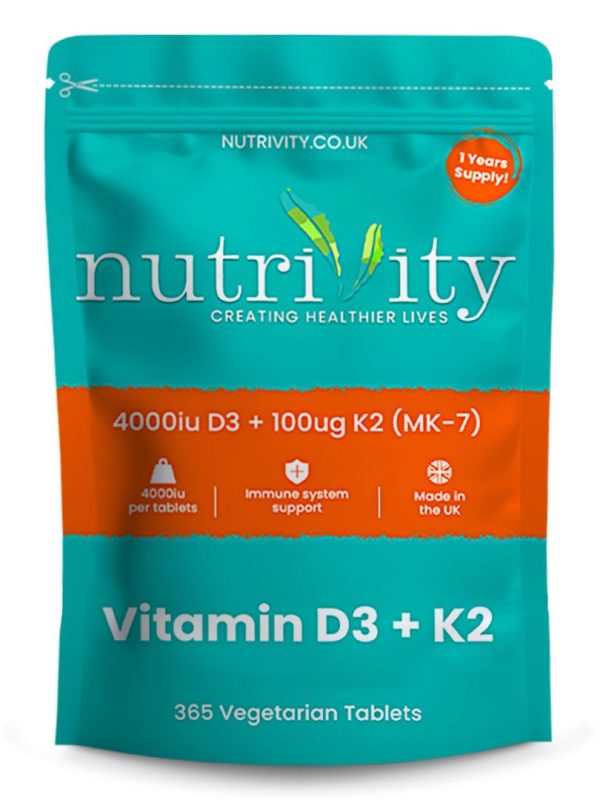
Vitamin D3 4000 IU + Vitamin K2 MK7 100µg | 12 Months Supply (365 Vegan Tablets)
Original price was: £14.99.£12.99Current price is: £12.99.
Vitamin D and Seasonal Affective Disorder (SAD)
Seasonal affective disorder — the clinical depression that occurs in autumn and winter and resolves in spring — affects approximately 2 million people in the UK, with a further 6 million experiencing milder “winter blues.”
The timing of SAD correlates precisely with the period when UK vitamin D levels are at their lowest. Between October and March, the sun sits too low for UV-B rays to trigger vitamin D synthesis at UK latitudes, and levels decline steadily through the winter months.
Several clinical trials have specifically tested vitamin D for SAD with mixed results. Some studies show significant improvement in SAD symptoms with supplementation, while others show minimal benefit. The inconsistency may relate to dose (some trials used lower doses), timing (starting supplementation after SAD symptoms are established versus preventively in autumn), and baseline vitamin D status.
The practical take: vitamin D supplementation is unlikely to be a complete solution for clinically diagnosed SAD, which typically requires light therapy, CBT, or medication. However, ensuring adequate vitamin D levels throughout winter removes one biological contributor to low mood and may reduce the severity of seasonal symptoms, particularly when combined with other evidence-based strategies.
Who Should Consider Vitamin D for Mood Support
Anyone whose mood reliably worsens in autumn and winter — The seasonal vitamin D decline from October to March affects virtually all UK adults. Supplementation from September onwards may help maintain mood through the darker months.
People with diagnosed depression and confirmed vitamin D deficiency — Correcting the deficiency as part of a comprehensive treatment plan may improve symptoms. Always continue prescribed treatment and discuss supplementation with your GP.
Office workers and indoor workers — Limited sun exposure year-round increases the likelihood of chronic low-level deficiency that may subtly affect mood without causing obvious physical symptoms.
Older adults — Vitamin D deficiency is more common with age, depression rates are higher in older adults, and the combination of social isolation, reduced outdoor time, and lower skin synthesis efficiency creates a perfect storm for mood-related deficiency. D3+K2 addresses mood, muscle health, and bone density simultaneously.
Anyone experiencing unexplained fatigue and low motivation — These are common symptoms of both depression and vitamin D deficiency, and the overlap is significant. A blood test can confirm vitamin D status and help determine whether supplementation is appropriate.
Dosage and Practical Guidance
The EFSA safe upper limit of 4,000 IU daily is the dose most commonly recommended for adults with low or deficient levels. This is the dose used in many of the positive clinical trials for mood and depression.
K2 MK-7 at 100µg ensures calcium metabolism remains balanced — important for anyone taking vitamin D long-term. See why take D3+K2 together.
Take daily with a meal containing fat for optimal absorption. See best time to take vitamin D3. For seasonal mood support, start in September before levels decline and continue through at least April.
Recommended: Vitamin D3 4000 IU + K2 MK-7 — 365 tablets, 3.6p per day. Vegan friendly, halal friendly, UK-made.
Vitamin D and Exercise for Mood — The Synergistic Effect
Exercise is one of the most potent natural antidepressants available, with clinical evidence comparable to medication for mild-to-moderate depression. Vitamin D and exercise work synergistically for mood: vitamin D supports the serotonin synthesis and neuroinflammation pathways that affect mood biochemically, while exercise triggers endorphin release, reduces cortisol, and promotes neuroplasticity through BDNF production.
For people with low mood who are also vitamin D deficient, addressing the deficiency first may make exercise feel more achievable. Fatigue and low motivation — common symptoms of both depression and vitamin D deficiency — are significant barriers to starting an exercise routine. Correcting the deficiency removes one barrier, making it easier to engage with the intervention (exercise) that has the strongest evidence for long-term mood improvement.
Even a 30-minute daily walk outdoors combines three mood-supporting strategies: exercise, daylight exposure, and — during spring and summer — natural vitamin D synthesis. It costs nothing and has no side effects. Combined with D3+K2 supplementation to maintain levels year-round, this is one of the simplest and most effective approaches to protecting mood naturally.
Important Caveats
Vitamin D supplementation for mood is not a substitute for professional mental health support. If you are experiencing persistent low mood, loss of interest in activities, sleep disturbance, feelings of worthlessness, or thoughts of self-harm, please speak to your GP. These are symptoms of clinical depression that require proper assessment and treatment.
Vitamin D is best understood as one component of a holistic approach to mood and mental health. Other evidence-based strategies include regular physical exercise (one of the strongest natural antidepressants), social connection, adequate sleep, mindfulness or CBT-based approaches, and professional support where needed.
The value of addressing vitamin D deficiency is that it removes a correctable biological drag on mood — allowing other interventions to work more effectively. It is not a magic pill, but for a cost of 3.6p per day with virtually no side effects, it is one of the simplest protective measures you can take for both physical and mental wellbeing.
 The Bottom Line
Low vitamin D is consistently associated with low mood, and correcting deficiency has been shown in clinical trials to improve depressive symptoms. For the millions of UK adults whose vitamin D levels plummet every winter, supplementation with D3+K2 is a cheap, safe, and evidence-based way to support mood alongside its well-established benefits for bones, muscles, and immune function.
It is not a cure for depression. But it is one piece of the puzzle that too many people are missing — particularly during the dark, cold months when both vitamin D levels and mood are at their lowest.
Related reading: What Is Vitamin D3+K2? | Vitamin D Deficiency UK | Vitamin D in Winter | Vitamin D and Immune System | Vitamin D and Bone Health
Disclaimer: This article is for informational purposes only and does not constitute medical or mental health advice. If you are experiencing persistent low mood or symptoms of depression, please consult your GP. All Nutrivity products are manufactured in the UK to GMP standards.
Frequently Asked Questions
Can vitamin D improve mood?
Clinical evidence shows that correcting vitamin D deficiency can improve depressive symptoms. The effect is most pronounced in people who are clinically deficient. Vitamin D supplementation is not a standalone treatment for depression but can meaningfully contribute alongside other approaches.
Does vitamin D help with seasonal affective disorder?
Some clinical trials show improvement in SAD symptoms with supplementation, though results are mixed. Ensuring adequate vitamin D throughout winter removes one biological contributor to seasonal mood decline and may reduce symptom severity, particularly combined with light therapy.
How much vitamin D should I take for mood?
4,000 IU daily is the EFSA safe upper limit and the dose used in many positive trials. Combined with K2 MK-7 for calcium balance. Start in September for seasonal mood support.
How long does vitamin D take to improve mood?
Blood levels improve within 4 to 8 weeks of consistent supplementation. Mood improvements in clinical trials were typically measured at 8 to 12 weeks. Allow at least 8 weeks before assessing the effect on your mood.
Is vitamin D a replacement for antidepressants?
No. Vitamin D should not replace prescribed antidepressant medication or professional therapy. It addresses one potential biological contributor to low mood (deficiency) and works best as part of a comprehensive approach including exercise, social connection, and professional support where needed.
Why does mood drop in winter in the UK?
Several factors: reduced daylight hours, limited sun exposure causing vitamin D depletion, reduced physical activity, and social isolation. Vitamin D deficiency is the most measurable and correctable of these biological factors.
Can I get enough vitamin D for mood from sunlight?
Between October and March in the UK, no. The sun is too low for vitamin D synthesis. Even in summer, cloud cover, indoor work patterns, and sunscreen use limit production. Year-round supplementation ensures consistent levels regardless of weather or lifestyle.
Are there any side effects of vitamin D for mood?
Vitamin D3 at 4,000 IU daily is well-tolerated with minimal side effects. It is one of the safest supplements available. Excessive doses above 10,000 IU for prolonged periods can cause issues, but this is not a risk at recommended doses.