





Vitamin D3+K2 for Muscle Health and Falls Prevention UK (2026)
-
By Chris Jones
Vitamin D3+K2 for Muscle Health and Falls Prevention UK (2026)
Posted June 2026 | Written by Chris Jones, Social Media Manager at Nutrivity with 7+ years in the supplement industry.
Quick Answer: Vitamin D contributes to the maintenance of normal muscle function — an EFSA-approved health claim. Clinical evidence shows that correcting vitamin D deficiency in older adults significantly improves muscle strength, balance, and physical performance, reducing the risk of falls by up to 20–30%. Combined with K2 MK-7 for bone density support, D3+K2 addresses both sides of the falls equation: the muscles that prevent falls and the bones that break when they happen.
Falls are the leading cause of injury-related death in adults over 65 in the UK. Each year, approximately one in three people over 65 and one in two over 80 will experience at least one fall. The consequences range from bruises and lost confidence to hip fractures, hospital admissions, and permanent loss of independence.
What many people do not realise is that vitamin D deficiency — which affects a large proportion of UK adults, particularly the elderly — directly contributes to both sides of this problem: weakened muscles that increase fall risk, and weakened bones that fracture more easily when a fall occurs.
This article covers the clinical evidence for vitamin D3+K2 in maintaining muscle health and preventing falls, who is most at risk, and the practical steps to protect yourself or your family members. For a broader overview of vitamin D3+K2 benefits, see what is Vitamin D3+K2?
Why Vitamin D Matters for Muscles
Vitamin D receptors (VDRs) are present in skeletal muscle tissue, which means vitamin D has a direct biological role in muscle function — not just an indirect one through bone and calcium metabolism. When vitamin D binds to these receptors, it influences:
Muscle protein synthesis — Vitamin D supports the production of muscle proteins needed for contraction and repair. Deficiency impairs this process, contributing to the gradual loss of muscle mass and strength known as sarcopenia.
Calcium signalling in muscle fibres — Muscle contraction depends on rapid, precise calcium release within muscle cells. Vitamin D regulates the calcium channels that control this process. When levels are low, muscle contractions become less efficient, less powerful, and slower — the sluggish, weak feeling that many older adults attribute simply to ageing.
Type II (fast-twitch) muscle fibres — These are the fibres responsible for quick, powerful movements — exactly the type needed to catch yourself when you stumble. Vitamin D deficiency preferentially affects type II fibres, which is why fall risk increases even before overall muscle mass declines noticeably. You lose the ability to react quickly before you lose the ability to move at all.
Neuromuscular coordination — Vitamin D supports the nerve-to-muscle signalling that controls balance and coordination. Deficiency impairs proprioception (your body’s awareness of its position in space), contributing to unsteadiness and missteps.
EFSA has approved the health claim that vitamin D contributes to the maintenance of normal muscle function. This is not a marketing claim — it is a scientifically substantiated statement that passed Europe’s strict regulatory review.
The Clinical Evidence
Falls reduction — A landmark meta-analysis published in the British Medical Journal analysed data from multiple randomised controlled trials and concluded that vitamin D supplementation reduced the risk of falls by approximately 20% in older adults. The benefit was most pronounced in those who were vitamin D deficient at baseline and those taking at least 700–1,000 IU daily.
A Cochrane review confirmed that vitamin D supplementation reduces the rate of falls in care home residents and older adults with low vitamin D levels. The evidence is strong enough that NICE guidelines recommend vitamin D supplementation for all adults in care homes and anyone at risk of falls.
Muscle strength — A systematic review of 17 randomised trials found that vitamin D supplementation significantly improved lower limb muscle strength in adults over 65, particularly those with baseline deficiency. Improvements in grip strength, chair-stand time (a key functional measure for fall risk), and gait speed were all documented.
Balance and physical performance — Trials using the Timed Up and Go test (a standard clinical measure of mobility and balance) have shown that vitamin D supplementation improves scores in deficient older adults. This translates directly to reduced fall risk in daily life — getting up from a chair, navigating stairs, stepping over obstacles.
Combined D3+K2 — While most muscle and falls studies have used vitamin D3 alone, the addition of K2 MK-7 enhances the overall approach by ensuring that the calcium vitamin D helps absorb is directed into bones rather than soft tissues. This is particularly important for falls prevention because strong bones reduce fracture severity when falls do occur. See why take D3+K2 together.
 Vitamin D and Sarcopenia
Sarcopenia — the age-related loss of muscle mass and function — affects approximately 10% of adults over 60 and up to 50% of those over 80. It is a major contributor to frailty, falls, disability, and loss of independence.
Vitamin D deficiency accelerates sarcopenia through impaired muscle protein synthesis and preferential loss of the fast-twitch muscle fibres needed for balance and quick movements. Conversely, maintaining adequate vitamin D levels through supplementation has been shown to slow the rate of muscle loss and preserve functional capacity in older adults.
This does not mean vitamin D alone can prevent sarcopenia — resistance exercise and adequate protein intake are the primary interventions. But vitamin D supplementation supports the biological environment in which exercise and nutrition can be most effective. Think of it as enabling your muscles to make the most of the exercise you do.
For adults over 50 managing joint pain alongside muscle concerns, combining D3+K2 with joint-supporting supplements like Devil’s Claw and Cod Liver Oil, Omega-3 & Glucosamine addresses both the musculoskeletal and joint dimensions of healthy ageing. The Joint & Bone Health Bundle includes all three at a bundled discount.
Who Is Most at Risk?
Adults over 65 — Natural vitamin D synthesis from sunlight decreases with age as skin becomes less efficient at producing it. Combined with reduced time spent outdoors and lower dietary intake, deficiency rates in this age group are extremely high.
Care home residents — Virtually 100% vitamin D deficient due to minimal sun exposure. NICE specifically recommends supplementation for this group.
Anyone with a previous fall — One fall significantly increases the risk of subsequent falls. Vitamin D supplementation is a simple, evidence-based intervention to reduce this recurrence risk.
Postmenopausal women — Oestrogen decline accelerates both bone density loss and muscle mass reduction. Vitamin D3+K2 supports both pathways simultaneously.
Anyone with limited mobility or outdoor time — Housebound individuals, those with chronic illness, and people who cover their skin for cultural or medical reasons are at heightened risk of deficiency regardless of age.
All UK adults in winter — Between October and March, the sun is too low for vitamin D synthesis at UK latitudes. See vitamin D in winter.
OUR TOP RECOMMENDED
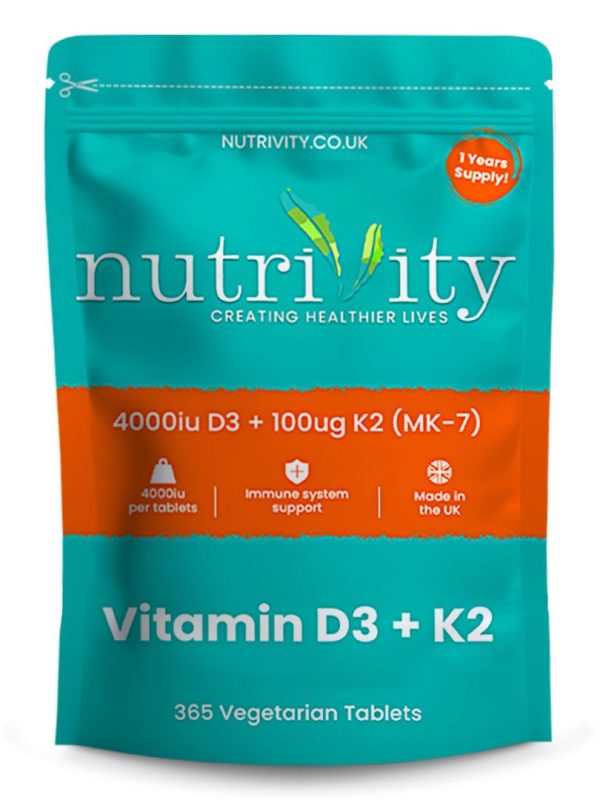
Vitamin D3 4000 IU + Vitamin K2 MK7 100µg | 12 Months Supply (365 Vegan Tablets)
Original price was: £14.99.£12.99Current price is: £12.99.
Dosage for Muscle Health and Falls Prevention
The falls prevention evidence supports vitamin D3 at 700–4,000 IU daily. The EFSA safe upper limit of 4,000 IU is the dose most commonly recommended by health professionals for adults with confirmed or suspected deficiency.
K2 MK-7 at 100µg daily ensures the calcium that vitamin D helps absorb is directed into bone matrix. This is critical for falls prevention because the goal is not just preventing falls but also ensuring bones can withstand impact when falls occur.
Consistency matters more than timing. Take D3+K2 daily with a meal containing fat (it is fat-soluble) for optimal absorption. See best time to take vitamin D3.
Recommended: Vitamin D3 4000 IU + K2 MK-7 — 365 tablets, full year’s supply at 3.6p per day. Vegan friendly, halal friendly, UK-made, GMP standard. See our Best D3+K2 UK comparison.
Exercise: The Essential Partner to Supplementation
Vitamin D supports muscle function, but exercise is what builds and maintains muscle strength. The two work together: vitamin D provides the biological foundation, exercise provides the stimulus. Neither is as effective without the other.
The most effective exercises for falls prevention are:
Resistance training — Bodyweight exercises (squats to a chair, wall press-ups, step-ups), resistance bands, or light weights. 2–3 sessions per week. This directly builds the muscle strength needed to prevent falls and maintain independence.
Balance training — Single-leg stands, heel-to-toe walking, tandem stance, and tai chi. These improve the proprioception and neuromuscular coordination that vitamin D supports at the cellular level.
Walking — 30 minutes daily maintains cardiovascular fitness, lower limb strength, and joint mobility. Walking outdoors during daylight hours also supports natural vitamin D synthesis during spring and summer months.
For adults managing joint pain after 50, supplements that reduce pain and inflammation — particularly Devil’s Claw — make it easier to engage in the exercise that builds fall-preventing muscle strength. The relationship is synergistic: less pain enables more exercise, more exercise builds stronger muscles, stronger muscles prevent falls.
 The Bottom Line
Vitamin D3+K2 addresses both sides of the falls equation: the muscles that prevent falls (through EFSA-approved muscle function support) and the bones that break when falls occur (through calcium absorption and bone mineralisation). For UK adults over 50, where vitamin D deficiency is widespread and falls are the leading cause of injury-related death in older age groups, supplementation is one of the simplest, cheapest, and most evidence-based protective measures available.
At 3.6p per day for a full year’s supply, there is no financial barrier. The only barrier is not starting. For comprehensive joint, bone, and muscle support, the Joint & Bone Health Bundle combines D3+K2 with Devil’s Claw and Cod Liver Oil, Omega-3 & Glucosamine at a bundled discount.
OUR TOP RECOMMENDED

Joint + Mobility Bundle — Devil’s Claw 2200mg + Cod Liver Oil, Omega 3 & Glucosamine & Vitamin D3 + K2
Original price was: £56.97.£46.77Current price is: £46.77.
Related reading: What Is Vitamin D3+K2? | Vitamin D and Bone Health | Vitamin D Deficiency UK | Vitamin D Dosage Guide | Why Take D3+K2 Together?
Disclaimer: This article is for informational purposes only and does not constitute medical advice. If you have experienced a fall or are concerned about fall risk, consult your GP for a falls risk assessment. All Nutrivity products are manufactured in the UK to GMP standards.
Frequently Asked Questions
Does vitamin D help prevent falls?
Yes. A meta-analysis in the BMJ found vitamin D supplementation reduced fall risk by approximately 20% in older adults. The benefit is strongest in those who are deficient and those taking at least 700 to 1,000 IU daily.
How does vitamin D affect muscles?
Vitamin D receptors in skeletal muscle regulate muscle protein synthesis, calcium signalling for contraction, and fast-twitch fibre function. Deficiency impairs all three, reducing strength, reaction speed, and balance. EFSA has approved the claim that vitamin D contributes to normal muscle function.
What dose of vitamin D prevents falls?
Falls prevention studies show benefits at 700 to 4,000 IU daily. The EFSA safe upper limit of 4,000 IU is commonly recommended for adults with confirmed or suspected deficiency. Combined with K2 MK-7 for bone protection.
At what age should I start taking vitamin D for muscle health?
Vitamin D supports muscle function at all ages, but supplementation becomes increasingly important from age 50 onwards as natural production declines and sarcopenia risk increases. Year-round supplementation is recommended for all UK adults.
Can vitamin D reverse muscle loss?
Vitamin D alone cannot reverse established sarcopenia. However, correcting deficiency improves muscle protein synthesis and fibre function, creating a better environment for resistance exercise to build muscle. The combination of vitamin D supplementation plus regular resistance training is the most effective approach.
Is vitamin D enough to prevent falls or do I need exercise too?
Both are needed. Vitamin D provides the biological foundation for muscle function. Exercise provides the stimulus that builds strength and balance. Neither is as effective alone as the combination. Resistance training and balance exercises 2 to 3 times per week alongside daily vitamin D3+K2 is the evidence-based approach.
Why do I need K2 alongside D3 for falls prevention?
D3 increases calcium absorption. K2 directs that calcium into bones rather than soft tissues. For falls prevention, strong bones reduce fracture severity when falls occur. The D3+K2 combination protects both the muscles that prevent falls and the bones that bear the impact.
Are there any side effects of taking vitamin D for muscle health?
Vitamin D3 at the EFSA safe upper limit of 4,000 IU daily is well-tolerated with minimal side effects. Excessive doses above 10,000 IU daily over prolonged periods can cause hypercalcaemia, but this is not a risk at recommended doses. K2 MK-7 has no known adverse effects at standard supplementation doses.