




Sea Buckthorn Oil vs Fish Oil — Which Omega Is Right for You?
-
By Chris Jones
Last Updated May 2026 | Written by Chris Jones, Social Media Manager at Nutrivity with 7+ years in the supplement industry.
Sea Buckthorn Oil vs Fish Oil — Which Omega Is Right for You?
Sea buckthorn oil and fish oil are both omega fatty acid supplements, but they provide completely different types of omega with different health benefits. This is one of the most common sources of confusion in the supplement market — people assume that because both contain “omega” fatty acids, they are interchangeable. They are not. Comparing them is not about which is “better” — it is about understanding which omega your body needs based on your specific health concerns, and whether taking both makes sense.
This guide explains the fundamental differences between omega-3 and omega-7, what the evidence shows for each, which health concerns each one addresses, and how to decide what is right for your situation.
| Quick Answer |
| They are not interchangeable. Fish oil provides omega-3 (EPA and DHA) — the fatty acids with the strongest evidence for cardiovascular health, joint inflammation, and brain function. Sea buckthorn provides omega-7 (palmitoleic acid) — a less well-known fatty acid with emerging evidence for skin health, mucous membrane hydration, and metabolic function. If your priority is heart and joints, fish oil. If your priority is skin and mucous membranes, sea buckthorn. Many people benefit from both because they address entirely different systems. |
Understanding the Omega Family
The term “omega” refers to the position of the first double bond in a fatty acid’s carbon chain. Different omega types have fundamentally different biological roles, and the body cannot convert one type into another. This is why taking fish oil does not give you omega-7 benefits, and taking sea buckthorn does not give you the anti-inflammatory EPA and DHA that fish oil delivers.
The major omega types relevant to supplementation are omega-3 (anti-inflammatory, cardiovascular, brain), omega-6 (structural, immune — most people get enough from diet), omega-7 (skin, mucous membranes, metabolic signalling), and omega-9 (cardiovascular — the body can produce this, so supplementation is less critical). Fish oil and sea buckthorn sit in completely different categories within this family.
Fish Oil — The Evidence for Omega-3
Omega-3 fatty acids — specifically EPA (eicosapentaenoic acid) and DHA (docosahexaenoic acid) — have one of the most extensive evidence bases of any supplement category. They are found primarily in oily fish (salmon, mackerel, sardines, anchovies) and in fish oil supplements.
The primary mechanism of omega-3 is anti-inflammatory. EPA and DHA inhibit the production of pro-inflammatory eicosanoids (prostaglandins, thromboxanes, and leukotrienes) and promote the production of resolvins and protectins — specialised mediators that actively resolve inflammation. This anti-inflammatory action is the basis for omega-3’s benefits across multiple body systems.
Cardiovascular health — Multiple large-scale meta-analyses have found that omega-3 supplementation is associated with reduced triglycerides, modest blood pressure reduction, and decreased risk of cardiovascular events in high-risk populations. The REDUCE-IT trial found that high-dose EPA (4g/day) reduced cardiovascular events by 25% compared to placebo in patients with elevated triglycerides.
Joint health — A 2017 meta-analysis in the Annals of the Rheumatic Diseases found that omega-3 supplementation significantly reduced joint pain intensity and NSAID use in patients with rheumatoid arthritis. For osteoarthritis, the evidence shows modest but consistent improvements in pain and function.
Brain function — DHA is a major structural component of brain cell membranes, and adequate omega-3 status is associated with better cognitive function and reduced risk of age-related cognitive decline. The evidence for treating established cognitive conditions is less clear, but for maintenance of normal brain function, omega-3 is well-supported.
Nutrivity’s Cod Liver Oil & Glucosamine provides omega-3 alongside naturally occurring vitamins A and D plus glucosamine for joint structural support — making it one of the most comprehensive omega-3 options available. For more, see our guide to taking cod liver oil and glucosamine together and our best cod liver oil and glucosamine UK comparison.
Omega-7 — The Overlooked Fatty Acid
Omega-7 (palmitoleic acid) is far less well-known than omega-3 but is attracting growing research interest for its unique biological roles. Unlike omega-3 and omega-6, which are “essential” fatty acids (the body cannot produce them), the body can produce small amounts of omega-7 — but not always enough to meet the demands of tissues that rely on it most heavily.
The tissues with the highest demand for omega-7 are the mucous membranes — the moist linings of the mouth, eyes, respiratory tract, digestive tract, and urogenital tract — and the skin. Omega-7 is a structural component of these membrane tissues, contributing to their hydration, elasticity, and barrier function.
This is why omega-7 supplementation has generated particular interest among postmenopausal women, who frequently experience mucosal dryness (vaginal, oral, and ocular) as oestrogen levels decline. Oestrogen supports mucous membrane health, and its withdrawal during menopause leaves these tissues more vulnerable to dryness, thinning, and discomfort. Omega-7 provides direct fatty acid support to these tissues independent of oestrogen. Sea Buckthorn — The Richest Natural Source of Omega-7
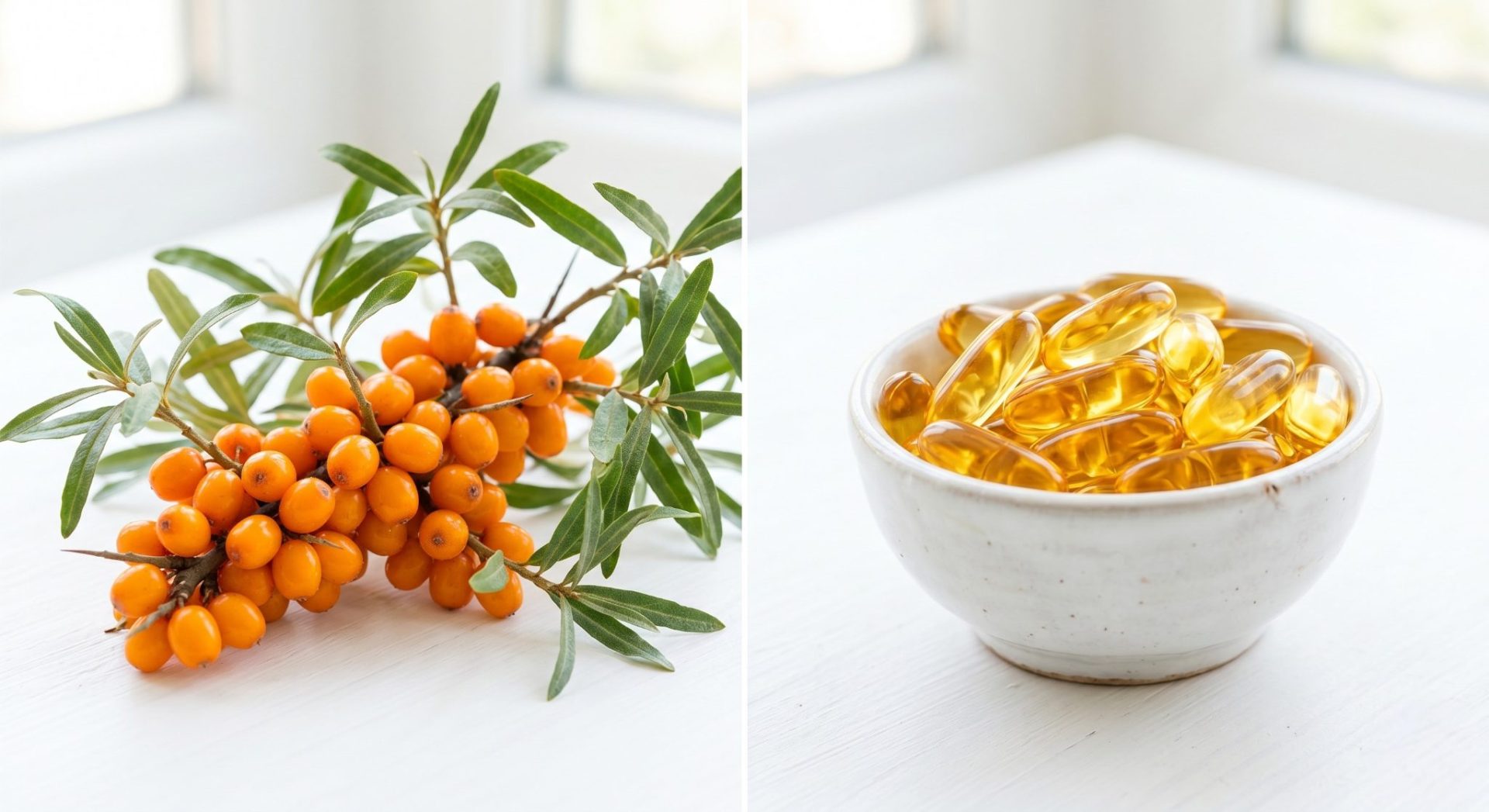
Sea buckthorn (Hippophae rhamnoides) is a thorny shrub native to Europe and Central Asia that produces small, bright orange berries. These berries — and particularly their pulp oil — contain one of the highest concentrations of omega-7 found in any natural source. Sea buckthorn berry oil typically contains 30–40% palmitoleic acid, compared to macadamia nut oil (the next richest source) at approximately 17%.
Beyond omega-7, sea buckthorn provides a uniquely broad nutritional profile that no fish oil can match. The berries contain over 190 bioactive compounds including carotenoids (beta-carotene, lycopene, zeaxanthin), flavonoids (quercetin, kaempferol, isorhamnetin), vitamin C (one of the richest fruit sources), vitamin E (multiple tocopherols and tocotrienols), phytosterols, and organic acids. This antioxidant and nutrient density makes sea buckthorn a more comprehensive supplement than isolated omega-7 extracts.
Skin health — Clinical studies have found that sea buckthorn supplementation improves skin hydration, reduces transepidermal water loss, and improves skin elasticity. A Finnish study published in the Journal of Nutritional Biochemistry found that sea buckthorn oil supplementation significantly improved skin condition in women over a 3-month period. The combined effect of omega-7 (membrane support) and carotenoids/vitamin E (antioxidant protection) provides both structural and protective benefits to the skin.
Mucous membrane health — A 2014 randomised, double-blind, placebo-controlled trial published in Maturitas found that sea buckthorn oil supplementation significantly improved vaginal health markers in postmenopausal women, including improved mucosal integrity and reduced dryness. This is one of the few supplement interventions with direct evidence for this common menopausal complaint.
Metabolic health — Emerging research suggests omega-7 may play a role in metabolic signalling. A 2014 study published in Science Translational Medicine identified palmitoleic acid as a lipokine — a lipid hormone that improves insulin sensitivity and suppresses hepatic fat accumulation in animal models. Human studies are earlier-stage but promising, with some finding modest improvements in CRP (an inflammation marker) and lipid profiles.
Cardiovascular markers — A 2014 randomised controlled trial at the Cleveland Clinic found that purified palmitoleic acid supplementation reduced CRP levels by 44% and triglycerides by 15% over 30 days. While this used purified omega-7 rather than sea buckthorn specifically, it demonstrates the fatty acid’s cardiovascular potential.
Nutrivity’s Sea Buckthorn 500mg Capsules are entirely plant-based — suitable for vegans, vegetarians, and anyone who cannot or prefers not to take fish-derived supplements. For more detail on sea buckthorn, see our guides on taking sea buckthorn at night, sea buckthorn advantages and disadvantages.
Head-to-Head Comparison
| Factor | Fish Oil (Omega-3) | Sea Buckthorn (Omega-7) |
|---|---|---|
| Primary fatty acids | EPA + DHA | Palmitoleic acid (omega-7) |
| Primary benefits | Heart, joints, brain, anti-inflammatory | Skin, mucous membranes, metabolic health |
| Evidence level | Extensive — decades of large-scale research | Emerging — growing rapidly with promising RCTs |
| Mechanism | Anti-inflammatory eicosanoid modulation | Membrane structural support + lipokine signalling |
| Vegan | No (algal oil is the vegan alternative) | Yes — entirely plant-based |
| Additional nutrients | Vitamins A + D (cod liver oil) | 190+ bioactive compounds: carotenoids, flavonoids, vitamins C and E |
| Best for | Cardiovascular health, joint inflammation, brain function | Skin hydration, mucous membrane health, menopausal dryness |
| Who benefits most | Anyone with cardiovascular risk, joint pain, or inflammatory conditions | Women (especially postmenopausal), anyone with dry skin or mucous membrane issues |
OUR TOP RECOMMENDED
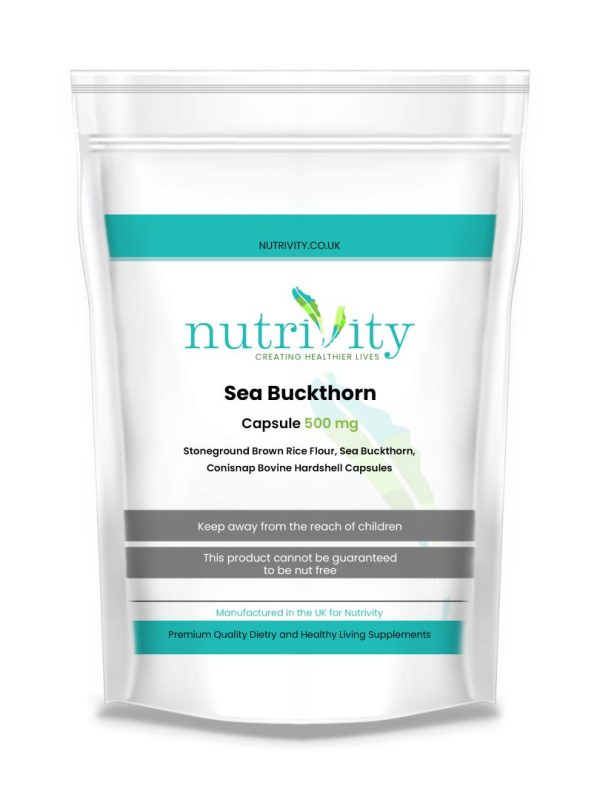
Sea Buckthorn 500mg Capsule – Rich in Omega-6, 7 & 9 fatty acids
Price range: £7.99 through £16.99🍊 500mg Sea Buckthorn Oil (10:1 Extract). 🛡️ Naturally rich in antioxidants – helps protect cells from oxidative stress. 📦 Up to 4 months supply – from just 14p per day.

Do You Need Both?
If your health concerns span both cardiovascular/joint health and skin/mucous membrane health, taking both fish oil and sea buckthorn makes sense because they address completely different biological systems through different fatty acids. There are no known interactions between omega-3 and omega-7 supplements, and their mechanisms are complementary rather than overlapping.
For women going through perimenopause or menopause, the combination is particularly relevant: omega-3 supports cardiovascular health (which becomes a greater concern postmenopausally as oestrogen’s cardioprotective effects decline) while omega-7 supports the mucous membrane health that oestrogen withdrawal directly affects.
For vegans and vegetarians, sea buckthorn provides an entirely plant-based omega supplement with a broad nutritional profile. For vegan EPA and DHA, algal oil is the appropriate complement — algae are the original source of omega-3 in the marine food chain, and algal oil provides EPA and DHA directly without fish involvement. Blackcurrant seed oil provides plant-based GLA (omega-6) and ALA (omega-3) for additional fatty acid coverage.
Choosing Based on Your Priority
Heart and joints → Fish oil — If your primary concern is cardiovascular health, high triglycerides, joint inflammation, or arthritis, omega-3 from fish oil or cod liver oil is the evidence-backed choice. The research base is extensive and the mechanisms are well-established.
Skin and mucous membranes → Sea buckthorn — If your primary concern is dry skin, mucous membrane dryness (vaginal, oral, ocular), skin elasticity, or general skin health, omega-7 from sea buckthorn is the targeted choice. The antioxidant profile provides additional skin protection that fish oil does not offer.
General health and broad coverage → Both — If you want comprehensive fatty acid support across cardiovascular, joint, skin, and membrane health, taking both addresses the widest range of concerns through complementary mechanisms.
The Bottom Line
Sea buckthorn oil and fish oil are not competitors — they are completely different supplements providing different omega fatty acids for different health concerns. Fish oil (omega-3) is the established choice for cardiovascular health, joint inflammation, and brain function with decades of research behind it. Sea buckthorn (omega-7) is the emerging choice for skin hydration, mucous membrane health, and metabolic function with a growing evidence base and a uniquely broad nutritional profile. Choose based on your specific health priority, or take both for the most comprehensive fatty acid coverage available. Key Takeaways
— Fish oil provides omega-3 (EPA/DHA) for heart, joint, and anti-inflammatory benefits
— Sea buckthorn provides omega-7 (palmitoleic acid) for skin, mucous membrane, and metabolic support
— They are complementary, not interchangeable — different omegas serve completely different biological roles
— Sea buckthorn also provides 190+ bioactive compounds including carotenoids, flavonoids, and vitamins C and E
— Sea buckthorn is entirely vegan — fish oil is not (algal oil is the vegan omega-3 alternative)
— Omega-7 is particularly relevant for postmenopausal women experiencing mucosal dryness
— Omega-3 has decades of large-scale research; omega-7 evidence is emerging but includes promising RCTs
— Taking both is safe and provides the most comprehensive fatty acid coverage
Frequently Asked Questions
Is sea buckthorn oil the same as fish oil?
No. Sea buckthorn oil provides omega-7 (palmitoleic acid) from a plant source. Fish oil provides omega-3 (EPA and DHA) from marine sources. They contain completely different fatty acids with different biological functions. Sea buckthorn supports skin and mucous membranes; fish oil supports cardiovascular health and reduces inflammation. The body cannot convert one omega type into another, which is why they are not interchangeable.
Can I take sea buckthorn instead of fish oil?
Only if your primary concern is skin and mucous membrane health rather than cardiovascular or joint health. Sea buckthorn does not provide the EPA and DHA that give fish oil its cardiovascular and anti-inflammatory benefits. If you need omega-3 benefits, fish oil (or algal oil for vegans) cannot be replaced by sea buckthorn. If you need both cardiovascular and skin support, take both.
Is sea buckthorn good for menopause?
Yes. A 2014 randomised, placebo-controlled trial found that sea buckthorn oil supplementation significantly improved vaginal health markers in postmenopausal women. Omega-7 supports the mucous membranes that oestrogen withdrawal during menopause directly affects — vaginal, oral, and ocular tissues. Sea buckthorn addresses mucosal dryness through direct fatty acid support independent of hormonal mechanisms.
Is sea buckthorn good for skin?
Yes. Sea buckthorn is one of the richest natural sources of omega-7, which supports skin hydration and elasticity. Clinical studies have found improvements in skin moisture, reduced transepidermal water loss, and improved skin condition with sea buckthorn supplementation. It also provides carotenoids and vitamin E for antioxidant protection against UV and environmental damage.
Can vegans take omega supplements?
Yes. Sea buckthorn is entirely plant-based and provides omega-7. For omega-3 (EPA and DHA), algal oil supplements are the vegan alternative to fish oil — algae are the original source of omega-3 in the marine food chain. Blackcurrant seed oil provides plant-based GLA (omega-6) and ALA (omega-3). Between these three, vegans can achieve comprehensive fatty acid coverage without any animal-derived supplements.
What is the best omega supplement for overall health?
There is no single “best” omega supplement because different omega types serve different functions. For cardiovascular and joint health, omega-3 from fish oil or cod liver oil has the strongest evidence. For skin and mucous membrane health, omega-7 from sea buckthorn is the targeted choice. For anti-inflammatory skin support, GLA from blackcurrant seed oil is well-evidenced. The most comprehensive approach combines omega-3, omega-7, and GLA to cover cardiovascular, joint, skin, membrane, and anti-inflammatory needs.