





Is black seed oil good for joint pain?
-
By Chris Jones
Last Updated May 2026 | Written by Chris Jones, Social Media Manager at Nutrivity with 7+ years in the supplement industry.
Is Black Seed Oil Good for Joint Pain? What the Research Shows
Black seed oil — extracted from Nigella sativa seeds — has surged in popularity as a natural remedy for a wide range of conditions, including joint pain and inflammation. It has a long history in traditional medicine, particularly in Middle Eastern and South Asian cultures, where it has been used for over two thousand years as a general tonic and healing oil.
But how does the actual evidence stack up? Is black seed oil genuinely effective for joint pain, or is the hype outpacing the science? This guide examines what the research shows, where the gaps are, and which alternatives have stronger clinical evidence for joint pain relief.
| Quick Answer |
| Black seed oil contains thymoquinone, a compound with demonstrated anti-inflammatory properties in laboratory and animal studies. A small number of human trials have found modest benefits for joint pain, particularly in knee osteoarthritis. However, the research is limited, small-scale, and preliminary. Supplements with substantially stronger clinical evidence for joint pain include omega-3 fatty acids (from cod liver oil with glucosamine), Devil’s Claw (Cochrane-reviewed evidence for osteoarthritis), and virgin olive oil (oleocanthal with ibuprofen-like anti-inflammatory activity). |
What Is Black Seed Oil?
Black seed oil is extracted from the seeds of Nigella sativa, a flowering plant native to southwest Asia. It is sometimes called black cumin oil, kalonji oil, or simply nigella oil. It should not be confused with black sesame oil or blackcurrant seed oil — these are entirely different products from different plants.
The oil contains a complex mixture of fatty acids (primarily linoleic acid and oleic acid), along with thymoquinone — the compound most researched for its therapeutic properties. Thymoquinone has demonstrated anti-inflammatory, antioxidant, and analgesic activity in preclinical (laboratory and animal) studies.
What Does the Research Say About Joint Pain?
The preclinical evidence for thymoquinone’s anti-inflammatory activity is genuinely promising. Laboratory studies have shown that it inhibits several pro-inflammatory pathways including NF-κB, COX-2, and various interleukins — mechanisms relevant to joint inflammation.
However, the human clinical evidence is limited:
Knee osteoarthritis — A 2012 study published in Phytotherapy Research found that topical black seed oil applied to the knee reduced pain scores in patients with osteoarthritis over a four-week period. A 2016 study found that oral Nigella sativa oil reduced inflammatory markers in elderly patients with knee osteoarthritis. Both studies were small (fewer than 100 participants) and short-term.
Rheumatoid arthritis — A small 2012 study found that Nigella sativa supplementation improved some disease activity scores in rheumatoid arthritis patients. Again, the study was small and the results were modest.
The honest assessment is that black seed oil shows potential but the evidence base is far too thin to make confident claims about its effectiveness for joint pain. The studies are small, short-term, and have not been replicated at scale. Compare this to omega-3 fatty acids, which have dozens of large-scale trials and meta-analyses, or Devil’s Claw, which has been the subject of a Cochrane review.
Evidence-Backed Alternatives for Joint Pain
If you are looking for natural supplements with robust clinical evidence for joint pain, the following options have substantially stronger research support than black seed oil:
Omega-3 Fatty Acids (EPA and DHA)
Omega-3 fatty acids are the most extensively researched natural anti-inflammatories for joint conditions. A 2017 meta-analysis in the Annals of the Rheumatic Diseases found that omega-3 supplementation significantly reduced joint pain intensity and NSAID use in rheumatoid arthritis. For osteoarthritis, multiple trials have shown modest but consistent improvements in pain and function.
Cod liver oil provides omega-3 alongside vitamin D (bone and muscle function) and vitamin A. Combined with glucosamine (cartilage structure support), it addresses both the inflammatory and structural components of joint degeneration.
Nutrivity’s Cod Liver Oil & Glucosamine 1000mg combines both in a single daily softgel. For more, see our guide to taking both together.
Devil’s Claw (Harpagophytum procumbens)
Devil’s Claw has one of the strongest evidence bases of any herbal supplement for musculoskeletal pain. Multiple randomised controlled trials have demonstrated significant reductions in pain and improvements in mobility for both osteoarthritis and lower back pain. A Cochrane review concluded there was moderate evidence supporting its use — a level of scrutiny that black seed oil has not yet received.
Nutrivity’s Devil’s Claw 2200mg Vegan Capsules provide one of the highest available strengths in the UK. For more, see Devil’s Claw vs turmeric and how long Devil’s Claw stays in your system.
Virgin Olive Oil (Oleocanthal)
Oleocanthal, a phenolic compound in virgin olive oil, inhibits the same COX-1 and COX-2 enzymes as ibuprofen — demonstrated in a landmark 2005 study published in Nature. While less potent than pharmaceutical NSAIDs at normal intake, daily consumption as part of an anti-inflammatory strategy provides cumulative benefit.
Nutrivity’s Virgin Olive Oil 1000mg Soft Gels include added vitamin E. See our best olive oil capsules UK comparison.
Comparing the Evidence
| Supplement | Evidence Level | Human Trials | Cochrane/Meta-Analysis |
|---|---|---|---|
| Omega-3 (EPA/DHA) | Strong | Dozens of large RCTs | Multiple meta-analyses |
| Devil’s Claw | Moderate-Strong | Multiple RCTs | Cochrane review (2004) |
| Virgin Olive Oil (oleocanthal) | Moderate | Epidemiological + lab | PREDIMED trial (dietary) |
| Glucosamine | Moderate | Multiple RCTs | Multiple meta-analyses |
| Black Seed Oil | Preliminary | Small, short-term | None |
The Bottom Line
Black seed oil contains thymoquinone, a compound with genuine anti-inflammatory potential demonstrated in laboratory settings. However, the human clinical evidence for joint pain is limited to a handful of small, short-term studies. If you are looking for natural joint pain relief with confidence in the evidence, omega-3 fatty acids, Devil’s Claw, glucosamine, and virgin olive oil all have substantially stronger research support. Black seed oil may emerge as a useful addition in the future as more research is conducted, but at present, the evidence does not place it among the most reliable options.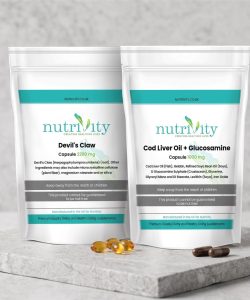 Key Takeaways
— Black seed oil (Nigella sativa) contains thymoquinone with anti-inflammatory properties in lab studies
— Human clinical evidence for joint pain is limited to small, short-term studies
— Omega-3 fatty acids have the strongest evidence base for joint inflammation — dozens of large trials
— Devil’s Claw has Cochrane-reviewed evidence for osteoarthritis and back pain
— Oleocanthal in virgin olive oil inhibits the same enzymes as ibuprofen
— Glucosamine supports cartilage structure — the structural component of joint health
— Black seed oil is not the same as blackcurrant seed oil or black sesame oil
— Evidence may strengthen as more research is conducted, but current support is preliminary
Frequently Asked Questions
Does black seed oil help with joint pain?
Black seed oil has shown some potential for joint pain in a small number of human studies, primarily in knee osteoarthritis. The active compound thymoquinone has demonstrated anti-inflammatory activity in laboratory settings. However, the clinical evidence is limited to small, short-term studies that have not been replicated at scale. Supplements with stronger evidence for joint pain include omega-3 fish oil, Devil’s Claw, and glucosamine.
What is the best natural anti-inflammatory for joint pain?
Omega-3 fatty acids (EPA and DHA) from fish or cod liver oil have the strongest clinical evidence for reducing joint inflammation. Devil’s Claw has Cochrane-reviewed evidence for osteoarthritis and back pain. Oleocanthal from virgin olive oil has ibuprofen-like anti-inflammatory activity. A combination approach targeting inflammation, cartilage structure, and pain tends to produce the best results.
Is black seed oil the same as blackcurrant seed oil?
No. Black seed oil comes from Nigella sativa seeds and contains thymoquinone as its primary active compound. Blackcurrant seed oil comes from the seeds of the blackcurrant berry (Ribes nigrum) and is rich in GLA (gamma-linolenic acid) and omega-3. They are completely different products from different plants with different nutritional profiles and different research bases.
How long does it take for black seed oil to work for joints?
The limited human studies on black seed oil and joint pain used treatment periods of four to twelve weeks before assessing results. As with most natural anti-inflammatory supplements, any benefits are likely to be gradual rather than immediate. For comparison, omega-3 supplementation typically shows measurable benefits within four to eight weeks, and Devil’s Claw within two to four weeks of consistent use.
Can I take black seed oil with other joint supplements?
Black seed oil is generally considered safe and is not known to interact adversely with common joint supplements like glucosamine, omega-3, or Devil’s Claw. However, if you are taking blood-thinning medications (anticoagulants), consult your GP before taking black seed oil, as it may have mild blood-thinning effects. As with any new supplement, start at a low dose and monitor for any adverse effects.