





CoQ10 for Blood Pressure — What the Evidence Says (2026)
-
By Chris Jones
CoQ10 for Blood Pressure — What the Evidence Says (2026)
Posted June 2026 | Written by Chris Jones, Social Media Manager at Nutrivity with 7+ years in the supplement industry.
Quick Answer: Multiple clinical trials and meta-analyses suggest that CoQ10 supplementation at 100–300mg daily can modestly reduce blood pressure, with average reductions of 11mmHg systolic and 7mmHg diastolic reported in some analyses. CoQ10 is not a replacement for blood pressure medication but may support cardiovascular health alongside prescribed treatment and lifestyle changes.
High blood pressure (hypertension) affects roughly one in three UK adults and is the single largest risk factor for heart disease and stroke. Most people manage it with medication — ACE inhibitors, calcium channel blockers, beta-blockers, or diuretics — but an increasing number are asking whether natural supplements can play a supporting role.
Coenzyme Q10 (CoQ10) is one of the most researched natural compounds for cardiovascular health, and its relationship with blood pressure has been studied in over 20 clinical trials. The results are encouraging, though they come with important caveats that anyone considering CoQ10 for blood pressure needs to understand.
For a broader overview of CoQ10’s benefits beyond blood pressure, see our complete guide: what is CoQ10?
How CoQ10 Affects Blood Pressure
CoQ10 is a naturally occurring compound found in every cell of your body, with the highest concentrations in the heart. It plays two roles relevant to blood pressure:
Cellular energy production — CoQ10 is essential for mitochondrial ATP synthesis — the process that generates energy in every cell. The heart, which beats approximately 100,000 times per day, has enormous energy demands. Adequate CoQ10 levels support efficient cardiac function, which directly influences blood pressure regulation.
Antioxidant protection — CoQ10 is one of the body’s most important fat-soluble antioxidants. It protects the endothelium (the lining of blood vessels) from oxidative damage. Damaged endothelium loses its ability to produce nitric oxide — a compound that relaxes blood vessel walls and reduces blood pressure. By protecting the endothelium, CoQ10 helps maintain the body’s natural blood pressure regulation.
A third mechanism is increasingly recognised: CoQ10 appears to improve endothelial function directly, enhancing the blood vessels’ ability to dilate in response to increased blood flow. This vasodilatory effect contributes to the blood pressure reductions seen in clinical trials.
The Clinical Evidence
The evidence for CoQ10 and blood pressure comes from multiple levels:
Meta-analyses — A meta-analysis of 12 randomised controlled trials published in the Journal of Human Hypertension found that CoQ10 supplementation reduced systolic blood pressure by an average of 11mmHg and diastolic pressure by 7mmHg. These are clinically meaningful reductions — comparable to some first-line blood pressure medications.
A more recent Cochrane-style systematic review was more conservative, noting that while CoQ10 showed consistent blood pressure-lowering effects, the quality of many included trials was moderate, with relatively small sample sizes. The review concluded that CoQ10 “may reduce blood pressure” but called for larger, longer-duration trials.
Individual trials — A 12-week randomised trial found that 100mg of CoQ10 twice daily produced significant reductions in both systolic and diastolic blood pressure compared to placebo, with no adverse effects. Another trial in patients with isolated systolic hypertension found that 120mg daily reduced systolic pressure by an average of 17mmHg over 12 weeks.
Observational evidence — Studies consistently show that people with hypertension have lower blood levels of CoQ10 than people with normal blood pressure. While this does not prove causation, it supports the biological plausibility of supplementation.
The honest assessment: The evidence is promising but not conclusive. CoQ10 is unlikely to replace blood pressure medication for anyone with diagnosed hypertension. However, as a complementary supplement alongside prescribed treatment, the evidence supports a meaningful role — particularly for people on statins, which deplete natural CoQ10 levels.
 CoQ10 and Blood Pressure Medication
An important question for anyone already on blood pressure medication: can CoQ10 be taken alongside prescribed antihypertensive?
Generally, yes. CoQ10 has been used alongside all major classes of blood pressure medication in clinical trials without reported adverse interactions. However, because CoQ10 may lower blood pressure, there is a theoretical risk of additive hypotension (blood pressure dropping too low) when combined with antihypertensive drugs.
In practice, this is rarely a clinical problem, but it means you should:
Inform your GP that you are taking CoQ10. This is particularly important if your blood pressure is well-controlled on medication, as the addition of CoQ10 could push it below target.
Monitor your blood pressure at home when starting CoQ10. If readings consistently drop below 90/60mmHg or you experience dizziness, light-headedness, or fatigue, consult your GP about adjusting your medication dose.
Never stop or reduce prescribed medication based on CoQ10 supplementation alone. Blood pressure medication adjustments should only be made by your GP based on consistent readings over time.
CoQ10, Statins, and Blood Pressure
This is where CoQ10 supplementation becomes particularly relevant. Statins (prescribed for high cholesterol, often alongside blood pressure medication) are known to deplete CoQ10 levels. The enzyme statins inhibit (HMG-CoA reductase) is involved in both cholesterol and CoQ10 synthesis, so blocking it reduces production of both.
Lower CoQ10 levels may contribute to the muscle fatigue and weakness that many statin users experience. More relevant to blood pressure, CoQ10 depletion may also reduce the heart’s energy efficiency and the endothelium’s ability to regulate vascular tone.
For the millions of UK adults taking both statins and blood pressure medication, CoQ10 supplementation addresses a medication-induced deficiency that may be quietly undermining cardiovascular function. See our detailed guide: CoQ10 and statins.
Dosage for Blood Pressure
Clinical trials showing blood pressure benefits have used CoQ10 doses ranging from 100mg to 300mg daily. The most commonly effective dose across studies is 200–300mg per day, taken in divided doses with meals containing fat (CoQ10 is fat-soluble and absorbs better with dietary fat).
A high-strength formulation of 300mg per capsule simplifies the routine to a single daily dose. See our CoQ10 dosage guide for detailed recommendations based on your specific situation.
Recommended: CoQ10 300mg Vegan Capsules — high-strength ubiquinone at 300mg per capsule. Vegan friendly, halal friendly, UK-made, GMP standard. See our Best CoQ10 Supplement UK comparison.
Who Should Consider CoQ10 for Blood Pressure?
Statin users with high blood pressure — The most compelling case. Statins deplete CoQ10, potentially undermining cardiovascular function at the same time blood pressure medication is trying to protect it. Supplementing restores what the medication takes away.
People with mildly elevated blood pressure (prehypertension) — If your readings are consistently 120–139/80–89mmHg, CoQ10 alongside lifestyle changes may help prevent progression to full hypertension and delay or avoid the need for medication.
Anyone on blood pressure medication who wants additional support — CoQ10 works through different mechanisms to most antihypertensive drugs, making it a complementary addition rather than a competing one.
People with a family history of cardiovascular disease — CoQ10’s combined cardiovascular benefits (antioxidant protection, cellular energy support, endothelial function, and modest blood pressure reduction) make it a reasonable preventive supplement for those at increased genetic risk.
Adults over 50 — Natural CoQ10 production declines with age, coinciding with the period when blood pressure typically rises. Supplementation addresses this age-related decline while providing cardiovascular support at the time it is most needed.
CoQ10 is less likely to produce meaningful blood pressure effects in young, healthy adults with normal blood pressure and adequate natural CoQ10 levels. The evidence is strongest for those with existing cardiovascular risk factors.
OUR TOP RECOMMENDED
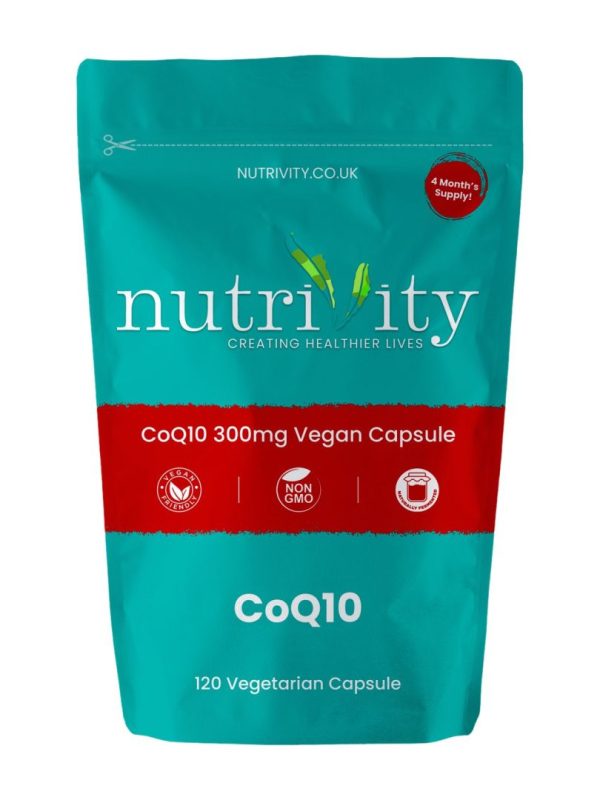
CoQ10 300mg Vegan Capsules – Naturally Fermented Ubiquinone
Price range: £12.99 through £49.99💊 High Strength 300mg CoQ10 per Vegan capsule.
🎋 Naturally fermented ubiquinone.
👉 No artificial colours or preservatives.
📦 Up to 12 months supply – from just 13.7p per day.
Other Lifestyle Factors for Blood Pressure
CoQ10 works best as part of a broader cardiovascular health strategy:
Exercise — Regular aerobic exercise (brisk walking, swimming, cycling) is one of the most effective non-drug interventions for blood pressure, typically reducing systolic pressure by 5–8mmHg.
Dietary sodium reduction — Reducing salt intake to below 6g per day can lower systolic blood pressure by 2–8mmHg.
Weight management — Each kilogram of weight lost reduces systolic blood pressure by approximately 1mmHg.
DASH diet — The Dietary Approaches to Stop Hypertension eating pattern (rich in fruits, vegetables, whole grains, lean protein, and low in sodium) can reduce systolic blood pressure by 8–14mmHg.
Alcohol reduction — Limiting alcohol to within recommended guidelines (14 units per week) supports healthy blood pressure.
Combined with CoQ10 supplementation and prescribed medication where appropriate, these lifestyle factors form a comprehensive approach to blood pressure management.
CoQ10 Form and Absorption for Cardiovascular Benefits
CoQ10 comes in two forms: ubiquinone and ubiquinol. Both have shown blood pressure benefits in clinical trials. Ubiquinone at 300mg is the most widely studied form and offers the best balance of evidence, absorption, and value.
Absorption is significantly improved by taking CoQ10 with food containing fat. The fat triggers bile secretion, which helps solubilise the fat-soluble CoQ10 for absorption in the small intestine. Taking CoQ10 on an empty stomach reduces absorption by up to 50%. For detailed guidance on when to take CoQ10 and how to maximise absorption, see our timing guide.
CoQ10 300mg Vegan Capsules provide a full clinical-strength dose in a single capsule, eliminating the need for multiple lower-dose capsules throughout the day. This simplifies compliance, which is critical for blood pressure management where consistent daily supplementation produces the best outcomes.
 The Bottom Line
CoQ10 is not a replacement for blood pressure medication. But the clinical evidence supports it as a meaningful complementary supplement for cardiovascular health, with meta-analyses showing average reductions of 11mmHg systolic and 7mmHg diastolic. For the millions of UK adults taking statins alongside blood pressure medication, CoQ10 supplementation addresses a drug-induced deficiency that may be undermining cardiovascular function.
At 300mg daily from a high-strength capsule, it is a simple, well-tolerated addition to a comprehensive blood pressure management strategy. Always inform your GP, monitor your blood pressure at home, and never adjust prescribed medication without medical guidance.
Related reading: What Is CoQ10? | CoQ10 and Statins | CoQ10 for Heart Health | CoQ10 Dosage Guide | CoQ10 Side Effects
Disclaimer: This article is for informational purposes only and does not constitute medical advice. CoQ10 is a dietary supplement and is not intended to diagnose, treat, cure, or prevent any disease. If you have high blood pressure, continue to follow your GP’s advice and prescribed medication. Consult your healthcare professional before starting any new supplement. All Nutrivity products are manufactured in the UK to GMP standards.
Frequently Asked Questions
Can CoQ10 lower blood pressure?
Clinical evidence suggests it can modestly reduce blood pressure. A meta-analysis of 12 trials found average reductions of 11mmHg systolic and 7mmHg diastolic. Effects are most pronounced in people with existing hypertension and those with low baseline CoQ10 levels, including statin users.
Can I take CoQ10 with blood pressure medication?
Generally yes. CoQ10 has been used alongside all major classes of antihypertensives in clinical trials without adverse interactions. Inform your GP and monitor your blood pressure at home, as CoQ10 may produce additional blood pressure lowering that could require medication dose adjustment.
How much CoQ10 should I take for blood pressure?
Clinical trials showing blood pressure benefits used doses of 100 to 300mg daily. The most consistently effective dose is 200 to 300mg per day. A high-strength 300mg capsule allows once-daily dosing. Take with food containing fat for optimal absorption.
How long does CoQ10 take to lower blood pressure?
Most clinical trials measured blood pressure effects over 8 to 12 weeks of consistent daily supplementation. Some studies reported significant reductions as early as 4 weeks. Allow at least 8 weeks before assessing the effect on your blood pressure readings.
Should I take CoQ10 if I am on statins?
Statins deplete natural CoQ10 levels by inhibiting the same enzyme pathway used for CoQ10 synthesis. Supplementing with CoQ10 corrects this depletion, which may support both cardiovascular function and reduce statin-related muscle symptoms. Many cardiologists now recommend CoQ10 supplementation for statin users.
Is CoQ10 safe for long-term use?
Yes. CoQ10 has an excellent safety profile with decades of clinical use data. Side effects are rare and typically limited to mild digestive discomfort. It is well-tolerated at doses up to 300mg daily in studies lasting over 12 months. It is not known to cause dependency or withdrawal effects.
Can CoQ10 replace blood pressure medication?
No. CoQ10 should be considered a complementary supplement, not a replacement for prescribed antihypertensive medication. The blood pressure reductions seen with CoQ10 are modest compared to pharmaceutical options. Never stop or reduce prescribed medication without your GP’s guidance.
What form of CoQ10 is best for blood pressure?
Both ubiquinone and ubiquinol forms have shown blood pressure benefits in clinical trials. Ubiquinone at 300mg is the most widely studied and cost-effective option. The key factor is dose (200 to 300mg daily) and consistency of use rather than the specific form.