





CoQ10 Side Effects and Safety UK — Everything You Need to Know
-
By Chris Jones
Written by Chris Jones, Social Media Manager at Nutrivity with 7+ years in the supplement industry.
CoQ10 Side Effects and Safety UK — Everything You Need to Know
CoQ10 has one of the most reassuring safety profiles of any widely used supplement, with decades of clinical research and widespread use producing a consistent picture: it is well-tolerated by most adults at standard doses, with no serious adverse effects identified at doses up to 1200mg daily in clinical studies. That said, no supplement is entirely without risk for all people in all circumstances, and understanding the known side effects, contraindications, and drug interactions is important for safe and informed use.
This guide covers what is known about CoQ10 side effects, who should exercise caution, the drug interactions worth knowing about, and what to do if you experience symptoms. For a full overview of CoQ10 and its health applications, see our guide to what is CoQ10. For full product information on Nutrivity’s CoQ10 300mg, visit our CoQ10 300mg Vegan Capsules product page.
CoQ10 Side Effects — What the Research Shows
The side effect profile of CoQ10 is well-characterised from decades of clinical trials across a wide range of doses and populations. The vast majority of people taking CoQ10 at standard doses (100–300mg daily) experience no side effects at all.
When side effects do occur, they are almost exclusively gastrointestinal and mild. The most commonly reported include nausea, stomach discomfort, loose stools, loss of appetite, and heartburn. These effects are generally dose-dependent — more likely at higher doses — and are typically resolved by taking CoQ10 with food rather than fasting, or by reducing the dose temporarily and titrating up gradually.
Headache and dizziness are occasionally reported but are uncommon and have not been consistently demonstrated in placebo-controlled trials — meaning they may reflect individual variability rather than a direct effect of CoQ10. Insomnia or sleep disturbance is reported anecdotally by some users who take CoQ10 in the evening, though this is not reliably demonstrated in research. If this occurs, switching to a morning or lunchtime dose with food typically resolves it.
At doses above 300mg daily, gastrointestinal side effects become slightly more common but remain mild. Clinical studies have used doses up to 1200mg daily without serious adverse events, and the upper tolerable limit has not been formally established because no serious toxicity has been identified at any dose studied.
Who Should Exercise Caution With CoQ10?
While CoQ10 is safe for the vast majority of adults, certain groups should approach supplementation with additional care and consult their GP before starting.
People taking blood-thinning medications (anticoagulants). CoQ10 has mild vitamin K-like activity and may reduce the effectiveness of warfarin (Coumadin) by slightly promoting clotting. People taking warfarin who start CoQ10 supplementation should have their INR (international normalised ratio) monitored more closely, particularly in the first few weeks. This does not mean CoQ10 and warfarin cannot be taken together — it means the combination requires monitoring and GP awareness.
People on blood pressure medication. CoQ10 has been shown in research to modestly reduce blood pressure. In people already taking antihypertensive medication, this combined effect may produce a more pronounced reduction in blood pressure than either alone. This is generally a beneficial interaction rather than a harmful one, but it warrants monitoring — particularly in people on multiple antihypertensive drugs. Always inform your GP if you start CoQ10 while on blood pressure medication.
People taking chemotherapy. CoQ10’s antioxidant properties have raised theoretical concerns that it might reduce the effectiveness of some chemotherapy drugs that work through oxidative mechanisms. The evidence on this is limited and inconclusive, but the theoretical concern is sufficient to warrant discussion with an oncologist before taking CoQ10 during active cancer treatment.
Pregnant and breastfeeding women. CoQ10 has not been extensively studied in pregnancy or lactation. While no harm has been demonstrated, the absence of robust safety data means most clinicians recommend discontinuing CoQ10 once pregnancy is confirmed. Some fertility research protocols use CoQ10 during preconception but not during pregnancy itself. Always consult your GP or midwife.
Children. CoQ10 has been studied in some paediatric populations, particularly children with mitochondrial disorders, generally with a favourable safety profile. However, standard adult supplements are not formulated or dosed for children, and any use in children should be under medical supervision.
CoQ10 Drug Interactions
Beyond the anticoagulant and antihypertensive interactions discussed above, a small number of additional drug interactions are worth noting for completeness.
Statins. Statins reduce CoQ10 levels — they do not interact negatively with CoQ10 supplements. Taking CoQ10 alongside a statin is safe and is the primary clinical rationale for CoQ10 supplementation in statin users. CoQ10 does not reduce the cholesterol-lowering efficacy of statins. For the full picture on this relationship, see our guide to CoQ10 and statins UK.
Diabetes medication. CoQ10 may improve blood sugar control through improvements in insulin secretion and sensitivity. In people taking medication for type 2 diabetes, this could theoretically potentiate the blood sugar-lowering effect. Blood glucose monitoring is advisable when starting CoQ10 in diabetic patients on medication. Inform your GP.
Thyroid medication. Some early research suggested possible interactions between CoQ10 and thyroid hormone replacement therapy, but this is not well-established and the clinical significance is unclear. People on levothyroxine who wish to take CoQ10 should mention it to their GP, though significant interaction is not expected.
Other supplements. CoQ10 can be safely taken alongside most supplements including vitamin D3, omega-3, magnesium, and B vitamins. It regenerates vitamin E as part of its antioxidant cycle, meaning the two work synergistically. No negative interactions with common supplements have been identified.
Is CoQ10 Safe for Long-Term Use?
Yes. CoQ10 has been studied in long-term clinical trials — including the Q-SYMBIO cardiovascular trial, which ran for two years — without emerging safety concerns. It is a compound the body produces naturally and uses continuously. The research does not suggest any cumulative toxicity, organ damage, or adverse effects with prolonged daily use at standard doses.
CoQ10 does not require cycling (periods off the supplement) and does not cause dependency or tolerance. Unlike stimulant-based energy supplements, it does not produce withdrawal effects if stopped. Long-term daily supplementation at 100–300mg is appropriate and well-supported by the available safety evidence.
What to Do If You Experience Side Effects
If you experience gastrointestinal symptoms — nausea, stomach discomfort, loose stools — after starting CoQ10, the first step is to ensure you are taking it with a fat-containing meal rather than fasting. This resolves the majority of gastrointestinal side effects. If symptoms persist, try reducing the dose to 100–150mg daily for 2–4 weeks before increasing back to 300mg. If symptoms continue at the lower dose, discontinue and consult your GP.
If you experience more significant symptoms — dizziness, significant blood pressure changes, unusual bleeding or bruising if on anticoagulants — discontinue CoQ10 and contact your GP promptly. These symptoms are rare but warrant medical assessment.
CoQ10 Dosage and Safety — The Numbers
To put the safety profile in context: CoQ10 clinical research has used doses from 30mg to 1200mg daily across a wide range of populations including children, older adults, heart failure patients, and healthy volunteers. No dose has produced serious adverse effects in any well-designed clinical trial. The most significant cardiovascular trial — Q-SYMBIO — used 300mg daily for two years in heart failure patients without safety signals. For more detail on appropriate dosing for different health goals, see our CoQ10 dosage guide.
Summary — CoQ10 Safety and Side Effects
CoQ10 has one of the best safety profiles of any supplement in widespread use. Decades of clinical research across a wide range of doses, populations, and durations have produced a consistent picture: it is well-tolerated, with no serious adverse effects identified at any dose studied. The known side effects are mild and gastrointestinal, resolved by taking CoQ10 with food. The meaningful safety considerations are drug interactions — particularly with warfarin and antihypertensive medication — rather than direct toxicity, and these are manageable through GP awareness and appropriate monitoring.
For healthy adults not on interacting medications, daily CoQ10 at 200–300mg is safe, well-evidenced, and appropriate for long-term use. For those on the medications mentioned, GP consultation before starting is the right approach — not avoidance of CoQ10 altogether.
For full product information and to purchase, visit Nutrivity’s CoQ10 300mg Vegan Capsules product page.
Frequently Asked Questions
Is CoQ10 safe to take every day?
Yes. CoQ10 has an excellent long-term safety record across decades of clinical research. No serious adverse effects have been identified at doses up to 1200mg daily in clinical studies. Minor gastrointestinal symptoms are the most commonly reported side effect and are typically resolved by taking CoQ10 with food. Long-term daily supplementation is appropriate and well-supported by the evidence.
What are the side effects of CoQ10?
The most common side effects are mild and gastrointestinal — nausea, stomach discomfort, loose stools, and heartburn. These are dose-dependent and typically resolved by taking CoQ10 with a fat-containing meal. Headache, dizziness, and sleep disturbance are occasionally reported but are uncommon. Serious side effects have not been identified in clinical research.
Can CoQ10 be harmful?
CoQ10 has no identified serious toxicity at any dose studied. The main risk considerations are drug interactions — particularly with warfarin, antihypertensive medication, and potentially chemotherapy drugs — rather than direct toxicity. People on these medications should consult their GP before starting CoQ10. For healthy adults not on interacting medications, CoQ10 is considered very safe.
Can CoQ10 cause heart palpitations?
Heart palpitations are not a recognised side effect of CoQ10 in clinical research. CoQ10 is used clinically to support cardiovascular function, including in heart failure patients. If you experience palpitations after starting CoQ10, discontinue and consult your GP — the cause is more likely unrelated to CoQ10, but medical assessment is appropriate.
Does CoQ10 interact with any medications?
The most important interactions are with warfarin (where CoQ10 may reduce anticoagulant effect, requiring INR monitoring), antihypertensive medication (where combined blood pressure lowering warrants monitoring), and chemotherapy drugs (theoretical concern about antioxidant interference with oxidative mechanism). Statins do not interact negatively with CoQ10 — statins deplete CoQ10, making supplementation appropriate rather than contraindicated.
Is Nutrivity's CoQ10 300mg safe?
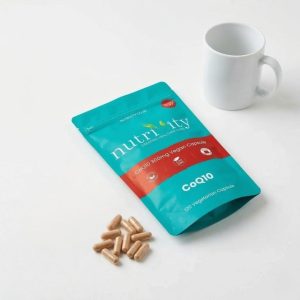
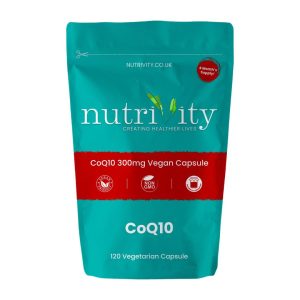
Yes. Nutrivity’s CoQ10 300mg uses naturally fermented ubiquinone in HPMC vegetable capsules with no unnecessary additives. 300mg is the dose used in the Q-SYMBIO cardiovascular trial over two years without safety concerns. As with any supplement, consult your GP if you take prescription medication — particularly warfarin or antihypertensive drugs — before starting.