





Do Joint Supplements Actually Work? What the Evidence Says (2026)
-
By Chris Jones
Do Joint Supplements Actually Work? What the Evidence Says (2026)
Posted June 2026 | Written by Chris Jones, Social Media Manager at Nutrivity with 7+ years in the supplement industry.
Short Answer: Some do, some don’t, and dosage matters enormously. Glucosamine, Devil’s Claw, omega-3 fatty acids, and vitamin D3+K2 all have robust clinical evidence supporting their effectiveness for specific types of joint pain. Many other popular joint supplements have weak or no evidence. The difference between a supplement that works and one that doesn’t often comes down to dose, formulation, and matching the right supplement to the right type of joint problem.
It’s a fair question. The supplement industry is worth billions, the marketing is relentless, and for every person who swears their joint supplement changed their life, there’s another who says they wasted their money. Meanwhile, the NHS is cautious, your GP is sceptical, and the media alternates between miracle cure headlines and “supplements are useless” takedowns.
So what does the actual science say? Not the marketing. Not the anecdotes. The peer-reviewed, randomised, controlled clinical trials.
This article reviews the evidence honestly. We’ll cover what works, what doesn’t, and — critically — why so many people have bad experiences with supplements that do have genuine evidence behind them.
How Clinical Evidence for Supplements Works
Before reviewing individual supplements, it helps to understand how evidence is graded. Not all studies are created equal:
Randomised controlled trials (RCTs) — The gold standard. Participants are randomly assigned to either the supplement or a placebo, and neither they nor the researchers know who got what. This eliminates bias and placebo effects. Multiple positive RCTs are the strongest evidence a supplement can have.
Systematic reviews and meta-analyses — These combine data from multiple RCTs to give a bigger-picture answer. A single trial might be a fluke. Ten trials showing the same result is a pattern.
Observational studies — These track what people already take and look for associations. Useful for generating hypotheses but cannot prove cause and effect.
Traditional use evidence — The European Medicines Agency grants Traditional Use Registrations to herbal products with documented use spanning at least 30 years. This is not clinical proof, but it indicates a long safety record and plausible effectiveness.
The supplements we’ll review below have evidence at the RCT and systematic review level — the same standard used to evaluate pharmaceutical drugs.
The Supplements With Strong Evidence
Devil’s Claw — Verdict: It Works
Devil’s Claw has some of the most compelling evidence of any joint supplement. A systematic review of 14 RCTs found clinically meaningful improvements in joint pain and lower back pain at doses of 2,000mg+ per day.
The most striking evidence: a head-to-head trial against rofecoxib (a prescription NSAID later withdrawn for cardiovascular risks) showed comparable pain reduction for chronic lower back pain after six weeks. This is not a supplement slightly outperforming placebo. This is a plant extract matching a prescription drug.
The mechanism is well understood. Harpagoside, the active compound, inhibits COX-2 and LOX inflammatory pathways — the same targets as pharmaceutical anti-inflammatories. The EMA has granted Devil’s Claw a Traditional Use Registration for minor joint pain.
The catch: Dose matters. Studies showing positive results used high-strength extracts (2,000mg+). Many over-the-counter products contain 500mg or less — these are unlikely to produce the effects seen in clinical trials. If you tried Devil’s Claw and it didn’t work, check the dose before writing it off. See our Devil’s Claw dosage guide.
Recommended: Devil’s Claw 2200mg veg capsules — 2,200mg per capsule, matching the clinical trial dosing range. See our Best Devil’s Claw UK comparison.
OUR TOP RECOMMENDED
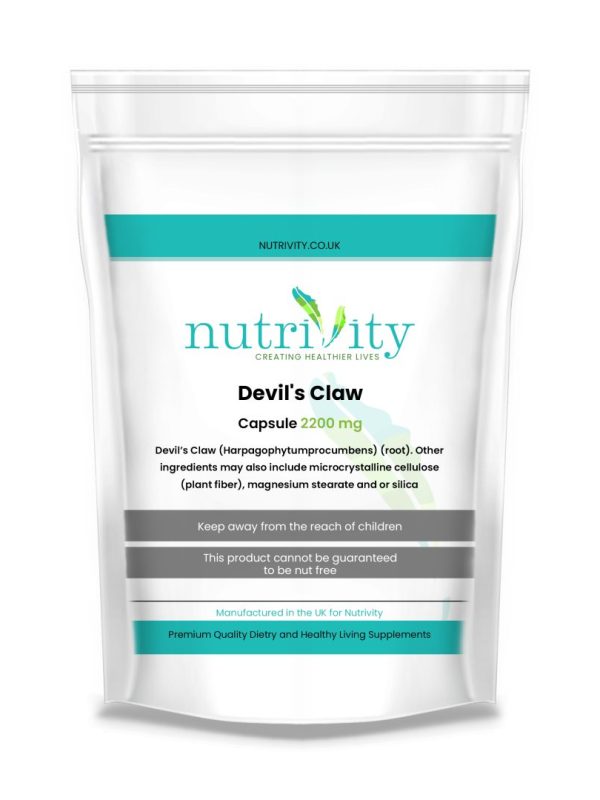
Devil’s Claw 2200mg Vegan Capsule – High Strength | Joint Support
Price range: £8.99 through £45.99
Glucosamine — Verdict: It Works (For Osteoarthritis)
Glucosamine is the most studied joint supplement in the world, and the evidence is positive — with important caveats.
The GAIT trial (the largest joint supplement study ever conducted, with 1,583 participants) found that glucosamine combined with chondroitin was significantly more effective than placebo for moderate-to-severe knee osteoarthritis. A Cochrane review of 25 RCTs confirmed that glucosamine sulphate at 1,500mg daily improved pain and function in osteoarthritis patients.
The European evidence is even stronger. The GUIDE trial found glucosamine sulphate was as effective as paracetamol for knee osteoarthritis pain over six months, with better tolerability. Long-term studies (3+ years) have shown that glucosamine may slow the structural progression of osteoarthritis — meaning it doesn’t just reduce symptoms, it may protect the joint itself.
The catch: The form matters. Glucosamine sulphate has strong evidence. Glucosamine hydrochloride has weaker evidence. Many budget supplements use the hydrochloride form because it’s cheaper. Also, glucosamine works for osteoarthritis specifically — it is less effective for inflammatory arthritis (rheumatoid) or acute injuries.
Recommended: Cod Liver Oil & Glucosamine softgel capsules — combines glucosamine with omega-3-rich cod liver oil for dual-action joint support.
Omega-3 Fatty Acids — Verdict: It Works (Especially for Inflammatory Arthritis)
A meta-analysis of 17 RCTs found that omega-3 supplementation (EPA+DHA) significantly reduced joint pain intensity, morning stiffness duration, and NSAID consumption in people with rheumatoid arthritis. The mechanism is well-established: omega-3s reduce pro-inflammatory cytokines and promote inflammation-resolving compounds.
For osteoarthritis, the evidence is more moderate but still positive. Emerging research shows that chronic low-grade inflammation plays a larger role in osteoarthritis than previously thought, which explains why omega-3s help even in traditionally “non-inflammatory” joint conditions.
Cod liver oil is an optimal source because it provides omega-3 alongside naturally occurring vitamins A and D, both of which support joint and bone health independently.
The catch: Dose and duration. Benefits typically require 6–12 weeks of consistent daily supplementation. One-off or irregular use won’t produce results.
OUR TOP RECOMMENDED
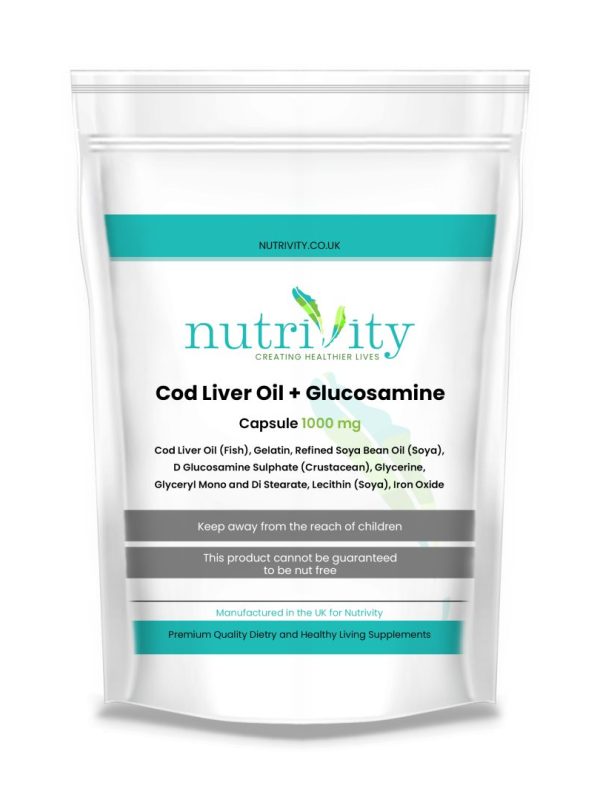
Cod Liver Oil, Omega 3 & Glucosamine 1000mg High Strength Soft Gels – 3 in 1 | Joint Support
Price range: £11.99 through £51.99🐟 Cod Liver Oil, Omega 3 & Glucosamine High Strength - 3 in 1 Formula. 📦 Up to 12 months supply – from just 15p per day.

Vitamin D3 + K2 — Verdict: It Works (For Bone-Related Joint Pain)
Vitamin D’s role in bone health is one of the most well-established findings in nutritional science. EFSA has approved health claims for vitamin D’s contribution to normal bone maintenance, calcium absorption, and muscle function.
For joint pain specifically, correcting vitamin D deficiency has been shown to reduce chronic lower back pain and improve musculoskeletal pain scores. Low vitamin D is also associated with faster progression of knee osteoarthritis.
K2 MK-7 improves the outcomes of D3 supplementation by directing absorbed calcium into bone rather than soft tissues. Studies show the D3+K2 combination produces better bone density outcomes than D3 alone.
The catch: If you’re not deficient, supplementing D3 may not produce noticeable joint pain improvements. But given that one in five UK adults has low levels, and virtually everyone is deficient in winter, the odds are good that you’ll benefit.
Recommended: Vitamin D3 4000 IU + K2 MK-7 — 365 tablets, 3.6p per day. Vegan friendly, halal friendly.
OUR TOP RECOMMENDED
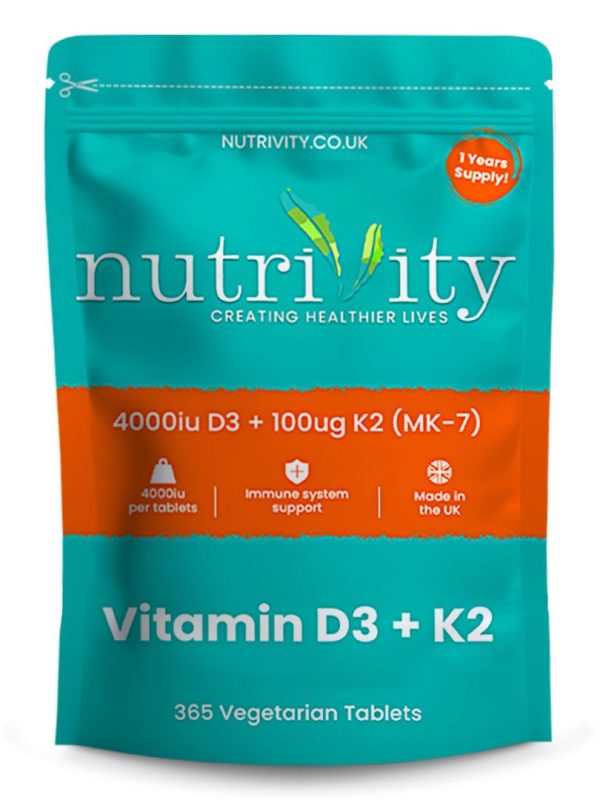
Vitamin D3 4000 IU + Vitamin K2 MK7 100µg | 12 Months Supply (365 Vegan Tablets)
Original price was: £14.99.£12.99Current price is: £12.99. The Supplements With Weak or Mixed Evidence
Not every popular joint supplement has strong clinical support. Here’s an honest assessment of the ones that fall short:
Chondroitin (alone) — Mixed results. Works better in combination with glucosamine than alone. Some studies show modest benefit, others show no difference from placebo. Not recommended as a standalone supplement.
Collagen — Moderate evidence for type II collagen in osteoarthritis and hydrolysed collagen for athlete joint pain. Effect sizes are generally smaller than glucosamine or Devil’s Claw. Not useless, but not a first-line choice. See glucosamine vs collagen.
Rosehip — Some positive RCTs for osteoarthritis pain, but the evidence base is small and effect sizes modest. Promising but not yet convincing.
SAMe (S-adenosylmethionine) — A few positive trials for osteoarthritis, but expensive, unstable, and the evidence is inconsistent.
Copper bracelets / magnetic therapy — No credible clinical evidence. Controlled trials have shown no benefit over placebo bracelets. Save your money.
 Why Some People Say Supplements Don’t Work
If the evidence is there, why do so many people report that joint supplements didn’t help them? The reasons are predictable and avoidable:
Wrong dose — This is the number one reason. A 500mg Devil’s Claw capsule from the supermarket shelf is not the same as the 2,200mg used in clinical trials. Most negative experiences come from under-dosed products. Always check the amount per capsule against the clinical evidence.
Not enough time — Glucosamine takes 8–12 weeks to produce cartilage-related benefits. Most people who say it “didn’t work” gave up after 2–3 weeks. Supplements work on biology, not chemistry — they need time to influence the underlying processes driving joint pain.
Wrong supplement for the problem — Glucosamine is excellent for osteoarthritis but won’t help inflammatory arthritis. Vitamin D3 is essential if you’re deficient but won’t do much if your levels are already adequate. Matching the supplement to your specific type of joint pain is critical.
Wrong form — Glucosamine sulphate has strong evidence. Glucosamine hydrochloride has much less. Curcumin without piperine has almost zero bioavailability. The specific formulation matters, not just the ingredient name on the label.
Unrealistic expectations — Supplements are not painkillers. They won’t eliminate severe arthritis pain overnight. They support joint health, reduce inflammation, and improve function over weeks and months. If you’re expecting ibuprofen-like instant relief, you’ll be disappointed — even though the long-term outcomes may be better.
How to Give Supplements the Best Chance of Working
Choose evidence-based doses. Match the dose to clinical trial levels, not the cheapest option on the shelf.
Commit to 12 weeks minimum. Set a calendar reminder. Don’t judge before then.
Match the supplement to your problem. Inflammatory pain = Devil’s Claw. Cartilage wear = Glucosamine. Bone-related = Vitamin D3+K2. Unsure? Our complete guide has a decision framework.
Combine where appropriate. Joint pain is usually multifactorial. A combination of two or three supplements targeting different pathways will outperform any single product.
Don’t stop exercise. Supplements reduce pain and inflammation enough to make movement easier. Exercise strengthens the structures that support your joints. The combination is more effective than either alone.
 The Bottom Line
Joint supplements are not snake oil. Glucosamine, Devil’s Claw, omega-3 fatty acids, and vitamin D3+K2 all have clinical evidence at the same standard used to evaluate pharmaceutical drugs. They work through well-understood biological mechanisms and have been tested in large, rigorous trials.
But they are not magic pills. They require the right dose, the right formulation, enough time, and realistic expectations. Most people who say “supplements don’t work” took the wrong dose for too short a time and expected painkiller-like results. That’s not a failure of the supplement — it’s a failure of information.
Get the dose right, give it time, and match the supplement to your specific problem. The evidence says you’ll feel the difference.
Related reading: Best Supplements for Joint Pain UK | Best Natural Anti-Inflammatory Supplements UK | Best Supplements for Arthritis UK | Best Supplements for Knee Pain UK | Best Supplements for Back Pain UK
Disclaimer: This article is for informational purposes only and does not constitute medical advice. Dietary supplements are intended to complement, not replace, a balanced diet and healthy lifestyle. Consult your healthcare professional before starting any new supplement. All Nutrivity products are manufactured in the UK to GMP standards.
WANT THE COMPLETE JOINT SUPPORT STACK?
THE JOINT & BONE HEALTH BUNDLE INCLUDES:
DEVIL’S CLAW 2200MG, COD LIVER OIL, OMEGA-3 & GLUCOSAMINE, AND VITAMIN D3+K2
AT A BUNDLED DISCOUNT
UNDER 33P PER DAY
FOR COMPREHENSIVE JOINT, BONE AND INFLAMMATION SUPPORT.

Joint + Mobility Bundle — Devil’s Claw 2200mg + Cod Liver Oil, Omega 3 & Glucosamine & Vitamin D3 + K2
Original price was: £56.97.£46.77Current price is: £46.77.Frequently Asked Questions
Are joint supplements backed by science?
Yes, several are. Glucosamine sulphate, Devil’s Claw, omega-3 fatty acids, and vitamin D3+K2 all have positive results from randomised controlled trials and systematic reviews. The evidence is strongest for glucosamine in knee osteoarthritis and Devil’s Claw for lower back pain. Not all joint supplements are evidence-based, so choosing the right ones matters.
Why do some doctors say joint supplements don’t work?
Some GP scepticism stems from mixed results in early studies that used varying doses and formulations. More recent, better-designed trials have produced consistently positive results for specific supplements at specific doses. The medical establishment is also naturally cautious about recommending anything outside pharmaceutical frameworks. The evidence has strengthened significantly in the last decade.
How long do I need to take joint supplements before they work?
Devil’s Claw typically shows results within 2 to 4 weeks. Glucosamine needs 8 to 12 weeks for meaningful cartilage benefits. Omega-3 anti-inflammatory effects begin at 6 to 8 weeks. Vitamin D3+K2 improves bone-related symptoms in 4 to 8 weeks. The minimum fair trial period for any joint supplement is 12 weeks.
What is the most effective joint supplement?
It depends on your type of joint pain. For inflammatory pain and lower back pain, Devil’s Claw at 2,200mg has the strongest evidence. For knee osteoarthritis and cartilage wear, glucosamine sulphate at 1,500mg daily. For bone-related joint pain and vitamin D deficiency, D3+K2. For systemic inflammation and rheumatoid arthritis, omega-3 fatty acids.
Do I need to take joint supplements forever?
Not necessarily. Some people take them continuously for chronic conditions, others seasonally or during flare-ups. Vitamin D3+K2 is recommended year-round for UK adults. Glucosamine and Devil’s Claw can be adjusted based on symptom severity. If your pain is well-managed after 6 to 12 months, you could try reducing the dose to see if benefits persist.
Are expensive joint supplements better than cheap ones?
Price alone does not determine quality, but very cheap supplements are often under-dosed. The key factors are dose per capsule, the form of the ingredient (glucosamine sulphate vs hydrochloride), and manufacturing standards (UK GMP certification). A higher-dose, GMP-certified product at a moderate price will outperform a low-dose premium brand every time.
Can I take multiple joint supplements together?
Yes, and it is often more effective than single supplements. Glucosamine and Devil’s Claw work through completely different mechanisms and complement each other well. Adding Vitamin D3+K2 provides bone support alongside the joint benefits. There are no known negative interactions between these supplements.
Are joint supplements safe?
The supplements reviewed in this article all have strong safety profiles. Devil’s Claw has been studied for up to 12 months with no significant adverse effects. Glucosamine and omega-3 have decades of safety data. Vitamin D3 at 4,000 IU daily is within EFSA safe limits. Mild digestive discomfort is the most commonly reported side effect across all of them. Always check with your GP if you take blood thinners or prescription medication.