





CoQ10 for Energy and Fatigue UK — Does It Actually Work?
-
By Chris Jones
Written by Chris Jones, Social Media Manager at Nutrivity with 7+ years in the supplement industry.
CoQ10 for Energy and Fatigue UK — Does It Actually Work?
Fatigue is one of the most commonly reported health complaints in the UK, and one of the hardest to address through conventional medicine. When fatigue is not caused by an identifiable underlying condition, the standard medical advice — improve sleep, reduce stress, exercise regularly — is correct but often insufficient for people whose energy levels are genuinely depleted. CoQ10 is one of the few supplements with a plausible, well-understood mechanism for addressing fatigue at the cellular level, and a meaningful evidence base to support it.
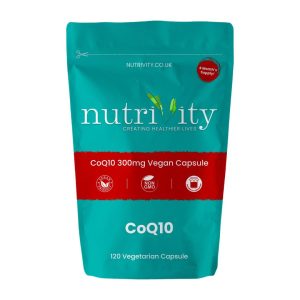
This guide covers why CoQ10 affects energy levels, what the research shows, who is most likely to benefit, and what realistic expectations look like. For full product information on Nutrivity’s high-strength CoQ10, visit our CoQ10 300mg Vegan Capsules product page.
Why CoQ10 Affects Energy Levels
Unlike most supplements marketed for energy — which typically work by stimulating the central nervous system through caffeine or similar compounds — CoQ10 addresses energy production at the mitochondrial level. This distinction matters because the two mechanisms are fundamentally different, with very different implications for long-term energy support.
Stimulant-based energy supplements increase the perception of energy by elevating adrenaline, dopamine, and other alertness-driving neurotransmitters. They do not address the underlying cellular energy production machinery — and over time, they can contribute to adrenal fatigue and dependence rather than genuinely improving energy capacity.
CoQ10, by contrast, supports ATP production in the mitochondrial electron transport chain — the actual process by which cells generate energy from food. For a full explanation of what CoQ10 is and how it works, see our guide to what is CoQ10. As an essential electron carrier in this chain, CoQ10 enables the biochemical steps that produce ATP. When CoQ10 levels are adequate, mitochondria can produce ATP efficiently. When CoQ10 levels are depleted — through age, statin use, or disease — mitochondrial efficiency declines, and one of the most common manifestations is fatigue.
This is not a theoretical mechanism — it is the same well-understood biochemistry behind mitochondrial disease, where defects in the electron transport chain produce profound fatigue as one of the core symptoms. CoQ10 supplementation works on the same pathway, though at a more modest level relevant to age-related depletion rather than genetic defects.
Who Is Most Likely to Benefit from CoQ10 for Energy?
CoQ10 is not a universal energy booster. Its effect on energy is most pronounced in people where CoQ10 depletion is contributing to their fatigue. Understanding who falls into this category helps set realistic expectations.
Adults over 40. Endogenous CoQ10 production declines progressively from the mid-twenties, with significant reductions from the forties onwards. For people in this age group whose energy levels have declined with age — particularly if they cannot identify another clear cause — CoQ10 depletion is a plausible contributing factor. This is the group most consistently showing benefit in energy-focused CoQ10 research.
Statin users. Statins reduce CoQ10 levels by 30–50% through the mevalonate pathway. Fatigue is one of the most commonly reported but least discussed statin side effects, and statin-induced CoQ10 depletion is a plausible mechanism. If your fatigue began or worsened after starting statin therapy, CoQ10 supplementation is particularly worth considering. For the full picture on statins and CoQ10, see our guide to CoQ10 and statins UK.
People with chronic fatigue syndrome (CFS/ME). Several studies have found lower CoQ10 levels in CFS patients compared to healthy controls, and a number of RCTs have examined CoQ10 supplementation in this population with generally positive results on fatigue severity and functional capacity. CoQ10 is not a cure for CFS, but the evidence supports its role as a meaningful adjunctive support for this condition.
People under high physical demand. Intense or prolonged physical activity increases mitochondrial demand and oxidative stress, both of which consume CoQ10. Athletes and physically active people with elevated training loads may benefit from CoQ10 supplementation to support mitochondrial recovery and reduce exercise-related fatigue.
Vegans and vegetarians. Plant foods contain substantially less CoQ10 than animal sources. Vegans and vegetarians who have never supplemented CoQ10 may have lower baseline levels than omnivores, making supplementation more likely to produce a noticeable effect on energy.
What the Research Shows
The evidence for CoQ10 and energy is more nuanced than the marketing surrounding it, and it is worth being precise about what the studies actually show.
In healthy adults with no specific CoQ10 depletion, the evidence for energy benefit is modest. A 2014 study in the Journal of the International Society of Sports Nutrition found that CoQ10 supplementation at 300mg daily for 8 weeks reduced feelings of fatigue and improved performance during exercise compared to placebo, but effect sizes in healthy populations are generally smaller than in those with underlying depletion.
In statin users, studies have shown reductions in fatigue alongside improvements in muscle symptoms, consistent with the CoQ10 depletion mechanism. In CFS patients, several controlled trials have reported statistically significant improvements in fatigue severity scores, physical function, and quality of life with CoQ10 supplementation, particularly when combined with NADH.
In older adults, research has generally shown positive effects on fatigue and physical capacity, consistent with the age-related CoQ10 decline mechanism. A Norwegian study in older adults found that CoQ10 supplementation significantly reduced fatigue and improved quality of life markers over a 12-week period.
The consistent pattern across this literature is that CoQ10 benefit on energy is greatest where CoQ10 depletion is most likely — older adults, statin users, and people with CFS. For healthy younger adults with no specific depletion, benefits are real but more modest.
Realistic Expectations and Timeframe
CoQ10 is not a stimulant and does not produce an immediate energy boost. Unlike caffeine, which works within 30–60 minutes, CoQ10 works by gradually restoring mitochondrial efficiency as blood and tissue CoQ10 levels build over weeks of supplementation. Expecting to feel different within the first few days is setting up for disappointment.
The research suggests that meaningful effects on energy typically emerge after 4–12 weeks of consistent supplementation. Some people notice improvements within 4–6 weeks; for others, the full benefit takes closer to 3 months. The key is consistency — CoQ10 needs to be taken daily at an adequate dose for long enough to replenish tissue levels.
The dose also matters significantly. Many UK CoQ10 products provide 30–100mg — below the doses used in most of the energy-focused research, which has typically used 200–300mg daily. At Nutrivity, we provide 300mg in a single daily capsule, which is at the level shown to produce meaningful results in the research.
CoQ10 for Energy vs Other Energy Supplements
It is worth briefly contextualising CoQ10 against the other supplements commonly taken for energy, because understanding the mechanism helps clarify who should take what.
Vitamin B12 supports energy metabolism and is genuinely important for energy — but only in people who are deficient. B12 deficiency causes fatigue; supplementation in deficient people restores normal energy. In non-deficient people, B12 supplementation has no energy benefit. Vitamin D has a similar profile — important for fatigue where deficiency is present, less relevant where it is not.
Iron is critical for energy via oxygen transport — low iron causes profound fatigue and supplementation in iron-deficient people is highly effective. But iron supplementation in non-deficient people is not beneficial and can be harmful.
CoQ10 is different from all of these in that its depletion is age-related and progressive rather than binary. You do not suddenly become CoQ10 deficient — you gradually produce less of it from your mid-twenties onwards, and the impact accumulates over decades. This makes CoQ10 supplementation relevant for a broader range of adults than vitamin-deficiency supplements, particularly from the forties onwards.
Summary — CoQ10 for Energy and Fatigue in the UK
CoQ10 addresses fatigue at its mitochondrial source rather than masking it through stimulation. For adults over 40, statin users, people with CFS, and those with high physical demand, CoQ10 depletion is a plausible and addressable contributor to reduced energy levels — and the research supports supplementation at adequate doses. The key variables are dose (300mg daily matches the research) and consistency (4–12 weeks for meaningful effect). For people whose fatigue has no clear cause and who have not tried CoQ10, it is one of the most evidence-based additions they can make to a supplement routine.
For full product information and to purchase, visit Nutrivity’s CoQ10 300mg Vegan Capsules product page.
Frequently Asked Questions
Does CoQ10 give you energy?
CoQ10 supports mitochondrial energy production at the cellular level — it is not a stimulant. Its effect on energy is most pronounced in people where CoQ10 depletion is contributing to fatigue: adults over 40, statin users, people with chronic fatigue syndrome, and those under high physical demand. In healthy younger adults without depletion, benefits are real but more modest.
How long does CoQ10 take to improve energy?
Meaningful effects on energy typically emerge after 4–12 weeks of consistent daily supplementation at an adequate dose. CoQ10 works by gradually restoring mitochondrial efficiency as tissue levels build — it is not an immediate-effect supplement. Most people who respond notice improvements between weeks 4 and 8.
What is the best CoQ10 dose for energy?
The research on CoQ10 and energy has typically used doses of 200–300mg daily. Many UK products provide 30–100mg, which is below the levels used in the research showing meaningful results. Nutrivity’s CoQ10 300mg provides 300mg in a single daily capsule — the dose level most consistently associated with energy benefits in clinical studies.
Can CoQ10 help with chronic fatigue syndrome?
Several controlled studies have found lower CoQ10 levels in people with CFS compared to healthy controls, and RCTs have shown improvements in fatigue severity and functional capacity with CoQ10 supplementation in this population. CoQ10 is not a cure for CFS, but the evidence supports a meaningful supportive role. Always consult your GP before using supplements as part of a CFS management strategy.
Is CoQ10 better than B vitamins for energy?
They work through different mechanisms and are relevant for different people. B vitamins — particularly B12 — are important for energy metabolism and critical for people who are deficient (including vegans who do not supplement B12). CoQ10 addresses mitochondrial energy production and is most relevant for adults with age-related depletion, statin users, and CFS patients. For many people, both are relevant and complementary rather than competing.
Does Nutrivity's CoQ10 help with fatigue?
Nutrivity’s CoQ10 300mg provides the dose used in the energy and fatigue research in a single daily capsule — fully vegan-suitable and halal-suitable. Results depend on the degree of CoQ10 depletion present, but for adults over 40, statin users, and those with high physical demand, it is a well-evidenced option for supporting cellular energy production.