





Best vitamins for skin
-
By Chris Jones
Last Updated May 2026 | Written by Chris Jones, Social Media Manager at Nutrivity with 7+ years in the supplement industry.
Best Vitamins for Skin — What Actually Helps from the Inside
Your skin is the largest organ in the body and one of the most metabolically demanding. It replaces itself entirely every 28 to 40 days, which means it has a constant requirement for the building blocks that maintain its structure, hydration, elasticity, and barrier function. When nutritional supply is inadequate, the skin is often one of the first places it shows — as dryness, dullness, slow wound healing, premature ageing, or increased sensitivity.
The supplement market is saturated with “skin vitamin” products making bold claims. Some of these contain genuinely useful ingredients. Many contain sub-therapeutic doses of too many things. And the most common nutritional factors affecting skin health in UK adults — vitamin D deficiency, insufficient omega fatty acid intake, and inadequate hydration — are straightforward to address without premium branded products.
| Quick Answer |
| The most evidence-backed supplements for skin health are vitamin D (skin cell renewal and barrier function), omega fatty acids — particularly GLA from blackcurrant seed oil and omega-7 from sea buckthorn (hydration, inflammation, membrane integrity), and vitamin E (antioxidant protection). Castor oil has a long tradition of use for skin health. Before buying supplements, ensure you are drinking enough water, eating adequate protein, and getting sufficient sleep — these three factors affect skin quality more than any capsule. |
Vitamin D — Skin Cell Renewal and Barrier Function
Vitamin D plays a fundamental role in skin health that goes well beyond its better-known functions in bone and immune support. Vitamin D receptors are present on keratinocytes — the primary cells of the epidermis — and vitamin D is directly involved in keratinocyte proliferation, differentiation, and the maintenance of the skin’s barrier function.
The skin barrier is the outermost layer of the epidermis that prevents water loss and protects against environmental damage. When vitamin D levels are insufficient, barrier function is compromised, leading to increased transepidermal water loss (dry skin), impaired wound healing, and greater susceptibility to inflammatory skin conditions.
Research has also linked vitamin D deficiency to increased severity of psoriasis, eczema, and acne — conditions where immune regulation and skin cell turnover are disrupted. The topical vitamin D analogue calcipotriol is an established prescription treatment for psoriasis, underscoring the direct relationship between vitamin D and skin cell behaviour.
For UK adults — particularly during October to March when UVB-mediated synthesis is insufficient — vitamin D supplementation supports skin health alongside its benefits for bones, immunity, and energy. Nutrivity’s Vitamin D3 4000 IU + K2 MK7 provides a year’s supply at 3.5p per day.
Omega Fatty Acids — The Skin’s Essential Building Blocks
Essential fatty acids are structural components of every cell membrane in the body, and the skin — with its rapid cell turnover — has a particularly high demand. Omega-3, omega-6, and omega-7 fatty acids each play distinct roles in maintaining skin hydration, reducing inflammation, and supporting the lipid barrier that keeps skin supple and protected.
GLA (gamma-linolenic acid) is an omega-6 fatty acid with potent anti-inflammatory properties. Unlike other omega-6s (which can be pro-inflammatory in excess), GLA is converted to DGLA (dihomo-gamma-linolenic acid), which actively reduces inflammation. Multiple studies have found that GLA supplementation improves skin moisture, reduces roughness, and alleviates symptoms of inflammatory skin conditions including eczema. Blackcurrant seed oil is one of the richest natural sources of GLA and uniquely also provides omega-3 (alpha-linolenic acid) — making it a more balanced fatty acid supplement than evening primrose oil, which contains GLA but negligible omega-3. For a detailed comparison, see our article on blackcurrant oil vs evening primrose oil.
Omega-7 (palmitoleic acid) is less well known but increasingly researched for skin and mucous membrane health. Omega-7 supports the mucous membranes that line internal surfaces of the body and also contributes to skin hydration and elasticity. Sea buckthorn is one of the richest natural sources of omega-7. For more, see our guide on taking sea buckthorn at night and sea buckthorn advantages and disadvantages.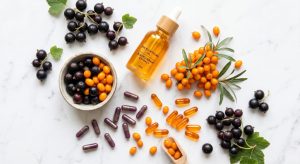
Castor Oil — Traditional Skin Health Remedy
Castor oil has centuries of traditional use as a skin health remedy, applied both topically and taken orally. It is rich in ricinoleic acid, a unique fatty acid with demonstrated anti-inflammatory, antimicrobial, and humectant (moisture-retaining) properties.
Topically, castor oil forms a protective barrier on the skin surface that reduces transepidermal water loss — effectively locking in moisture. Orally, it provides ricinoleic acid systemically, which may support skin health from within through its anti-inflammatory and fatty acid contributions.
Nutrivity’s Castor Oil 500mg Soft Gels provide a convenient oral dose. For more, see our guides to long-term castor oil safety and daily castor oil use.
Vitamin E — Antioxidant Protection
Vitamin E (alpha-tocopherol) is the skin’s primary fat-soluble antioxidant. It is concentrated in the epidermis and protects cell membranes from oxidative damage caused by UV radiation, pollution, and other environmental stressors. Vitamin E works synergistically with vitamin C — vitamin C regenerates oxidised vitamin E, creating a recycling system that extends antioxidant protection.
Dietary sources of vitamin E include nuts, seeds, avocados, and plant oils. Most people who eat a varied diet get adequate vitamin E, but it is a useful addition in supplement form for people with limited dietary variety or increased oxidative stress (heavy sun exposure, smoking, pollution). Nutrivity’s Virgin Olive Oil 1000mg Soft Gels include added vitamin E alongside the oleic acid and polyphenols from olive oil.
Vitamin C — Collagen Synthesis
Vitamin C is essential for collagen synthesis — the structural protein that gives skin its firmness and elasticity. Without adequate vitamin C, collagen production is impaired, leading to thin, fragile skin and slow wound healing. Severe vitamin C deficiency (scurvy) is rare in the UK, but suboptimal intake — insufficient for optimal collagen production — is more common than many people realise, particularly in those who eat few fruits and vegetables.
Vitamin C also contributes to the protection of cells from oxidative stress and supports vitamin E recycling. The most effective approach is dietary: citrus fruits, berries, peppers, kiwi, broccoli, and potatoes are all rich sources. If your fruit and vegetable intake is genuinely low, a simple vitamin C supplement is inexpensive and effective.
Zinc — Wound Healing and Skin Repair
Zinc is essential for cell division, immune function, and wound healing — all processes critical to skin health. Zinc deficiency manifests as slow wound healing, increased susceptibility to infection, and dermatitis. It is particularly relevant for people with acne, as zinc has been shown to modulate sebum production and reduce inflammatory acne lesions in several clinical trials.
Zinc is found in meat, shellfish, cheese, nuts, and seeds. Vegetarians and vegans are at higher risk of zinc insufficiency due to phytates in plant foods that reduce absorption. If you suspect zinc deficiency, a blood test through your GP can confirm.
What About Collagen Supplements?
Collagen supplements have become one of the fastest-growing categories in the beauty supplement market. The premise is straightforward: collagen is the main structural protein in skin, collagen production declines with age, so supplementing with collagen should improve skin.
The evidence is more nuanced. Several clinical trials have found that hydrolysed collagen peptide supplementation improves skin hydration, elasticity, and wrinkle depth over 8–12 weeks. However, the mechanisms are debated — ingested collagen is broken down into amino acids and peptides during digestion, and it is not clear whether these specifically reach the skin or simply contribute to general amino acid availability.
If you choose to try collagen supplementation, ensure adequate vitamin C intake alongside it, as vitamin C is essential for the body’s own collagen synthesis.
Nutrivity Supplements for Skin Health
| Supplement | Key Nutrient | Skin Health Role | Price From |
|---|---|---|---|
| Vitamin D3 4000 IU + K2 | Vitamin D3 | Keratinocyte renewal, barrier function, immune regulation | 3.5p/day |
| Blackcurrant Seed Oil 500mg | GLA + Omega-3 | Anti-inflammatory, hydration, membrane integrity | 14p/day |
| Sea Buckthorn 500mg | Omega-7 | Mucous membrane health, skin hydration, elasticity | 14p/day |
| Castor Oil 500mg | Ricinoleic acid | Traditional skin health, moisture retention | 13p/day |
| Virgin Olive Oil 1000mg | Vitamin E + oleic acid | Antioxidant protection, anti-inflammatory polyphenols | 16p/day |
All Nutrivity supplements are manufactured in the UK in GMP-certified facilities. Vegan friendly products use HPMC plant-based capsules. Halal friendly. Free UK delivery on every order.
The Bottom Line
The best vitamins for skin are not exotic or expensive — they are the nutrients your skin needs to maintain its rapid cell turnover, barrier function, and structural integrity. Vitamin D supports skin cell renewal. Omega fatty acids — particularly GLA from blackcurrant seed oil and omega-7 from sea buckthorn — maintain hydration and reduce inflammation. Vitamin E provides antioxidant protection. And the most effective thing you can do for your skin costs nothing: drink enough water, eat adequate protein, and get enough sleep.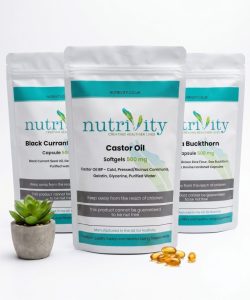
Key Takeaways
— Vitamin D deficiency compromises skin barrier function and is linked to worsening of psoriasis, eczema, and acne
— GLA from blackcurrant seed oil is one of the most evidence-backed fatty acids for skin hydration and inflammation
— Omega-7 from sea buckthorn supports skin and mucous membrane health
— Castor oil has centuries of traditional use for skin health through ricinoleic acid
— Vitamin E protects skin cell membranes from UV and environmental oxidative damage
— Vitamin C is essential for collagen synthesis — ensure adequate dietary intake
— Collagen supplements have promising but debated evidence — take with vitamin C if you try them
— Water, protein, and sleep affect skin quality more than any supplement
Frequently Asked Questions
What is the best vitamin for skin?
Vitamin D is the most important vitamin for skin health in UK adults because of its direct role in keratinocyte renewal and barrier function, combined with the fact that deficiency is extremely common. Omega fatty acids — particularly GLA from blackcurrant seed oil — are the best supplemental support for skin hydration and inflammation. A combination of vitamin D and essential fatty acids addresses the two most common nutritional factors affecting skin health.
Does blackcurrant seed oil help skin?
Yes. Blackcurrant seed oil is one of the richest natural sources of GLA (gamma-linolenic acid), an omega-6 fatty acid that reduces inflammation and improves skin moisture. Studies have shown that GLA supplementation improves skin hydration, reduces roughness, and alleviates symptoms of eczema. Blackcurrant seed oil also provides omega-3, giving it a more balanced fatty acid profile than evening primrose oil.
Is sea buckthorn oil good for skin?
Sea buckthorn is one of the richest natural sources of omega-7 (palmitoleic acid), a fatty acid that supports skin and mucous membrane health. Research has found that sea buckthorn supplementation improves skin hydration and elasticity. It also contains carotenoids, vitamin E, and flavonoids that provide additional antioxidant protection.
Can vitamin D deficiency affect your skin?
Yes. Vitamin D is directly involved in keratinocyte proliferation, differentiation, and skin barrier function. Deficiency has been linked to increased severity of psoriasis, eczema, and acne. The topical vitamin D analogue calcipotriol is an established prescription treatment for psoriasis, demonstrating the direct relationship between vitamin D and skin cell health. For UK adults, supplementing during autumn and winter supports skin alongside bones and immunity.
Do collagen supplements work for skin?
Several clinical trials have found that hydrolysed collagen peptide supplementation improves skin hydration, elasticity, and wrinkle depth over 8–12 weeks. However, the mechanism is debated because ingested collagen is broken down into amino acids during digestion. If you try collagen supplements, ensure adequate vitamin C intake alongside them, as vitamin C is essential for the body’s own collagen synthesis.
What is the best supplement for dry skin?
For dry skin, the most effective supplements are omega fatty acids — GLA from blackcurrant seed oil for anti-inflammatory hydration, omega-7 from sea buckthorn for membrane health, and vitamin D for barrier function. Castor oil taken orally provides ricinoleic acid, which has moisture-retaining properties. However, the most important factor in dry skin is hydration — ensure you are drinking at least six to eight glasses of water daily before supplementing.