





Best Supplements for Bone Density UK — What Actually Helps (2026)
-
By Chris Jones
Best Supplements for Bone Density UK — What Actually Helps (2026)
Posted June 2026 | Written by Chris Jones, Social Media Manager at Nutrivity with 7+ years in the supplement industry.
Quick Answer: The most effective supplements for bone density in the UK are Vitamin D3 + K2 (essential for calcium absorption and directing it into bones), Cod Liver Oil, Omega 3 & Glucosamine (provides vitamin D, omega-3, and joint-protective glucosamine), and calcium (if your dietary intake is low). Vitamin D3+K2 is the single most important supplement for bone health in the UK due to the widespread prevalence of vitamin D deficiency.
Bone density peaks in your late 20s and gradually declines from there. For most people, this happens so slowly that it never causes a problem. But for millions of UK adults — particularly women after menopause and anyone over 60 — that decline accelerates to the point where bones become fragile, brittle, and prone to fractures.
Osteoporosis affects roughly 3.5 million people in the UK. Osteopenia (the precursor stage, where bone density is below normal but not yet in the osteoporosis range) affects millions more who don’t even know they have it. Hip fractures alone account for over 65,000 hospital admissions per year in England, and the consequences can be devastating — one in three adults over 50 who suffers a hip fracture dies within 12 months.
The good news is that bone density loss is not inevitable. The right combination of weight-bearing exercise, adequate nutrition, and targeted supplementation can significantly slow bone loss and, in some cases, modestly increase bone density even in later life.
This guide covers the supplements with the strongest evidence for supporting bone density in the UK, who needs them most, and how to use them effectively.
Why Bone Density Declines and Who Is Most at Risk
Bone is living tissue that constantly remodels itself. Specialised cells called osteoclasts break down old bone, while osteoblasts build new bone. In youth, bone formation outpaces breakdown. After your mid-30s, the balance shifts gradually toward net loss.
Several factors accelerate this process:
Menopause — Oestrogen plays a critical role in maintaining bone density. When oestrogen levels drop sharply during menopause, bone loss accelerates dramatically. Women can lose up to 20% of their bone density in the 5–7 years following menopause.
Vitamin D deficiency — Without adequate vitamin D, your body cannot absorb calcium efficiently, regardless of how much calcium you consume. The UK’s northern latitude means most adults are deficient for at least 6 months of the year.
Low calcium intake — Calcium is the primary mineral in bone. If your diet doesn’t provide enough, your body pulls calcium from your bones to maintain blood calcium levels for critical functions like muscle contraction and nerve signalling.
Sedentary lifestyle — Bones respond to mechanical stress by getting stronger. Without regular weight-bearing exercise, bones have no stimulus to maintain density.
Medications — Long-term use of corticosteroids (prednisolone, dexamethasone), proton pump inhibitors, and certain epilepsy drugs can accelerate bone loss.
Age — Everyone over 50 is at increased risk, with risk accelerating after 65. This is compounded by the fact that older adults typically spend less time outdoors, absorb calcium less efficiently, and produce less vitamin D from sunlight.
The 4 Best Supplements for Bone Density in the UK
1. Vitamin D3 + K2 — The Foundation Supplement for Bone Health
If you take only one supplement for bone density, make it this one. Vitamin D is essential for calcium absorption in the gut. Without adequate vitamin D, you absorb only 10–15% of dietary calcium. With sufficient levels, absorption increases to 30–40%. That difference alone can determine whether your bones maintain density or gradually weaken.
EFSA has approved the health claim that vitamin D contributes to normal absorption and utilisation of calcium, normal blood calcium levels, and the maintenance of normal bones. The UK government recommends that all adults take a vitamin D supplement during autumn and winter (October to March), and many health professionals recommend year-round supplementation given the prevalence of deficiency.
Vitamin K2 (MK-7 form) is the critical companion to D3. While D3 increases calcium absorption, K2 activates osteocalcin — the protein responsible for binding calcium into the bone matrix. Without K2, absorbed calcium may deposit in arteries and soft tissues instead of bones. Multiple studies have shown that the D3+K2 combination produces better bone density outcomes than either vitamin alone.
Effective dose: 4,000 IU vitamin D3 + 100µg vitamin K2 MK-7 daily. 4,000 IU is the EFSA safe upper limit and the dose most commonly recommended for adults with low levels.
Best for: Everyone over 50, postmenopausal women, anyone with diagnosed osteopenia or osteoporosis, anyone who spends limited time outdoors, all UK adults during winter months
Recommended product: Vitamin D3 4000 IU + K2 MK-7 — 365 tablets, full year’s supply at 3.6p per day. Vegan friendly, halal friendly, UK-made to GMP standards.
OUR TOP RECOMMENDED
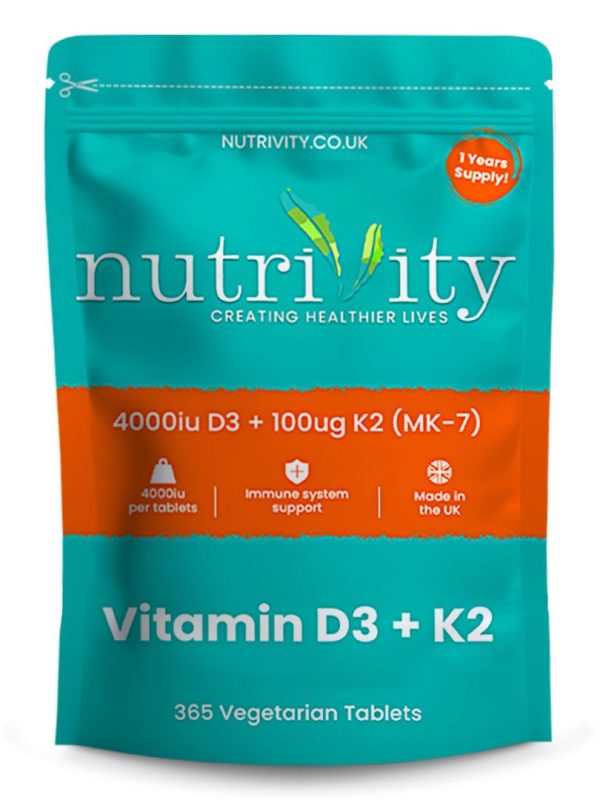
Vitamin D3 4000 IU + Vitamin K2 MK7 100µg | 12 Months Supply (365 Vegan Tablets)
Original price was: £14.99.£12.99Current price is: £12.99.
2. Cod Liver Oil & Glucosamine — Multi-Pathway Bone and Joint Support
Cod liver oil provides naturally occurring vitamin D alongside omega-3 fatty acids and vitamin A. For bone health, this combination works on multiple levels: the vitamin D supports calcium absorption, the omega-3s reduce inflammatory bone resorption (the process by which osteoclasts break down bone), and vitamin A supports osteoblast function.
A study published in the American Journal of Clinical Nutrition found that higher omega-3 intake was associated with greater bone mineral density at the hip in postmenopausal women. The anti-inflammatory effect of omega-3 is particularly relevant because chronic low-grade inflammation accelerates osteoclast activity and bone breakdown.
The glucosamine component supports the cartilage and joints that surround and protect bones. For older adults, maintaining both bone density and joint health is essential — strong bones with degraded cartilage still lead to pain and disability.
Best for: Adults over 50 who want combined bone and joint support, anyone with inflammatory conditions that accelerate bone loss, anyone who doesn’t eat oily fish regularly
Recommended product: Cod Liver Oil & Glucosamine softgel capsules — dual-action bone and joint formula. Halal friendly, UK-made, GMP standard.
OUR TOP RECOMMENDED
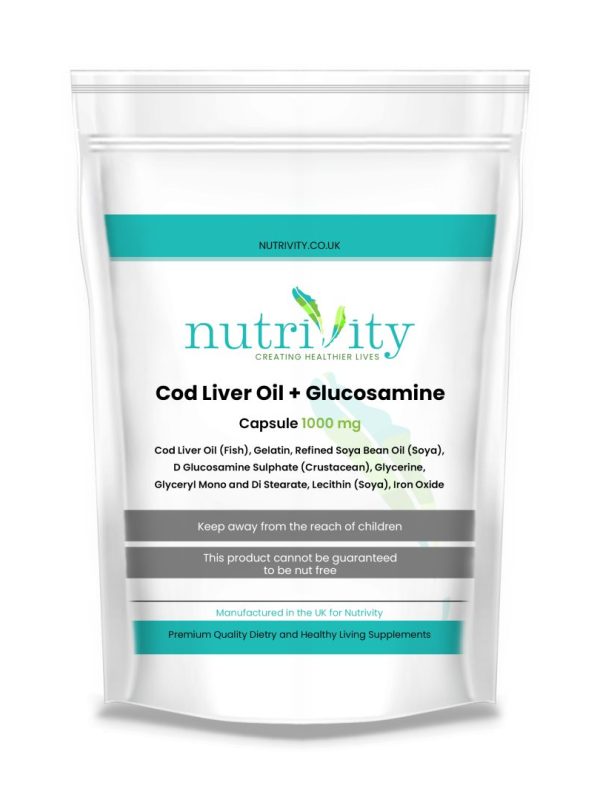
Cod Liver Oil, Omega 3 & Glucosamine 1000mg High Strength Soft Gels – 3 in 1 | Joint Support
Price range: £11.99 through £51.99🐟 Cod Liver Oil, Omega 3 & Glucosamine High Strength - 3 in 1 Formula. 📦 Up to 12 months supply – from just 15p per day.

 3. Calcium — Essential if Dietary Intake Is Low
Calcium is the primary structural mineral in bone, making up roughly 99% of your body’s calcium stores. The recommended daily intake for UK adults is 700mg, rising to 1,000–1,200mg for postmenopausal women and adults over 70.
However, calcium supplementation is more nuanced than simply taking a tablet. Large-scale studies have produced mixed results, with some suggesting that high-dose calcium supplements (1,000mg+) taken without vitamin K2 may slightly increase cardiovascular risk by allowing calcium to deposit in arterial walls. This is why the D3+K2 combination is so important — K2 directs calcium to bones and away from arteries.
The most effective approach is to get as much calcium as possible from dietary sources — dairy products, leafy green vegetables, fortified foods, sardines, almonds — and supplement only the gap between your dietary intake and the recommended amount. A typical UK adult consuming dairy regularly gets around 500–700mg from food, meaning a modest supplement of 200–500mg is usually sufficient.
Best form: Calcium citrate is better absorbed than calcium carbonate, particularly in older adults with lower stomach acid levels. Take calcium in divided doses (no more than 500mg at a time) for optimal absorption.
Best for: Adults whose dietary calcium intake is below 700mg daily, vegans and those avoiding dairy, postmenopausal women
Important: Always take calcium alongside vitamin D3+K2. Calcium without D3 is poorly absorbed. Calcium without K2 may not reach your bones.
4. Devil’s Claw — Indirect Bone Protection Through Inflammation Reduction
Devil’s Claw is not a bone density supplement in the traditional sense. It doesn’t provide minerals or vitamins that build bone. However, its powerful anti-inflammatory action protects bones indirectly by reducing chronic inflammation — one of the key drivers of accelerated bone resorption.
Inflammatory cytokines (TNF-α, IL-1, IL-6) directly stimulate osteoclast activity, increasing the rate at which bone is broken down. By modulating these inflammatory pathways, Devil’s Claw helps reduce the inflammatory burden on bones, particularly in people with inflammatory arthritis or chronic joint conditions.
For bone density specifically, Devil’s Claw is best used as part of a broader stack alongside D3+K2 and Cod Liver Oil & Glucosamine, where it contributes pain relief and inflammation reduction while the other supplements provide the structural building blocks.
Recommended product: Devil’s Claw 2200mg veg capsules — highest-strength formulation available in the UK. Vegan friendly, halal friendly, GMP standard.
OUR TOP RECOMMENDED
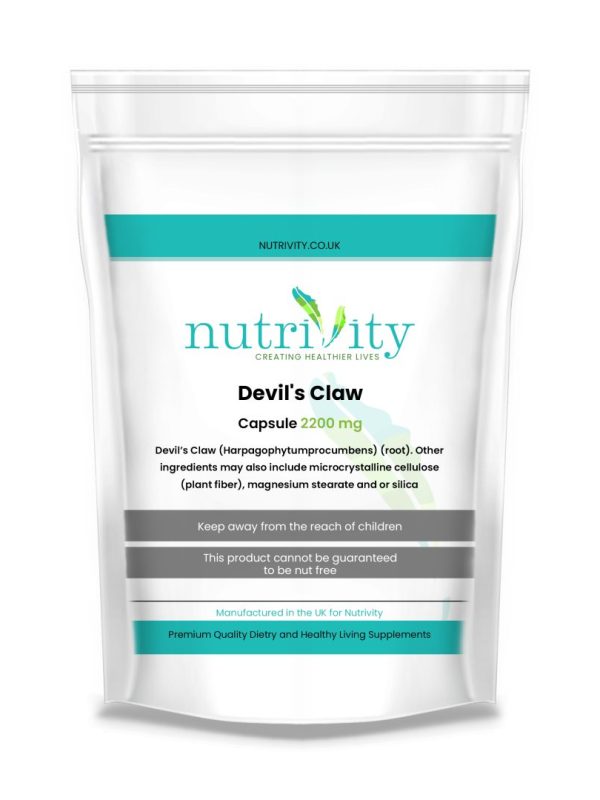
Devil’s Claw 2200mg Vegan Capsule – High Strength | Joint Support
Price range: £8.99 through £45.99Bone Density Supplement Comparison
| Supplement | Primary Bone Benefit | Evidence | Who Needs It Most | Cost/Day |
|---|---|---|---|---|
| Vitamin D3 + K2 | Calcium absorption + bone deposition | Very strong | All UK adults, especially over 50 | From 3.6p |
| Cod Liver Oil & Glucosamine | Anti-inflammatory + vitamin D + joint support | Strong | Over 50, inflammatory conditions | From 3p |
| Calcium | Structural mineral for bone matrix | Strong (with D3+K2) | Low dietary intake, dairy-free diets | Varies |
| Devil’s Claw | Reduces inflammatory bone resorption | Moderate (indirect) | Inflammatory conditions | From 8p |
The Best Supplement Stack for Bone Density
Essential: Vitamin D3 + K2 daily, year-round. This is non-negotiable for UK adults concerned about bone density. At 3.6p per day for a full year’s supply, cost is not a barrier.
Recommended: Add Cod Liver Oil & Glucosamine for additional vitamin D from a natural source, anti-inflammatory omega-3s, and joint protection. Particularly valuable for adults over 50 managing both bone and joint health.
If you have inflammatory joint conditions: Add Devil’s Claw to reduce the chronic inflammation that accelerates bone breakdown. The combined cost of all three is under 15p per day.
If your dietary calcium is low: Add a modest calcium citrate supplement (200–500mg daily). Always take with D3+K2, never alone.
Lifestyle Factors That Matter as Much as Supplements
Supplements support bone density, but they cannot compensate for a lifestyle that actively weakens bones. The most important non-supplement factors:
Weight-bearing exercise — Walking, jogging, dancing, stair climbing, and resistance training directly stimulate bone formation. Bones adapt to the mechanical forces placed on them. Even 30 minutes of brisk walking 5 times per week has been shown to slow bone loss. Resistance training with weights is particularly effective for maintaining hip and spine density.
Dietary protein — Protein provides the collagen scaffold on which bone minerals are deposited. Low protein intake is associated with lower bone density and increased fracture risk. Aim for at least 1g of protein per kilogram of body weight daily.
Reduce alcohol — More than 2 units daily is associated with reduced bone density. Heavy drinking significantly increases fracture risk.
Stop smoking — Smoking directly impairs osteoblast function and accelerates bone loss. Smokers have measurably lower bone density and higher fracture rates than non-smokers.
 The Bottom Line
Bone density loss is gradual and largely silent until a fracture happens. The time to act is before that point. Vitamin D3+K2 is the essential foundation for every UK adult concerned about bone health, with Cod Liver Oil & Glucosamine providing valuable additional support through anti-inflammatory and joint-protective pathways.
Combined with regular weight-bearing exercise and adequate dietary calcium and protein, these supplements give your bones the best possible chance of staying strong well into later life. The daily cost of a comprehensive bone health supplement stack is under 15p — a fraction of the cost and burden of treating a fracture.
Related reading: Best Supplements for Joint Pain UK | Best Supplements for Arthritis UK | Best Natural Anti-Inflammatory Supplements UK | Best Supplements for Knee Pain UK | Joint Pain After 50
Disclaimer: This article is for informational purposes only and does not constitute medical advice. Dietary supplements are intended to complement, not replace, a balanced diet and healthy lifestyle. If you have been diagnosed with osteoporosis or osteopenia, consult your healthcare professional about appropriate treatment alongside supplementation. All Nutrivity products are manufactured in the UK to GMP standards.
WANT THE COMPLETE JOINT SUPPORT STACK?
THE JOINT & BONE HEALTH BUNDLE INCLUDES:
DEVIL’S CLAW 2200MG, COD LIVER OIL, OMEGA-3 & GLUCOSAMINE, AND VITAMIN D3+K2
AT A BUNDLED DISCOUNT
UNDER 33P PER DAY
FOR COMPREHENSIVE JOINT, BONE AND INFLAMMATION SUPPORT.
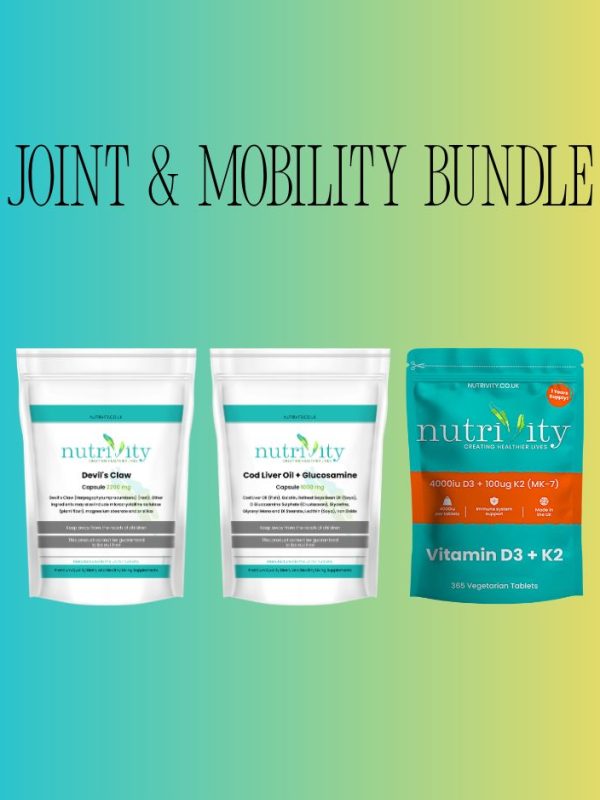
Joint + Mobility Bundle — Devil’s Claw 2200mg + Cod Liver Oil, Omega 3 & Glucosamine & Vitamin D3 + K2
Original price was: £56.97.£46.77Current price is: £46.77.Frequently Asked Questions
What is the best supplement for osteoporosis prevention?
Vitamin D3 combined with K2 MK-7 is the most important supplement for osteoporosis prevention. D3 enables calcium absorption while K2 directs calcium into the bone matrix. At 4,000 IU daily, D3 addresses the widespread deficiency among UK adults that is a major contributor to bone density loss. Combined with adequate dietary calcium and weight-bearing exercise, this is the most evidence-based approach to prevention.
Should I take calcium supplements for bone density?
Only if your dietary calcium intake is below 700mg daily. Most adults who consume dairy regularly get sufficient calcium from food. If you supplement, take calcium citrate in divided doses (no more than 500mg at a time) alongside vitamin D3+K2 to ensure proper absorption and bone deposition. Taking high-dose calcium without K2 may carry cardiovascular risks.
How much vitamin D do I need for bone health?
The EFSA safe upper limit is 4,000 IU daily, which is the dose recommended for adults with low vitamin D levels. The UK government recommends at least 400 IU during autumn and winter, but most bone health specialists consider this insufficient for people at risk of osteoporosis. A blood test can confirm your levels and guide dosing.
Can supplements reverse osteoporosis?
Supplements alone cannot reverse established osteoporosis, but they can slow further bone loss and, in combination with weight-bearing exercise, produce modest improvements in bone mineral density. Vitamin D3+K2 has been shown to reduce fracture risk in deficient populations. For diagnosed osteoporosis, supplements should be used alongside any prescribed medication, not as a replacement.
Why do I need vitamin K2 with vitamin D3?
Vitamin D3 increases calcium absorption from food, but it does not control where that calcium goes. Vitamin K2 activates osteocalcin, the protein that binds calcium into bone. Without K2, absorbed calcium may deposit in arteries and soft tissues. Studies show the D3+K2 combination produces better bone density outcomes and lower cardiovascular risk than D3 alone.
At what age should I start taking bone density supplements?
Vitamin D3+K2 is beneficial for all UK adults year-round due to limited sunlight. For bone density specifically, supplementation becomes increasingly important from age 40 onwards as the rate of bone loss begins to outpace formation. Women should pay particular attention around perimenopause and menopause when oestrogen decline accelerates bone loss dramatically.
Are bone density supplements suitable for vegans?
Vitamin D3+K2 from lichen-derived D3 and natto-sourced K2 is suitable for vegans. Cod Liver Oil and Glucosamine contains fish-derived ingredients and is not suitable for vegans. Vegans should ensure adequate calcium from fortified plant milks, tofu, leafy greens, and consider a calcium citrate supplement alongside D3+K2.
How long does it take for bone density supplements to work?
Vitamin D levels improve within 4 to 8 weeks of consistent supplementation. However, measurable changes in bone mineral density take 6 to 12 months. DEXA scans (the standard bone density test) are typically repeated every 1 to 2 years to assess changes. Commit to at least 12 months of consistent supplementation before expecting measurable bone density improvements.