



What Is Agnus Castus? Benefits, Uses and UK Guide
-
By Chris Jones
Written by Chris Jones, Social Media Manager at Nutrivity with 7+ years in the supplement industry.
What Is Agnus Castus? Benefits, Uses and UK Guide
Agnus castus (Vitex agnus-castus) — also known as chasteberry, Vitex, or monk’s pepper — is one of the most widely researched herbal supplements for women’s hormonal health. Used in traditional European medicine for over two thousand years, it remains one of the best-selling herbal products for women in the UK today, with a growing evidence base that supports its traditional applications in PMS, menstrual irregularity, and hormonal balance.
This guide covers what agnus castus is, how it works, what the research shows, and who is most likely to benefit. For full product information on Nutrivity’s high-strength vegan agnus castus tablets, visit our Agnus Castus 1000mg Vegan Tablets product page.
What Is Agnus Castus?
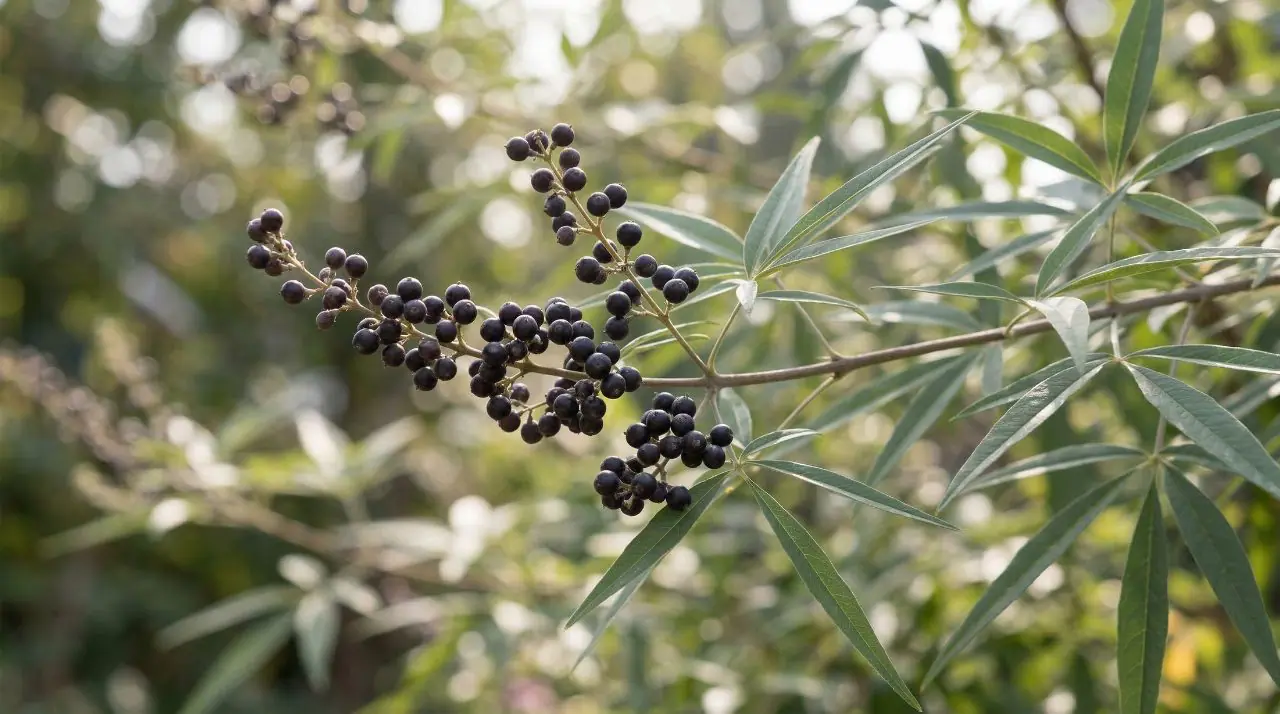
Agnus castus is a flowering shrub native to the Mediterranean and Central Asia. The dried ripe berries of the plant — chasteberries — are the part used medicinally. The name “agnus castus” derives from the Latin for “chaste lamb,” reflecting its historical association with reducing libido in monks (hence “monk’s pepper”). Its modern clinical applications are almost entirely in women’s hormonal health.
The active compounds in agnus castus include iridoid glycosides (particularly aucubin and agnuside), flavonoids (including casticin), diterpenes, and essential oils. The standardisation of agnus castus extracts — measuring consistent levels of agnuside or casticin — is an important quality indicator for supplement products.
How Does Agnus Castus Work?
The primary mechanism of agnus castus is dopaminergic — it acts on dopamine receptors in the pituitary gland, specifically D2 receptors. By binding to these receptors, agnus castus suppresses the release of prolactin from the anterior pituitary. This is clinically significant because elevated prolactin (hyperprolactinaemia) is associated with several of the symptoms and conditions that agnus castus is used to address.
Prolactin suppression affects the hypothalamic-pituitary-gonadal axis — the hormonal signalling pathway that regulates the menstrual cycle. By reducing excess prolactin, agnus castus indirectly supports the balance of oestrogen and progesterone across the menstrual cycle. This is particularly relevant in the luteal phase (the second half of the cycle), where progesterone is normally dominant and where many PMS symptoms arise when progesterone is relatively low compared to oestrogen.
Agnus castus also has partial agonist activity at opioid receptors, which may contribute to its effects on mood-related PMS symptoms, and some evidence suggests mild oestrogenic activity at low doses. The hormonal picture is nuanced — agnus castus is not a simple hormonal supplement and does not directly provide or block any single hormone. Its effects are indirect, mediated through pituitary signalling.
What Is Agnus Castus Used For?
 PMS (Premenstrual Syndrome). This is the most researched application for agnus castus and the indication with the strongest clinical evidence. Multiple randomised controlled trials have shown significant reductions in PMS symptom scores — including irritability, mood swings, breast tenderness, bloating, and menstrual cramps — compared to placebo. For a full breakdown of the PMS evidence, see our guide to agnus castus for PMS UK.
Menstrual irregularity. Agnus castus has been studied for cycle normalisation in women with irregular periods, particularly where irregularity is associated with luteal phase defects or elevated prolactin. Research has shown improvements in cycle regularity and luteal phase length in women supplementing with agnus castus.
Hormonal balance. The term “hormonal balance” is used broadly in supplement marketing, but in the context of agnus castus it has specific mechanistic content — prolactin normalisation and indirect support of the oestrogen-progesterone balance across the menstrual cycle.
Perimenopause. Some research has examined agnus castus for perimenopausal symptom management, including hot flushes, sleep disturbance, and mood changes. The evidence is less developed than for PMS but reflects the herb’s broader role in pituitary-gonadal axis modulation.
Fertility support. Agnus castus has been studied as a component of fertility support protocols for women with cycle irregularity or luteal phase defects, though it is not a direct fertility treatment.
What the Research Shows
The clinical evidence for agnus castus is more developed than for many herbal supplements. The landmark trial in this area — the ZE 440 study — was a randomised, double-blind, placebo-controlled trial of 178 women with PMS, which found that agnus castus extract at one tablet daily for three menstrual cycles significantly reduced PMS symptom scores compared to placebo, with 52% of the agnus castus group rating their overall improvement as “much better” or “very much better” compared to 24% in the placebo group.
A subsequent Cochrane-style systematic review of agnus castus for PMS concluded that the evidence supports its use for premenstrual syndrome and premenstrual dysphoric disorder (PMDD), with a generally favourable safety and tolerability profile.
The research consistently identifies three months of continuous use as the minimum period before assessing effectiveness — a timeline that reflects the herb’s mechanism through cycle regulation rather than acute symptom relief. For a full discussion of timing, see our guide to how long does agnus castus take to work.
Agnus Castus in the UK — THR vs Food Supplement
In the UK, agnus castus is sold in two regulatory categories: Traditional Herbal Remedy (THR) licensed medicines and food supplements. THR-licensed products have undergone a formal registration process with the MHRA and can make specific claims about relieving PMS symptoms based on traditional use. Food supplement products cannot make these specific claims but often provide higher doses and are frequently more cost-effective.
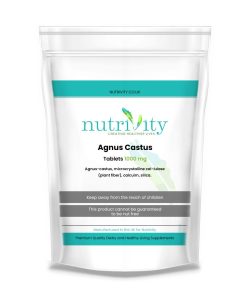
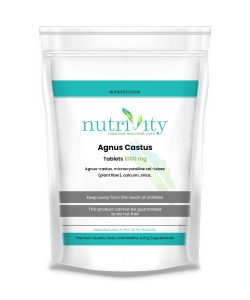
Nutrivity’s Agnus Castus 1000mg is a food supplement providing 1000mg of whole agnus castus herb per vegan tablet in an 8-month supply — the longest supply at the lowest daily cost of any major UK agnus castus product. For a full comparison of UK agnus castus supplements, see our best agnus castus supplement UK guide.
Who Should Not Take Agnus Castus?
Agnus castus is not suitable for everyone. It should not be taken during pregnancy or breastfeeding, by women with hormone-sensitive conditions (including oestrogen-receptor positive breast cancer), by women taking hormonal contraception or HRT without medical guidance, by women with pituitary disorders, or by anyone under 18. For a full discussion of safety and interactions, see our guide to agnus castus side effects UK. Always consult your GP before starting agnus castus if you take prescription medication.
Summary — Agnus Castus in the UK
Agnus castus has one of the most developed evidence bases of any herbal supplement for women’s health, with multiple RCTs supporting its use for PMS and a well-understood mechanism through prolactin suppression and pituitary-gonadal axis modulation. For UK women experiencing PMS, menstrual irregularity, or perimenopausal symptoms, it is one of the most well-evidenced herbal options available — with the important caveats that it requires consistent use for at least three months to assess effectiveness and is not appropriate for all women.
For full product information and to purchase, visit Nutrivity’s Agnus Castus 1000mg Vegan Tablets product page.
Frequently Asked Questions
What is agnus castus used for?
Agnus castus is used primarily for women’s hormonal health — particularly PMS symptom relief, menstrual cycle regulation, and hormonal balance support. THR-licensed products in the UK can specifically claim to help relieve premenstrual symptoms including irritability, mood swings, breast tenderness, bloating, and menstrual cramps based on traditional use. It is also used for perimenopause symptom support and as part of fertility support protocols for women with cycle irregularity.
How does agnus castus work?
Agnus castus acts primarily on dopamine D2 receptors in the pituitary gland, suppressing the release of prolactin. Elevated prolactin disrupts the hormonal signalling that regulates the menstrual cycle, and prolactin normalisation indirectly supports oestrogen-progesterone balance. It also has partial opioid receptor activity, which may contribute to effects on mood-related PMS symptoms.
How long does agnus castus take to work?
Most clinical research and traditional use guidance recommends taking agnus castus continuously for at least three menstrual cycles (approximately three months) before assessing effectiveness. Agnus castus works through cycle regulation rather than acute symptom relief — its effects build gradually with consistent use
Is agnus castus vegan?
It depends on the product. The agnus castus herb itself is entirely plant-derived and vegan. However, many agnus castus supplements use gelatine capsules or tablets containing lactose. Nutrivity’s Agnus Castus 1000mg uses a compressed vegan tablet — no gelatine, no lactose, fully vegan-suitable and halal-suitable.
Can men take agnus castus?
Agnus castus is marketed and researched almost exclusively for women’s hormonal health. Historically it was used to reduce libido in men (hence “monk’s pepper”), but this application is not clinically supported or recommended. It is not a supplement men should take without specific medical guidance.
What is the best agnus castus supplement in the UK?
Key factors are dose, formulation type (THR-licensed versus food supplement), capsule or tablet suitability for your diet, and cost over a recommended three-month course. For a full comparison, see our best agnus castus supplement UK guide. Nutrivity’s 1000mg vegan tablet provides the best value per day at approximately 10.4p and the longest supply in a single pack.