

Is Vitamin D3 Halal? Lanolin vs Lichen — What Muslim Supplement Buyers Need to Know
-
By Chris Jones
The Vitamin D3 Halal Question — Why It’s More Complicated Than You Think
Vitamin D3 is one of the most widely taken supplements in the UK. NHS guidance recommends it for everyone during autumn and winter, and deficiency is genuinely widespread — particularly among communities with darker skin tones or those who spend less time outdoors. For Muslim consumers, however, buying vitamin D3 comes with a question that most supplement brands don’t answer: where does the D3 actually come from?
The answer matters because the overwhelming majority of vitamin D3 supplements sold in the UK are derived from lanolin — a wax extracted from sheep’s wool — and there is ongoing scholarly debate about whether lanolin-derived D3 is halal-permissible. This guide explains the issue clearly, covers the scholarly positions, and tells you what to look for when buying vitamin D3 as a Muslim consumer.
For a broader overview of halal concerns in supplements beyond vitamin D3, see our complete halal supplements guide.
Where Does Vitamin D3 Come From?
Vitamin D3 (cholecalciferol) is the same form of vitamin D that the human body produces when skin is exposed to UVB sunlight. In supplement form, it needs to be derived from a source that contains either cholesterol or a cholesterol precursor that can be converted into D3 through UV irradiation.
There are two main commercial sources of vitamin D3:
Lanolin (sheep’s wool wax) — This is by far the most common source. Lanolin is a fatty substance secreted by the sebaceous glands of wool-bearing animals and is found in large quantities in sheep’s wool. It contains 7-dehydrocholesterol, a cholesterol precursor that converts to vitamin D3 when exposed to UV light. The process involves extracting lanolin from raw wool through a solvent-based washing process, isolating the 7-dehydrocholesterol, and then irradiating it to produce cholecalciferol (D3). The vast majority of vitamin D3 supplements on the UK market — including many well-known brands — use lanolin-derived D3. It is cheap, produces high yields, and has been the industry standard for decades.
Lichen (plant-based) — Certain species of lichen — a symbiotic organism combining fungi and algae — naturally produce vitamin D3. This makes lichen the only known plant-based source of D3 (as opposed to D2, which can be derived from fungi). Lichen-derived D3 is more expensive to produce than lanolin-derived D3, but it is entirely plant-based, making it suitable for vegans and removing the lanolin question for Muslim consumers entirely.
Is Lanolin-Derived Vitamin D3 Halal?
This is where it gets genuinely complex, and it’s important to present the scholarly positions accurately rather than give a simple yes or no answer.
The case that lanolin D3 is halal-permissible: Lanolin is extracted from wool, not from the slaughter of the animal. Sheep are shorn alive, and the wool — along with its lanolin content — is a by-product of that process. Many Islamic scholars hold that substances derived from living halal animals through a non-harmful process are permissible. Under this view, since no animal is harmed or killed in the extraction of lanolin, and since sheep are inherently halal animals, lanolin and its derivatives would be considered permissible. A number of major Islamic certification bodies have certified lanolin-derived D3 supplements as halal on this basis.
The case that lanolin D3 requires further scrutiny: Other scholars take a stricter position, arguing that the permissibility depends on the specific extraction process, potential cross-contamination with non-halal materials in processing, and whether the cholesterol derivative undergoes sufficient transformation (istihalah) to be considered a new substance. Under istihalah principles, a haram substance that undergoes a complete chemical transformation may become permissible — but scholars differ on whether the conversion of lanolin-derived 7-dehydrocholesterol to D3 constitutes sufficient transformation.
The practical reality: There is no universal consensus. Different certification bodies and scholars take different positions, and a consumer following one school of thought may reach a different conclusion than one following another. If you follow a stricter interpretation, or if you simply want to avoid the uncertainty entirely, lichen-derived D3 removes the question completely.
How to Tell Which Source Your Vitamin D3 Uses
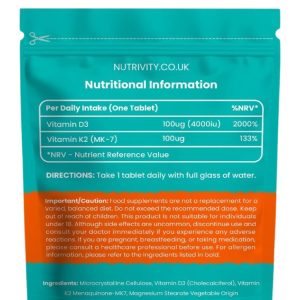 Most vitamin D3 supplement brands do not disclose the source of their D3 on the label. UK labelling law does not require this, and the industry has no standardised way of indicating it. This makes identifying the source harder than it should be.
Signs it is likely lanolin-derived: The label simply says “Vitamin D3 (Cholecalciferol)” with no further detail. The product makes no vegan claim. The brand has no halal certification. This covers the majority of mainstream vitamin D3 supplements in the UK.
Signs it may be lichen-derived: The label says “Vegan Vitamin D3” or “Plant-based D3.” The label specifies “Cholecalciferol from lichen” or similar. The product carries a vegan society or vegan trademark certification. Lichen-derived D3 is the only plant-based form of D3, so any product making a genuine vegan D3 claim should be using lichen.
Signs it is halal-certified lanolin D3: The product carries a recognised halal certification mark from a named certification body. Be aware that not all halal certifications are equivalent — some bodies apply stricter standards than others.
If a brand’s website or label does not specify the D3 source, contact them directly before purchasing. A reputable brand should be able to answer this question immediately.
What About Vitamin D2?
Vitamin D2 (ergocalciferol) is an alternative form of vitamin D derived from fungi or yeast, making it inherently plant-based and free from the lanolin question. However, D2 is considered less effective than D3 at raising and maintaining blood vitamin D levels. Research consistently shows that D3 raises serum 25-hydroxyvitamin D levels more effectively and sustains them for longer than D2 at equivalent doses. For this reason, D3 is the preferred form for supplementation, and the NHS recommends vitamin D supplements without specifying a form — though most clinical guidance now favours D3 for efficacy.
If you cannot verify the source of a D3 supplement and want to avoid uncertainty, D2 is an alternative — but lichen-derived D3 is a better solution because it gives you the superior efficacy of D3 without any halal concerns.
Nutrivity’s Vitamin D3 — Lichen-Sourced, Plant-Based
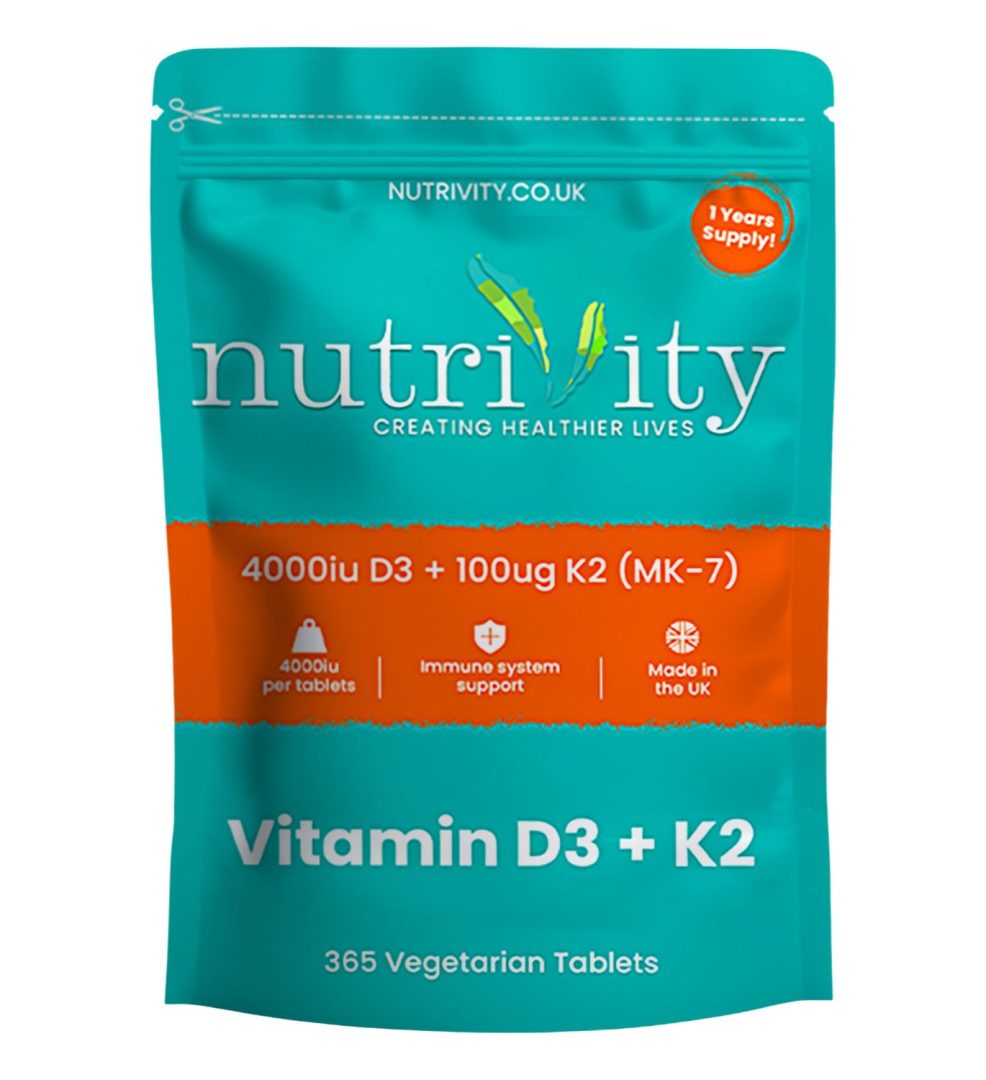
Our Vitamin D3 4000 IU + K2 MK7 100µg uses D3 derived exclusively from lichen. There is no lanolin in this product. The D3 is plant-based, which means it is suitable for vegans and removes the lanolin halal question entirely.
The product is a compressed vegan tablet — not a capsule — so there is no gelatine of any kind. The full ingredients are listed on the product page, and every component is of plant or mineral origin.
At 4000 IU per tablet with a full year’s supply of 365 tablets, this is one of the highest-strength vegan D3+K2 supplements available in the UK. The K2 is included as MK-7, the most bioavailable form, which works in combination with D3 to direct calcium to bones rather than arteries.

The Bottom Line
For Muslim consumers in the UK, the safest and most straightforward choice for vitamin D3 supplementation is a product that specifies lichen as the D3 source. This removes all lanolin-related uncertainty, is suitable for vegans, and delivers the superior efficacy of D3 rather than D2.
If you are considering a lanolin-derived D3 supplement, check whether it carries halal certification from a body whose standards align with your own scholarly reference point. Do not assume that an uncertified lanolin D3 supplement is halal-permissible simply because the brand doesn’t flag it as an issue — most mainstream brands are simply unaware that the question exists.
Browse our full range of halal-suitable supplements, all manufactured in the UK with complete ingredient transparency.
Frequently Asked Questions
Is vitamin D3 halal?
It depends on the source. Lichen-derived D3 is plant-based and halal-suitable without any scholarly debate. Lanolin-derived D3 is the subject of ongoing scholarly discussion — some certification bodies consider it permissible, others require stricter verification. If you want to avoid uncertainty, choose a supplement that specifies lichen as the D3 source.
What is lanolin and where does it come from?
Lanolin is a waxy substance secreted by the sebaceous glands of wool-bearing animals, found in large quantities in sheep’s wool. It is extracted from raw wool during processing. It is not derived from the slaughter of the animal — sheep are shorn alive. Lanolin is widely used in cosmetics, pharmaceuticals, and supplement manufacturing.
What is lichen-derived vitamin D3?
Certain species of lichen naturally produce vitamin D3. Lichen is a composite organism formed from algae and fungi living together, and it is entirely plant-based. D3 extracted from lichen is chemically identical to lanolin-derived D3 and human-synthesised D3, but it comes from a plant source, making it suitable for vegans and removing the lanolin question for Muslim consumers.
Is vitamin D2 halal?
Yes. Vitamin D2 (ergocalciferol) is derived from fungi or yeast and contains no animal-derived ingredients. It is halal-suitable without qualification. However, D2 is considered less effective than D3 at raising and maintaining vitamin D levels in the blood, so lichen-derived D3 is generally the preferred choice for both efficacy and halal suitability.
Does Nutrivity's vitamin D3 contain lanolin?
No. Nutrivity’s Vitamin D3 4000 IU + K2 MK7 uses lichen-derived D3. The product contains no lanolin, no gelatin, and no animal-derived ingredients of any kind. It is a compressed vegan tablet suitable for both vegan and halal diets.
How do I know if a vitamin D3 supplement uses lanolin or lichen?
Check the label for a vegan claim or a specific statement about the D3 source. If the label says “vegan D3” or specifies “cholecalciferol from lichen,” it is plant-based. If the label simply says “Vitamin D3 (Cholecalciferol)” with no further detail and no vegan claim, it is almost certainly lanolin-derived. When in doubt, contact the manufacturer directly.
Is there a halal-certified vitamin D3 supplement available in the UK?
Yes. Some lanolin-derived D3 supplements carry halal certification from recognised certification bodies. Lichen-derived D3 supplements are also available and are considered halal-suitable without requiring certification, as the source is entirely plant-based. Nutrivity’s D3+K2 uses lichen-derived D3.