





Is it OK to take cod liver oil and glucosamine together?
-
By Chris Jones
Last updated April 2026 | Written by Chris Jones, Social Media Manager at Nutrivity with 7+ years in the UK supplement industry.
Cod liver oil and glucosamine are two of the most widely used joint health supplements in the UK, and they are frequently taken together — or purchased as a combined product. The question of whether it is safe and sensible to take them together has a clear answer: yes, and for most people focused on joint health, taking both is more beneficial than taking either alone.
This guide covers why the combination works, what the evidence shows, how they differ in what they do, and the most practical way to take them. For full product information on Nutrivity’s combined formula, visit our Cod Liver Oil & Glucosamine 1000mg Soft Gels.
Quick Answer
Yes — it is safe and beneficial to take cod liver oil and glucosamine together. They work through entirely different mechanisms, so there is no competition or interaction between them. Cod liver oil provides omega-3 fatty acids EPA and DHA, which target inflammation in joints, along with vitamins A and D. Glucosamine is a building block of cartilage that supports the structural integrity of joints. Together they address both the inflammatory and structural dimensions of joint health, which is why combined supplements are popular and clinically sensible.
What Each Supplement Does
To understand why the combination works, it helps to understand what each ingredient actually does — and crucially, how different those roles are.
Cod liver oil is extracted from the liver of cod fish and is one of the most nutrient-dense supplement oils available. Its primary active components are the omega-3 fatty acids EPA (eicosapentaenoic acid) and DHA (docosahexaenoic acid). EPA is the most relevant for joint health — it reduces the production of prostaglandins and leukotrienes, which are inflammatory compounds involved in joint pain and swelling. By reducing these inflammatory signals, cod liver oil can reduce joint pain and stiffness rather than merely masking it. Cod liver oil also naturally contains vitamin D, which supports bone density and muscle function around joints, and vitamin A, which supports tissue repair and immune function.
Glucosamine is an amino sugar that the body uses as a raw material to produce glycosaminoglycans — the structural components of cartilage, the tissue that cushions joints. As the body ages, cartilage naturally thins and breaks down more quickly than it is repaired. Glucosamine supplementation provides the building blocks to support this repair and maintenance process. Unlike cod liver oil, glucosamine does not target inflammation directly. Instead it works on the structural side of joint health — maintaining and supporting the cartilage that absorbs mechanical stress.
The practical implication is straightforward: cod liver oil and glucosamine address joint health from opposite ends. One reduces inflammatory damage. The other supports structural repair. There is no overlap, no competition, and no interaction between them.
What the Evidence Shows
The evidence for each ingredient individually is well-established. For the combination specifically, there is also supportive research.
On cod liver oil, a Cardiff University study found that regular cod liver oil supplementation reduced cartilage degradation enzymes and joint pain scores in patients with knee osteoarthritis. The omega-3 content specifically — EPA and DHA — has been consistently associated with reductions in joint inflammation markers in multiple clinical trials.
On glucosamine, the most significant clinical study is the GAIT trial (Glucosamine/Chondroitin Arthritis Intervention Trial), a large US National Institutes of Health study that found glucosamine sulphate reduced pain in participants with moderate-to-severe knee osteoarthritis. Glucosamine has been studied more extensively than almost any other joint supplement, with a reasonable evidence base across multiple randomised controlled trials.
On the combination, a study published in the journal Osteoarthritis and Cartilage found that combining omega-3 fatty acids with glucosamine produced greater reductions in joint pain and stiffness than glucosamine alone over a 26-week period. The synergistic mechanism is consistent with what we know about how each ingredient works — anti-inflammatory support from omega-3 paired with structural support from glucosamine produces a more comprehensive effect than either alone.
Combined Supplement vs Taking Separately
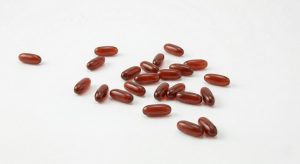
You can take cod liver oil and glucosamine as two separate supplements or as a combined product. Both approaches are equally effective from a clinical standpoint — what matters is the total daily intake of each ingredient, not whether they come from one capsule or two.
The practical case for a combined product is convenience. A single daily soft gel that provides both cod liver oil and glucosamine reduces pill burden, simplifies your routine, and is typically more cost-effective than two separate products.
The case for taking them separately is dosage control. Clinical studies on glucosamine have typically used doses of 1,500mg per day. Most combined cod liver oil and glucosamine soft gels — including Nutrivity’s — provide a lower glucosamine dose per capsule, as the capsule must accommodate the oil volume. If you specifically require a therapeutic glucosamine dose for moderate-to-severe osteoarthritis, a dedicated glucosamine supplement at 1,500mg alongside a cod liver oil soft gel may be more appropriate than a combined product alone.
For most adults taking these supplements for general joint maintenance, mobility support, or mild joint discomfort, a combined product at standard doses is a sensible and practical choice.
Who Benefits Most From Taking Both
The combination of cod liver oil and glucosamine is particularly well-suited to adults over 40, where both cartilage thinning and low-grade joint inflammation become increasingly common. It is also appropriate for anyone with a physically demanding job or activity level that places sustained stress on joints, or for anyone experiencing the early signs of joint discomfort such as morning stiffness or reduced mobility.
For people with diagnosed osteoarthritis, both supplements have relevant evidence. The anti-inflammatory support from cod liver oil and the structural support from glucosamine address the two primary processes driving osteoarthritis progression — cartilage degradation and inflammatory damage.
People taking blood-thinning medications such as warfarin should note that cod liver oil’s omega-3 content has mild anticoagulant properties and may interact with anticoagulant drugs. Inform your GP before starting cod liver oil if you are on warfarin or similar medication.
Dosage and Timing
Both cod liver oil and glucosamine are fat-soluble or best absorbed with food, so taking them with a meal is recommended — it improves absorption and reduces the risk of any mild gastrointestinal discomfort that can occasionally occur when taking oil-based supplements on an empty stomach.
There is no established interaction that requires them to be taken at different times. Taking both with the same meal is fine and makes adherence easier.
For a combined product, the standard dose is one to two soft gels daily with food. Nutrivity’s Cod Liver Oil & Glucosamine 1000mg Soft Gels are designed for one to two capsules daily. For the full dosage guidance for cod liver oil specifically, see our cod liver oil dosage UK guide.
How long does it take to work? Cod liver oil’s anti-inflammatory effects can become noticeable within four to eight weeks of consistent daily use. Glucosamine’s structural effects on cartilage take longer — most clinical studies run for 12 to 26 weeks, and the evidence suggests meaningful changes in cartilage health require at least three months of consistent supplementation. Consistency over months matters more than the specific timing of each dose.
The Bottom Line
Cod liver oil and glucosamine are safe to take together and work better together than either does alone. Cod liver oil addresses joint inflammation through EPA and DHA, while glucosamine provides structural support for cartilage maintenance. The combination covers both the inflammatory and structural aspects of joint health, which is why combined products are one of the most practical formats for daily joint support supplementation.
For most UK adults, a combined cod liver oil and glucosamine soft gel taken daily with food is a sensible, evidence-supported approach to joint maintenance. Nutrivity’s Cod Liver Oil & Glucosamine 1000mg Soft Gels use halal-sourced bovine gelatine and are UK manufactured to GMP standards.

Key Takeaways
- Cod liver oil and glucosamine are safe to take together — there is no interaction or competition between them
- They work through different mechanisms: cod liver oil targets inflammation via EPA and DHA, glucosamine supports cartilage structure
- The combination addresses both the inflammatory and structural aspects of joint health, producing better results than either alone
- A combined soft gel product is the most convenient way to take both — one capsule covers both ingredients
- If you specifically need a therapeutic glucosamine dose of 1,500mg, a dedicated supplement alongside cod liver oil may be more appropriate
- Take with food — both ingredients absorb better with a meal and this reduces the risk of digestive discomfort
- Allow at least 8–12 weeks of consistent daily use before assessing results — glucosamine in particular requires consistent long-term supplementation
- People on blood-thinning medication should consult their GP before starting cod liver oil
Frequently Asked Questions
Is it safe to take cod liver oil and glucosamine together?
Yes. Cod liver oil and glucosamine work through entirely different mechanisms and there is no known interaction between them. Taking both together is safe for most healthy adults and is the basis of combined joint supplement products.
Do cod liver oil and glucosamine work better together than separately?
Evidence suggests yes. A study published in Osteoarthritis and Cartilage found that combining omega-3 fatty acids with glucosamine produced greater reductions in joint pain and stiffness than glucosamine alone. The combination addresses both inflammation and cartilage structure, which are the two primary drivers of joint discomfort.
What is the difference between cod liver oil and glucosamine?
Cod liver oil is a fish-derived oil rich in omega-3 fatty acids EPA and DHA, which reduce joint inflammation, along with vitamins A and D. Glucosamine is an amino sugar that supports cartilage structure. They target different aspects of joint health and complement each other rather than overlapping.
Can you get cod liver oil and glucosamine in one capsule?
Yes. Combined cod liver oil and glucosamine soft gel capsules are widely available in the UK and provide both ingredients in a single daily capsule. Nutrivity’s Cod Liver Oil & Glucosamine 1000mg Soft Gels are one example — halal-suitable, UK manufactured, available in pack sizes from one month to one year supply.
How long does it take for cod liver oil and glucosamine to work?
Cod liver oil’s anti-inflammatory effects can be noticeable within four to eight weeks of daily use. Glucosamine’s effects on cartilage structure take longer — most clinical studies run for 12 to 26 weeks. For best results, take consistently for at least three months before assessing the outcome.
Should you take cod liver oil and glucosamine with food?
Yes. Both ingredients are best taken with a meal. Cod liver oil is fat-soluble and absorbs better with dietary fat. Taking glucosamine with food also reduces the risk of mild gastrointestinal discomfort that can occasionally occur on an empty stomach.
Who should not take cod liver oil and glucosamine together?
People on blood-thinning medications such as warfarin should consult their GP before starting cod liver oil, as omega-3 fatty acids have mild anticoagulant properties. People with shellfish allergies should note that most glucosamine supplements are derived from shellfish (crustaceans). Pregnant women should seek advice before taking cod liver oil due to its vitamin A content.
Is a combined cod liver oil and glucosamine supplement as good as taking them separately?
For most people taking these supplements for general joint maintenance, a combined product is equally effective and more convenient. If you specifically require a higher therapeutic dose of glucosamine — as used in clinical research at 1,500mg per day — a dedicated glucosamine supplement alongside cod liver oil may provide a higher total glucosamine dose than most combined capsules.