

How to Read Supplement Labels as a Muslim Consumer — A Practical UK Guide
-
By Chris Jones
How to Read Supplement Labels as a Muslim Consumer — A Practical UK Guide
Most supplement labels are designed to sell a product, not to help you assess its halal status. The front of pack tells you the health benefit. The back of pack lists the ingredients — but even there, the information is often incomplete, ambiguous, or structured in a way that makes halal assessment harder than it should be.
This guide walks through exactly what to look for on a UK supplement label, ingredient by ingredient, so you can make an informed decision at the point of purchase without having to contact every brand individually. For Nutrivity’s full range of supplements with complete ingredient transparency, visit our halal supplements guide.
Why UK Supplement Labels Are Not Enough on Their Own
UK food and supplement labelling law requires manufacturers to list all ingredients in descending order of weight. This is the foundation of label reading — but it has two significant gaps for Muslim consumers.
First, the law does not require animal-derived ingredients to state their source species. Gelatine must be listed as “gelatine,” but the label is not required to say whether it is from pork, beef, or fish. This is the single biggest labelling gap for halal compliance — the ingredient that matters most is the one that tells you the least.
Second, processing aids and extraction solvents used during manufacturing do not have to appear on the finished product label if they are not present in the final product at functional levels. Alcohol used during herbal extraction, for example, may not appear on the label at all — even if scholars consider alcohol-based extraction to affect the permissibility of the product.
This means label reading is necessary but not sufficient. For some products, particularly soft gels and herbal extracts, you will need to go further than the label.
The Five Things to Check on Every Supplement Label
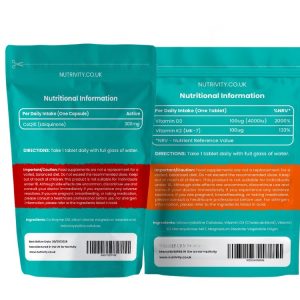 1. The Capsule Shell
This is the first thing to check on any capsule-format supplement. Look in the ingredients list for the capsule material. You are looking for one of two things:
Halal-suitable: HPMC (hydroxypropyl methylcellulose), hypromellose, pullulan, or vegetable capsule. These are all plant-derived and contain no animal ingredients.
Requires verification: Gelatine. If you see gelatine listed without a stated source, treat it as unverified. Contact the brand and ask whether it is pork, bovine, or fish-derived — and if bovine, whether it is halal-certified. Do not assume.
Red flag: No capsule material listed at all. Some brands list only the active ingredients and omit the capsule shell from the visible ingredients panel. This is technically non-compliant with labelling guidance but does happen. If you cannot find the capsule material, check the brand’s product page or contact them directly.
2. Flow Agents and Anti-Caking Agents
Flow agents help powders move through manufacturing equipment and prevent clumping. They appear at the bottom of the ingredients list, often under “other ingredients” or listed individually. The main ones to check:
Magnesium stearate — can be derived from animal fat (stearic acid from pork or beef tallow) or from plant sources (palm oil, vegetable oils). The label will say “magnesium stearate” without distinguishing between the two. Vegetable-derived magnesium stearate is halal-suitable. Brands committed to halal compliance will either state “vegetable magnesium stearate” or confirm the source on request.
Silicon dioxide (silica) — mineral-derived, no animal origin concern. Halal-suitable.
Stearic acid — same issue as magnesium stearate. Can be animal or plant-derived. Source needs verification.
Nutrivity uses vegetable-derived magnesium stearate across all products. This is stated on product pages.
3. Colouring Agents
Two colourings are specifically prohibited for Muslim consumers:
Carmine (E120) — a red colouring derived from crushed cochineal insects. Used in some supplement capsule shells and coatings to give a red or pink colour. Listed as “carmine,” “cochineal,” “carminic acid,” or “E120.” Any of these on a supplement label means the product is not halal-suitable.
Shellac (E904) — a resin secreted by the lac bug, used as a coating or glazing agent on some tablets. Listed as “shellac” or “E904.” Most Islamic scholars consider insect-derived ingredients impermissible, making shellac-coated tablets not halal-suitable.
Both are easy to spot once you know what to look for — they will appear in the ingredients list by name or E-number.
4. Vitamin D3 Source
Vitamin D3 has two distinct sources and they are not interchangeable for halal compliance:
Lanolin-derived D3 — extracted from sheep’s wool grease. The majority of vitamin D3 supplements on the UK market use lanolin-derived D3. Whether lanolin-derived D3 is halal is a point of scholarly debate — some consider it permissible because wool is not slaughtered tissue, others require halal certification of the wool source. The label will simply say “vitamin D3” or “cholecalciferol” without specifying the source.
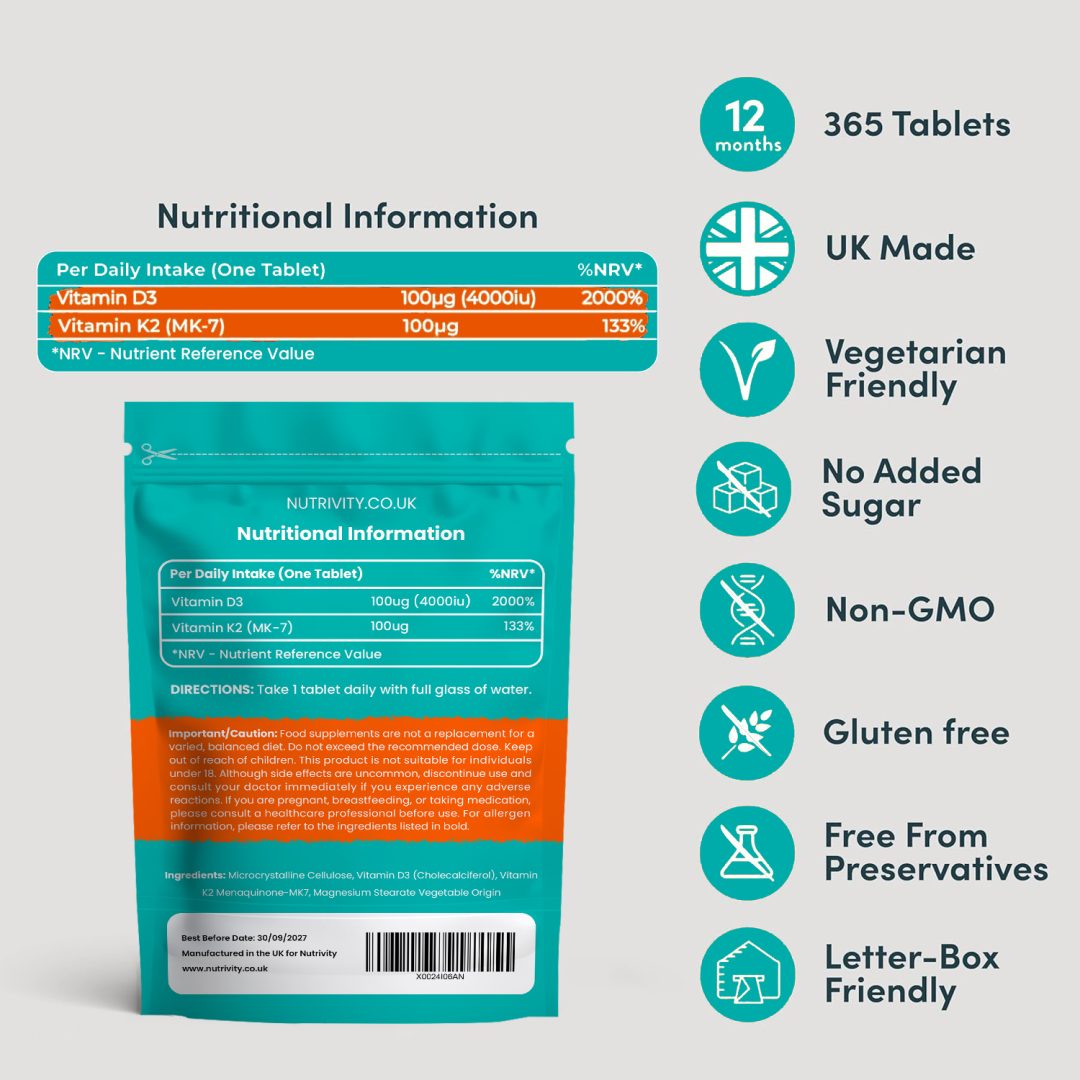
Lichen-derived D3 — extracted from lichen, a plant-like organism. Fully plant-based, no animal involvement, halal-suitable and vegan without qualification. If a brand uses lichen-derived D3 it will typically state this explicitly, as it is a selling point. Nutrivity’s Vitamin D3 4000 IU + K2 MK7 uses lichen-derived D3.
If the label says “vitamin D3” or “cholecalciferol” with no source stated, contact the brand before purchasing.
5. Herbal Extract Type
For herbal supplement products — anything containing a plant extract rather than a whole herb powder — the extraction method matters. Alcohol (ethanol) is a commonly used extraction solvent in herbal supplement manufacturing because it is effective at pulling certain active compounds from plant material.
Most labels will not state the extraction solvent. You will see “dandelion root extract,” “ashwagandha extract,” or similar — with no indication of how the extract was produced. This is the label gap that requires direct enquiry for observant Muslim consumers.
Brands that use water-based or CO2 extraction rather than alcohol-based extraction will often state this, because it is a positive differentiator. Look for “alcohol-free extraction,” “aqueous extract,” or “supercritical CO2 extract.” If none of these appear and the product contains herbal extracts, contact the brand and ask.
Nutrivity uses alcohol-free extraction across all herbal formulations. This is confirmed on every relevant product page.
Quick Reference — Halal Label Checklist
Capsule shell: HPMC / hypromellose / vegetable capsule = halal-suitable. Gelatine without source = requires verification.
Flow agents: Silicon dioxide = fine. Magnesium stearate / stearic acid = check whether plant or animal-derived.
Colourings: E120 / carmine / cochineal = not halal-suitable. E904 / shellac = not halal-suitable.
Vitamin D3: Lichen-derived = halal-suitable. Lanolin-derived = requires assessment. Source unstated = contact the brand.
Herbal extracts: Alcohol-free / aqueous / CO2 extraction stated = halal-suitable. Extraction method unstated = contact the brand.
Soft gels: Never assume halal-suitable without gelatine source confirmation. Pork gelatine is the UK market default.
When the Label Is Not Enough — What to Do Next
For any ingredient where the label does not give you sufficient information — undisclosed gelatine source, unstated D3 origin, no extraction method on a herbal product — the next step is direct contact with the brand.
A brand committed to halal compliance will have these answers readily available and will be able to respond clearly and quickly. If a brand cannot tell you the source of its gelatine or whether its herbal extracts are alcohol-free, that is itself useful information about their transparency standards.
Specific questions to ask: What is the source of your gelatine (pork, bovine, fish)? If bovine, is it halal-certified? What is the source of your vitamin D3 (lanolin or lichen)? What extraction method is used for your herbal ingredients? Is your magnesium stearate vegetable-derived?
Summary — Read the Label, Then Go Further
UK supplement labels give you the ingredients list — but for Muslim consumers, the ingredients list alone is often not enough. Gelatine source, vitamin D3 origin, herbal extraction method, and flow agent derivation all require information that current labelling law does not mandate to be disclosed. The label is the starting point, not the end point.
The practical approach is to use the checklist above on every product: check the capsule shell first, then flow agents, colourings, D3 source if relevant, and extraction method on any herbal product. For anything the label does not answer, contact the brand directly. A brand that cannot answer these questions clearly is telling you something important about its transparency standards.
Browse Nutrivity’s complete halal supplements range, with full ingredient transparency on every product page and UK GMP-certified manufacturing throughout.
Frequently Asked Questions
Do UK supplement labels have to list all ingredients?
Yes — UK food labelling law requires all ingredients to be listed in descending order of weight. However, the law does not require the source species of animal-derived ingredients to be stated, and processing aids such as extraction solvents that are not present at functional levels in the finished product may not appear on the label at all.
How do I know if a supplement uses pork gelatine?
You cannot tell from the label alone. UK labelling law requires “gelatine” to be listed but does not require the animal source to be stated. If a label lists gelatine without specifying the source, contact the brand and ask directly. Do not assume it is halal-suitable.
What does HPMC mean on a supplement label?
HPMC stands for hydroxypropyl methylcellulose — a plant-derived polymer used to make vegetable capsule shells. It contains no animal-derived ingredients, is fully halal-suitable, and is also vegan. If a supplement lists HPMC, hypromellose, or “vegetable capsule” as the capsule shell, the capsule itself is halal-suitable without qualification.
Is E120 always in supplements?
No — E120 (carmine) is not commonly used in supplements and many products will not contain it. However, it does appear in some supplement capsule shells and coatings, particularly those with a red, pink, or purple colour. Always check the full ingredients list for E120, carmine, cochineal, or carminic acid if the capsule has any of these colours.
Are all herbal supplements alcohol-free?
No. Alcohol-based extraction is standard practice in herbal supplement manufacturing. Whether a product uses alcohol-based or water-based extraction is rarely stated on the label and requires direct enquiry with the manufacturer. Nutrivity uses alcohol-free extraction across all herbal formulations.
Does halal certification guarantee a supplement is fully compliant?
A recognised halal certification from a reputable body such as HFA or HMC provides strong third-party verification and covers both ingredients and manufacturing processes. However, not all halal-suitable products are certified — some brands achieve halal compliance through ingredient and manufacturing transparency without formal certification. Certification is the clearest signal, but its absence does not automatically mean a product is not halal-suitable.