




Halal Supplements During Ramadan — What to Take, When to Take It, and What the Scholars Say
-
By Chris Jones
Supplements During Ramadan — What to Take, What to Avoid, and What the Scholars Say
Ramadan is the most important month in the Islamic calendar, and for the millions of Muslims in the UK who fast from dawn to sunset, it raises practical questions about health and supplementation. Can you take vitamins during Ramadan without breaking your fast? Which supplements are most important when your eating window is restricted? And how do you ensure that everything you take is genuinely halal-suitable?
This guide answers all of these questions clearly and practically, drawing on both nutritional science and the mainstream scholarly positions on fasting and supplementation.
For a full overview of Nutrivity’s halal-suitable range and manufacturing standards, visit our halal supplements guide.
Does Taking Supplements Break the Fast?
This is the question most Muslims ask first, and the honest answer is: it depends on the supplement and the scholarly position you follow.
The mainstream position among contemporary Islamic scholars is that swallowing a tablet or capsule that provides no nutritional nourishment — i.e., a supplement taken purely for health maintenance rather than as food — does not break the fast. The fast is broken by consuming food or drink that nourishes the body, and a vitamin tablet taken with a small sip of water is generally not considered equivalent to eating.
However, scholarly opinions vary. Some scholars hold that any substance swallowed intentionally breaks the fast, regardless of its nutritional content. Others draw distinctions based on the form of the supplement — tablets and capsules being treated differently from liquid supplements, energy drinks, or protein shakes which clearly provide calories and nourishment.
The practical guidance followed by most Muslims in the UK is:
Tablets and capsules with no caloric content — generally considered permissible to take during fasting hours by mainstream scholarly opinion, though individuals should seek guidance from their own religious authority.
Liquid supplements, protein shakes, energy drinks, and meal replacements — these provide nourishment and are almost universally considered to break the fast.
If you are uncertain, the simplest approach is to take all supplements during the eating window — either at Suhoor (the pre-dawn meal) or at Iftar (the breaking of the fast at sunset) — which removes the question entirely.
Why Nutritional Needs Change During Ramadan
Fasting during Ramadan compresses your entire daily food and fluid intake into a restricted window. Depending on the time of year in the UK, that window can be as short as eight hours in winter or require fasting for up to nineteen hours during summer months. This has real implications for nutrient intake and supplementation.
Vitamin D deficiency risk increases. Vitamin D is synthesised through sun exposure, which is limited in the UK even outside Ramadan. During Ramadan, many Muslims spend more time indoors, particularly during prayer times. Combined with the dietary restrictions of fasting, vitamin D deficiency is a genuine concern — particularly for communities already at higher risk due to darker skin tones or limited sun exposure throughout the year.
Hydration and electrolyte balance is disrupted. Extended fasting hours — particularly during summer Ramadan — mean the body goes without water for long periods. Minerals such as magnesium and potassium, which are lost through sweat and urination, may need supplementation to support normal muscle and nerve function.
Energy levels and mental clarity can fluctuate. CoQ10 plays a role in cellular energy production. For those who notice significant fatigue during fasting hours, particularly in demanding work environments, CoQ10 supplementation taken at Suhoor may help support energy metabolism throughout the day.
Sleep quality can be affected. The change in routine during Ramadan — late Tarawih prayers, early Suhoor — disrupts normal sleep patterns. Magnesium supports normal muscle relaxation and may help with sleep quality when taken as part of the Iftar meal.
The Most Important Supplements to Take During Ramadan
 Vitamin D3 — Priority One
Vitamin D deficiency is one of the most widespread nutritional issues in the UK Muslim community, and Ramadan can compound it. NHS guidance recommends vitamin D supplementation for everyone in the UK from October through to March, and year-round for those at higher risk — which includes many South Asian and Black British communities due to the lower efficiency of vitamin D synthesis in darker skin tones.
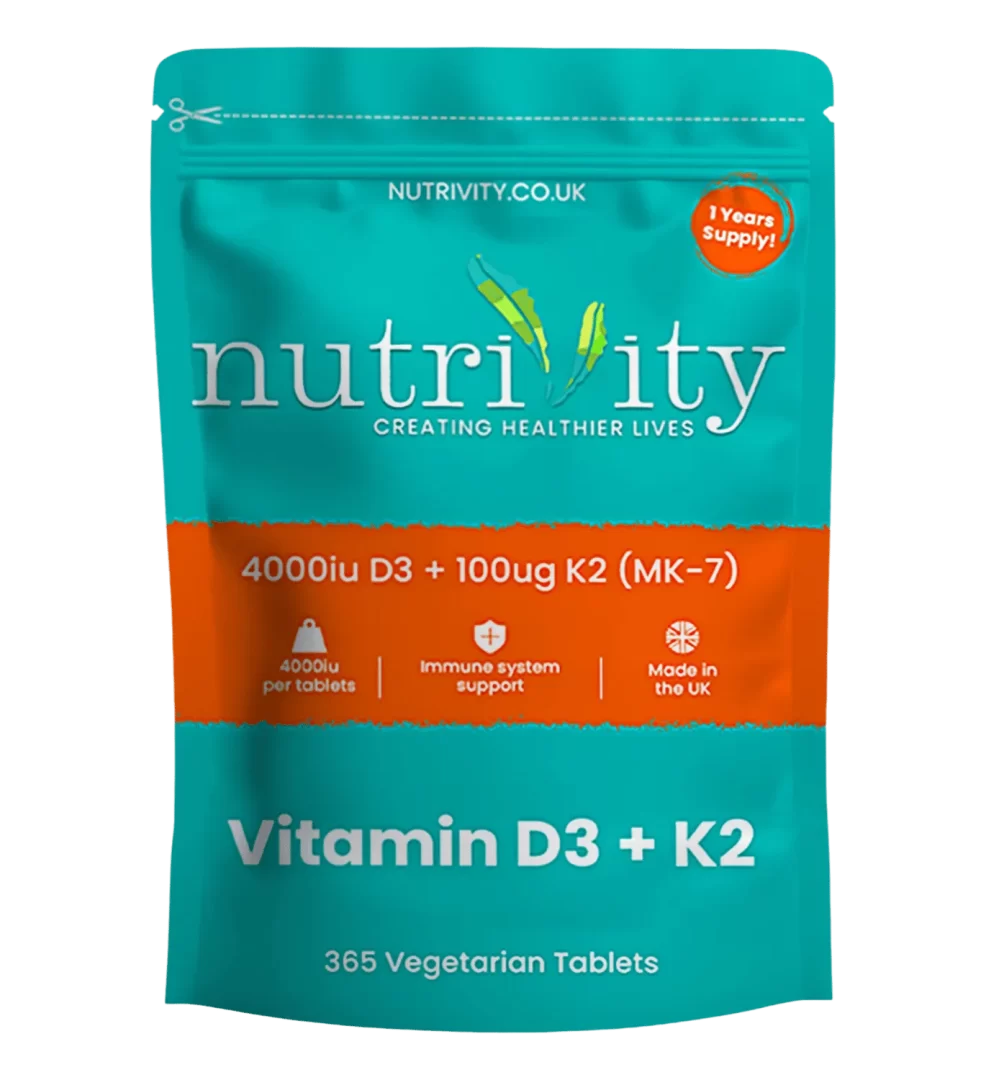
Take at Suhoor or Iftar with a meal containing fat, as vitamin D3 is fat-soluble and absorbs better alongside dietary fat. Our Vitamin D3 4000 IU + K2 MK7 uses lichen-derived D3 — entirely plant-based, with no lanolin and no gelatine. One tablet per day covers both vitamin D and K2 in a single halal-suitable, vegan tablet.
CoQ10 — For Energy and Heart Health
CoQ10 (coenzyme Q10) is a compound naturally present in every cell of the body and plays a central role in mitochondrial energy production. Levels decline with age and can be depleted by certain medications including statins. During Ramadan, when energy levels fluctuate due to changes in eating patterns and sleep schedules, CoQ10 taken at Suhoor provides cellular energy support throughout the fasting period.
Take at Suhoor with food containing fat. CoQ10 is fat-soluble and absorption is significantly improved when taken with dietary fat.
Omega-3 (Cod Liver Oil) — For Joints and Inflammation
Omega-3 fatty acids support cardiovascular health, joint function, and normal inflammatory response. The UK diet is generally low in omega-3, and this can be further reduced during Ramadan if fatty fish is not a regular part of the Suhoor or Iftar meal. Our Cod Liver Oil & Glucosamine uses halal-permissible gelatine in its soft gel capsule — not pork-derived.
Take at Iftar with food.
Magnesium — For Muscle Function and Sleep
Magnesium is involved in over 300 enzymatic processes in the body and supports normal muscle and nerve function, energy metabolism, and psychological wellbeing. Extended fasting hours can deplete magnesium levels, particularly in those who exercise during Ramadan. Take magnesium at Iftar or just before sleep to support muscle relaxation and sleep quality.
Supplements to Be Cautious About During Ramadan
Iron supplements — Iron can cause nausea and digestive discomfort when taken on an empty stomach. Take iron supplements with food at Iftar rather than during fasting hours, and avoid taking with tea or coffee which reduce iron absorption.
High-dose vitamin C — Large doses of vitamin C (above 1000mg) taken without food can cause digestive discomfort. Take with meals during the eating window.
Herbal supplements with stimulant properties — Supplements such as green tea extract or guarana contain caffeine and may cause discomfort during fasting hours. Take these during the eating window only.
Protein powders and meal replacement shakes — These provide significant caloric content and nourishment and should not be taken during fasting hours. Take only during the eating window at Suhoor or Iftar.
Halal Suitability During Ramadan — Why It Matters More, Not Less
During Ramadan, the spiritual dimension of what we consume becomes heightened. Many Muslims who might not scrutinise supplement ingredients at other times of year become more attentive during the holy month. This is entirely appropriate — the same standards of halal compliance that apply to food apply equally to supplements.
The most common hidden issue is gelatine. The majority of capsule supplements sold in the UK use pork-derived gelatine, and UK labelling law does not require brands to disclose the animal source. A supplement taken with the intention of supporting health during Ramadan should not contain ingredients that are impermissible — and many mainstream supplements do, without the consumer being aware.
Check every supplement you take during Ramadan for gelatine source, vitamin D3 source, colourings (avoid E120 carmine and E904 shellac), and whether herbal ingredients use alcohol-based extraction. For a detailed guide to these issues, see our article on whether vitamins are halal.
Practical Timing — When to Take Supplements During Ramadan
At Suhoor (pre-dawn meal): Fat-soluble supplements that benefit from being taken with food — vitamin D3, CoQ10, omega-3, vitamin E, vitamin K2. Taking these with the Suhoor meal ensures optimal absorption and removes any question about supplements during fasting hours.
At Iftar (breaking the fast): Water-soluble vitamins such as vitamin C and B vitamins, minerals such as magnesium and zinc, and any supplement that causes digestive discomfort on an empty stomach. Iron should always be taken with food.
During fasting hours (if following the permissibility position): Plain tablets or capsules with no caloric content, taken with the minimum water necessary. If there is any doubt about scholarly permissibility, move these to the eating window.
Summary — Supplementing Smartly During Ramadan
Ramadan does not have to mean compromising on nutritional support. With a sensible approach to timing and a clear understanding of which supplements are most valuable during extended fasting, it is entirely possible to support your health throughout the holy month without complexity.
The three rules to follow are simple. First, take fat-soluble supplements — vitamin D3, CoQ10, omega-3 — with the Suhoor meal so they absorb properly and the fasting question doesn’t arise. Second, take any supplement that might cause digestive discomfort with the Iftar meal instead. Third, check that every supplement you take during Ramadan is genuinely halal-suitable — gelatine source, vitamin D3 source, colourings, and extraction methods all apply equally during the holy month as at any other time of year.
Browse Nutrivity’s complete halal supplements range, all manufactured in the UK in GMP-certified facilities with full ingredient transparency on every product page.
Frequently Asked Questions
Does taking vitamins break the fast during Ramadan?
The mainstream scholarly position is that swallowing a non-nutritive tablet or capsule does not break the fast. However, opinions vary between scholars, and individuals should seek guidance from their own religious authority. Taking all supplements during the eating window at Suhoor or Iftar removes the question entirely.
Which supplements are most important during Ramadan?
Vitamin D3 is the most important, particularly in the UK where sunlight is limited and deficiency is widespread in Muslim communities. CoQ10 for energy support, omega-3 for cardiovascular and joint health, and magnesium for muscle function and sleep quality are also valuable during the extended fasting periods of Ramadan.
Can I take halal supplements during Ramadan?
Yes. Halal-suitable supplements — those in HPMC vegetable capsules or plain tablets with no animal-derived ingredients — are appropriate for use during Ramadan. Check that any soft gel supplements you take use halal-permissible gelatine rather than pork-derived gelatine.
When is the best time to take vitamin D during Ramadan?
At Suhoor with a meal containing fat. Vitamin D3 is fat-soluble and absorbs significantly better when taken alongside dietary fat. Taking it at the pre-dawn meal ensures it is absorbed properly and removes any question about taking supplements during fasting hours.
Are Nutrivity supplements suitable to take during Ramadan?
Yes. All Nutrivity supplements are formulated to be halal-suitable. Our hard capsule products use HPMC vegetable capsules with no gelatine. Our soft gel products use halal-permissible gelatine, not pork-derived gelatine. Our Vitamin D3 4000 IU + K2 MK7 is a compressed vegan tablet with no gelatine or animal-derived ingredients of any kind. Full ingredients are published on every product page.
Does fasting during Ramadan cause vitamin deficiencies?
Extended fasting can affect levels of certain nutrients, particularly vitamin D (reduced sun exposure and dietary intake), magnesium (lost through sweat during long fasting hours), and omega-3 fatty acids (if fatty fish is not regularly eaten during the eating window). Targeted supplementation at Suhoor or Iftar can help maintain adequate levels throughout the month.