




Devils Claw for Inflammation UK — The Mechanism and the Evidence
-
By Chris Jones
Written by Chris Jones, Social Media Manager at Nutrivity with 7+ years in the supplement industry.
Devils Claw for Inflammation UK — The Mechanism and the Evidence
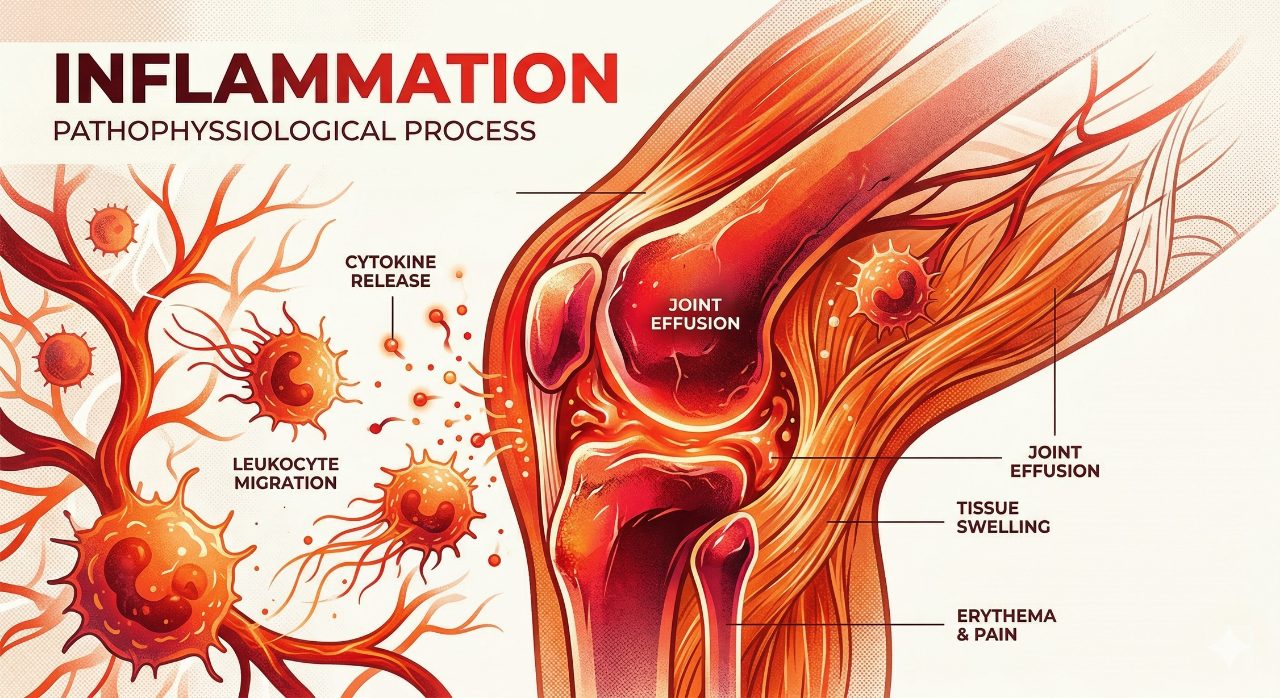
Inflammation is the body’s first-line defence against injury and infection — a necessary and protective process in the short term. But chronic, low-grade inflammation persisting in joints, muscles, and connective tissue is the underlying driver of most musculoskeletal pain conditions, and it is this ongoing inflammatory process that devils claw’s active compounds directly address. Understanding how devils claw works against inflammation — and why its mechanism is clinically meaningful — explains both its effectiveness for joint and back pain and why it compares favourably to pharmaceutical NSAIDs for long-term use.
This guide covers the inflammatory mechanisms that devils claw targets, how this translates to clinical outcomes, and how it compares to pharmaceutical anti-inflammatories. For a full overview of what devils claw is, see our guide to what is devils claw. For the arthritis-specific evidence, see our guide to devils claw for joint pain and arthritis UK. For full product information, visit our Devils Claw 2200mg Vegan Capsules product page.
Acute vs Chronic Inflammation — Why the Distinction Matters
Acute inflammation is the immediate response to injury — the redness, heat, swelling, and pain that appear within hours of tissue damage. It is driven by a rapid release of prostaglandins and histamine, and it typically resolves within days to weeks as healing progresses. Anti-inflammatory intervention in acute inflammation is primarily about symptom relief during the healing process.
Chronic inflammation is different in character and mechanism. It is a low-grade, persistent inflammatory state in which the immune system maintains a level of inflammatory activity in a tissue without resolving. In joints affected by osteoarthritis, the synovial membrane maintains elevated levels of inflammatory cytokines — TNF-α, IL-1β, IL-6 — that continuously drive pain, cartilage degradation, and stiffness. In the lumbar spine affected by non-specific back pain, inflammatory mediators in the paraspinal muscles and facet joints maintain the pain signal even in the absence of acute injury.
Devils claw is most effective against chronic inflammation — its multi-pathway mechanism is particularly suited to the persistent inflammatory environment of chronic musculoskeletal conditions.
The Multi-Pathway Anti-Inflammatory Mechanism

Most pharmaceutical anti-inflammatories work through a single pathway. Traditional NSAIDs (ibuprofen, aspirin, naproxen) inhibit both COX-1 and COX-2 non-selectively. COX-2-selective NSAIDs (celecoxib) target only the inflammatory isoform. This single-target approach is effective but comes with the characteristic side effects of each mechanism: non-selective NSAIDs damage the gastric lining through COX-1 inhibition; COX-2 inhibitors carry elevated cardiovascular risk.
Devils claw’s harpagoside acts across multiple inflammatory pathways simultaneously:
COX-2 inhibition: Harpagoside inhibits cyclooxygenase-2, reducing prostaglandin E2 (PGE2) production at sites of inflammation. PGE2 is one of the primary mediators of inflammatory pain and sensitises pain receptors (nociceptors), lowering the pain threshold. Reducing PGE2 directly reduces pain sensitivity.
5-LOX inhibition: Harpagoside inhibits 5-lipoxygenase, which produces leukotrienes — another class of inflammatory mediators that play a significant role in chronic inflammatory conditions. Leukotrienes contribute to joint inflammation and are not targeted by standard NSAIDs, giving devils claw a broader anti-inflammatory effect.
NF-κB pathway suppression: Research has demonstrated that harpagoside suppresses the nuclear factor kappa-B (NF-κB) signalling pathway — a central transcription factor that drives the production of pro-inflammatory cytokines including TNF-α, IL-1β, and IL-6. By dampening NF-κB activation, devils claw reduces the inflammatory gene expression that maintains chronic inflammation.
iNOS inhibition: Inducible nitric oxide synthase (iNOS) produces nitric oxide in inflammatory tissues, contributing to oxidative damage and pain sensitisation. Harpagoside has shown inhibitory activity against iNOS in research models.
This combination of COX-2, LOX, NF-κB, and iNOS inhibition gives devils claw a broader anti-inflammatory action than single-pathway pharmaceutical agents — which may explain why clinical research has found it comparably effective to COX-2 inhibitors in some conditions despite the different molecular mechanisms.
Anti-Inflammatory Research — What the Evidence Shows
In vitro research has consistently demonstrated harpagoside’s anti-inflammatory activity across multiple cell and tissue models. Animal research has confirmed anti-inflammatory and analgesic effects in multiple models. Clinical research has translated these mechanistic findings into meaningful reductions in pain and stiffness scores in human patients with OA and back pain.
A 2003 in vitro study published in Planta Medica demonstrated that harpagoside significantly inhibited LPS-stimulated TNF-α and IL-1β production in human macrophages — a direct demonstration of NF-κB pathway suppression at clinically relevant concentrations. A further study examined the effects of devils claw extract on inflammatory markers in OA patients and found significant reductions in COX-2 expression and PGE2 levels in synovial tissue alongside the clinical improvements in pain scores.
Devils Claw vs Pharmaceutical Anti-Inflammatories — The Key Differences
The practical comparison between devils claw and pharmaceutical NSAIDs for chronic inflammatory pain management comes down to three factors: effectiveness, speed of action, and safety profile. For a detailed head-to-head comparison, see our guide to devils claw vs ibuprofen.
In terms of effectiveness for chronic inflammatory pain, the clinical research suggests comparable efficacy for consistent daily use. In terms of speed, NSAIDs act faster — a single ibuprofen dose reduces prostaglandin production within 30 minutes. Devils claw builds its anti-inflammatory effect over days to weeks of consistent dosing. In terms of safety profile, devils claw has a substantially better gastrointestinal and cardiovascular safety profile than NSAIDs for long-term use, which is the most clinically significant difference for the population most likely to need ongoing anti-inflammatory treatment — older adults with OA.

Summary — Devils Claw for Inflammation
Devils claw’s multi-pathway anti-inflammatory mechanism — spanning COX-2, lipoxygenase, NF-κB, and iNOS inhibition — gives it a broader anti-inflammatory action than single-target pharmaceutical NSAIDs and a better long-term safety profile for chronic use. For people managing chronic musculoskeletal inflammatory conditions, the combination of clinical evidence and mechanistic depth makes devils claw one of the most credible herbal anti-inflammatories available in the UK.
For full product information and to purchase, visit Nutrivity’s Devils Claw 2200mg Vegan Capsules product page.
Frequently Asked Questions
Is devils claw a good anti-inflammatory?
Yes — devils claw (harpagoside) has a well-characterised multi-pathway anti-inflammatory mechanism inhibiting COX-2, 5-lipoxygenase, NF-κB, and iNOS. Clinical research supports meaningful anti-inflammatory effects for chronic musculoskeletal conditions, with effectiveness comparable to pharmaceutical NSAIDs for ongoing pain management and a superior long-term safety profile.
How does devils claw reduce inflammation?
Harpagoside inhibits multiple inflammatory pathways simultaneously: COX-2 enzymes (reducing prostaglandin production), 5-lipoxygenase (reducing leukotriene production), NF-κB transcription factor (reducing pro-inflammatory cytokine production), and iNOS (reducing nitric oxide-driven oxidative stress). This multi-pathway approach distinguishes it from single-target pharmaceutical anti-inflammatories.
Can devils claw reduce swelling?
Yes — the anti-inflammatory mechanisms that reduce prostaglandin and cytokine production also reduce inflammatory swelling in joints and tissues. Clinical trials have reported reductions in joint swelling alongside pain improvements in OA research. The effect develops over consistent daily use rather than producing immediate swelling reduction like a corticosteroid injection.
Is devils claw better than turmeric for inflammation?
Both have anti-inflammatory evidence, but the quality differs. Devils claw has multiple well-designed RCTs in human patients with specific conditions (back pain, OA). Turmeric/curcumin evidence is largely preclinical or in smaller studies with bioavailability challenges. For musculoskeletal inflammatory pain specifically, the devils claw evidence base is stronger. The two have complementary mechanisms and can be taken together.
Is Nutrivity's devils claw a strong anti-inflammatory?
Nutrivity’s Devils Claw 2200mg provides a high-strength dose with alcohol-free extraction and HPMC vegetable capsules. Full product details and ingredient specifications are on the product page at nutrivity.co.uk.