



CoQ10 for Fertility UK — What the Research Shows for Men and Women

-
By Chris Jones
Written by Chris Jones, Social Media Manager at Nutrivity with 7+ years in the supplement industry.
CoQ10 for Fertility UK — What the Research Shows for Men and Women
CoQ10 is one of the most researched supplements in reproductive medicine, and the evidence base — particularly for male fertility and for women undergoing IVF — is more developed than most people realise. The mechanism is well understood: reproductive cells have some of the highest mitochondrial energy demands of any cells in the body, and CoQ10 is central to mitochondrial ATP production and antioxidant protection. As CoQ10 levels decline with age, these functions are impaired — which is directly relevant in a reproductive context where egg and sperm quality are strongly age-dependent.
This guide covers the fertility research on CoQ10 for both men and women, what the evidence shows for IVF support, the doses used in fertility research, and what couples trying to conceive should know. For a full overview of CoQ10 and how it works, see our guide to what is CoQ10. For full product information on Nutrivity’s CoQ10 300mg, visit our CoQ10 300mg Vegan Capsules product page.
Why Mitochondrial Health Matters for Fertility
Mitochondria play an essential role in both sperm and egg function — a role that is not always appreciated in general discussions of fertility supplements.
In sperm, mitochondria are concentrated in the midpiece — the section between the sperm head and tail — where they generate the ATP that powers sperm motility. Sperm with dysfunctional mitochondria produce less ATP, swim less effectively, and are less likely to reach and fertilise an egg. Oxidative stress — the accumulation of free radicals that CoQ10 helps neutralise — is one of the primary causes of sperm DNA damage and reduced motility. Research consistently finds higher levels of oxidative stress markers and lower antioxidant levels, including CoQ10, in the seminal plasma of men with poor sperm parameters compared to fertile controls.
In eggs (oocytes), mitochondria are even more critically important. The mature human oocyte contains more mitochondria than any other cell in the human body — an estimated 100,000 or more — reflecting the enormous energy demand of oocyte maturation, fertilisation, and early embryo development. As women age, oocyte mitochondrial function declines, contributing to reduced egg quality, lower fertilisation rates, and higher rates of chromosomal abnormalities. This mitochondrial decline is one of the key mechanisms behind the age-related decline in female fertility.
CoQ10 addresses both of these mechanisms — supporting mitochondrial energy production and reducing oxidative stress in both sperm and eggs.
CoQ10 for Male Fertility
The research on CoQ10 for male fertility is among the most consistent in the supplement field. Multiple randomised controlled trials have examined CoQ10 supplementation in men with idiopathic infertility — infertility with no identifiable cause — and have found significant improvements in sperm parameters across several key measures.
A 2009 RCT published in Fertility and Sterility found that CoQ10 at 300mg daily for 26 weeks produced significant increases in sperm density, motility, and morphology compared to placebo in men with idiopathic oligoasthenoteratozoospermia. A subsequent meta-analysis of available RCTs confirmed these findings, concluding that CoQ10 supplementation was associated with significant improvements in sperm concentration and motility.
The mechanism is consistent with CoQ10’s known roles — improved mitochondrial energy production in the sperm midpiece supports motility, while reduced oxidative stress protects sperm DNA integrity. For men with elevated oxidative stress markers in seminal plasma, CoQ10’s antioxidant role may be particularly relevant.
The doses used in the male fertility research have typically been 200–300mg daily, with treatment periods of 3–6 months. This duration reflects the time required for sperm production (spermatogenesis takes approximately 74 days), meaning any supplement taken for male fertility needs to be used consistently for at least 3 months before the effect on mature sperm can be assessed.
CoQ10 for Female Fertility
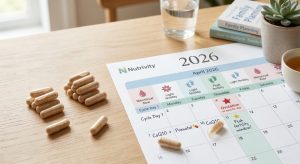 The research on CoQ10 for female fertility is newer and less extensive than for male fertility, but the mechanistic rationale is strong and the clinical evidence is growing.
The most significant research area is CoQ10 and ovarian reserve — the quantity and quality of a woman’s remaining eggs. Studies in both animal models and humans have shown that CoQ10 supplementation can improve markers of ovarian reserve and oocyte quality, particularly in older women where mitochondrial decline is most advanced.
A 2018 study examined CoQ10 supplementation in women with diminished ovarian reserve undergoing IVF and found significantly higher fertilisation rates, better embryo quality, and higher clinical pregnancy rates in the CoQ10 group compared to controls. While the study was relatively small, the results are consistent with the mitochondrial mechanism and have generated significant interest in CoQ10 as an adjunct to IVF protocols.
For women trying to conceive naturally who are over 35 — the age at which mitochondrial decline in oocytes becomes clinically relevant — CoQ10 supplementation is a well-reasoned intervention. The evidence does not guarantee improved outcomes, but the mechanism is sound, the safety profile is excellent, and the potential benefit relative to the low risk makes it a reasonable addition to a preconception supplement routine.
CoQ10 and IVF — What UK Patients Should Know
CoQ10 is increasingly discussed in IVF circles, and many fertility clinics now mention it as a potential adjunct to IVF cycles. The evidence is not yet strong enough to be part of standard NHS IVF protocols, but the mechanistic rationale and the emerging RCT evidence justify its use as an add-on for patients who want to optimise their oocyte quality ahead of a cycle.
The most important practical consideration for women using CoQ10 ahead of IVF is timing. Oocyte maturation takes approximately 90 days, meaning CoQ10 supplementation needs to begin at least 3 months before egg collection to have an effect on the eggs that will be retrieved. Starting CoQ10 the week before egg collection is too late to influence the current cohort of developing oocytes.
The doses used in IVF-focused research have typically been higher than those used for general health — 400–600mg daily in some studies. For women using CoQ10 specifically for IVF support, this higher dose range is more relevant than the standard 300mg used in cardiovascular and energy research. Always discuss supplement use with your fertility clinic before an IVF cycle.
CoQ10 Dosage for Fertility
The appropriate CoQ10 dose for fertility differs from the general health dose. For male fertility, 200–300mg daily for a minimum of 3 months is the dose range used in the RCT evidence. For female fertility and IVF support, 400–600mg daily starting at least 3 months before planned egg retrieval is more aligned with the research. For a general understanding of CoQ10 dosage across all health goals, see our CoQ10 dosage guide.
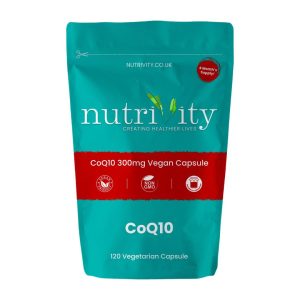
Nutrivity’s CoQ10 300mg provides 300mg per capsule. For female IVF support requiring higher doses, two capsules daily (600mg) is within the range used in the relevant research and within the established safety profile of CoQ10.
Summary — CoQ10 for Fertility in the UK
CoQ10 is one of the best-evidenced supplements for fertility support, with a clear mechanistic rationale rooted in mitochondrial biology and a growing body of RCT evidence for both male and female reproductive health. For men with poor sperm parameters, CoQ10 at 200–300mg daily for at least 3 months is supported by multiple clinical studies. For women — particularly those over 35, those with diminished ovarian reserve, or those preparing for IVF — CoQ10 at 400–600mg daily started at least 3 months before planned egg retrieval is a well-reasoned intervention with a favourable risk-benefit profile.
The key variables are dose and duration. CoQ10 does not work quickly in a reproductive context — the biology of egg and sperm development means results take months, not weeks. Start early, take consistently, and at an adequate dose.
For full product information and to purchase, visit Nutrivity’s CoQ10 300mg Vegan Capsules product page.
Frequently Asked Questions
Does CoQ10 improve fertility?
For men, multiple RCTs have shown significant improvements in sperm density, motility, and morphology with CoQ10 supplementation at 200–300mg daily. For women, emerging research suggests benefits for oocyte quality and IVF outcomes, particularly in older women and those with diminished ovarian reserve. CoQ10 is not a fertility treatment — it is a supplement that supports the mitochondrial function and antioxidant protection that reproductive cells depend on.
How long should I take CoQ10 before trying to conceive?
At least 3 months. Sperm production takes approximately 74 days, meaning any supplement effect on sperm quality requires at least 3 months of consistent supplementation before the treated sperm are mature. For women, oocyte maturation also takes approximately 90 days, meaning CoQ10 needs to be started at least 3 months before planned egg retrieval or conception attempts.
What dose of CoQ10 should I take for fertility?
For male fertility, 200–300mg daily for at least 3 months matches the RCT evidence. For female fertility and IVF support, 400–600mg daily is more aligned with the research, starting at least 3 months before planned egg retrieval. Always discuss supplement use with your GP or fertility specialist before starting.
Can CoQ10 improve egg quality?
Research suggests CoQ10 may improve oocyte mitochondrial function and quality, particularly in older women where mitochondrial decline is most significant. Studies in women with diminished ovarian reserve have shown improvements in fertilisation rates and embryo quality with CoQ10 supplementation ahead of IVF. The evidence is promising but not yet conclusive — CoQ10 is a reasonable adjunct to IVF preparation rather than a proven treatment.
Is CoQ10 safe to take when trying to conceive?
CoQ10 has an excellent safety profile with decades of research supporting its use in healthy adults. There is no evidence of harm from CoQ10 supplementation in women trying to conceive or in early pregnancy at standard doses. However, CoQ10 during pregnancy has not been extensively studied, and most clinicians recommend discontinuing supplementation once pregnancy is confirmed unless advised otherwise by a healthcare provider. Always consult your GP or fertility specialist before starting any supplement when trying to conceive.
Is Nutrivity's CoQ10 suitable for fertility support?
Yes. Nutrivity’s CoQ10 300mg provides the dose used in the male fertility RCT evidence in a single daily capsule — fully vegan-suitable and halal-suitable. For female IVF support at higher doses, two capsules daily is within the established safety range. Always consult your GP or fertility specialist before using supplements for fertility support.