





Cod Liver Oil Benefits UK — Omega-3, Vitamin A and Vitamin D
-
By Chris Jones
Written by Chris Jones, Social Media Manager at Nutrivity with 7+ years in the supplement industry.
Cod Liver Oil Benefits UK — Omega-3, Vitamin A and Vitamin D
Cod liver oil holds a unique position in the British supplement landscape. It is one of the oldest and most continuously used nutritional supplements in the country — generations of British children grew up taking it, and it remains among the most popular daily supplements for adults today. This longevity reflects something real: cod liver oil’s nutritional profile is genuinely distinctive and difficult to replicate with any other single product.
What makes cod liver oil unique is that it is the only widely available supplement oil that naturally contains significant quantities of three nutritionally important components simultaneously: omega-3 fatty acids EPA and DHA, vitamin A (as preformed retinol), and vitamin D3 (as cholecalciferol). Standard fish oil provides omega-3 but no vitamins. Plant oils provide neither omega-3 nor these vitamins in meaningful quantities. Multivitamins provide vitamins but not meaningful omega-3. Cod liver oil provides all three in a single daily softgel — a combination that makes it one of the most nutritionally efficient supplements available for adults seeking broad-spectrum health support.
This guide covers each of cod liver oil’s primary benefits in detail, the research supporting them, and the practical considerations UK adults should know. For a full overview of how cod liver oil works alongside glucosamine for joint health, see our guide to what is cod liver oil and glucosamine. For dosage guidance, see our cod liver oil dosage UK guide. For full product information, visit our Cod Liver Oil and Glucosamine product page.
Omega-3 Fatty Acids — EPA and DHA
Cod liver oil’s omega-3 content — EPA (eicosapentaenoic acid) and DHA (docosahexaenoic acid) — is the most clinically researched component and the primary reason most people take it. These long-chain polyunsaturated fatty acids are classified as essential — the human body cannot synthesise them in adequate quantities from plant-based ALA (alpha-linolenic acid) — and must be obtained from diet or supplementation. Oily fish (salmon, mackerel, sardines, herring) is the primary dietary source, but UK dietary surveys consistently show that the majority of UK adults do not eat the recommended two portions of oily fish per week, leaving most people reliant on supplementation to meet omega-3 needs.
EPA and DHA work through multiple mechanisms across multiple body systems, which explains the breadth of health research on omega-3 fatty acids.
Joint and inflammatory health. EPA and DHA are incorporated into cell membranes throughout the body, including synovial membrane cells and chondrocytes in joints, where they compete with the omega-6 fatty acid arachidonic acid. By displacing arachidonic acid in cell membranes, they reduce the production of pro-inflammatory prostaglandins (PGE2) and leukotrienes that drive joint pain, stiffness, and swelling. This is the mechanism behind cod liver oil’s well-documented effects on joint conditions — multiple clinical trials demonstrate reductions in joint pain, morning stiffness, and analgesic requirements in both osteoarthritis and rheumatoid arthritis.
Cardiovascular health. EPA in particular has well-established cardiovascular benefits. It reduces triglyceride levels in the blood — an independent cardiovascular risk factor — through inhibition of hepatic triglyceride synthesis and increased triglyceride clearance. The European Medicines Agency has approved high-purity EPA products for the treatment of hypertriglyceridaemia, reflecting the strength of the evidence. EPA also supports healthy blood pressure through effects on vascular tone and reduces platelet aggregation, lowering the risk of thrombotic events. These cardiovascular effects have been confirmed in multiple large-scale clinical trials and systematic reviews.
Brain and cognitive health. DHA is a structural component of neuronal cell membranes, where it influences membrane fluidity and the function of membrane-embedded proteins involved in neurotransmission. DHA is highly concentrated in the brain — approximately 40% of the brain’s polyunsaturated fatty acid content is DHA. Adequate DHA is associated with cognitive function maintenance in ageing adults, and DHA deficiency is associated with cognitive decline in observational research. DHA supplementation has shown benefits for cognitive performance in several populations, though the evidence is strongest for populations with documented deficiency.
Eye health. DHA is concentrated in the retinal photoreceptors, where it supports visual function and retinal cell integrity. The retina contains higher concentrations of DHA than any other tissue in the body. Adequate DHA intake is associated with reduced risk of age-related macular degeneration in prospective studies.
Vitamin D
Cod liver oil’s vitamin D content — provided as vitamin D3, the same form produced in the skin — addresses one of the most clinically significant nutritional deficiencies in the UK. Public Health England estimates that approximately one in five UK adults has low vitamin D levels. In South Asian and Black British populations, rates of deficiency are substantially higher. During the October to March period, UVB radiation at UK latitudes is insufficient to drive meaningful vitamin D synthesis in the skin regardless of how much time is spent outdoors — making supplementation the only reliable way to maintain adequate vitamin D levels through winter.
Vitamin D’s functions in the body are extensive and well-established. It is essential for calcium absorption from the gut — without adequate vitamin D, only 10–15% of dietary calcium is absorbed versus 30–40% with sufficient vitamin D. This makes vitamin D fundamental to bone mineralisation and the prevention of osteoporosis and osteomalacia. Beyond bone, vitamin D supports normal muscle function — vitamin D receptors in muscle cells influence muscle protein synthesis and contraction, and vitamin D deficiency is associated with measurable muscle weakness. Vitamin D also plays a critical role in immune regulation, modulating both innate and adaptive immune responses — relevant to susceptibility to respiratory infections and to inflammatory conditions including the chronic low-grade inflammation of osteoarthritis.
Cod liver oil’s vitamin D is vitamin D3 — the more effective supplemental form compared to vitamin D2, because D3 is more efficiently converted to 25-hydroxyvitamin D in the liver and has a longer half-life in circulation. For UK adults supplementing for vitamin D alongside omega-3, cod liver oil provides both in a single daily product.
Vitamin A
Cod liver oil naturally contains preformed vitamin A as retinol — the directly bioavailable form, as distinct from the provitamin A beta-carotene found in plant foods. Beta-carotene from plant sources must be converted to retinol in the intestinal wall, a process that is inefficient and highly variable between individuals. Retinol from cod liver oil is absorbed and available directly.
Vitamin A supports multiple important physiological functions. It is essential for normal immune function — vitamin A deficiency significantly impairs both innate and adaptive immunity, increasing susceptibility to infection. It is required for vision, particularly in low-light conditions — the visual cycle that converts light into neural signals in rod photoreceptors in the retina depends on retinal, a derivative of vitamin A. Vitamin A also supports normal skin and mucosal integrity, cell differentiation, and reproductive function.
The UK Reference Nutrient Intake for vitamin A is 700mcg retinol equivalents for men and 600mcg for women. Many UK adults do not consistently achieve these amounts through diet, particularly those with low consumption of liver (the richest dietary source), dairy, and eggs. Cod liver oil provides a meaningful contribution to daily vitamin A intake alongside its omega-3 and vitamin D content.
An important practical caveat: vitamin A is fat-soluble and accumulates in the liver with chronic excessive intake. The UK Food Standards Agency advises that habitual daily vitamin A intake should not exceed 1500mcg (5000 IU). One standard cod liver oil softgel daily is well within this limit, but cod liver oil should not be combined with other vitamin A supplements, and pregnant women must not take cod liver oil due to the teratogenic risk of high vitamin A in pregnancy.
Combined in a Single Daily Product
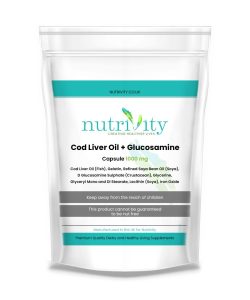
The practical advantage of cod liver oil’s multi-nutrient profile is meaningful. For UK adults seeking omega-3 support for joint and cardiovascular health, vitamin D maintenance through winter, and vitamin A for immune and vision health, cod liver oil provides all three without requiring multiple separate supplements — reducing cost, pill burden, and the complexity of managing multiple products. When combined with glucosamine sulphate in Nutrivity’s formulation, it additionally addresses joint structural support through a fourth distinct mechanism, making a single daily softgel one of the most nutritionally comprehensive joint and general health supplements available. For the full comparison with standard fish oil, see our guide to cod liver oil vs fish oil.
Vitamin A Safety — What UK Adults Need to Know
Vitamin A deserves specific attention because it is the one component of cod liver oil that requires dosage care. Unlike water-soluble vitamins that are excreted when consumed in excess, vitamin A is fat-soluble and accumulates in the liver with chronic excessive intake. Hypervitaminosis A — vitamin A toxicity from sustained excess — causes a range of adverse effects including headache, nausea, bone pain, and in severe cases liver damage and hair loss.
The UK Food Standards Agency advises that habitual daily intake should not exceed 1500mcg retinol equivalents (5000 IU) for most adults, with greater caution for older adults where the safe threshold may be lower. For pregnant women, the guidance is stricter: vitamin A at any level above dietary norms is contraindicated in pregnancy due to its established teratogenic effects on foetal development. Pregnant women must not take cod liver oil under any circumstances.
For most adults, one standard cod liver oil softgel daily provides vitamin A well within safe limits — the concern arises from combining cod liver oil with other vitamin A supplements, taking multiple cod liver oil products simultaneously, or using high-dose retinol skincare products alongside oral vitamin A supplementation. As long as one standard daily dose of cod liver oil is used without other vitamin A sources, the safety profile is excellent.
Omega-3 in the Context of the UK Diet
Understanding why omega-3 supplementation is particularly important in the UK context helps explain why cod liver oil’s EPA and DHA content is so clinically relevant. The ratio of omega-6 to omega-3 fatty acids in the typical Western diet has shifted dramatically over the past century — from approximately 4:1 in traditional diets to 15–20:1 in contemporary Western diets. This shift reflects the increased consumption of seed oils and processed foods rich in omega-6 linoleic acid, alongside reduced consumption of oily fish.
This elevated omega-6 to omega-3 ratio has direct consequences for the inflammatory environment in joints and throughout the body. With arachidonic acid (derived from omega-6 linoleic acid) dominating cell membranes, the production of pro-inflammatory PGE2 and leukotrienes is chronically elevated. Cod liver oil supplementation with meaningful EPA and DHA intake is the most practical way to shift this ratio back toward a less inflammatory balance — which is why the joint health benefits of consistent omega-3 supplementation are supported by both the mechanistic evidence and the clinical trial data.

Summary — Cod Liver Oil Benefits
Cod liver oil’s unique combination of omega-3 fatty acids (EPA and DHA), vitamin D3, and preformed vitamin A makes it one of the most nutritionally comprehensive daily supplements available in the UK. The omega-3 content addresses joint inflammation, cardiovascular health, brain function, and eye health. The vitamin D addresses bone mineralisation, muscle function, immune regulation, and the widespread vitamin D deficiency that affects a significant proportion of UK adults. The vitamin A addresses immune function, vision, skin integrity, and cell differentiation. No other common supplement oil provides all three. For joint health combined with broad-spectrum nutritional support, cod liver oil is the most efficient and evidence-supported single-product choice for most UK adults.
For full product information and to purchase, visit Nutrivity’s Cod Liver Oil and Glucosamine product page.
Frequently Asked Questions
What are the benefits of taking cod liver oil daily?
Daily cod liver oil supplementation provides omega-3 fatty acids EPA and DHA (supporting joint, cardiovascular, brain, and eye health), vitamin D (supporting bone density, muscle function, and immune regulation), and vitamin A (supporting immune function, skin, and vision). No other common supplement oil provides all three nutrients simultaneously.
Is cod liver oil good for your joints?
Yes — the EPA and DHA in cod liver oil reduce the prostaglandins and leukotrienes driving joint inflammation and pain. Research has found reductions in cartilage degradation enzymes and pain scores in OA patients taking cod liver oil. Vitamin D from cod liver oil also supports muscle function around joints and may reduce pain sensitivity.
Is cod liver oil good for your heart?
Cod liver oil’s omega-3 fatty acids — particularly EPA — have well-established cardiovascular benefits including triglyceride reduction, blood pressure support, and reduced platelet aggregation. These effects are supported by extensive clinical research and are reflected in regulatory approvals for omega-3 in cardiovascular health management.
Does cod liver oil contain vitamin D?
Yes — cod liver oil is one of the few natural food sources that contains significant vitamin D3. This distinguishes it from standard fish oil, which provides omega-3 but no vitamin D. For UK adults deficient in vitamin D during winter months, cod liver oil addresses both omega-3 and vitamin D needs in a single daily supplement.
Is cod liver oil safe to take every day?
Yes, for most adults without the stated contraindications, at the recommended dose. Do not exceed the recommended dose, do not combine with other vitamin A supplements, and do not take during pregnancy. One softgel daily with food is safe and well-supported by decades of clinical use.
What is the difference between cod liver oil and fish oil?
Cod liver oil comes from cod livers and naturally contains omega-3, vitamin A, and vitamin D. Standard fish oil comes from fish body tissue and provides omega-3 only — no vitamins A or D. For a full comparison, see our cod liver oil vs fish oil guide.