




Vegan Omega-3 Supplements UK — A Complete Guide to Plant-Based EPA and DHA
-
By Chris Jones
Written by Chris Jones, Social Media Manager at Nutrivity with 7+ years in the supplement industry.
Vegan Omega-3 Supplements UK — A Complete Guide to Plant-Based EPA and DHA
Omega-3 fatty acids are among the most widely recommended supplements for cardiovascular health, inflammation, joint function, and brain health. For vegan consumers, however, the standard omega-3 supplement — a fish oil soft gel — fails on two counts: the oil comes from fish, and the capsule is almost certainly made from animal gelatine. Finding a genuinely vegan omega-3 supplement that delivers the right fatty acids in the right format requires understanding what you are actually looking for.
This guide covers the three omega-3 fatty acids and their roles, why most omega-3 supplements are not vegan, what the vegan alternatives are, and how to assess them. For a full overview of hidden non-vegan ingredients in supplements, see our guide to are capsules vegan. For Nutrivity’s complete range of vegan-suitable supplements, visit our vegan supplements guide.
The Three Omega-3 Fatty Acids — What You Actually Need
Not all omega-3 is the same. Understanding the three main types is essential to making an informed choice as a vegan consumer.
ALA (alpha-linolenic acid) is a short-chain omega-3 found in plant sources — flaxseed, hemp seed, chia seed, and walnuts. It is an essential fatty acid, meaning the body cannot produce it and must obtain it from diet. ALA is fully vegan-suitable from plant sources and widely available. However, ALA itself is not what the body uses directly for cardiovascular, inflammatory, and neurological function.
EPA (eicosapentaenoic acid) and DHA (docosahexaenoic acid) are long-chain omega-3 fatty acids that the body uses directly for cardiovascular health, reduction of inflammation, brain function, and joint flexibility. These are what most omega-3 supplementation targets. The body can convert ALA to EPA and DHA — but the conversion rate is low, typically under 10% for EPA and under 5% for DHA. Relying on ALA conversion alone for EPA and DHA sufficiency is not reliable for most people.
The practical implication for vegan consumers is this: plant-based ALA sources are valuable and should be part of a balanced diet, but they are not a reliable substitute for direct EPA and DHA supplementation where cardiovascular, inflammatory, or brain health is the specific goal.
Why Standard Fish Oil Is Not Vegan
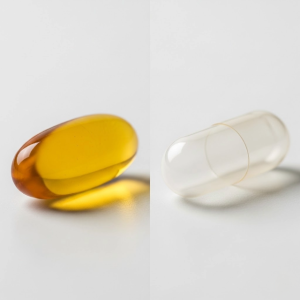 Fish oil supplements fail the vegan standard on two separate grounds. First, the oil itself is derived from fish — anchovies, sardines, mackerel, and similar species — making it an animal product. Second, virtually all fish oil supplements are sold in soft gel capsule format, and standard soft gel production requires gelatine. Pork-derived gelatine is the industry default for soft gels, though bovine and fish gelatine are also used. None of these are vegan.
The soft gel format is used for fish oil because it is the most effective way to encapsulate liquid oils at scale and mask the taste and smell. There is no plant-based soft gel equivalent that is widely used in the UK market — the technology exists but remains expensive and uncommon. For vegan consumers, this means any fish oil product in soft gel format should be treated as not vegan-suitable.
For a full explanation of gelatine capsule types and the vegan alternative, see our guide to are capsules vegan.
Vegan Omega-3 Options — What Actually Works
Algae-Based Omega-3 — The Best Vegan Source of EPA and DHA
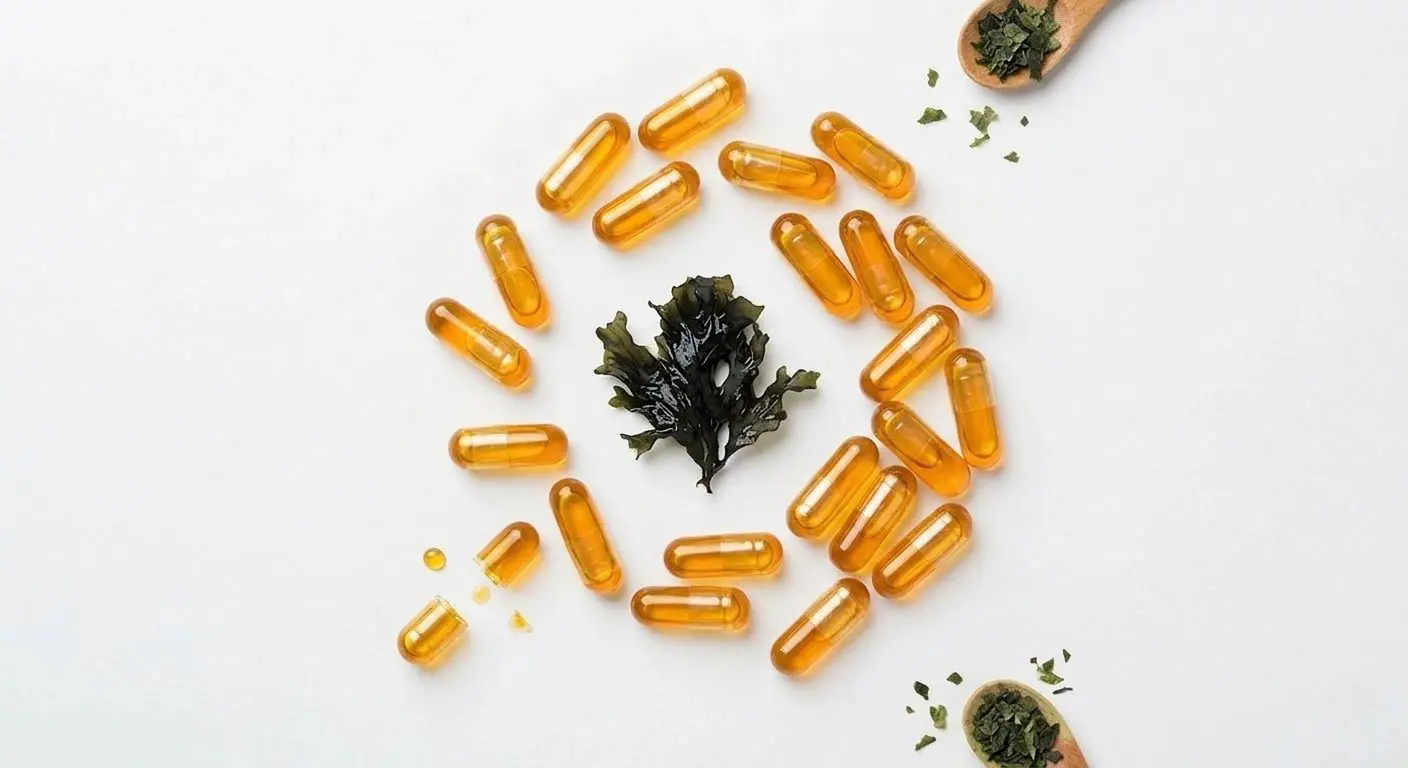
Algae is the original source of omega-3 in the marine food chain. Fish accumulate EPA and DHA not by producing it themselves but by consuming microalgae and the small organisms that eat microalgae. By supplementing directly with algae-derived omega-3, vegan consumers access the same EPA and DHA that fish oil provides — from the same original source — without any animal involvement.
Algae-based omega-3 supplements provide EPA and DHA directly, at meaningful levels, in HPMC vegetable capsule format. They are fully vegan-suitable, and because they come from a controlled algae cultivation process rather than wild fish, they also avoid concerns about heavy metal contamination and ocean sustainability that apply to some fish oil products.
Algae omega-3 is more expensive than fish oil omega-3, which is why it has a smaller market presence. However, it is the only vegan source of direct EPA and DHA, and for vegan consumers who want to address cardiovascular, inflammatory, or brain health specifically, it is the correct choice.
Flaxseed Oil — ALA Only
Flaxseed oil is the most widely available plant-based omega-3 supplement in the UK. It provides ALA at high concentrations and is fully vegan-suitable. However, it provides no direct EPA or DHA — only ALA, which the body may partially convert. Flaxseed oil is a valuable addition to a vegan diet for general omega-3 support, but it should not be treated as equivalent to algae-based omega-3 for cardiovascular or inflammatory health goals.
Hemp Seed Oil and Chia Seed Oil — ALA Only
Hemp seed oil and chia seed oil both provide ALA and are fully vegan-suitable. Like flaxseed oil, they do not provide direct EPA or DHA. They offer additional nutritional value — hemp seed oil has a favourable omega-6 to omega-3 ratio, and chia provides fibre alongside the oil — but the ALA-to-EPA/DHA conversion limitation applies equally.
Walnuts and Other Dietary Sources
Walnuts are the most significant dietary source of ALA among commonly eaten foods. A small handful provides a meaningful contribution to daily ALA intake. Like other plant ALA sources, walnuts do not provide EPA or DHA directly. They are a useful dietary contribution to overall omega-3 intake but not a replacement for direct EPA and DHA supplementation.
What to Look for When Buying Vegan Omega-3 in the UK
Check the omega-3 source. Algae-derived omega-3 is the only vegan source of direct EPA and DHA. Flaxseed, hemp, and chia provide ALA only. The product label or product page should state clearly whether the omega-3 is algae-derived or plant-seed-derived.
Check the capsule material. Vegan omega-3 supplements should use HPMC, hypromellose, or vegetable capsule shells — not gelatine. If the supplement is in soft gel format, verify explicitly that a plant-based alternative to gelatine has been used. If no capsule material is stated and the format is a soft gel, contact the brand before purchasing.
Check EPA and DHA levels. For cardiovascular and inflammatory health goals, the specific amounts of EPA and DHA per serving matter. A product stating “omega-3” without specifying EPA and DHA levels may be providing ALA only. Look for products that explicitly state EPA and DHA content per capsule or per daily serving.
Check for a certified vegan logo. Products carrying the Vegan Society Trademark have had both the omega-3 source and the capsule material verified. This is the most reliable signal for a fully vegan-compliant omega-3 supplement.
Summary — Choosing Vegan Omega-3 in the UK
The omega-3 category is one where vegan consumers face the most significant challenge in the supplement market. Fish oil — the dominant format — fails the vegan standard on both the oil source and the capsule, and the plant-seed oils that are genuinely vegan provide ALA rather than the EPA and DHA that most omega-3 supplementation is designed to deliver.
The answer is algae-based omega-3, which provides EPA and DHA directly from a fully plant-based source, in HPMC capsule format, with no animal involvement at any stage. It is the correct choice for vegan consumers who want the health benefits associated with omega-3 supplementation — particularly cardiovascular, inflammatory, and brain health support — without compromise on their dietary principles. For a full guide to reading supplement labels as a vegan consumer, see our guide to how to read supplement labels as a vegan.
Browse Nutrivity’s complete vegan supplements range, with full ingredient transparency on every product page and UK GMP-certified manufacturing throughout.
Frequently Asked Questions
What is the best vegan source of omega-3?
Algae-derived omega-3 is the best vegan source of EPA and DHA — the long-chain omega-3 fatty acids the body uses directly for cardiovascular, inflammatory, and brain health. Plant seed oils such as flaxseed, hemp, and chia provide ALA, which the body can partially convert to EPA and DHA, but the conversion rate is low and unreliable. For specific health goals requiring EPA and DHA, algae-based omega-3 is the appropriate vegan choice.
Is fish oil vegan?
No. Fish oil is derived from fish and is not vegan. The standard soft gel capsule format used for fish oil also contains animal gelatine, adding a second non-vegan ingredient. Algae-based omega-3 is the vegan alternative that provides EPA and DHA directly without any animal involvement.
Can vegans get enough omega-3 from food alone?
Vegans can obtain adequate ALA from plant foods — flaxseed, hemp seeds, chia seeds, and walnuts are all good sources. However, obtaining sufficient EPA and DHA from diet alone is more difficult on a vegan diet, since the main dietary sources of direct EPA and DHA are oily fish and seafood. For vegans with specific cardiovascular, inflammatory, or brain health concerns, algae-based omega-3 supplementation provides the most reliable way to maintain adequate EPA and DHA levels.
Are omega-3 soft gel capsules vegan?
Standard soft gel capsules are not vegan — they use gelatine as the shell material. Most fish oil and omega-3 supplements in the UK are in soft gel format. Algae-based omega-3 supplements are typically available in HPMC hard capsule format, which is vegan-suitable. Always check the capsule material on any omega-3 supplement before purchasing.
Is algae omega-3 as effective as fish oil?
Yes. Algae-derived omega-3 provides EPA and DHA directly — the same fatty acids found in fish oil, from the same original source. Research comparing algae-based and fish-based omega-3 supplementation has found equivalent bioavailability and similar effects on blood omega-3 levels. There is no efficacy compromise in choosing algae-based omega-3 over fish oil.
What should I look for on a vegan omega-3 label?
Check that the omega-3 source is stated as algae-derived if you need direct EPA and DHA. Check the capsule material for HPMC, hypromellose, or vegetable capsule rather than gelatine. Check the EPA and DHA content per serving is stated explicitly. Look for a certified vegan logo for the most reliable verification of full vegan compliance.