





Glucosamine Sulphate vs Glucosamine Hydrochloride — Which Is Better?
-
By Chris Jones
Written by Chris Jones, Social Media Manager at Nutrivity with 7+ years in the supplement industry.
Glucosamine Sulphate vs Glucosamine Hydrochloride — Which Is Better?
Walk into any pharmacy or health food store in the UK and you will find glucosamine products listed as either “glucosamine sulphate” or “glucosamine hydrochloride” — sometimes with higher milligram counts for the hydrochloride form and sometimes at lower prices. Without knowing the clinical significance of the distinction, it is easy to choose based on dose or price alone. That is a mistake that matters.
The clinical evidence base for glucosamine sulphate and glucosamine hydrochloride is not equivalent. The distinction between the two forms is one of the most important and most overlooked quality indicators in the joint supplement market. Understanding it protects you from spending months on a supplement with a weaker evidence base while assuming you are taking the well-researched version.
This guide cuts through the confusion. For the broader evidence on glucosamine for joints, see our guide to glucosamine for joints UK. For the timeline for results, see our guide to how long does glucosamine take to work. For full product information, visit our Cod Liver Oil and Glucosamine product page.
What Glucosamine Sulphate and Hydrochloride Actually Are
Both glucosamine sulphate and glucosamine hydrochloride are salts of glucosamine — the glucosamine molecule chemically paired with either a sulphate group (SO4²⁻) or a hydrochloride group (Cl⁻) for chemical stability in solid supplement form. Glucosamine itself is unstable as a free compound and cannot be manufactured and stored effectively without pairing it with a stabilising counter-ion — hence the salt forms.
When either salt is absorbed from the gut into the bloodstream, it dissociates — releasing free glucosamine ions that are distributed to tissues throughout the body, including cartilage. At this level, both forms provide the same glucosamine substrate. The glucosamine molecule that reaches cartilage from glucosamine sulphate and from glucosamine hydrochloride is chemically identical.
Where the forms differ is in what else they release upon dissociation. Glucosamine sulphate releases sulphate ions alongside glucosamine. Glucosamine hydrochloride releases chloride ions. Chloride is metabolically ubiquitous — it plays no specific role in cartilage metabolism. Sulphate, by contrast, is a substrate for the sulphation of glycosaminoglycan chains in cartilage matrix, and sulphate availability in joint tissue has been proposed as a rate-limiting factor in glycosaminoglycan synthesis in osteoarthritis. This is the biochemical basis for the hypothesis that glucosamine sulphate has advantages beyond the glucosamine content alone.
What the Clinical Evidence Shows
The clinical evidence strongly and consistently favours glucosamine sulphate. Every major positive trial demonstrating structural benefit and every trial demonstrating meaningful symptomatic improvement in osteoarthritis used glucosamine sulphate.
The Reginster trial — published in The Lancet and widely regarded as the landmark study in this field — used 1500mg glucosamine sulphate daily for three years in patients with knee osteoarthritis. The result was striking: the placebo group showed progressive, significant joint space narrowing over three years — the radiological evidence of cartilage loss. The glucosamine sulphate group showed no significant joint space narrowing. This structural preservation finding is remarkable because it represents something that NSAIDs, paracetamol, and most other commonly used OA treatments cannot demonstrate — actual modification of the disease process rather than just symptomatic relief.
The GUIDE trial compared glucosamine sulphate against paracetamol (the most commonly recommended first-line OA analgesic in UK guidelines) and placebo over six months. Glucosamine sulphate produced statistically superior improvements in WOMAC functional scores compared to both paracetamol and placebo. That glucosamine sulphate outperformed the standard pharmaceutical first-line treatment is clinically significant.
The EULAR (European League Against Rheumatism) guidelines for osteoarthritis give glucosamine sulphate a 1A evidence level — the highest available — with a strong recommendation for use in knee OA. This guideline endorsement from a major European rheumatology authority reflects the quality and consistency of the glucosamine sulphate evidence base.
Why Glucosamine Hydrochloride Has Weaker Evidence
The largest glucosamine clinical trial — the GAIT trial, funded by the US National Institutes of Health and involving over 1,500 patients — used glucosamine hydrochloride at 1500mg daily. The overall result was negative: glucosamine hydrochloride did not significantly outperform placebo for knee OA pain in the full study population. Only in the prespecified subgroup of patients with moderate-to-severe pain did a glucosamine sulphate arm (which was also included as a separate treatment arm) show significant benefit.
The GAIT trial result has been widely misinterpreted as evidence that “glucosamine doesn’t work.” The more accurate interpretation is that glucosamine hydrochloride didn’t produce significant results in this population, while glucosamine sulphate did in the moderate-to-severe pain subgroup. The conflation of negative hydrochloride results with glucosamine as a category has been misleading for consumers and even for some healthcare professionals.
Why does hydrochloride underperform relative to sulphate? The most plausible explanation combines two factors: the absence of the additional sulphate substrate that may contribute to cartilage GAG synthesis, and potentially different pharmacokinetic profiles between the two salt forms affecting tissue distribution. The exact mechanisms are not fully resolved in the literature, but the clinical outcome difference is consistent across multiple studies.
How to Identify the Form on a Supplement Label
UK supplement labels are required to list the specific form of glucosamine used. Look for “glucosamine sulphate” — not simply “glucosamine.” If the label says “glucosamine hydrochloride” or “glucosamine HCl,” you have the weaker-evidenced form. If the label says only “glucosamine” without specifying the form, this is a red flag — a quality manufacturer using glucosamine sulphate will state it clearly, because it is the selling point that differentiates their product.
Be cautious of products that state a very high milligram count for glucosamine — a 1500mg glucosamine hydrochloride product is not better than a 1500mg glucosamine sulphate product simply because the dose is the same. The form is the decisive quality indicator, not just the dose.
Nutrivity’s Formulation — Glucosamine Sulphate Confirmed
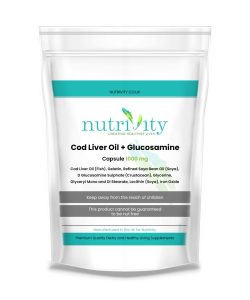
Nutrivity’s Cod Liver Oil and Glucosamine uses glucosamine sulphate — 400mg per softgel — consistent with the form used in the trials with the strongest positive evidence for osteoarthritis. The full ingredients list, including the confirmed glucosamine sulphate specification, is published on the product page. For UK adults choosing between glucosamine products, Nutrivity’s formulation additionally provides 400mg cod liver oil and 400mg omega-3 fish oil — addressing the inflammatory component of joint conditions alongside glucosamine’s structural support mechanism in a single daily capsule.
Does the Dose of Glucosamine Sulphate Matter?
Yes — dose matters alongside form. The landmark clinical trials used 1500mg of glucosamine sulphate daily. Nutrivity’s combined formula provides 400mg glucosamine sulphate per softgel as part of a multi-ingredient joint health product. For someone specifically targeting the doses used in structural preservation trials, taking the combined formula as directed provides meaningful glucosamine sulphate alongside the omega-3 and vitamin benefits of cod liver oil. People wanting to specifically target the 1500mg dose level used in the Reginster trial may consider discussing higher-dose glucosamine sulphate supplementation with a healthcare practitioner alongside the combined formula.
The Regulatory and Guideline Context
The distinction between glucosamine sulphate and hydrochloride is not only a matter of clinical trial evidence — it is also reflected in how regulatory and professional bodies assess and recommend glucosamine. The European League Against Rheumatism (EULAR) guidelines for osteoarthritis of the knee specifically recommend glucosamine sulphate — not glucosamine hydrochloride — with the highest available evidence rating (1A) and a strong recommendation. The European Society for Clinical and Economic Aspects of Osteoporosis, Osteoarthritis and Musculoskeletal Diseases (ESCEO) similarly recommends pharmaceutical-grade glucosamine sulphate as a first-line step-2 treatment for knee OA, explicitly distinguishing it from other glucosamine preparations.
This guideline specificity matters. When a European rheumatology guideline recommends “glucosamine” without specifying the form, it is implicitly referring to glucosamine sulphate — because the evidence on which the recommendation is based is entirely from glucosamine sulphate trials. UK consumers and healthcare professionals who read these guidelines and assume any glucosamine product qualifies are misapplying the evidence.
Practical Buying Advice for UK Consumers
When choosing a glucosamine supplement in the UK, apply the following checklist in this order: First, confirm the form is stated as “glucosamine sulphate” on the label — not hydrochloride, not simply “glucosamine.” Second, check the dose — 1500mg daily is the target used in structural preservation trials. Third, consider whether the product is combined with an anti-inflammatory such as cod liver oil to address the inflammatory component of joint conditions that glucosamine alone does not cover. Fourth, check the capsule or tablet shell for dietary suitability — gelatine capsules are common and not vegan-suitable.
A higher milligram count of glucosamine hydrochloride is not a better choice than a lower milligram count of glucosamine sulphate — the form determines clinical relevance, not the dose alone. A product clearly labelled “glucosamine sulphate” at 1500mg daily from a reputable UK manufacturer is the standard against which all other products should be measured.
What About Combined Glucosamine and Chondroitin Products?
Some UK joint supplements combine glucosamine with chondroitin sulphate — another glycosaminoglycan component of cartilage matrix. Chondroitin sulphate has its own evidence base for OA, and several trials have examined the combination. The evidence for combined glucosamine sulphate and chondroitin sulphate is mixed — some trials show additive benefit, others do not show the combination to be superior to glucosamine sulphate alone. The GAIT trial did test a glucosamine-chondroitin combination arm and found no significant benefit over placebo in the overall population, though again the moderate-to-severe pain subgroup showed more positive results.
For most UK adults, glucosamine sulphate alone — or combined with the anti-inflammatory support of cod liver oil — represents a well-evidenced and practical starting point. If you have been taking glucosamine sulphate consistently for six months without adequate response, discussing the addition of chondroitin sulphate with a healthcare practitioner is a reasonable next step.

Summary — Glucosamine Sulphate vs Hydrochloride
Glucosamine sulphate is the clinically supported form of glucosamine — the form used in the trials showing structural joint space preservation in osteoarthritis over three years, the form shown to outperform paracetamol for OA functional outcomes, and the form endorsed with the highest evidence level in European rheumatology guidelines. Glucosamine hydrochloride has not demonstrated equivalent results in clinical trials. For UK adults choosing a glucosamine supplement, the form is the single most important quality indicator — more important than brand, milligram count, or price. Always verify “glucosamine sulphate” is stated on the label before purchasing.
For full product information and to purchase, visit Nutrivity’s Cod Liver Oil and Glucosamine product page.
Frequently Asked Question
Is glucosamine sulphate better than glucosamine hydrochloride?
Yes — the clinical evidence strongly favours glucosamine sulphate. All major positive trials for structural joint space preservation and symptomatic improvement used glucosamine sulphate. The EULAR osteoarthritis guidelines specify glucosamine sulphate with the highest evidence level. Glucosamine hydrochloride has not replicated these results in clinical research.
What is the difference between glucosamine sulphate and glucosamine hydrochloride?
Both are salts of glucosamine that release free glucosamine when absorbed. The difference is the accompanying ion — sulphate in glucosamine sulphate, chloride in glucosamine hydrochloride. Sulphate itself is a substrate for sulphated glycosaminoglycan synthesis in cartilage, potentially contributing to cartilage-supporting effects beyond glucosamine alone. Chloride has no specific role in cartilage metabolism.
Which glucosamine is recommended for osteoarthritis?
Glucosamine sulphate — as specified in EULAR osteoarthritis guidelines with the highest recommendation level (1A evidence). The landmark trials showing structural joint space preservation and superiority to paracetamol all used glucosamine sulphate at 1500mg daily.
Does the form of glucosamine matter?
Yes — significantly. Many consumers and even some healthcare professionals treat glucosamine sulphate and glucosamine hydrochloride as interchangeable. The clinical research shows they are not. Choosing hydrochloride on the basis of lower price or higher milligram count may mean selecting a form without meaningful clinical support for the intended indication.
What dose of glucosamine sulphate should I take?
The clinical trials showing structural benefit used 1500mg glucosamine sulphate daily. Nutrivity’s formulation provides 400mg glucosamine sulphate per softgel — one softgel daily as part of a combined joint support formula including cod liver oil and omega-3.
Is Nutrivity's glucosamine sulphate or hydrochloride?
Glucosamine sulphate — the clinically supported form used in the major osteoarthritis trials. Full ingredients are published on the Nutrivity product page.