





Cod Liver Oil Dosage UK — How Much Should You Take?
-
By Chris Jones
Written by Chris Jones, Social Media Manager at Nutrivity with 7+ years in the supplement industry.
Cod Liver Oil Dosage UK — How Much Should You Take?
Cod liver oil dosage is more nuanced than dosing most supplements because it involves balancing two nutritional targets simultaneously — getting adequate omega-3 fatty acids while keeping vitamin A within safe limits. Get this balance right and you get the full benefit of cod liver oil’s unique nutritional profile. Misjudge it by taking multiple products or exceeding the recommended dose, and you risk the adverse effects associated with vitamin A excess. Understanding both sides of this balance is essential for using cod liver oil safely and effectively over the long term.
This guide covers the clinically relevant omega-3 targets, the vitamin A safety ceiling, how UK supplements vary in their nutritional content, and the practical guidance for daily dosing. For the full range of benefits from cod liver oil, see our guide to cod liver oil benefits UK. For information on side effects and safety, see our guide to cod liver oil and glucosamine side effects UK. For full product information, visit our Cod Liver Oil and Glucosamine product page.
Omega-3 — The Target Range
The primary dosage target for cod liver oil is its EPA and DHA omega-3 content — the key active components for joint health, cardiovascular health, brain function, and the other benefits associated with cod liver oil supplementation. The total oil weight (e.g. 400mg or 1000mg cod liver oil per capsule) is not the relevant figure. The relevant figure is the EPA and DHA content within that oil — which varies significantly between products depending on the concentration of omega-3 in the specific oil and the extraction method used.
The European Food Safety Authority (EFSA) has established a reference daily intake for combined EPA and DHA of 250mg for general cardiovascular health maintenance in healthy adults. This represents the minimum target for general health benefits from omega-3 supplementation. For therapeutic purposes — managing joint inflammation, reducing triglycerides, supporting cardiovascular health in people with elevated risk — research has used doses from 1,000mg to 4,000mg EPA+DHA daily, with different dose ranges showing benefit for different outcomes.
For most UK adults taking cod liver oil as a daily joint and general health supplement, a dose providing 250–1,000mg combined EPA+DHA daily is appropriate for general health maintenance. At the lower end of this range (250–400mg EPA+DHA), the dose is sufficient for maintaining adequate omega-3 status in healthy adults who eat some oily fish. At the higher end (600–1,000mg), the dose addresses more significant omega-3 insufficiency and may produce more pronounced anti-inflammatory effects relevant to joint conditions.
When reading supplement labels, always look for the EPA and DHA figures specifically — the omega-3 content per capsule expressed in mg. Do not rely solely on the oil weight. A 1,000mg cod liver oil capsule may provide anywhere from 100mg to 300mg EPA+DHA depending on the concentration in the oil — a threefold difference in the active component for the same stated oil weight.
Vitamin A — The Dosage Ceiling
Vitamin A is fat-soluble and accumulates in the liver with chronic excess intake — which is why cod liver oil dosage requires more care than standard fish oil dosing. The medical condition resulting from sustained excessive vitamin A intake is hypervitaminosis A. Symptoms include headache, dizziness, nausea, fatigue, dry skin, bone pain, and in severe or prolonged cases, liver damage and hair loss. Acute high-dose vitamin A toxicity (from very large single doses) can be more serious, but this is not the risk for supplement users — the relevant concern is chronic excess from regular daily doses above the safe upper limit over months and years.
The UK Food Standards Agency advises that regular daily vitamin A intake should not exceed 1,500mcg retinol equivalents (approximately 5,000 IU) for most adults. For older adults, the threshold may be lower — the FSA advises particular caution for people over 65 due to reduced liver capacity to handle vitamin A accumulation. For pregnant women, the guidance is absolute: vitamin A supplementation above dietary norms is contraindicated in pregnancy due to established teratogenic effects (risk of birth defects). This is not a precautionary guideline — it reflects confirmed harm from high vitamin A in pregnancy. Pregnant women must not take cod liver oil under any circumstances.
For most adults taking one standard cod liver oil softgel daily, vitamin A intake is well within safe limits. Problems arise from three specific scenarios: taking multiple cod liver oil products simultaneously; combining cod liver oil with separate vitamin A supplements or multivitamins containing retinol; or using high-dose retinol skincare products (prescription-strength retinoids or high-concentration retinol serums) alongside oral vitamin A from cod liver oil. If any of these apply to you, check the combined total vitamin A intake from all sources against the 1,500mcg daily limit.
Pregnant women must not take cod liver oil — the vitamin A content poses a teratogenic risk. This is an absolute contraindication stated on all licensed cod liver oil products.
How UK Cod Liver Oil Products Vary
UK cod liver oil products vary substantially in their omega-3 and vitamin A content per serving. The variation reflects differences in oil concentration, extraction method, and the dilution of cod liver oil with other oils (some products blend cod liver oil with standard fish oil to adjust the nutritional profile). This variation makes label reading essential rather than optional.
Traditional lower-dose cod liver oil capsules (often 500mg oil per capsule) may provide 100–150mg EPA+DHA — adequate as a maintenance dose for people with a reasonable dietary omega-3 baseline. Higher-strength products providing 1,000mg or more oil per capsule typically provide 200–300mg EPA+DHA per capsule. Products that state both the oil weight and the EPA/DHA content per serving are giving you the information you need to assess the dose. Products that state only the oil weight are less transparent.
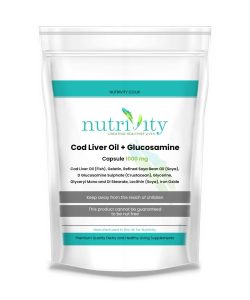
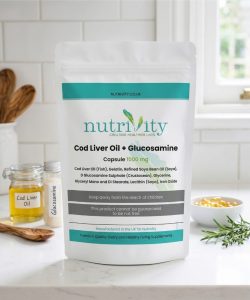
Nutrivity’s Cod Liver Oil and Glucosamine provides 400mg cod liver oil and 400mg omega-3 fish oil per softgel — the combination of both oil types providing a broad omega-3 profile alongside the vitamins A and D from the cod liver oil component. Full nutritional specifications including EPA, DHA, vitamin A, and vitamin D content per serving are published on the product page.
When and How to Take Cod Liver Oil
Cod liver oil should always be taken with food. As a fat-soluble supplement, it requires dietary fat in the gut for optimal absorption into the bloodstream. Research comparing omega-3 absorption in fasted versus fed states has found absorption approximately 50% higher when taken with a fat-containing meal compared to fasting. Taking cod liver oil on an empty stomach not only reduces absorption but also increases the likelihood of the most common side effects — fishy aftertaste, burping, and mild nausea — because the oil enters an empty stomach without the buffering effect of food.
Take cod liver oil with the main meal of the day — typically lunch or dinner, which is most likely to contain adequate fat for optimal absorption. Morning is also fine if breakfast includes fat. The specific time of day does not meaningfully affect the omega-3’s biological effects — consistency of daily use is far more important than the specific timing.
The anti-inflammatory effect of omega-3 builds gradually over weeks as EPA and DHA are incorporated into cell membranes. Consistent daily supplementation without gaps produces progressive improvements in the cell membrane omega-3 to omega-6 ratio. Taking cod liver oil sporadically — several days on, several days off — prevents this gradual shift from establishing and substantially reduces the likelihood of meaningful benefit. Daily consistency is the most important factor in getting results from cod liver oil supplementation.
One final practical note on dosage for UK adults using cod liver oil primarily for its vitamin D contribution: cod liver oil provides meaningful vitamin D but at typical supplement doses (one softgel daily) does not provide the same quantity as dedicated high-strength vitamin D supplements (1,000–4,000 IU D3). If your primary need is correcting a significant vitamin D deficiency, a dedicated vitamin D supplement alongside cod liver oil may be necessary rather than relying on cod liver oil alone. For general vitamin D maintenance through winter for adults without established deficiency, one daily cod liver oil softgel contributes meaningfully as part of the overall vitamin D intake.
How Long Should You Take Cod Liver Oil?
Cod liver oil is most appropriately used as an ongoing daily supplement rather than a short-term course. The anti-inflammatory effects of omega-3 require sustained supplementation to maintain — when omega-3 intake stops, the cell membrane fatty acid composition gradually returns toward the pre-supplementation balance over weeks to months, and the anti-inflammatory benefit diminishes. For people taking cod liver oil for ongoing joint support, vitamin D maintenance (particularly through the UK autumn and winter), and general cardiovascular and brain health, indefinite daily use is appropriate.
Annual review with a GP is sensible for any long-term supplement, particularly cod liver oil where the vitamin A content makes dose awareness important over the long term. Confirming that your vitamin D levels are adequate through a simple blood test periodically also helps ensure the supplement is achieving its nutritional purpose.
Summary — Cod Liver Oil Dosage
Cod liver oil dosage involves two variables: achieving adequate EPA and DHA omega-3 content (check the specific EPA+DHA mg per serving, not just the oil weight) and keeping vitamin A within safe daily limits (no more than 1,500mcg daily from all sources, never during pregnancy). One standard softgel daily with a fat-containing meal is appropriate for most adults. Do not exceed the recommended dose, do not combine with other vitamin A supplements, and do not take during pregnancy. Consistent daily use over weeks and months produces the joint health, cardiovascular, and general health benefits associated with cod liver oil supplementation — consistency is the most important single variable for getting results.
For full product information and to purchase, visit Nutrivity’s Cod Liver Oil and Glucosamine product page.
Frequently Asked Qustions
How much cod liver oil should I take per day?
One softgel daily with food is the standard and clinically used dose for most adults. This provides the omega-3 and vitamins A and D at levels appropriate for general health maintenance while keeping vitamin A within safe daily limits. Do not exceed the recommended dose without medical guidance.
Can I take cod liver oil twice a day?
For most adults, doubling the dose doubles the vitamin A intake — which needs to remain within safe limits. If you feel you need higher omega-3 doses, consider adding a separate high-concentration fish oil (which contains no vitamin A) rather than doubling cod liver oil. Always consult your GP before significantly increasing any supplement dose.
Should I take cod liver oil with food?
Yes — cod liver oil is fat-soluble and absorption is significantly improved when taken with a fat-containing meal. Taking it with food also substantially reduces the risk of gastrointestinal discomfort and the fishy aftertaste that some people experience with omega-3 supplements taken on an empty stomach.
Is it safe to take cod liver oil every day?
Yes, for most adults without contraindications at the recommended daily dose. Do not exceed the recommended dose, do not combine with other vitamin A supplements, and do not take during pregnancy. One standard softgel daily is safe for long-term use.
Can pregnant women take cod liver oil?
No — cod liver oil is contraindicated in pregnancy due to its vitamin A (retinol) content. High vitamin A intake in pregnancy is associated with birth defects. Pregnant women who want omega-3 supplementation should use a dedicated pregnancy omega-3 product (fish oil without vitamin A) rather than cod liver oil.
Can children take cod liver oil?
Cod liver oil has a long history of use for children in the UK. However, children’s vitamin A requirements and safe upper limits differ from adults. Use child-specific formulations with appropriate child dosing rather than adult products, and follow the manufacturer’s age-specific dosing guidance.