


Are Vitamins Halal? The Complete Guide for Muslim Supplement Buyers in the UK
-
By Chris Jones
Are Vitamins Halal? What Every Muslim Supplement Buyer Needs to Know
For Muslim consumers in the UK, buying vitamins and supplements is not as straightforward as it should be. Most mainstream supplement brands don’t disclose whether their products contain pork-derived gelatine, alcohol-based extracts, insect-derived colourings, or other ingredients that are not compatible with a halal diet. UK labelling law doesn’t require them to.
This guide covers everything you need to know about halal compliance in vitamins and supplements — what to check, what the common problem ingredients are, and how to make informed choices without having to contact every brand individually.
For a full overview of how Nutrivity approaches halal-suitable manufacturing, visit our halal supplements guide.
Are Vitamins and Supplements Automatically Halal?
No. Many people assume that vitamins — being “just vitamins” — are inherently permissible. This is a reasonable assumption, but it’s incorrect. The active vitamin ingredient itself (such as vitamin C, vitamin D, or vitamin B12) is typically not the issue. The problem lies in the other ingredients used to manufacture and package the supplement: the capsule shell, the coatings, the flow agents, the colourings, and the extraction solvents.
A bottle of vitamin D3 capsules might contain perfectly permissible vitamin D3 inside a capsule shell made from pork-derived gelatine. A herbal supplement might use an alcohol-based extraction process that leaves trace ethanol in the final product. A coated tablet might use shellac — a resin secreted by lac bugs — as its coating agent.
The active ingredient is rarely the issue. It’s everything else that requires scrutiny.
The Main Halal Concerns in Supplements
1. Gelatine Capsules
This is the single biggest halal issue in the supplement industry. The majority of capsules sold in the UK — both hard capsules and soft gel capsules — are made from gelatine derived from pork. Pork gelatine is cheap, widely available, and the industry default. UK labelling law requires gelatine to be listed as an ingredient, but does not require the animal source to be stated.
A label that says “gelatine” tells you nothing about whether that gelatine is halal. You need the brand to explicitly state the source — or to use plant-based capsules instead.
Plant-based capsules made from HPMC (hydroxypropyl methylcellulose) are derived from plant cellulose and are halal-suitable without any qualification. Any supplement listing “vegetable capsule” or “HPMC capsule” in its ingredients is using plant-based shells.
For a detailed breakdown of gelatine in supplements and how to identify halal-suitable options, see our guide to whether gelatine in supplements is halal.
2. Vitamin D3 Source
Most vitamin D3 supplements are derived from lanolin — a wax extracted from sheep’s wool. There is ongoing scholarly debate about whether lanolin-derived D3 is halal-permissible, with some Islamic certification bodies certifying it and others requiring stricter verification. If you want to avoid this uncertainty entirely, look for supplements specifying lichen-derived D3, which is entirely plant-based.
For a full explanation of this issue, see our guide to whether vitamin D3 is halal.
3. Alcohol-Based Herbal Extracts
Some herbal supplement manufacturers use ethanol (alcohol) as a solvent during the extraction of plant compounds. Even after processing, trace amounts of alcohol may remain in the final product. This is a concern for observant Muslims, and most brands do not disclose their extraction methods on the label.
If you take herbal supplements — including popular products like echinacea, agnus castus, devils claw, or ashwagandha — it is worth checking with the manufacturer whether alcohol-based extraction is used.
4. Carmine (E120)
Carmine is a red colouring agent derived from crushed cochineal insects. It is used in some coated tablets, gummy vitamins, and liquid supplements to achieve red, pink, or purple colours. Most Islamic scholars consider insect-derived ingredients to be impermissible. Check the ingredients list for E120 or “carmine.”
5. Shellac (E904)
Shellac is a resin secreted by the lac bug and is sometimes used as a coating on tablets to make them easier to swallow and to protect the active ingredients. It appears on labels as E904 or “shellac.” As with carmine, most scholars consider insect-derived ingredients to be impermissible.
6. Magnesium Stearate
Magnesium stearate is one of the most common flow agents in tablet and capsule manufacturing — it prevents ingredients from sticking to machinery during production. It can be derived from either animal fat or vegetable sources, and labels rarely specify which. If a brand cannot confirm the source, treat it with caution. Reputable brands will specify vegetable-derived magnesium stearate.
7. Glycerine
Glycerine (also listed as glycerol) is used as a humectant, solvent, and sweetener in some supplements. It can be derived from animal fat, vegetable oils, or synthetically produced. As with magnesium stearate, the source is rarely specified on the label. Plant-derived or synthetic glycerine is halal-suitable; animal-derived glycerine requires verification of the source animal and slaughter method.
8. Omega-3 and Fish Oil Supplements
Fish-derived supplements — including cod liver oil, omega-3, and fish collagen — are considered halal by most Islamic scholars, as fish is generally permissible. However, the gelatine capsule used to encapsulate fish oil supplements is typically pork-derived, which creates a separate issue. Look for fish oil supplements in plant-based capsules, or brands that specify halal-sourced gelatine.
Vitamins That Are Almost Always Halal-Suitable
While vigilance is always required, some supplement formats and types present very low halal risk:
Compressed tablets with no coating — plain tablets that list only mineral or plant-derived excipients (binders, fillers, flow agents from vegetable sources) are generally straightforward. The main thing to check is magnesium stearate source.
HPMC vegetable capsules — any supplement in a capsule shell explicitly listed as “vegetable capsule” or “HPMC capsule” has no gelatine issue.
Vitamin C tablets — ascorbic acid is synthesised or derived from plant sources. Plain vitamin C tablets in plant-based formats are typically straightforward.
Mineral supplements — zinc, magnesium, iron, and calcium supplements in tablet or HPMC capsule form generally have minimal halal concerns beyond the excipients.
Vitamins That Require the Most Scrutiny
 Soft gel capsules of any kind — fish oil, vitamin E, CoQ10, evening primrose oil, blackcurrant seed oil, vitamin A, vitamin D softgels. Soft gel manufacturing almost universally uses gelatine, and pork gelatine is the default. Always verify the gelatine source.
Standard hard capsules with no “vegetable capsule” claim — assume gelatine unless stated otherwise.
Vitamin D3 without source specification — lanolin-derived unless confirmed otherwise.
Gummy vitamins — frequently contain pork gelatine, carmine, and other problematic ingredients. Some use pectin (plant-based) instead of gelatine, but gummies require careful label checking.
Herbal supplements from non-specialist brands — alcohol-based extraction is common and rarely disclosed.
How to Check If a Supplement Is Halal
Run through these steps before purchasing any supplement:
Step 1: Check the capsule or tablet format. Does the label say “vegetable capsule” or “HPMC”? If yes, no gelatine concern. If it says “capsule” or “softgel” with no further detail, proceed to step 2.
Step 2: Look for halal certification from a named certification body. Be aware that certification standards vary between bodies — research the certifying organisation if you are unfamiliar with it.
Step 3: Check for carmine (E120) and shellac (E904) in the ingredients. These are insect-derived and considered impermissible by most scholars.
Step 4: For vitamin D3, check whether the source is specified. “Cholecalciferol from lichen” or a vegan D3 claim means plant-based. No specification means almost certainly lanolin-derived.
Step 5: For herbal supplements, contact the manufacturer to ask whether alcohol-based extraction is used in the production of any of the herbal ingredients.
Step 6: Check magnesium stearate and glycerine sources if listed. Reputable brands will confirm vegetable origin on request.
If a brand cannot answer these questions clearly and promptly, that is itself informative. Brands that have genuinely invested in halal-suitable manufacturing know their supply chain and can answer these questions without hesitation.
Nutrivity’s Approach to Halal-Suitable Supplements
At Nutrivity, our entire product range is formulated to be compatible with a halal diet. Our approach covers every ingredient in every product:
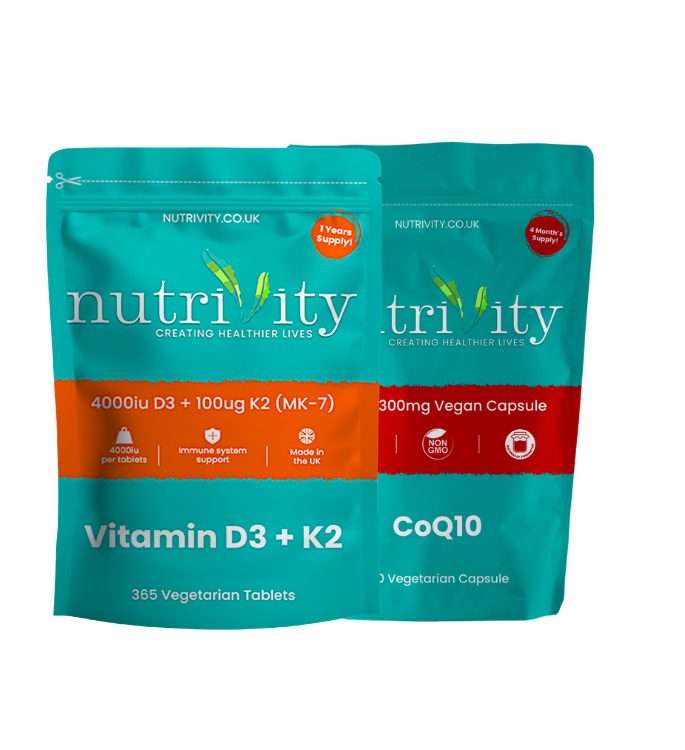
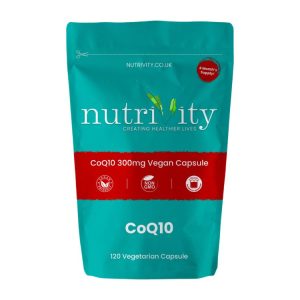
Our hard capsule products use HPMC vegetable capsules — plant-based, halal-suitable, and vegan. These include our CoQ10 300mg, Agnus Castus, Devils Claw, Damiana Extract, Dandelion Root, Sea Buckthorn, Black Cohosh, Cilantro, and Echinacea supplements.
Our soft gel products — Cod Liver Oil & Glucosamine, Castor Oil, Virgin Olive Oil, and Blackcurrant Seed Oil — use gelatine capsules with halal-permissible gelatine. The gelatine is not pork-derived.
Our Vitamin D3 4000 IU + K2 MK7 uses lichen-derived D3 in a compressed vegan tablet. No gelatine, no lanolin, no animal-derived ingredients of any kind.
We do not use alcohol-based extraction in any of our herbal formulations. We do not use carmine, shellac, or animal-derived magnesium stearate in any product. Full ingredients are published on every product page.
Browse our complete halal supplements range with full ingredient transparency on every product.
Summary — The Key Rules for Buying Halal Supplements in the UK
The active vitamin or mineral in a supplement is almost never the issue. What matters is everything else — the capsule shell, the coatings, the flow agents, the colourings, and the extraction methods. These are the areas where mainstream supplement brands routinely use non-halal ingredients without disclosure, either because they haven’t considered the issue or because they don’t think their customers are asking.
The rules to follow are straightforward once you know them. Look for “vegetable capsule” or “HPMC” on the label — that removes the gelatine question entirely. Check for lichen-derived D3 if you take vitamin D. Avoid products listing carmine (E120) or shellac (E904). Ask about magnesium stearate and extraction methods if those details aren’t published. And treat any undisclosed gelatine as pork-derived until proven otherwise.
Brands that genuinely manufacture for a halal-conscious market will have already answered all of these questions on their product pages. You shouldn’t have to dig for this information. If you do, that tells you something about how seriously the brand takes its halal-conscious customers.
Browse Nutrivity’s full halal supplements range — every product page lists complete ingredients with full transparency on capsule materials, gelatine sources, and manufacturing standards.
Frequently Asked Questions
Are vitamins halal?
The active vitamin ingredient is almost always halal-suitable. The concern is with other ingredients used in manufacturing — gelatine capsule shells, colourings, coatings, and extraction solvents. Vitamins in plant-based capsules or plain tablets with vegetable-derived excipients are generally halal-suitable. Always check the full ingredients list rather than assuming the product is permissible based on the active ingredient alone.
What is the biggest halal concern in supplements?
Gelatine. The majority of capsules sold in the UK use pork-derived gelatine, and UK labelling law does not require the animal source to be specified. Unless a brand explicitly states the gelatine source or uses plant-based capsules, undisclosed gelatine should be assumed to be pork-derived.
Are vegetarian supplements halal?
Not necessarily. A vegetarian supplement contains no meat or fish but may still contain other animal-derived ingredients such as shellac, carmine, lanolin-derived vitamin D3, or animal-derived magnesium stearate. Vegetarian and halal are different standards and should not be conflated.
Are vegan supplements halal?
In most cases yes, but not always. Vegan supplements avoid all animal-derived ingredients, which covers the most common halal concerns. However, some vegan herbal supplements use alcohol-based extraction. At Nutrivity, our vegan products are also halal-suitable because we avoid alcohol-based processing across our entire range.
Do halal supplement certifications mean the same thing across different bodies?
No. Halal certification standards vary between certifying organisations. Some bodies apply rigorous auditing of the full supply chain; others apply less comprehensive standards. If halal certification is important to your purchasing decision, it is worth researching the certifying body rather than treating all certifications as equivalent.
Can I take supplements during Ramadan?
Most Islamic scholars consider that taking supplements which contain no food-like ingredients does not break the fast. However, this is a matter of personal scholarly guidance, and individuals should seek advice from their own religious authority. For supplements taken during Ramadan, halal suitability of all ingredients — including capsule shells — remains equally important.
Where can I find halal supplements in the UK?
Specialist UK supplement brands that explicitly address halal suitability are the most reliable option. Nutrivity manufactures all products in the UK in GMP-certified facilities and publishes full ingredient lists on every product page. Browse our halal supplements range for a full product listing.