


Are Supplements Vegan? The Complete UK Guide
-
By Chris Jones
Written by Chris Jones, Social Media Manager at Nutrivity with 7+ years in the supplement industry.
Are Supplements Vegan? The Complete UK Guide
The short answer is: not automatically. A significant proportion of the vitamins and supplements sold in the UK contain animal-derived ingredients — and unlike food products, the vegan status of supplements is rarely made clear on the label. Gelatine capsules, lanolin-derived vitamin D3, carmine colouring, shellac coatings, and animal-derived flow agents are all standard ingredients in mainstream supplement manufacturing. None of them need to appear under a “contains animal products” declaration because UK labelling law does not require it.
This guide covers every animal-derived ingredient found in UK supplements, how to identify them on a label, what the vegan-suitable alternatives are, and how to make genuinely informed purchasing decisions. For Nutrivity’s full range of vegan-suitable supplements with complete ingredient transparency, visit our vegan supplements guide.
Why “Vegetarian” Does Not Mean Vegan in Supplements
One of the most common sources of confusion in supplement labelling is the gap between vegetarian and vegan claims. A supplement labelled vegetarian means it contains no meat or fish. It does not mean it contains no animal-derived ingredients. Gelatine from bovine sources, lanolin from sheep’s wool, lactose from dairy, carmine from insects, and shellac from lac bugs are all technically vegetarian — none of them involve slaughtered animals as their primary source — but none of them are vegan.
This matters because a large number of supplements marketed with a vegetarian label contain gelatine capsules, and consumers reasonably but incorrectly assume that vegetarian equals suitable for vegans. It does not. The vegan claim must be checked separately, and even where a vegan claim is made, it is worth understanding exactly what that covers — and what it may not.
The Six Hidden Non-Vegan Ingredients in Supplements
1. Gelatine — The Most Common
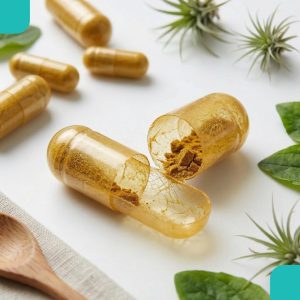
Gelatine is a protein derived from animal collagen — skin, bones, and connective tissue from cattle, pigs, or fish. It is used in two ways in supplement manufacturing. Hard capsules — the two-piece capsules used for powders and granules — are commonly made from gelatine, though plant-based alternatives are widely available and used by specialist manufacturers. Soft gel capsules — the oval, liquid-filled capsules used for fish oils, vitamin E, CoQ10, and omega-3 — are almost exclusively gelatine-based.
Gelatine is the most prevalent non-vegan ingredient in UK supplements and the hardest to avoid because it is the default across mainstream manufacturing. It appears on labels simply as “gelatine” with no indication of whether it is bovine, porcine, or fish-derived. Any supplement listing “gelatine” without further qualification should be treated as not vegan unless the brand explicitly confirms otherwise.
The vegan alternative is HPMC (hydroxypropyl methylcellulose) — a plant-derived polymer used to make vegetable capsule shells. HPMC contains no animal-derived ingredients, behaves similarly to gelatine in hard capsule formats, and is both vegan and halal-suitable. It will appear on labels as HPMC, hypromellose, or “vegetable capsule.” For a full breakdown of capsule types and their vegan status, see our guide to are capsules vegan.
2. Vitamin D3 Source — Lanolin vs Lichen
Most vitamin D3 supplements are derived from lanolin — the waxy grease extracted from sheep’s wool. Lanolin-derived D3 involves animal exploitation and is not considered vegan. It is the default source in the vast majority of vitamin D3 supplements sold in the UK, including many that carry a vegetarian label.
The vegan alternative is lichen-derived D3 — extracted from lichen, a plant-like organism, with no animal involvement. It is fully plant-based and produces the same form of vitamin D3 (cholecalciferol) as lanolin-derived D3, with equivalent effectiveness. Brands using lichen-derived D3 will typically state this explicitly because it is a positive differentiator. If a supplement lists “vitamin D3” or “cholecalciferol” without specifying the source, assume it is lanolin-derived unless confirmed otherwise. For a full breakdown of the D3 source question, see our guide to is vitamin D3 vegan.
Nutrivity’s Vitamin D3 4000 IU + K2 MK7 uses lichen-derived D3 — fully plant-based, no lanolin, vegan and halal-suitable.
3. Carmine (E120) — Insect-Derived Colouring
Carmine is a red dye derived from crushed cochineal insects. It is used in supplement capsule shells and coatings to produce red, pink, and purple colours, and appears on labels as E120, carmine, cochineal, or carminic acid. It is not vegan. It is not widely used in supplements but does appear — any supplement with a red, pink, or purple capsule should have the colouring ingredient checked before purchase.
4. Shellac (E904) — Insect-Derived Coating
Shellac is a resin secreted by the lac insect, used as a glazing agent or coating on some tablets. It appears on labels as E904 or shellac. It is not vegan. It is used in some supplement tablets, particularly those with a shiny or smooth coating. Less common than carmine but worth checking on any coated tablet product.
5. Magnesium Stearate — Animal or Plant-Derived
Magnesium stearate is a flow agent used in virtually every capsule supplement to help powders move through manufacturing equipment. It can be derived from animal fat (stearic acid from pork or beef tallow) or from plant sources (palm oil, vegetable oils). The label will say “magnesium stearate” in both cases without distinguishing between them.
For strict vegans, magnesium stearate requires source verification. Brands committed to vegan manufacture will either state “vegetable magnesium stearate” on the label or confirm the source on their product pages. Nutrivity uses vegetable-derived magnesium stearate across all products — confirmed on every product page.
6. Lactose — Dairy-Derived Filler
Lactose is a sugar derived from dairy milk, used as a filler or bulking agent in some tablet formulations. It appears on labels as “lactose” or “lactose monohydrate.” It is not vegan and is also a concern for anyone with lactose intolerance. It is more common in pharmaceutical-grade tablets than in dedicated supplement products, but does appear — always check the full ingredient list on tablet formats.
How to Identify Vegan Supplements in the UK
The most reliable approach is to work through the ingredient list systematically rather than relying on front-of-pack claims. A “suitable for vegans” claim on the label is a useful starting point, but it should be backed up by ingredient verification rather than taken on trust — particularly for the capsule shell and flow agents, where animal-derived ingredients are most commonly used without clear disclosure.
Check the capsule shell first. HPMC, hypromellose, or “vegetable capsule” confirms a plant-based shell. “Gelatine” without a stated source is not vegan-suitable. Check for E120, carmine, cochineal, or carminic acid in any coloured product. Check for E904 or shellac on any coated tablet. Check the vitamin D3 source if D3 is an ingredient — lichen-derived is vegan, lanolin-derived is not. For herbal supplements, confirm whether extraction uses alcohol-free or water-based methods if this is a concern for you.
Brands that manufacture specifically for the vegan market will have all of this information readily available on their product pages. If a brand cannot confirm its capsule material, vitamin D3 source, or magnesium stearate origin, that is useful information about their transparency standards.
Are Vegan Supplements Less Effective?
No. The active ingredients in a supplement — the vitamins, minerals, herbal extracts, and botanical compounds — are not affected by whether the capsule shell is gelatine or HPMC. The capsule is the delivery mechanism, not the active component. HPMC capsules dissolve at a comparable rate to gelatine capsules and deliver the active ingredient to the digestive system equally effectively.
The one area where vegan formulation can affect efficacy is vitamin D3 source. Both lanolin-derived and lichen-derived D3 produce the same form of cholecalciferol and have equivalent bioavailability — the plant source does not reduce effectiveness. The same applies to plant-based omega-3 from algae, which delivers EPA and DHA directly without going through a fish intermediate.
Summary — How to Choose Vegan Supplements in the UK
The UK supplement market is not designed with vegan consumers in mind. Gelatine capsules, lanolin-derived vitamin D3, and animal-derived flow agents are standard practice across mainstream manufacturing — none of them are required to be disclosed under a clear “contains animal products” warning. The vegan consumer carries the burden of reading the label, understanding what to look for, and going beyond the label when the information is incomplete.
The practical approach is straightforward: check the capsule shell, check the vitamin D3 source, check for carmine and shellac in any coloured or coated product, and verify the magnesium stearate origin. Choose brands that publish this information transparently without you having to ask. If the brand cannot answer these questions clearly, choose a brand that can.
Browse Nutrivity’s complete vegan supplements range, with full ingredient transparency on every product page and UK GMP-certified manufacturing throughout.
Frequently Asked Questions
Are vitamin supplements vegan?
Not automatically. Many mainstream vitamin supplements contain gelatine capsules, lanolin-derived vitamin D3, or other animal-derived ingredients. Whether a specific supplement is vegan depends on its capsule material, colouring agents, flow agents, and the source of any animal-derivable vitamins such as D3. Always check the full ingredient list rather than relying on a vegetarian label.
Are HPMC capsules vegan?
Yes. HPMC (hydroxypropyl methylcellulose) is a plant-derived polymer made from cellulose. It contains no animal-derived ingredients and is both vegan and halal-suitable without qualification. If a supplement lists HPMC, hypromellose, or “vegetable capsule” as the capsule shell, the capsule itself is vegan.
Is vitamin D3 vegan?
It depends on the source. Lichen-derived D3 is fully plant-based and vegan. Lanolin-derived D3 comes from sheep’s wool grease and is not vegan. The majority of vitamin D3 supplements on the UK market use lanolin-derived D3. Always check the product page or contact the brand to confirm the source — labels typically say “vitamin D3” or “cholecalciferol” without specifying the origin.
Are soft gel capsules vegan?
Standard soft gel capsules are not vegan — they use gelatine as the shell material. Plant-based soft gel technology exists but is rare in the UK supplement market. For supplements in soft gel format, such as fish oils and oil-based vitamins, the gelatine source needs to be verified, and fully vegan consumers may prefer to choose an alternative format where available.
What is the difference between vegetarian and vegan supplements?
Vegetarian supplements contain no meat or fish. Vegan supplements contain no animal-derived ingredients of any kind — including gelatine, lanolin, carmine, shellac, lactose, and animal-derived flow agents. Many supplements labelled vegetarian contain gelatine capsules from bovine sources, making them unsuitable for vegans. Always check specifically for a vegan claim or verify the ingredients independently.
Are Nutrivity supplements vegan?
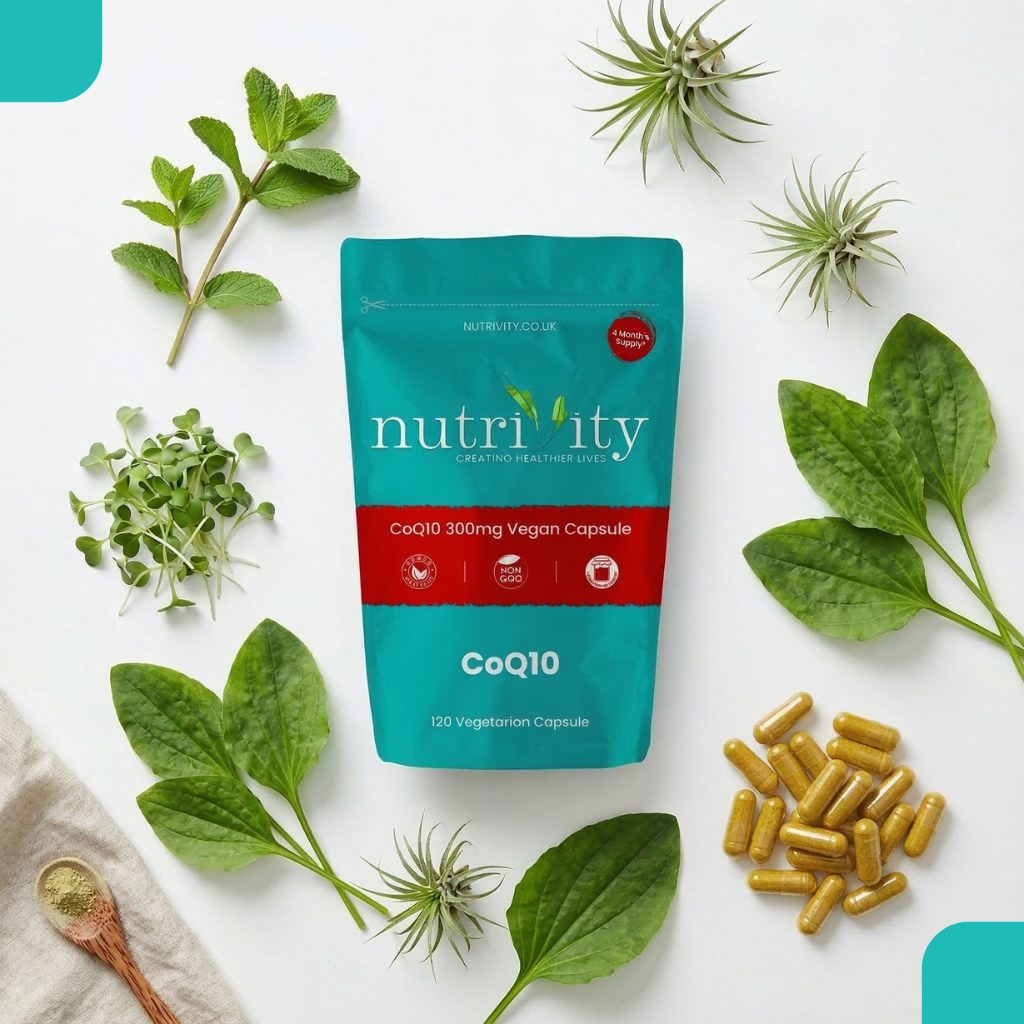
All of Nutrivity’s hard capsule products are vegan-suitable — they use HPMC vegetable capsules, alcohol-free extraction for all herbal formulations, vegetable-derived magnesium stearate, lichen-derived D3 where applicable, and no carmine or shellac. Our soft gel products — including Cod Liver Oil and Castor Oil — use halal-permissible gelatine and are not vegan. Full ingredients are published on every product page at nutrivity.co.uk.