




Agnus Castus for Perimenopause UK — What It Can and Cannot Do
-
By Chris Jones
Written by Chris Jones, Social Media Manager at Nutrivity with 7+ years in the supplement industry.
Agnus Castus for Perimenopause UK — What It Can and Cannot Do
Perimenopause — the transitional period before menopause that can last anywhere from two to ten years — is one of the most significant hormonal shifts in a woman’s life. As ovarian reserve declines, oestrogen and progesterone production becomes increasingly erratic and eventually falls. The symptoms that accompany this transition — hot flushes, night sweats, sleep disruption, mood changes, irregular periods, and brain fog — drive many women to look for non-pharmaceutical options alongside or instead of HRT.
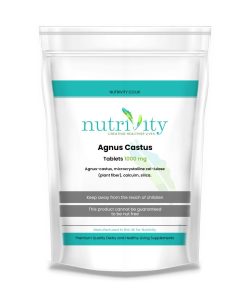
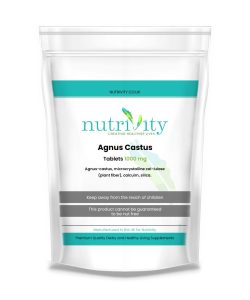
Agnus castus is one of the most commonly considered herbal options for perimenopause, but its role is more nuanced than its broader PMS evidence base suggests. This guide covers what agnus castus can and cannot address in perimenopause, what the research shows, and who is most likely to benefit. For a full overview of how agnus castus works, see our guide to what is agnus castus. For full product information, visit our Agnus Castus 1000mg Vegan Tablets product page.
What Happens Hormonally in Perimenopause
In perimenopause, the ovarian follicle pool declines to the point where follicle development becomes irregular and inconsistent. This produces erratic oestrogen levels — sometimes elevated, sometimes low — and increasingly inadequate progesterone production as ovulation becomes less frequent. The pituitary responds to declining ovarian output by increasing FSH and LH production, attempting to stimulate the ovaries — which is why elevated FSH is a marker of perimenopause in blood testing.
The hormonal environment of early perimenopause — irregular cycles, unpredictable oestrogen swings, declining progesterone — is in some ways similar to the luteal phase insufficiency that agnus castus addresses in younger women with PMS. This is the mechanistic basis for its use in perimenopause.
What Agnus Castus Can Address in Perimenopause
The perimenopausal symptoms most likely to be influenced by agnus castus’s mechanism are those driven by the erratic hormonal fluctuations of early perimenopause rather than by the established oestrogen deficiency of late perimenopause and post-menopause. These include irregular periods in early perimenopause, PMS-like symptoms that worsen as cycles become less regular, mood changes and emotional lability in the premenstrual phase, and breast tenderness during hormonal swings.
Research specifically examining agnus castus in perimenopause is more limited than for PMS. A study examining a combination product containing agnus castus alongside other botanicals found improvements in perimenopausal symptoms compared to placebo, with particular benefit for irritability and mood symptoms. Some research suggests prolactin normalisation through agnus castus may help moderate the hormonal swings of early perimenopause.
For women in early perimenopause who are still having cycles — however irregular — agnus castus’s cycle-modulating mechanism remains relevant. For the context of hormonal balance more broadly, see our guide to agnus castus for hormonal balance.
What Agnus Castus Cannot Address in Perimenopause
As perimenopause progresses toward established oestrogen deficiency, agnus castus’s pituitary modulation mechanism becomes less relevant. The classic vasomotor symptoms of perimenopause — hot flushes and night sweats — are driven primarily by oestrogen deficiency affecting the hypothalamic thermoregulation centre. Agnus castus does not replace oestrogen and does not directly address oestrogen deficiency. The evidence for agnus castus on hot flushes specifically is weak.
For women with moderate to severe hot flushes, significant sleep disruption, vaginal atrophy, or advanced perimenopausal symptoms, HRT remains the most effective and evidence-based treatment and should be discussed with a GP or gynaecologist. Agnus castus is not a substitute for HRT in women with clinically significant perimenopausal symptoms requiring oestrogen replacement.
Agnus Castus and HRT — Can They Be Taken Together?
Agnus castus has potential interactions with hormonal medications including HRT. The theoretical concern is that agnus castus’s effect on pituitary signalling may interact with the exogenous hormonal environment created by HRT. While specific interaction studies are limited, the precautionary guidance is to consult your GP before taking agnus castus alongside HRT, and not to use agnus castus as a reason to avoid or delay HRT where it is clinically indicated. For the full safety picture, see our guide to agnus castus dosage UK.
Summary — Agnus Castus for Perimenopause
Agnus castus has a role in early perimenopause for women still experiencing cycles with PMS-like symptoms and hormonal fluctuations — its pituitary modulating mechanism can help moderate the erratic hormonal environment of this transition. It is not a substitute for HRT in women with significant vasomotor symptoms or established oestrogen deficiency. The most appropriate use is alongside, not instead of, appropriate medical management of perimenopausal symptoms — with GP input to determine the most suitable approach for each individual’s symptom profile.
For full product information and to purchase, visit Nutrivity’s Agnus Castus 1000mg Vegan Tablets product page.
Frequently Asked Questions
Does agnus castus help with perimenopause?
Agnus castus may help with specific perimenopausal symptoms — particularly mood changes, irregular periods, PMS-like symptoms, and hormonal fluctuations in early perimenopause. Its mechanism is most relevant in women who are still cycling, even irregularly. It is less likely to help with hot flushes, vaginal atrophy, or symptoms of established oestrogen deficiency in later perimenopause.
Can agnus castus replace HRT?
No. HRT is the most effective evidence-based treatment for moderate to severe perimenopausal symptoms, particularly vasomotor symptoms (hot flushes, night sweats), sleep disruption, and vaginal atrophy. Agnus castus is a complementary option for women with mild to moderate symptoms in early perimenopause or those who prefer to try herbal approaches first, but it should not substitute for HRT where HRT is clinically appropriate.
Can agnus castus help with hot flushes?
The evidence for agnus castus on hot flushes specifically is weak. Hot flushes are primarily driven by oestrogen deficiency — a mechanism that agnus castus does not address. Other herbal options including black cohosh have more evidence for vasomotor symptom relief in perimenopause. Consult your GP about the most appropriate approach for hot flush management.
Is agnus castus safe during perimenopause?
For women in perimenopause without hormone-sensitive conditions and not taking hormonal medications, agnus castus is generally considered safe at standard supplement doses. If you are taking HRT or other hormonal medications, consult your GP before starting agnus castus. Always consult your GP if you have or have had an oestrogen-receptor positive cancer.
Is Nutrivity's agnus castus suitable for perimenopausal women?
Yes, for women in early perimenopause still experiencing cycles with PMS-like symptoms, mood changes, and hormonal fluctuations. Fully vegan-suitable and halal-suitable, taken once daily. Always consult your GP before starting any supplement if you are taking prescription medication for perimenopausal symptoms.