





Cod Liver Oil and Glucosamine Side Effects UK – Safety Guide
-
By Chris Jones
Written by Chris Jones, Social Media Manager at Nutrivity with 7+ years in the supplement industry.
Cod Liver Oil and Glucosamine Side Effects UK — The Complete Safety Guide
Both cod liver oil and glucosamine have well-established safety profiles built from decades of widespread clinical use and multiple large randomised controlled trials. The vast majority of adults who take these supplements at recommended doses experience either no adverse effects or only mild, transient gastrointestinal effects that resolve with continued use or by adjusting the timing of the dose. Serious adverse effects are rare at standard supplement doses.
That said, both supplements have specific, clinically meaningful contraindications and drug interactions that are more significant than those associated with simple vitamins and minerals. Cod liver oil’s vitamin A content creates absolute contraindications that must be respected. Glucosamine’s shellfish derivation and effects on blood glucose have implications for specific populations. Understanding these before starting supplementation is essential for safe use.
This guide covers the known side effects, who should not take this product, the drug interactions that matter, and what to do if you experience problems. For dosage guidance to minimise side effect risk, see our cod liver oil dosage UK guide. For a full overview of both ingredients, see our guide to what is cod liver oil and glucosamine. For full product information, visit our Cod Liver Oil and Glucosamine product page.
Cod Liver Oil Side Effects
The most commonly reported side effects of cod liver oil are gastrointestinal and are related to the oil content rather than the specific active components. Fishy aftertaste and fishy burping are the most frequently reported complaints — these occur when the softgel capsule begins to break down in the upper gastrointestinal tract and oil is released into the oesophagus during belching. This is substantially reduced or eliminated by taking cod liver oil with a full meal rather than on an empty stomach, by taking it at the beginning of the meal rather than at the end, and by choosing high-quality products where the oil is fresh and properly encapsulated. Rancid or oxidised oil produces far more pronounced fishy taste and odour — which is one reason product quality matters for cod liver oil.
Nausea is occasionally reported, particularly when cod liver oil is taken on an empty stomach. This is typically resolved by consistent food co-administration. Mild diarrhoea or loose stools are possible at standard doses, particularly in the first week or two of supplementation — this usually resolves as the gastrointestinal tract adapts. If diarrhoea persists beyond two weeks of consistent use with food, discontinue and consult your GP.
Vitamin A toxicity from cod liver oil is not a risk at standard single-daily-dose supplementation in healthy adults without other vitamin A sources. It becomes relevant only when recommended doses are exceeded, when cod liver oil is combined with other vitamin A supplements or retinol-containing products, or in the special circumstances discussed in the contraindications section below. At one standard softgel daily as directed, vitamin A intake from cod liver oil is well below the safe upper limit for most adults.
Glucosamine Side Effects
Glucosamine is among the best-tolerated supplements in the joint health category. In large clinical trials — including the three-year Reginster trial and the GAIT trial involving over 1,500 patients — adverse event rates in glucosamine groups were not significantly different from placebo groups for the majority of outcomes. This confirms the generally benign safety profile at standard doses.
The most commonly reported mild side effects are gastrointestinal: nausea, heartburn, and occasional diarrhoea or constipation. These are dose-dependent and substantially reduced by taking glucosamine with food. Most people who experience initial mild gastrointestinal effects in the first week find they resolve within 1–2 weeks as supplementation continues. Headache has been reported by a small number of patients in clinical trials but at rates not significantly different from placebo.
Skin reactions — rash, itching — are occasionally reported and may reflect sensitivity to components of the shellfish-derived glucosamine rather than glucosamine itself. Anyone who develops a skin reaction after starting glucosamine should discontinue and consult their GP before resuming, particularly if they have a known shellfish sensitivity.
Who Should Not Take This Product
People with fish or shellfish allergies. Nutrivity’s Cod Liver Oil and Glucosamine contains two declared allergens: fish (from cod liver oil and omega-3 fish oil) and crustacean (glucosamine is derived from the shells of crustaceans — shrimp, lobster, or crab). Both are major allergens under UK food labelling law. Anyone with a known allergy to fish or shellfish must not take this product. This is not a precautionary statement — it is a hard contraindication based on real allergen content. If you have a history of fish or shellfish allergy, do not take this product under any circumstances.
Pregnant women. Cod liver oil is absolutely contraindicated in pregnancy. The vitamin A (retinol) content poses a confirmed teratogenic risk — high vitamin A intake in pregnancy is associated with foetal malformations affecting the skull, brain, heart, and other organs. This contraindication is stated on all licensed cod liver oil products and reflects established clinical evidence, not precaution. Pregnant women who want omega-3 supplementation during pregnancy should use a dedicated pregnancy omega-3 product specifically formulated without vitamin A — cod liver oil is not an appropriate substitute. This contraindication applies from conception through the entire pregnancy.
Vegans and vegetarians. This product contains gelatine in the softgel capsule shell. The gelatine is halal-certified but is derived from animal sources and is not suitable for vegans or vegetarians. There is no vegan version of this combined formula. Vegans requiring omega-3 supplementation should consider algae-derived omega-3 (which provides DHA and EPA directly from the microalgae that fish consume), and a separate vegan glucosamine product if joint support is needed.
People with diabetes or blood glucose concerns. Some research — primarily in animal models and observational studies — has suggested that glucosamine may affect insulin sensitivity and blood glucose regulation. This effect has not been consistently demonstrated at supplement doses in human clinical trials, but the signal is sufficient to warrant precaution. People with type 1 or type 2 diabetes taking glucose-lowering medication should inform their GP before starting glucosamine supplementation, and should monitor blood glucose more closely in the first few weeks. Any unexplained changes in blood glucose control should prompt GP review.

Drug Interactions
Warfarin and anticoagulants. Omega-3 fatty acids have mild antiplatelet and anticoagulant effects — they reduce platelet aggregation and may modestly prolong bleeding time. At standard supplement doses (one softgel daily), this effect is rarely clinically significant in healthy adults. However, for people taking warfarin or other anticoagulant medications, even modest changes in anticoagulant effect can alter INR and increase bleeding risk. If you take warfarin, acenocoumarol, or any other anticoagulant, inform your GP before starting cod liver oil supplementation and arrange INR monitoring when starting. The same general precaution applies to direct oral anticoagulants (DOACs) such as apixaban and rivaroxaban, though the specific interaction is less clearly characterised for these agents.
NSAIDs. Both cod liver oil and NSAIDs have anti-inflammatory effects, and both omega-3 fatty acids and NSAIDs affect platelet function. Combining the two at standard doses is generally safe and is commonly done — many people take cod liver oil alongside ibuprofen or naproxen for arthritis. However, the additive antiplatelet effect means the gastrointestinal bleeding risk associated with NSAIDs may be marginally increased with concurrent omega-3. For people who take NSAIDs regularly, informing your GP of all supplements including cod liver oil is good practice.
Antidiabetic medications. Given the potential glucosamine-blood glucose interaction discussed above, people taking metformin, sulphonylureas, insulin, or other antidiabetic medications should inform their GP before starting glucosamine and monitor blood glucose as described.
When to Stop and Seek Medical Advice
Discontinue this product immediately and consult your GP if you experience: signs of allergic reaction (hives, swelling of the face or throat, difficulty breathing), significant worsening of gastrointestinal symptoms that does not resolve with food co-administration, unexplained changes in blood glucose control (in people with diabetes), or any other significant adverse effects that began after starting supplementation. For people on warfarin, any unexplained change in INR after starting cod liver oil warrants GP review.
It is also worth noting that the long-term safety record of both cod liver oil and glucosamine in the general UK population is extensive. Cod liver oil has been taken daily by British adults for well over a century — its safety profile at standard doses is one of the most well-established of any supplement. Glucosamine has been studied in trials running up to three years without emerging safety signals at recommended doses. This does not mean either supplement is risk-free for everyone — the contraindications described above are real and must be respected — but for the large majority of healthy adults without those specific contraindications, the long-term safety profile supports ongoing daily use with appropriate periodic review.
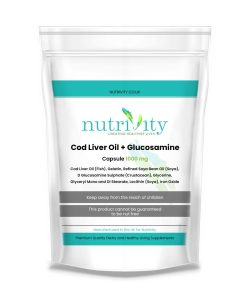
Summary — Side Effects and Safety
Cod liver oil and glucosamine are well-tolerated supplements at recommended doses for the majority of healthy adults, with the most common adverse effects being mild and gastrointestinal — substantially reduced by taking with food. The clinically significant contraindications are fish/shellfish allergy (both hard contraindications), pregnancy for cod liver oil (absolute, due to vitamin A teratogenicity), and vegan/vegetarian diet (gelatine in capsule shell). The most significant drug interaction is with warfarin, requiring GP awareness and INR monitoring. For all adults without these contraindications and not on interacting medications, daily supplementation at the recommended dose is safe and well-supported by the long-term clinical evidence base.
For full product information and to purchase, visit Nutrivity’s Cod Liver Oil and Glucosamine product page.
Frequently Asked Questions
What are the side effects of cod liver oil and glucosamine?
The most common side effects are mild gastrointestinal — fishy aftertaste, burping, nausea, heartburn, or loose stools. These are substantially reduced by taking the supplement with food. Serious adverse effects are rare at recommended doses with decades of widespread population use.
Can cod liver oil cause stomach problems?
Mild gastrointestinal effects — nausea, burping, and fishy aftertaste — are the most frequently reported issues. These are substantially reduced by taking cod liver oil with food rather than on an empty stomach. High-quality products with fresh, properly encapsulated oil are less likely to cause fishy burping.
Is glucosamine safe for kidneys?
Glucosamine has not been associated with kidney damage at standard supplement doses in clinical research. However, people with significant kidney disease or taking immunosuppressants should consult their GP before starting glucosamine, as the hexosamine pathway that glucosamine influences plays a role in renal cell biology.
Can cod liver oil raise cholesterol?
At standard supplement doses, cod liver oil does not raise LDL cholesterol. Omega-3 fatty acids in cod liver oil may actually reduce triglyceride levels. Very high doses of some fish oils may raise LDL in some individuals, but this is not a concern at standard single-daily-dose supplementation.
Who should not take cod liver oil?
Pregnant women (vitamin A risk), people with fish or shellfish allergies (both allergens present), vegans and vegetarians (gelatine shell), people with clotting disorders on anticoagulant medication without GP supervision, and people taking very high doses of other vitamin A supplements. Always consult your GP if you take prescription medication.
Is it safe to take cod liver oil and glucosamine long-term?
Yes, for adults without the contraindications listed above. Both ingredients have extensive long-term use histories — cod liver oil has been used daily in the UK for over a century, and glucosamine has been studied in three-year clinical trials without emerging safety concerns. Annual GP review is sensible for any long-term supplement.