




Glucosamine for Joints UK — What the Evidence Shows
-
By Chris Jones
Written by Chris Jones, Social Media Manager at Nutrivity with 7+ years in the supplement industry.
Glucosamine for Joints UK — What the Evidence Shows
Glucosamine is one of the most researched supplements in joint health, with a clinical evidence base spanning several decades and multiple large randomised controlled trials. It is also one of the most debated — with some meta-analyses concluding it is effective and others finding effects no greater than placebo, depending on which form was used, which population was studied, and which outcome measures were applied. That complexity in the literature has created confusion for UK consumers trying to assess whether glucosamine is worth taking.
The answer requires more nuance than a simple yes or no. Glucosamine sulphate has genuine, clinically meaningful evidence for osteoarthritis — particularly for structural joint space preservation and symptomatic improvement in moderate to severe OA. Glucosamine hydrochloride does not have the same evidence base. The debate around glucosamine largely reflects trials that used the wrong form being conflated with trials that used the correct form. Once you understand that distinction, the evidence picture becomes considerably clearer.
This guide covers what glucosamine does in the body, what the research shows, which form matters, and how glucosamine fits into a broader joint supplement approach alongside cod liver oil. For a full overview of how glucosamine and cod liver oil work together, see our guide to what is cod liver oil and glucosamine. For full product information, visit our Cod Liver Oil and Glucosamine product page.
What Glucosamine Does in the Body
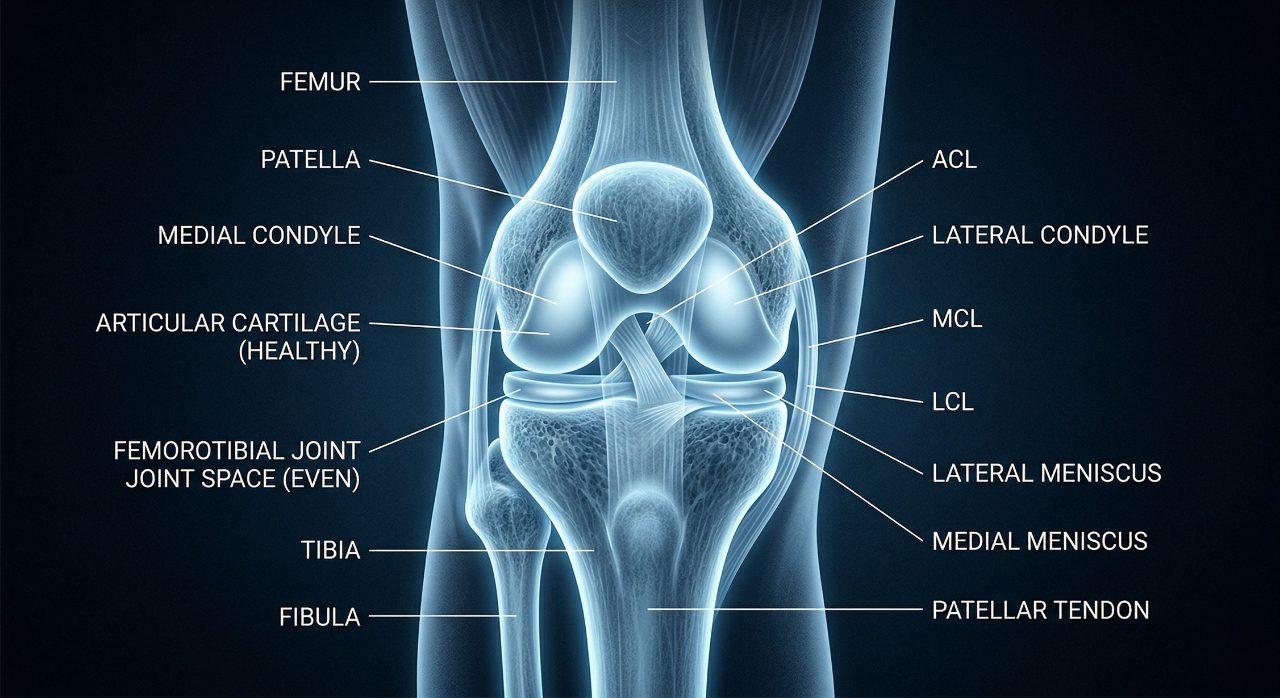
Glucosamine is an amino sugar — a molecule combining a sugar (glucose) with an amino group — that functions as a metabolic precursor for glycosaminoglycans (GAGs). Glycosaminoglycans are long-chain polysaccharide molecules that form the structural backbone of articular cartilage, synovial fluid, tendons, ligaments, and other connective tissues throughout the musculoskeletal system.
In articular cartilage specifically, glycosaminoglycans — primarily chondroitin sulphate and keratan sulphate — are attached to core proteins to form proteoglycans. These proteoglycan molecules are embedded within a type II collagen framework to create the unique viscoelastic properties of cartilage: the ability to absorb compressive load and return to shape, maintain hydration, and distribute mechanical stress across the joint surface. The integrity of this proteoglycan network is what gives healthy cartilage its shock-absorbing capacity.
In healthy joints, glucosamine is synthesised endogenously from glucose and glutamine through the hexosamine biosynthesis pathway in chondrocytes (cartilage cells). As joints age, chondrocyte metabolic activity declines, and the balance between cartilage matrix synthesis and matrix degradation shifts gradually toward net degradation. In osteoarthritis, pro-inflammatory cytokines (TNF-α, IL-1β) further suppress chondrocyte anabolic activity while upregulating the production of matrix-degrading enzymes (MMPs, aggrecanases). The result is progressive loss of proteoglycan content and cartilage volume — the structural changes visible on X-ray as joint space narrowing.
The rationale for glucosamine supplementation is that providing exogenous glucosamine substrate may support endogenous glycosaminoglycan synthesis in ageing chondrocytes, potentially helping to maintain cartilage matrix composition and slow the net degradation that characterises OA progression.
Glucosamine Sulphate vs Glucosamine Hydrochloride — Why the Form Matters
This is the single most important distinction in the glucosamine evidence landscape, and it is frequently overlooked in consumer guidance. Glucosamine sulphate and glucosamine hydrochloride are both salts of glucosamine — the glucosamine molecule attached to either a sulphate group or a hydrochloride group. Once absorbed, both release free glucosamine into the bloodstream. However, glucosamine sulphate additionally releases sulphate ions.
Sulphate is itself a substrate for sulphated glycosaminoglycan synthesis in cartilage. The sulphation of GAG chains is metabolically significant — it affects their biological function and their interactions with growth factors and cytokines. Sulphate availability in joint tissue has been proposed as a rate-limiting factor in glycosaminoglycan synthesis, particularly in OA where systemic sulphate metabolism may be dysregulated. This gives glucosamine sulphate a potential mechanistic advantage over glucosamine hydrochloride beyond the glucosamine content alone.
The research evidence for the two forms is not equivalent. All major positive trials showing structural joint space preservation and meaningful symptomatic improvement used glucosamine sulphate. The largest trial using glucosamine hydrochloride — the NIH-funded GAIT trial — found no significant effect in the overall OA population. Many consumers and some healthcare professionals who cite “evidence that glucosamine doesn’t work” are citing the GAIT trial, which used glucosamine hydrochloride. For a full comparison of both forms, see our guide to glucosamine sulphate vs glucosamine hydrochloride. Nutrivity’s formulation uses glucosamine sulphate — the evidence-supported form.
What the Clinical Trials Show
The most significant clinical research for glucosamine sulphate comes from three landmark trials that together provide a compelling evidence base for osteoarthritis management.
The Reginster trial, published in The Lancet in 2001, was a three-year double-blind randomised controlled trial of 212 patients with knee osteoarthritis. Patients received either 1500mg glucosamine sulphate daily or placebo. At three years, the placebo group showed significant progressive joint space narrowing — the radiological marker of cartilage loss in OA. The glucosamine sulphate group showed no significant joint space narrowing — effectively zero structural progression over three years. Pain and functional scores also improved significantly in the glucosamine group compared to placebo. This structural preservation finding is particularly significant because no NSAID, no analgesic, and no other commonly used OA treatment has demonstrated structural disease modification in clinical trials.
The GUIDE trial compared 1500mg glucosamine sulphate daily against 3000mg paracetamol (acetaminophen) daily and placebo over six months in 318 patients with knee OA. Glucosamine sulphate produced superior improvements in WOMAC (Western Ontario and McMaster Universities Arthritis Index) functional scores compared to both paracetamol and placebo. Paracetamol — the most commonly recommended first-line analgesic for OA in UK guidelines — did not significantly outperform placebo in this trial. Glucosamine sulphate did.
The GAIT trial, conducted by the US National Institutes of Health, used glucosamine hydrochloride at 1500mg daily and found no significant effect in the overall OA population, though the moderate-to-severe pain subgroup showed significant benefit from glucosamine sulphate (which was also tested as a separate arm). This mixed result has been widely misrepresented as evidence that “glucosamine doesn’t work” — when the more accurate interpretation is that glucosamine hydrochloride doesn’t work as consistently as glucosamine sulphate.
European osteoarthritis guidelines — from EULAR and the European Society for Clinical and Economic Aspects of Osteoporosis, Osteoarthritis and Musculoskeletal Diseases (ESCEO) — recommend glucosamine sulphate as a first-line pharmacological intervention for knee OA, with the highest evidence level. This regulatory and guideline endorsement is significant context for UK consumers deciding whether glucosamine belongs in their joint health routine.
How Long Does Glucosamine Take to Work?
Glucosamine is not a fast-acting pain reliever. It works through structural mechanisms — providing substrate for glycosaminoglycan synthesis — that operate at the cellular level over extended periods. Most people who respond to glucosamine begin to notice subtle symptomatic improvements at 8–12 weeks, with fuller benefit developing over 3–6 months. Structural effects — joint space preservation — only become apparent in trials running 6 months to 3 years.
The minimum assessment period recommended in clinical practice before concluding whether glucosamine is working is three months of consistent daily use at the recommended dose. Stopping after 4–6 weeks because no change is apparent is premature — most people have not yet reached the timeline where glucosamine’s structural mechanism begins to translate into symptomatic benefit. For a full discussion of what to expect and when, see our guide to how long does glucosamine take to work.

What Glucosamine Cannot Do
Being honest about limitations is as important as describing benefits. Glucosamine sulphate does not reverse existing cartilage damage — once cartilage is lost, it cannot be regenerated by any supplement or drug currently available. Its clinical value is in slowing further degradation and maintaining remaining cartilage over time, not in restoring what is already gone. This means glucosamine is most appropriately used as an ongoing daily supplement for OA management rather than a short-term course — the structural benefits require sustained supplementation to maintain.
Glucosamine is also not directly anti-inflammatory in the way that omega-3 fatty acids or NSAIDs are. It does not acutely reduce prostaglandin production or inflammatory cytokine levels. For the inflammatory pain component of osteoarthritis — the redness, warmth, swelling, and acute stiffness that flares during periods of increased activity — glucosamine is not the primary intervention. This is precisely why the combination with cod liver oil is so valuable: cod liver oil addresses the inflammatory component that glucosamine cannot, while glucosamine addresses the structural component that cod liver oil cannot.
Glucosamine is also not appropriate for rheumatoid arthritis as a primary treatment. RA is an autoimmune condition requiring disease-modifying antirheumatic drugs (DMARDs) to prevent progressive joint destruction. While glucosamine may provide some complementary support for the structural integrity of joints in RA alongside prescribed treatment, it is not a substitute for medical management of this condition.
Practical Guidance — Getting the Most From Glucosamine
Several practical factors determine whether glucosamine supplementation produces meaningful benefit. First, the form must be glucosamine sulphate — not hydrochloride. This is the most important selection criterion and is more important than the milligram dose on the label. Second, the dose matters: 1500mg daily is the dose used in the landmark trials. Lower doses may not produce equivalent results. Third, consistency is essential — glucosamine must be taken daily without breaks for the structural mechanism to accumulate effect. Fourth, the assessment timeline must be realistic — three months minimum before concluding it is or isn’t working, with fuller benefit at six months.
When choosing a glucosamine supplement, consider whether it is combined with cod liver oil to address the inflammatory component of joint conditions simultaneously. Managing both the structural and inflammatory aspects of joint health from a single daily product is more practical and more comprehensive than addressing one without the other.
Summary — Glucosamine for Joints UK
Glucosamine sulphate is one of the best-evidenced nutritional supplements for osteoarthritis available in the UK. The three-year Reginster trial demonstrating structural joint space preservation, the GUIDE trial showing superiority to paracetamol, and the EULAR guideline endorsement together provide a meaningful clinical foundation for its use. The critical caveat is form: glucosamine sulphate has the evidence, glucosamine hydrochloride does not. Combined with cod liver oil’s anti-inflammatory omega-3 mechanism, glucosamine sulphate provides the structural half of a comprehensive, evidence-based daily joint support approach.
For full product information and to purchase, visit Nutrivity’s Cod Liver Oil and Glucosamine product page.
Frequently Asked Questions
Does glucosamine actually work for joints?
Glucosamine sulphate has clinical trial evidence showing structural joint space preservation over three years and symptomatic improvement superior to paracetamol in osteoarthritis trials. The evidence is strongest for moderate to severe knee OA with glucosamine sulphate specifically. Glucosamine hydrochloride has a weaker evidence base and should not be assumed equivalent.
What does glucosamine do for joints?
Glucosamine provides substrate for glycosaminoglycan synthesis — the structural molecules forming the backbone of articular cartilage. It may support cartilage matrix maintenance and slow the degradation of cartilage in osteoarthritis. Its mechanism is structural rather than anti-inflammatory, which is why it works best in combination with an anti-inflammatory like cod liver oil’s omega-3.
How long does glucosamine take to work?
A minimum of three months of consistent daily use is required before assessing effectiveness. Structural effects — joint space preservation — require even longer. Most people who respond notice early symptomatic improvement at 4–8 weeks, with fuller benefit developing over 3–6 months.
Is glucosamine sulphate better than glucosamine hydrochloride?
Yes — the clinical evidence overwhelmingly supports glucosamine sulphate. The landmark trials showing structural joint space preservation and symptomatic improvement all used glucosamine sulphate. The largest trial using glucosamine hydrochloride (the GAIT trial) did not find significant effects in the overall population. Nutrivity’s formulation uses glucosamine sulphate.
Can glucosamine rebuild cartilage?
Glucosamine provides substrate for cartilage matrix synthesis, which may support maintenance of existing cartilage and potentially slow its degradation. Clinical evidence shows structural joint space preservation — meaning less cartilage loss — in glucosamine sulphate groups versus placebo over three years. It does not rebuild cartilage that has already been lost.
What is the best glucosamine supplement in the UK?
Look for glucosamine sulphate (not hydrochloride), at a dose of at least 1000mg daily, combined with an anti-inflammatory such as cod liver oil for complementary joint support. Nutrivity’s Cod Liver Oil and Glucosamine combines 400mg glucosamine sulphate with cod liver oil and omega-3 fish oil in a single daily softgel.