




Can You Take Devils Claw with Other Medications? A Complete Interactions Guide
-
By Chris Jones
Written by Chris Jones, Social Media Manager at Nutrivity with 7+ years in the supplement industry.
Devils claw is one of the most pharmacologically active herbal supplements in common use — which means its interaction potential with prescription and over-the-counter medications is more significant than for vitamins and minerals. Most interactions are theoretical based on known pharmacological mechanisms rather than large clinical studies, but some — particularly the warfarin interaction — are supported by case reports and require direct GP involvement. Understanding which medications require attention before starting devils claw is essential for safe supplementation.
For the full safety picture, see our guide to devils claw side effects and safety UK. For a full overview of what devils claw is, see our guide to what is devils claw. For full product information, visit our Devils Claw 2200mg Vegan Capsules product page.
How to Use This Guide
This guide covers devils claw’s interactions across medication categories. Each section states whether the interaction is established (supported by case reports or clinical evidence) or theoretical (based on pharmacological mechanisms without confirmed clinical reports). This distinction matters — a theoretical interaction warrants caution and GP discussion but is not a definitive contraindication, whereas an established interaction requires active management.
The Most Significant Interactions
Warfarin and Anticoagulants — ESTABLISHED — Consult GP Before Use
The warfarin interaction is the most clinically significant interaction associated with devils claw and the one most clearly supported by evidence. Multiple case reports have documented elevated INR (international normalised ratio — the measure of anticoagulation intensity) in patients taking warfarin who added devils claw to their regimen. Elevated INR on warfarin indicates excessive anticoagulation and increases the risk of serious bleeding.
The mechanism is not fully characterised — it may involve inhibition of cytochrome P450 enzymes involved in warfarin metabolism, or direct additive anticoagulant effects from harpagoside. Whatever the mechanism, the clinical consequence is well-documented. If you take warfarin, do not start devils claw without consulting your GP and establishing a plan for increased INR monitoring. This is not a theoretical risk — it is a clinically demonstrated interaction.
The same caution extends to other anticoagulants including acenocoumarol. For direct oral anticoagulants (DOACs) such as apixaban, rivaroxaban, and dabigatran, the specific interaction data is less developed, but the theoretical mechanism for interaction exists. Consult your GP before combining devils claw with any anticoagulant medication.
Antidiabetic Medications — THEORETICAL — Monitor Blood Glucose
Some research suggests harpagoside may lower blood glucose through effects on insulin secretion or glucose uptake. While this is not consistently demonstrated at typical supplement doses, people taking insulin, metformin, sulphonylureas, or other antidiabetic medications should be aware of the theoretical additive hypoglycaemic effect. If you take antidiabetic medication and want to start devils claw, inform your GP and monitor blood glucose more closely in the first few weeks. Any unexplained hypoglycaemic episodes should prompt GP review.
Antiarrhythmic Medications — THEORETICAL — Consult Cardiologist
In vitro research has suggested that high concentrations of harpagoside may affect cardiac ion channels, potentially affecting heart rate and rhythm. This has not been demonstrated at typical supplement doses in clinical populations, but the theoretical concern is sufficient to recommend against combining devils claw with antiarrhythmic drugs (amiodarone, flecainide, digoxin, beta-blockers used for arrhythmia) without specialist cardiology guidance.

Medications Requiring Caution — Lower Risk But Worth Noting
NSAIDs (Ibuprofen, Naproxen, Diclofenac, Aspirin)
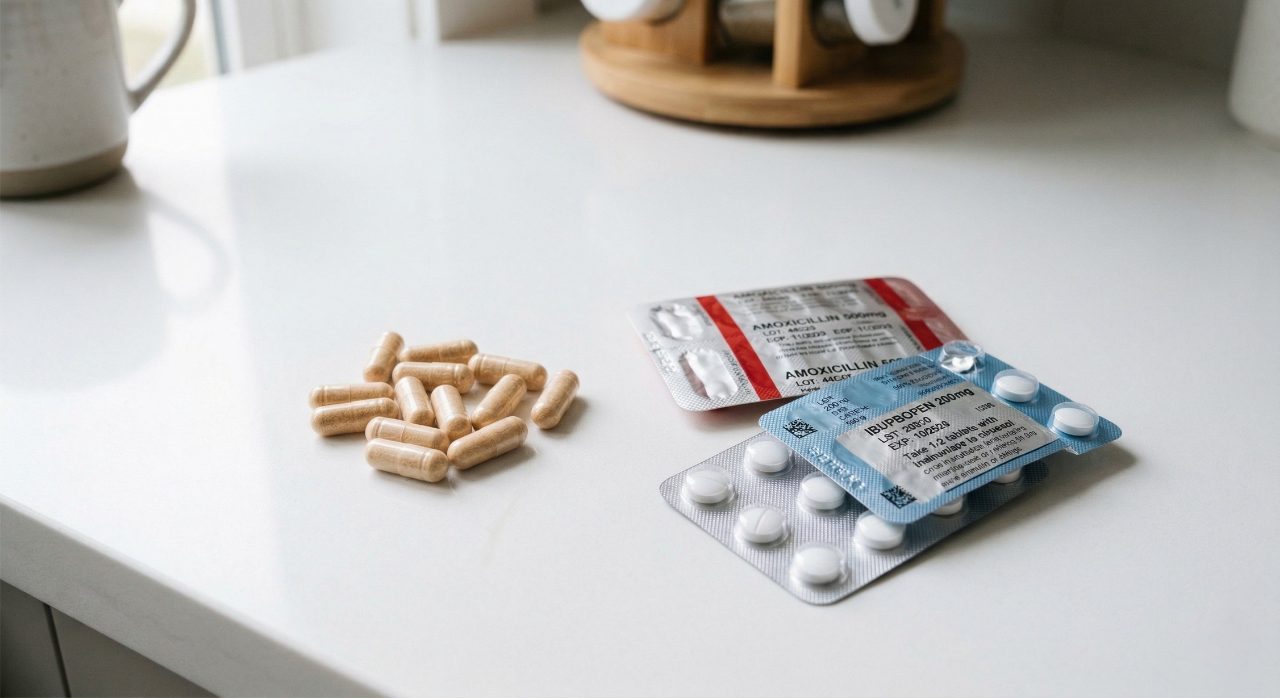
Both devils claw and NSAIDs inhibit COX-2. Taking them together is generally safe — there are no established harmful interactions — but produces limited additional benefit over either alone at adequate doses. If you are transitioning from NSAIDs to devils claw, using NSAIDs as needed for breakthrough pain during the establishment period is reasonable. Long-term combined use of NSAIDs and devils claw is not recommended as a strategy — it is better to use adequate doses of one agent than subtherapeutic doses of both. The gastrointestinal protective benefit of devils claw’s selective COX-2 profile is partially negated by concurrent non-selective NSAID use.
Antacids and Proton Pump Inhibitors (Omeprazole, Lansoprazole)
Antacids and PPIs reduce gastric acid. Devils claw’s bitter compounds stimulate gastric acid secretion — the mechanism behind its mild gastrointestinal side effects. Theoretically, antacids and PPIs may reduce some of the gastrointestinal discomfort from devils claw. More importantly, if you are taking a PPI for a gastric ulcer or significant acid reflux condition, the underlying reason for your PPI use (active ulceration or significant gastritis) may make devils claw itself inappropriate. Discuss with your GP.
Antihypertensive Medications
Some research suggests minor blood pressure-lowering effects from devils claw. For most people this is clinically insignificant, but people taking antihypertensive medications — particularly those with well-controlled blood pressure — should monitor blood pressure when starting devils claw and inform their GP. The interaction is theoretical and likely minor at standard supplement doses.
Immunosuppressants (Ciclosporin, Tacrolimus)
Harpagoside has potential for inhibiting cytochrome P450 3A4 — a key enzyme in the metabolism of many immunosuppressant drugs. If you take ciclosporin or tacrolimus (commonly used after organ transplant or for autoimmune conditions), the theoretical interaction with devils claw could affect drug levels. This warrants discussion with the specialist managing your immunosuppressant therapy before starting devils claw.
Cholesterol-Lowering Medications (Statins)
The theoretical CYP3A4 interaction that may affect immunosuppressants is also relevant for some statins (particularly simvastatin and atorvastatin, which are CYP3A4 substrates). In practice, this is unlikely to produce clinically significant effects at standard devils claw doses, but it is worth informing your GP that you are taking both.
Medications Considered Generally Safe Alongside Devils Claw
The following medication categories have no established or significant theoretical interaction with devils claw at recommended supplement doses and are generally considered safe to take alongside it: paracetamol (acetaminophen), most antibiotics, most antihistamines, thyroid medication (levothyroxine — take two hours apart from all supplements as a general rule), most antidepressants (though inform your GP), and most vitamins and minerals.
The Golden Rule — Tell Your GP
The most important single piece of advice for anyone taking prescription medication and wanting to start devils claw is to inform their GP or pharmacist. This is not overcautious — it is good practice for any supplement with pharmacological activity. Your GP or pharmacist can check the specific interaction profile for all your current medications and advise accordingly. Most interactions can be managed with appropriate monitoring rather than requiring avoidance.

Summary — Devils Claw and Medications
The most important interaction to know is warfarin — a documented interaction with real clinical consequences requiring GP involvement and INR monitoring. Interactions with antidiabetic medications, antiarrhythmics, and immunosuppressants are theoretical but warrant caution and medical discussion. Paracetamol, topical NSAIDs, and most other common medications are safe alongside devils claw. For anyone taking prescription medication, informing your GP before starting devils claw is essential and is the single most important step in safe supplementation.
For full product information and to purchase, visit Nutrivity’s Devils Claw 2200mg Vegan Capsules product page.
Frequently Asked Questions
Can I take devils claw with ibuprofen?
Yes — there is no harmful interaction between devils claw and ibuprofen. Both inhibit COX-2 inflammation pathways, so combined use provides limited additional benefit, but it is safe. Using ibuprofen occasionally for breakthrough pain while taking daily devils claw is a reasonable approach during the establishment period.
Can I take devils claw with warfarin?
Not without GP guidance. There are documented case reports of elevated INR in warfarin patients taking devils claw. If you take warfarin, consult your GP before starting devils claw. Increased INR monitoring will be required if your GP approves the combination.
Can I take devils claw with paracetamol?
Yes — there is no established interaction between devils claw and paracetamol. They work through completely different mechanisms. Taking paracetamol alongside devils claw for breakthrough pain is safe.
Can I take devils claw with blood pressure tablets?
The interaction is theoretical and likely minor. Inform your GP and monitor blood pressure when starting devils claw if you take antihypertensive medication. No dose adjustment is typically expected at standard supplement doses.
Can I take devils claw with steroids?
Both devils claw and corticosteroids have anti-inflammatory effects. There is no established harmful interaction, but combining herbal anti-inflammatories with steroid medications should be discussed with the prescribing doctor, particularly if steroids are being used for a specific inflammatory condition where monitoring is important.
Can I take devils claw with diclofenac gel?
Topical diclofenac has minimal systemic absorption compared to oral NSAIDs, making the interaction concern substantially lower. Taking oral devils claw alongside topical diclofenac is generally considered safe — inform your GP or pharmacist as a matter of good practice.
