




Agnus Castus for Irregular Periods UK — Evidence, Mechanism and Realistic Expectations
-
By Chris Jones
Written by Chris Jones, Social Media Manager at Nutrivity with 7+ years in the supplement industry.
Irregular periods affect a significant proportion of women at some point in their reproductive lives. While the most common cause is PCOS, other causes include thyroid dysfunction, elevated prolactin, significant weight change, extreme exercise, and hypothalamic suppression from stress. Agnus castus is relevant to a specific subset of these causes — those involving pituitary-gonadal axis disruption, particularly where prolactin elevation or luteal phase defects are contributing factors.
This guide covers when agnus castus is and is not appropriate for irregular periods, what the research shows, and what UK women should consider before starting it. For a full overview of agnus castus and hormonal balance, see our guide to agnus castus for hormonal balance. For full product information, visit our Agnus Castus 1000mg Vegan Tablets product page.
When Agnus Castus Is Relevant for Irregular Periods
Agnus castus addresses hormonal irregularity through one primary mechanism: prolactin suppression via pituitary dopamine receptors. This mechanism is directly relevant to irregular periods caused by mildly elevated prolactin (hyperprolactinaemia) and to cycles with shortened or defective luteal phases. Research has demonstrated cycle normalisation and improved luteal phase length in women with these specific patterns.
Where irregular periods are caused by PCOS — the most common cause — the primary issue is insulin resistance and androgen excess rather than prolactin elevation, and agnus castus is not the primary indicated intervention. Where irregularity is caused by thyroid dysfunction, thyroid treatment is required. Where it is caused by significant caloric restriction or extreme exercise (hypothalamic amenorrhoea), addressing the underlying physiological stress is the priority. Agnus castus works best where the disruption is at the pituitary-gonadal level.
What the Research Shows
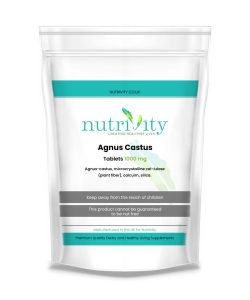 Several studies have examined agnus castus for cycle normalisation and luteal phase support. A German study examining women with luteal phase defects found that agnus castus supplementation over three months produced significant improvements in luteal phase length and mid-luteal progesterone levels compared to placebo, with cycle normalisation in a meaningful proportion of the treatment group. Another study found improvements in cycle regularity in women with secondary amenorrhoea (absent periods) where prolactin was mildly elevated.
The evidence is less extensive than for PMS — fewer large RCTs have specifically targeted cycle irregularity — but the mechanistic rationale and the available studies support agnus castus as a reasonable first-line herbal intervention for irregularity associated with prolactin disruption or luteal phase defects.
Agnus Castus and Fertility in the Context of Irregular Periods
Women with irregular periods who are trying to conceive are a specific subgroup where agnus castus research has shown particular interest. Cycle irregularity reduces the predictability of ovulation and makes conception planning more difficult. Where irregularity is associated with luteal phase defects, the shortened window for implantation further reduces fertility. Agnus castus’s potential to normalise cycle length and improve luteal phase quality makes it relevant to this group. For the full discussion of agnus castus and fertility, see our guide to agnus castus for fertility UK.
When to Seek Medical Assessment
Irregular periods always warrant GP investigation to identify the underlying cause before starting any supplement. Causes requiring medical treatment — PCOS requiring metabolic management, thyroid disorders requiring medication, pituitary tumours causing prolactin elevation — should be ruled out before assuming the irregularity is attributable to pituitary-level prolactin disruption that agnus castus can address. A blood test panel including prolactin, thyroid function, FSH, LH, oestradiol, and testosterone provides a useful hormonal baseline and should be the starting point for unexplained cycle irregularity.
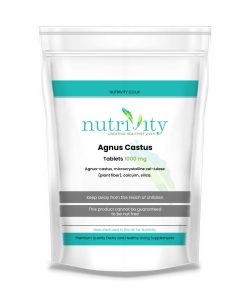
Summary — Agnus Castus for Irregular Periods
Agnus castus is a clinically justified intervention for irregular periods caused by mildly elevated prolactin or luteal phase defects, with research showing improvements in cycle regularity and luteal phase quality in these populations. It is not appropriate for all causes of irregular periods — PCOS, thyroid dysfunction, and hypothalamic amenorrhoea require different approaches. Always investigate the cause of cycle irregularity with your GP before starting any supplement, and allow three months of consistent daily use before assessing whether agnus castus is producing the desired cycle-normalising effect.
For full product information and to purchase, visit Nutrivity’s Agnus Castus 1000mg Vegan Tablets product page.
Frequently Asked Questions
Can agnus castus regulate periods?
Agnus castus has shown cycle-normalising effects in research on women with luteal phase defects and mildly elevated prolactin. It is not a universal cycle regulator and is not appropriate for all causes of irregular periods. Its mechanism — prolactin suppression through pituitary dopamine receptor activity — is most relevant where irregularity is driven by elevated prolactin or luteal phase insufficiency.
How long does agnus castus take to regulate periods?
Clinical research uses three menstrual cycles as the minimum assessment period. Cycle normalisation, where it occurs, typically becomes observable from the second or third cycle of consistent daily use.
Can agnus castus cause irregular periods?
In some women, agnus castus may initially alter the cycle length or timing as the pituitary signalling adjusts. This is typically transient and resolves with continued use. If significant cycle disruption persists beyond the second cycle, discontinue and consult your GP.
Is agnus castus good for PCOS?
PCOS is primarily driven by insulin resistance and androgen excess — mechanisms that agnus castus does not directly address. Some women with PCOS also have elevated prolactin, in which case agnus castus’s prolactin-suppressing mechanism may provide partial support. However, it is not a primary PCOS treatment and should not substitute for lifestyle interventions and medical management in women with confirmed PCOS.
Is Nutrivity's agnus castus suitable for irregular periods?
Yes — if the irregularity is associated with prolactin disruption or luteal phase defects. Always consult your GP to identify the underlying cause of cycle irregularity before starting supplementation. Nutrivity’s Agnus Castus 1000mg is fully vegan-suitable and halal-suitable, taken once daily, with an 8-month supply at approximately 10.4p per day.